
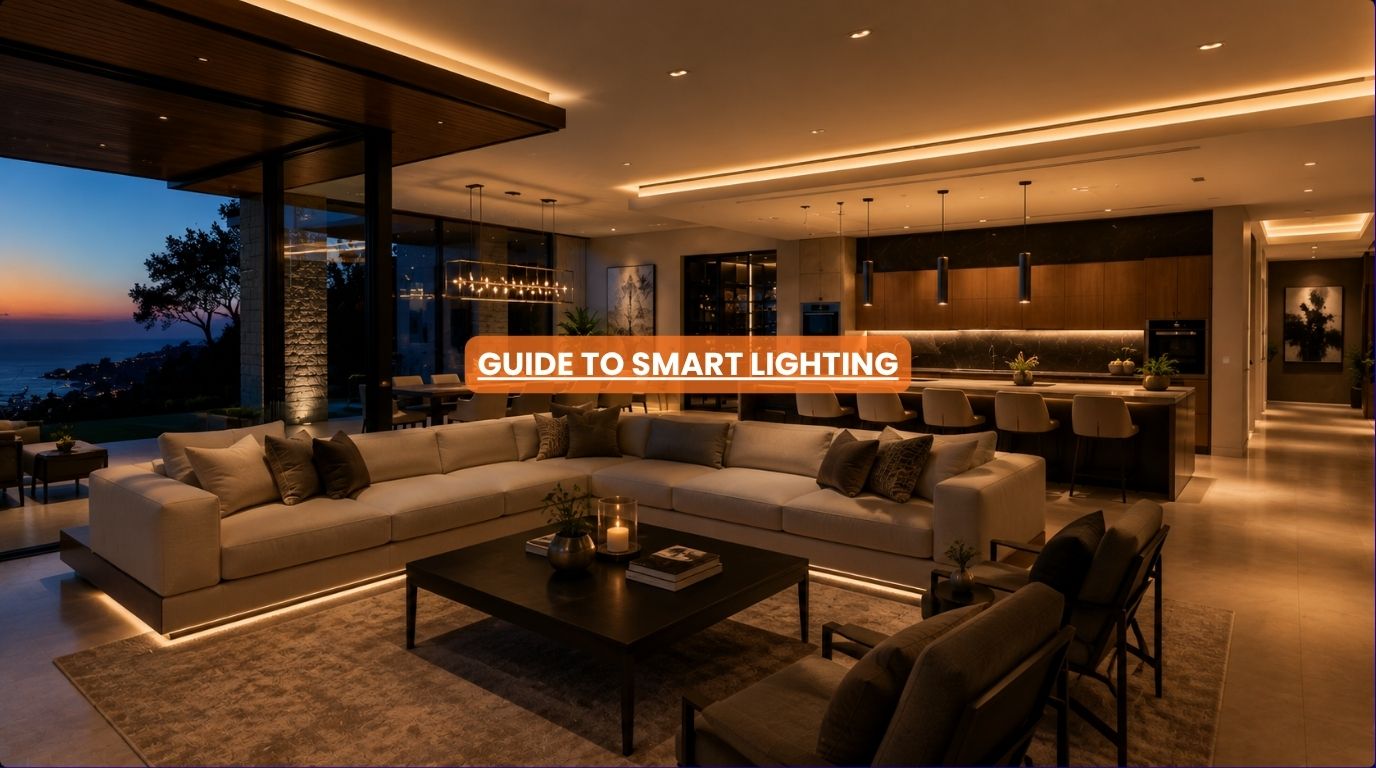
Lighting is one of the most important elements in any home. It influences comfort, mood, productivity, security, aesthetics, and even energy consumption. Yet many homeowners still interact with lighting the same way they did decades ago—through simple on/off switches.
Modern smart lighting changes that completely. Today, lighting can automatically adjust based on occupancy, time of day, natural daylight levels, activities, and personal preferences.
At Techtastic, lighting automation is often the first smart home feature homeowners experience, and it’s usually the one they continue using every single day. However, setting up smart lighting properly involves much more than buying a few smart bulbs. The most successful smart lighting systems are carefully planned around lifestyle, functionality, and long-term usability.
Let’s explore the best way to design a smart lighting system that enhances both your home and your everyday living experience.
Summary
The best smart lighting setup combines automated lighting control, occupancy-based automation, scene creation, dimming capabilities, centralized control, and future scalability. Rather than simply replacing bulbs with smart alternatives, homeowners should design lighting around how rooms are used, integrating convenience, ambience, energy efficiency, and automation. Professionally planned smart lighting systems often provide a better user experience than individual smart devices because they create seamless, whole-home control.
Quick Answer
The best way to set up smart lighting is to focus on how each space is used rather than simply installing smart bulbs. A well-designed smart lighting system combines automated schedules, occupancy sensors, dimming control, lighting scenes, centralized management, and integration with other smart home features. The goal is to create lighting that automatically adapts to daily routines while improving comfort, convenience, and energy efficiency.
Why Smart Lighting Is One of the Best Smart Home Investments
Unlike some automation features that are used occasionally, lighting impacts daily life constantly.
Benefits include:
- Improved convenience
- Enhanced ambience
- Better energy efficiency
- Increased security
- Simplified control
- Luxury living experiences
For many homeowners, smart lighting delivers the fastest and most noticeable return on investment.
What Is Smart Lighting?
Smart lighting allows homeowners to control and automate lighting through:
- Mobile apps
- Touch panels
- Smart switches
- Motion sensors
- Voice assistants
- Automation schedules
Instead of manually operating every light, the system can intelligently manage illumination throughout the home.
The goal is not simply remote control.
The goal is intelligent lighting.
The Biggest Mistake Homeowners Make
Many people start by purchasing smart bulbs.
While smart bulbs have their place, they often create problems:
- Multiple apps
- Inconsistent control
- Limited scalability
- Poor whole-home integration
The best smart lighting systems focus on lighting control rather than individual bulbs.
This creates a more seamless experience.
Step 1: Design Lighting Around Lifestyle
Before choosing products, ask:
How do you use the space?
For example:
Living Room
- Relaxation
- Entertainment
- Family gatherings
Kitchen
- Cooking
- Dining
- Task lighting
Bedroom
- Reading
- Relaxation
- Sleep preparation
Each activity requires different lighting conditions.
Good lighting design starts with understanding behavior.
Step 2: Create Smart Lighting Scenes
Lighting scenes are one of the most powerful automation tools.
A scene controls multiple lights simultaneously.
Examples include:
Morning Scene
- Gentle brightness
- Natural color temperature
- Gradual wake-up lighting
Movie Scene
- Dimmed ambient lighting
- Accent lighting activated
- Reduced glare
Dinner Scene
- Warm lighting
- Soft ambience
- Enhanced comfort
Good Night Scene
- Most lights turn off
- Hallway lighting remains active
- Security lighting activates
Scenes simplify daily routines dramatically.
Step 3: Use Dimming Wherever Possible
One of the biggest upgrades in lighting quality comes from dimming control.
Benefits include:
- Greater flexibility
- Better ambience
- Energy savings
- Improved comfort
Lighting should rarely operate at maximum brightness.
Dimming provides a much more natural experience.
Step 4: Automate Lighting with Occupancy Sensors
Smart lighting becomes truly intelligent when it responds automatically.
Occupancy sensors can:
- Turn the lights on when someone enters
- Turn lights off when rooms are empty
- Reduce unnecessary energy consumption
Ideal locations include:
- Bathrooms
- Hallways
- Closets
- Utility rooms
- Garages
Automation removes the need for manual interaction.
Step 5: Use Daylight-Based Automation
Natural light should be part of the lighting strategy.
Smart systems can:
- Adjust brightness throughout the day
- Respond to daylight levels
- Maintain consistent illumination
This improves comfort while reducing energy usage.
Step 6: Integrate Lighting with Other Smart Home Systems
Lighting becomes even more powerful when connected to:
Security Systems
Lights can activate during security events.
Motorized Curtains
Lighting adjusts based on daylight conditions.
Climate Control
Environmental systems work together.
Home Theatre Systems
Movie mode automatically adjusts lighting.
Integrated experiences create a more intelligent home.
Smart Lighting Control Methods
Modern systems typically offer multiple control options.
Smart Switches
The most intuitive solution for most homeowners.
Touch Panels
Provide centralized control.
Mobile Apps
Convenient for remote access.
Voice Assistants
Hands-free operation.
Automation
The most powerful option because no interaction is required.
The best systems combine all of these methods.
Smart Bulbs vs Smart Lighting Systems
| Smart Bulbs | Smart Lighting System |
|---|---|
| Device-based | Infrastructure-based |
| Room-by-room setup | Whole-home control |
| Limited scalability | Highly scalable |
| Multiple apps possible | Centralized management |
| Consumer-focused | Long-term solution |
| Good starting point | Premium experience |
For larger homes, integrated lighting systems generally provide a superior experience.
Best Areas to Automate First
If you’re starting small, prioritize:
Living Room
Highest daily usage.
Entrance & Hallways
Convenience and safety.
Kitchen
Task-focused lighting.
Master Bedroom
Comfort and relaxation.
Outdoor Areas
Security and ambience.
These spaces typically provide the greatest impact.
Common Smart Lighting Mistakes
Overcomplicating Controls
Lighting should remain simple and intuitive.
Ignoring Dimming
Brightness flexibility is essential.
Automating Every Light Immediately
Start with high-value spaces.
Focusing Only on Technology
Lifestyle should drive design decisions.
Poor Lighting Design
Automation cannot compensate for poorly planned lighting layouts.
Why KNX Lighting Systems Are Popular
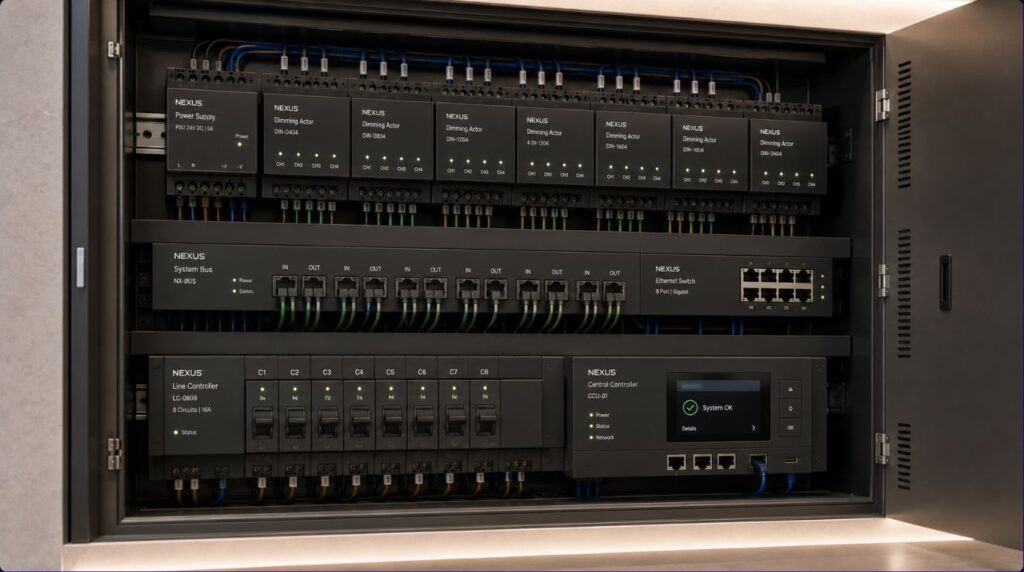
Many premium homes use KNX lighting control because it offers:
- Reliability
- Scalability
- Multi-brand compatibility
- Centralized control
- Long-term flexibility
As homes become larger and more sophisticated, these advantages become increasingly valuable.
Why It Matters for Modern Homes
Today’s homeowners expect:
- Convenience
- Energy efficiency
- Personalized experiences
- Seamless technology
Smart lighting supports all of these goals.
Because lighting affects nearly every room and activity, it often becomes the most frequently used automation feature in a home.
Our Perspective at Techtastic
At Techtastic, we believe great smart lighting should feel invisible. Homeowners shouldn’t constantly think about operating lights. The system should provide the right lighting at the right time.
We typically recommend focusing on:
- Lifestyle-based lighting design
- Dimming control
- Occupancy automation
- Scene creation
- Centralized management
- Future scalability
The result is a home that feels more comfortable, intuitive, and enjoyable every day.
Collaboration Opportunities for Developers, Architects & Interior Designers
Smart lighting performs best when considered early in the design process.
At Techtastic, we collaborate with:
- Architects
- Interior designers
- Luxury home builders
- Residential developers
- Hospitality consultants
- Commercial project planners
Intelligent Lighting Design
Create lighting experiences that enhance architecture.
Automation Integration
Combine aesthetics with functionality.
Energy-Efficient Lighting Solutions
Improve sustainability and performance.
Luxury Residential Projects
Deliver premium lighting experiences.
Hospitality & Commercial Applications
Implement scalable lighting control systems.
Future-Ready Infrastructure Planning
Prepare properties for evolving technologies.
Early planning ensures lighting becomes a seamless part of the overall design vision.
Key Takeaways
- Smart lighting should be designed around lifestyle rather than devices.
- Lighting scenes dramatically improves usability.
- Dimming is one of the most valuable smart lighting features.
- Occupancy sensors enhance convenience and efficiency.
- Integrated lighting systems outperform isolated smart bulbs.
- Smart lighting often delivers the most noticeable smart home benefits.
Frequently Asked Questions
1. What is the best way to set up smart lighting?
A: The best approach combines lighting scenes, dimming, occupancy sensors, centralized control, and automation based on how spaces are used.
2. Are smart bulbs enough for a smart lighting system?
A: For smaller spaces, they can work well, but integrated lighting control systems often provide better long-term flexibility and usability.
3. Do smart lights save energy?
A: Yes. Automation, dimming, scheduling, and occupancy-based control can reduce unnecessary energy consumption.
4. What rooms should I automate first?
A: Living rooms, hallways, kitchens, bedrooms, and outdoor areas typically deliver the greatest benefits.
5. Do smart lights work with voice assistants?
A: Yes. Most modern smart lighting systems can integrate with Alexa, Google Assistant, and Siri.
6. What are lighting scenes?
A: Lighting scenes allow multiple lights to adjust simultaneously for specific activities such as entertaining, watching movies, or relaxing.
7. Is dimming important in smart lighting?
A: Absolutely. Dimming improves comfort, ambience, flexibility, and energy efficiency.
8. Can smart lighting be integrated with other home automation systems?
A: Yes. Lighting can integrate with security systems, climate control, motorized curtains, entertainment systems, and broader home automation platforms.
Conclusion
The best smart lighting systems do far more than turn lights on and off. They create comfortable environments, simplify daily routines, improve energy efficiency, and enhance the overall living experience. When designed thoughtfully, smart lighting becomes one of the most valuable and frequently used elements of a connected home.
At Techtastic, we help homeowners, architects, and developers design intelligent lighting systems that combine automation, aesthetics, and functionality.
📞 Call/WhatsApp: 9769145145
📍 Our Operational Hubs: Navi Mumbai | Nashik | Lonavla | Sangli
Whether you’re building a new smart home or upgrading an existing property, a well-planned smart lighting strategy can transform the way you experience every space in your home.
Looking for the best features to start with? Check out our practical guide on Safe Home Security System 2026: What To Know Before Installing to plan a system that everyone can feel safe in effortlessly.