
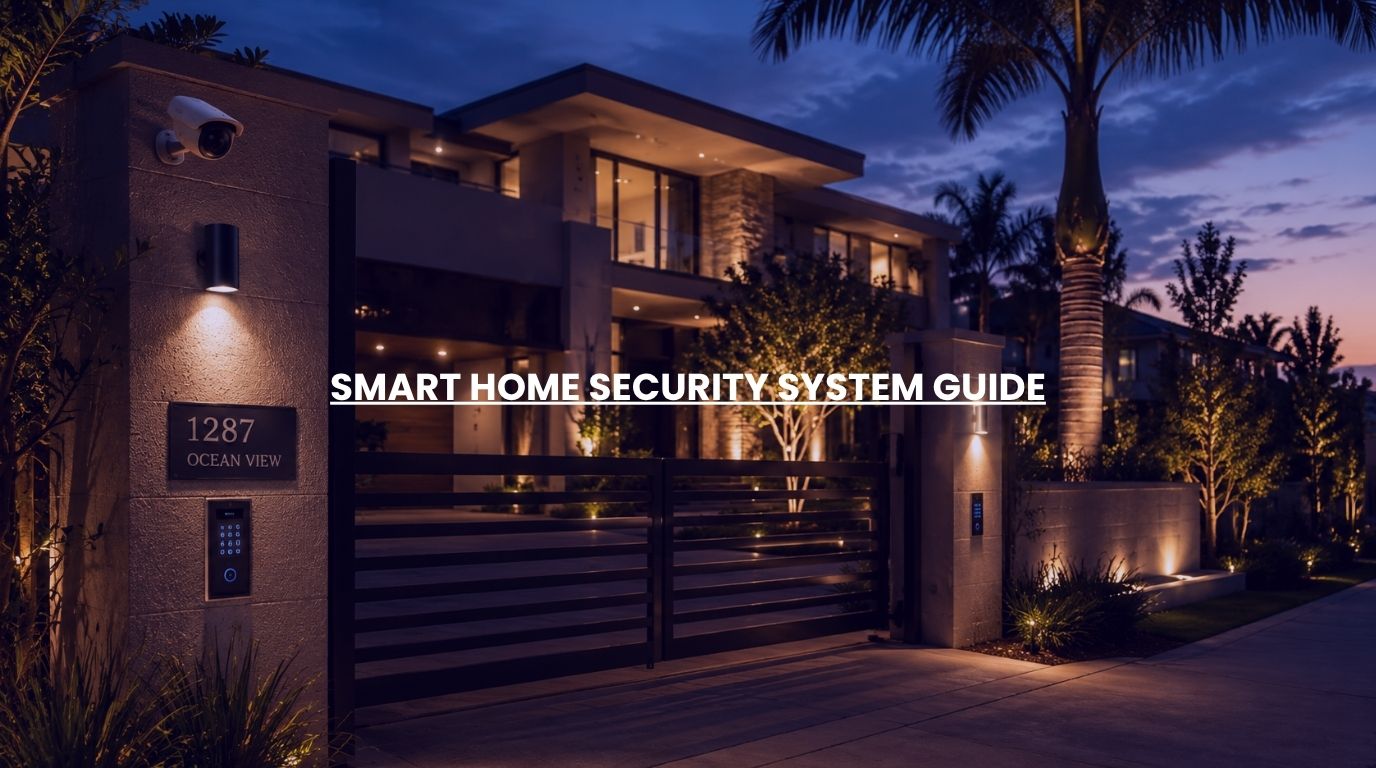
Home security is no longer limited to locks, gates, and alarm systems.
Today’s homeowners have access to advanced technologies that can monitor properties in real time, automate security responses, provide remote visibility, and integrate seamlessly with smart home automation systems.
However, many homeowners make the mistake of choosing security products before understanding their actual security requirements.
At Techtastic, we frequently meet homeowners who invest in cameras, alarms, and smart devices only to discover later that their systems don’t work together effectively or cannot expand as their needs evolve.
A well-designed home security system is about much more than individual devices. It’s about creating a comprehensive security ecosystem that protects your family, property, and lifestyle.
Before installing a home security system, several important considerations can significantly impact long-term performance, reliability, and peace of mind.
Summary
Before installing a home security system, homeowners should evaluate property layout, security objectives, camera placement, access control needs, networking infrastructure, automation integration, and future scalability. Modern security systems often include CCTV cameras, smart locks, video door phones, motion sensors, alarms, and centralized monitoring. The most effective solutions are designed as integrated ecosystems that combine surveillance, access management, automation, and remote monitoring to provide comprehensive protection and long-term flexibility.
Quick Answer
Before installing a home security system, homeowners should identify their security priorities, evaluate entry points, choose scalable technologies, ensure reliable networking infrastructure, and consider integration with smart home automation systems. Modern security solutions work best when cameras, access control, alarms, lighting, and monitoring tools operate together as part of a unified security ecosystem rather than as standalone devices.
Why Home Security Planning Matters
Security is one of the most important investments homeowners make.
A properly designed system helps:
- Protect family members
- Secure property
- Monitor activity
- Deter unwanted access
- Improve peace of mind
Unfortunately, poor planning can create:
- Blind spots
- Coverage gaps
- Inconsistent monitoring
- Integration issues
- Future upgrade limitations
This is why planning should always come before purchasing equipment.
Step 1: Identify Your Security Goals
Every property has unique security requirements.
Start by asking:
- What are you trying to protect?
- What areas require monitoring?
- Who needs access to the property?
- Do you travel frequently?
- Do you have children or elderly family members?
The answers help determine which technologies are most appropriate.
Step 2: Evaluate Entry Points
Most security incidents involve access points.
Common areas include:
- Main entrances
- Back doors
- Side entrances
- Garage access points
- Balconies
- Ground-floor windows
A professional security assessment helps identify vulnerable areas.
Understanding these entry points is essential before selecting devices.
Step 3: Choose the Right CCTV Strategy
Many homeowners assume security cameras alone provide complete protection.
In reality, camera placement is often more important than camera quantity.
Effective coverage typically includes:
Entry Monitoring
Capture activity around doors and gates.
Perimeter Coverage
Monitor property boundaries.
Driveway Surveillance
Track vehicle activity.
Common Areas
Increase visibility around key spaces.
A strategic approach improves both security and usability.
Step 4: Consider Smart Access Control
Traditional keys provide limited visibility.
Modern access control solutions include:
- Smart locks
- Biometric readers
- RFID credentials
- Mobile access
- PIN-based entry
Benefits include:
- Remote management
- Visitor control
- Activity logs
- Temporary access permissions
Access control has become one of the most valuable smart security features.
Step 5: Don’t Overlook Video Door Phones
Video door phones provide an additional layer of protection.
They allow homeowners to:
- Verify visitors
- Monitor deliveries
- Communicate remotely
- Improve visitor management
These systems are particularly useful for families and frequent travelers.
Step 6: Ensure Reliable Networking
A security system is only as reliable as the network supporting it.
Networking impacts:
- Camera performance
- Mobile access
- Remote monitoring
- Video storage
- System responsiveness
Key considerations include:
Structured Cabling
Provides stable connectivity.
Strong Wi-Fi Coverage
Supports wireless devices.
Network Security
Protects connected systems.
Reliable infrastructure improves overall system performance.
Step 7: Think Beyond Cameras
The most effective security systems combine multiple technologies.
Examples include:
- CCTV cameras
- Smart locks
- Motion sensors
- Alarm systems
- Access control
- Video door phones
- Smart lighting
When integrated, these systems provide significantly greater protection.
Step 8: Plan for Automation
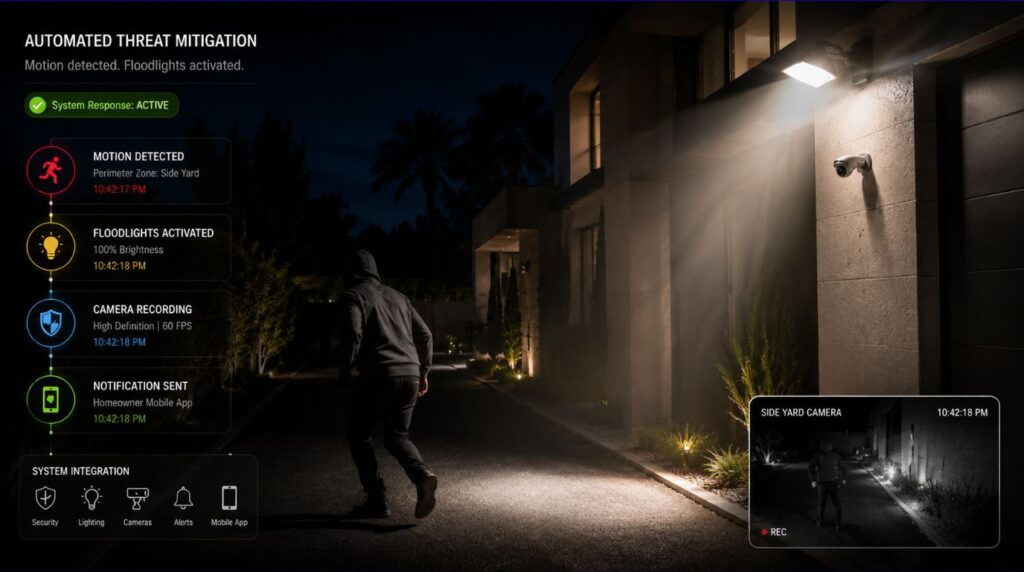
Modern security systems can respond intelligently to events.
For example:
Intrusion Scenario
If unauthorized access is detected:
- Cameras begin recording.
- Exterior lights activate.
- Notifications are sent.
- Security systems respond.
Automation transforms security from reactive to proactive.
Step 9: Plan for Future Expansion
Many homeowners add security features over time.
Future upgrades may include:
- Additional cameras
- Smart locks
- Gate automation
- Home automation integration
- Advanced monitoring
Scalable systems protect long-term investments.
Common Home Security System Installation Mistakes
Choosing Equipment Before Planning
Security goals should determine technology choices—not the other way around.
Ignoring Networking Requirements
Poor connectivity can undermine system performance.
Creating Camera Blind Spots
Strategic placement is more important than camera quantity.
Treating Security Devices Separately
Integrated systems provide better protection and user experiences.
Failing to Plan for Future Growth
Security needs often evolve.
Scalability is essential.
Traditional Security vs Smart Home Security
| Traditional Security | Smart Home Security |
|---|---|
| Standalone devices | Integrated ecosystem |
| Limited visibility | Real-time monitoring |
| Physical keys | Smart access control |
| Basic alarms | Intelligent automation |
| Local monitoring | Remote monitoring |
| Limited customization | Personalized security scenarios |
The difference extends far beyond convenience.
Security Features Families Value Most
Families often prioritize:
Smart Locks
Improve entry management and safety.
Video Door Phones
Enhance visitor verification.
Mobile Alerts
Provide real-time awareness.
Camera Monitoring
Increase visibility around the property.
Access Control
Manage family, staff, and visitor access.
These features contribute to both security and peace of mind.
Why It Matters for Modern Homes
Today’s homeowners expect more than basic protection.
They want systems that can:
- Adapt to changing needs
- Provide instant visibility
- Improve convenience
- Enhance security
- Integrate with automation
Modern home security systems are increasingly becoming a core component of connected living.
Our Perspective at Techtastic
At Techtastic, we believe effective security starts with understanding the homeowner’s lifestyle and property requirements.
Rather than focusing on individual products, we typically recommend a comprehensive approach that combines:
- Surveillance
- Access control
- Visitor management
- Smart lighting
- Automation
- Centralized monitoring
We’ve found that integrated security ecosystems consistently deliver better performance, usability, and long-term value than isolated devices.
The goal is not simply to install security technology—it’s to create safer, smarter environments.
Collaboration Opportunities for Developers, Architects & Interior Designers
The best security systems are planned during the design stage.
At Techtastic, we collaborate with:
- Architects
- Interior designers
- Luxury home builders
- Real estate developers
- Hospitality consultants
Security Infrastructure Planning
Design properties with integrated protection from day one.
Access Control Design
Create intelligent entry management systems.
Smart Home Security Integration
Ensure seamless compatibility with automation systems.
Surveillance Planning
Optimize coverage while preserving aesthetics.
Luxury Residential Projects
Deliver premium security experiences.
Hospitality & Commercial Applications
Implement scalable and future-ready security solutions.
Early planning results in stronger protection and cleaner installations.
Key Takeaways
- Security planning should happen before purchasing equipment.
- Cameras alone do not provide complete protection.
- Access control and visitor management are increasingly important.
- Reliable networking is essential for modern security systems.
- Automation enhances responsiveness and protection.
- Integrated security ecosystems provide the best long-term results.
Frequently Asked Questions
What should I consider before installing a home security system?
Evaluate your property layout, security goals, entry points, networking infrastructure, and future expansion plans.
Are security cameras enough to protect a home?
Cameras are valuable, but the best protection comes from integrating surveillance, access control, alarms, and automation.
What is the most important part of a home security system?
A comprehensive strategy that combines monitoring, access management, and automation.
Can home security systems be integrated with smart homes?
Yes. Modern systems can integrate with lighting, locks, alarms, and home automation platforms.
Do smart locks improve security?
They can improve visibility, access management, and remote control capabilities.
Why is networking important for security systems?
Network performance directly impacts monitoring, recording, alerts, and remote access.
Can I expand my security system later?
Yes. Scalable systems allow homeowners to add devices and capabilities over time.
Are home security systems worth the investment?
For many homeowners, improved safety, visibility, and peace of mind make security systems a valuable long-term investment.
Conclusion
Installing a home security system is one of the most important decisions homeowners make, but the best results come from planning rather than purchasing devices impulsively. By evaluating security goals, infrastructure requirements, access control needs, and future expansion opportunities, homeowners can create a more effective and adaptable security environment.
At Techtastic, we help homeowners, architects, and developers design integrated security ecosystems that combine surveillance, automation, access control, and smart home technologies into a seamless experience.
📞 Call/WhatsApp: 9769145145
📍 Our Operational Hubs: Navi Mumbai | Nashik | Lonavla | Sangli
Whether you’re building a new home or upgrading an existing property, understanding your requirements before installation is the first step toward creating a safer and smarter home.
Looking for the best features to start with? Check out our practical guide on What’s the Safest Way to Automate A Smart Door Lock in 2026? to plan a system that everyone can use effortlessly.