
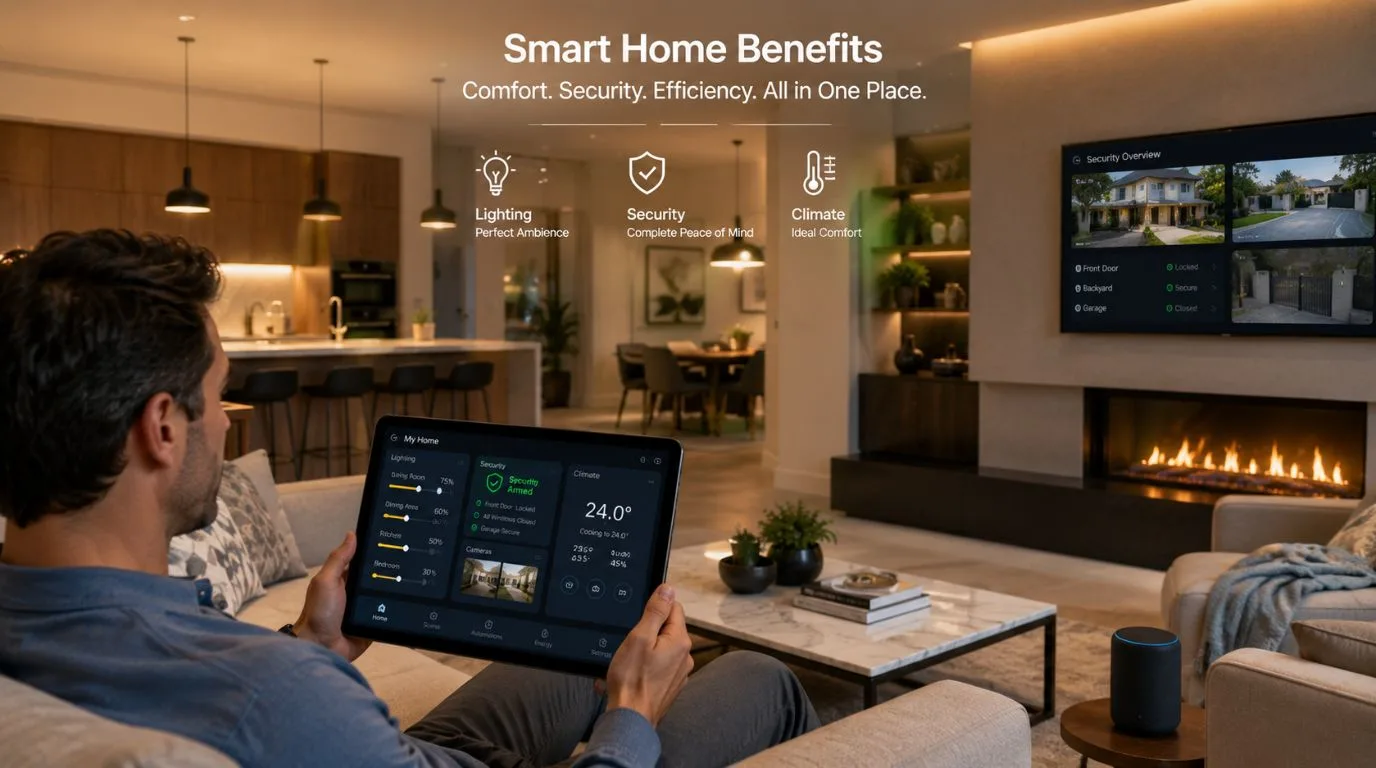
Summary
The biggest smart home benefits include greater convenience, improved security, enhanced energy efficiency, better comfort, and increased property value. However, smart homes also come with challenges such as higher upfront costs, compatibility issues, reliance on networking, and the need for proper planning. Professionally designed systems like KNX reduce many of these drawbacks by providing reliable, scalable, and integrated automation. For most homeowners, the long-term benefits outweigh the disadvantages when the system is carefully planned and installed.
Quick Answer
The real smart home benefits go far beyond controlling lights from your phone. A well-designed smart home can automate daily routines, improve security, reduce energy waste, and make your home more comfortable while increasing its long-term value. However, homeowners should also consider the upfront investment, choose compatible technologies, and plan for future expansion. The key isn’t simply buying smart devices; it’s building an integrated system that works reliably for years.
What Are the Real Pros and Cons of Smart Homes?
Smart homes are everywhere. You see advertisements promising:
- Voice-controlled lighting
- Smart locks
- Automated curtains
- AI-powered assistants
- Energy savings
- Remote home control
It sounds impressive. But many homeowners still wonder: “Are smart homes actually worth it?”
At Techtastic, we’ve worked with homeowners who absolutely love their automation systems, and we’ve also met people frustrated by disconnected gadgets and unreliable setups. The difference usually isn’t the technology: it’s the planning. The greatest smart home benefits come from designing an integrated system rather than adding random devices.
Let’s look at the real pros and cons of smart homes so you can make an informed decision.
What Is a Smart Home?
A smart home connects multiple systems so they can be controlled automatically or remotely.
Common smart home benefits include:
- Smart lighting
- Climate control
- Motorized curtains
- Smart locks
- CCTV cameras
- Video door phones
- Home theatres
- Multi-room audio
- Energy monitoring
The greatest smart home benefits come from creating a home that responds intelligently to your lifestyle rather than simply offering remote control.
The Biggest Smart Home Benefits
1. Everyday Convenience
This is the benefit homeowners notice first.
Instead of managing dozens of tasks manually, your home can automatically:
- Turn the lights on
- Close curtains
- Adjust the air conditioning
- Lock doors
- Activate security
Automation saves time every single day. This is one of the most noticeable smart home benefits for busy homeowners.
2. Better Home Security
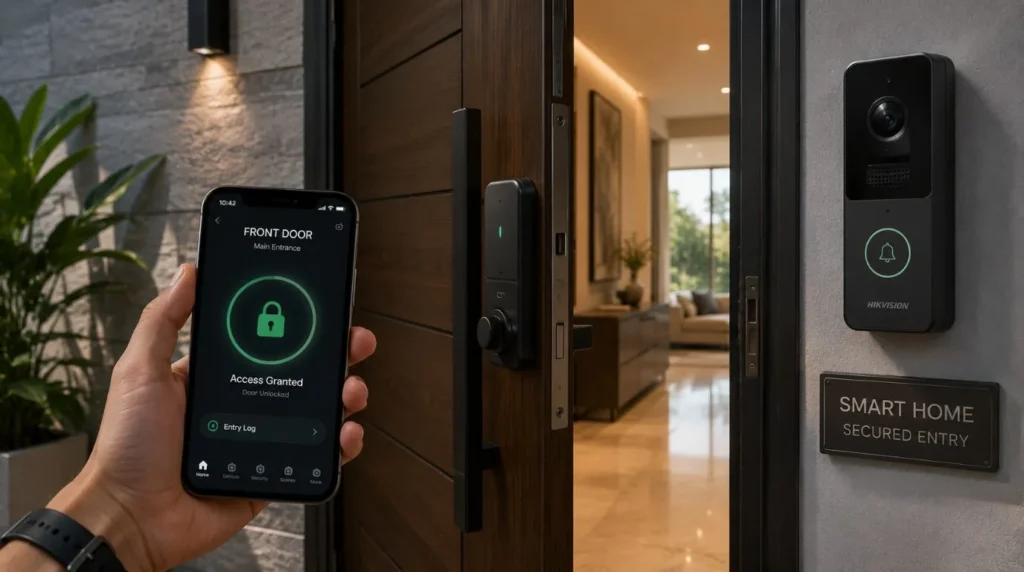
Smart homes improve security through:
- Smart locks
- CCTV cameras
- Motion sensors
- Video door phones
- Instant alerts
You can check on your home from almost anywhere and respond more quickly to unusual activity.
3. Greater Energy Efficiency
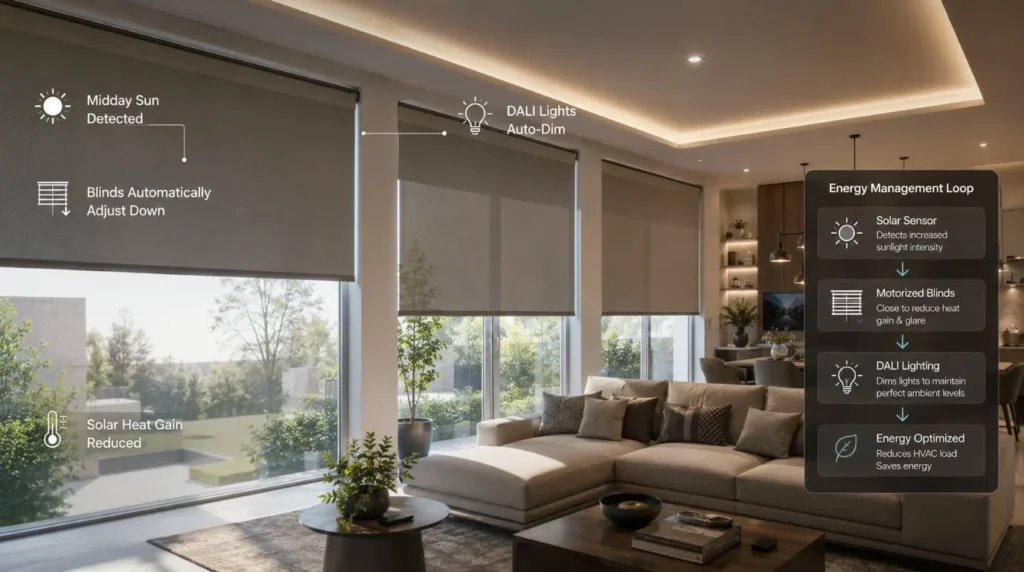
Automation helps reduce unnecessary electricity usage by:
- Switching off unused lights
- Adjusting air conditioning
- Managing motorized curtains
- Monitoring energy consumption
While savings vary, a well-configured system can significantly reduce energy waste.
4. Improved Comfort
Imagine your home automatically:
- Cooling your bedroom before bedtime
- Opening curtains every morning
- Adjusting lighting throughout the day
- Creating the perfect movie-night atmosphere
Comfort becomes effortless.
5. Increased Property Value
Modern buyers increasingly appreciate homes with professionally installed smart technology.
Features like integrated lighting, security, and energy management can make premium homes more attractive in competitive markets.
6. Accessibility
For older adults and people with mobility challenges, smart homes offer meaningful benefits.
Voice control and automation can simplify everyday tasks such as:
- Operating lights
- Opening curtains
- Locking doors
- Adjusting temperature
Technology becomes more inclusive.
7. Future Readiness
A scalable smart home can easily expand to include:
- Solar integration
- EV charging
- Battery storage
- Advanced energy management
- New automation features
Planning protects your investment.
The Real Drawbacks of Smart Homes
While the benefits of smart homes are significant, it’s equally important to understand the potential challenges before investing.
1. Higher Initial Investment
Quality automation systems require an upfront investment in:
- Hardware
- Installation
- Programming
- Networking
However, choosing the cheapest option often leads to higher upgrade costs later.
2. Poor Planning Can Cause Problems
Many homeowners buy devices one at a time.
The result can be:
- Multiple apps
- Compatibility issues
- Inconsistent performance
Planning first avoids these frustrations.
3. Networking Matters
Weak Wi-Fi or poor network design can affect connected devices. Reliable networking is essential for a dependable smart home.
4. Learning New Technology
Although modern systems are easy to use, there is a short learning period while homeowners become familiar with apps, automation scenes, and voice commands.
Professional installers usually provide training to make this transition easier.
5. Device Compatibility
Not every smart device works with every platform. Choosing a unified ecosystem from the beginning reduces compatibility issues.
Common Smart Home Myths
“Smart homes are only for luxury villas.”
Not true. Apartments and smaller homes can also benefit from automation.
“Smart homes stop working if the internet goes down.”
Many professionally designed systems continue operating locally even during internet outages.
“They’re too complicated.”
A well-designed smart home should actually simplify your daily life.
“They’re only about gadgets.”
The best smart homes focus on improving how you live and not on adding technology for its own sake.
Wi-Fi Smart Homes vs KNX Home Automation
| Feature | Wi-Fi Smart Home | KNX Home Automation |
|---|---|---|
| Initial cost | Lower | Higher |
| Reliability | Good | Excellent |
| Scalability | Moderate | Outstanding |
| Whole-home integration | Limited | Excellent |
| Local operation | Limited | Yes |
| Long-term support | Moderate | Excellent |
Professional platforms such as KNX home automation reduce many of the common drawbacks associated with consumer smart devices by providing a stable, integrated automation infrastructure.
Is a Smart Home Worth It?
These smart home benefits help create homes that are more comfortable, efficient, and ready for future technologies.
Especially if you value:
- Convenience
- Security
- Comfort
- Energy efficiency
- Long-term property value
The key is choosing technology that fits your lifestyle and planning for future expansion.
Common Mistakes to Avoid
Buying Individual Gadgets Without a Plan
Create a long-term automation strategy first.
Choosing Only Based on Price
Consider reliability and future support.
Ignoring Networking
Your smart home depends on strong connectivity.
Mixing Too Many Brands
One ecosystem creates a much better experience.
Skipping Professional Advice
Expert planning prevents expensive upgrades later.
Why It Matters for Modern Homes
Smart homes are no longer just about convenience.
They’re becoming an important part of:
- Sustainable living
- Home security
- Energy management
- Modern property design
These smart home benefits help create homes that are more comfortable, efficient, and ready for future technologies.
Our Perspective at Techtastic
At Techtastic, we’ve learned that homeowners rarely regret investing in automation. They usually regret not planning it properly.
Our approach isn’t about filling your home with the latest gadgets. It’s about understanding how you live and designing a system that quietly supports your daily routines. In our view, the best smart home benefits come from thoughtful planning rather than simply adding more devices.
Whether it’s lighting, climate control, motorized curtains, security, entertainment, or energy management, we believe the best smart homes are the ones you barely notice because everything works.
Collaboration Opportunities for Developers, Architects & Interior Designers
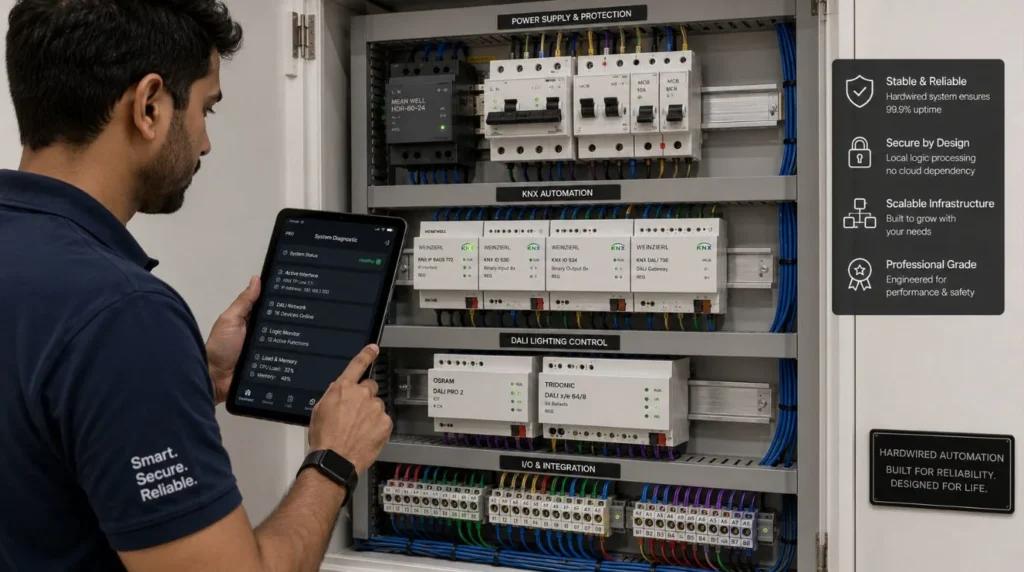
Planning automation early allows homeowners to experience the full smart home benefits from day one.
At Techtastic, we collaborate with:
- Architects
- Interior designers
- Residential developers
- Luxury home builders
- Hospitality consultants
- Commercial project planners
Smart Home Master Planning
Design technology around architecture.
KNX System Design
Build scalable automation infrastructure.
Lighting & Interior Integration
Blend aesthetics with intelligent control.
Structured Networking
Create reliable digital foundations.
Premium Residential Projects
Deliver exceptional connected living experiences.
Future-Ready Developments
Design homes that remain valuable for decades.
Early collaboration results in cleaner installations, easier maintenance, and better homeowner satisfaction.
Key Takeaways on Smart Home Benefits
- Smart homes improve convenience, security, comfort, and energy efficiency.
- The biggest drawbacks usually come from poor planning rather than the technology itself.
- Strong networking and compatible devices are essential for reliable performance.
- The biggest smart home benefits come from automation that simplifies everyday living.
- Professionally integrated systems offer greater scalability and long-term value.
- Home automation can enhance accessibility and increase property appeal.
- Choosing the right platform today makes future upgrades much easier.
- A smart home should simplify life and not make it more complicated.
Frequently Asked Questions
1. What are the biggest smart home benefits?
A. The main smart home benefits include greater convenience, improved security, better energy efficiency, enhanced comfort, and the ability to automate everyday routines.
2. What are the disadvantages of smart homes?
A. Potential drawbacks include higher upfront costs, compatibility challenges, reliance on good networking, and the need for proper planning and installation.
3. Are smart home benefits worth the investment?
A. For many homeowners, yes. A well-designed smart home provides long-term value through convenience, efficiency, security, and future scalability.
4. Do smart homes increase property value?
A. Professionally integrated smart home features can make a property more appealing, particularly in premium residential markets.
5. Will my smart home stop working if the internet goes down?
A. Not necessarily. Many advanced systems, including KNX-based automation, continue operating locally even if the internet connection is unavailable.
6. Are smart homes difficult to use?
A. No. Modern smart homes are designed to be intuitive, with control through wall switches, touch panels, mobile apps, and voice assistants.
7. Is professional installation necessary?
A. DIY solutions work well for simple devices, but professional installation is recommended for integrated lighting, climate control, security, and whole-home automation systems.
8. Which smart home system is the most reliable?
A. Professionally designed platforms such as KNX are widely regarded as among the most reliable options for whole-home automation because they are scalable, secure, and designed for long-term performance.
Conclusion
The real smart home benefits extend far beyond convenience. When thoughtfully planned, a smart home can improve security, reduce energy waste, enhance comfort, simplify everyday routines, and even increase your property’s long-term value. While there are challenges such as upfront costs and choosing compatible technologies, most of these can be minimized through careful planning and by investing in a scalable automation platform rather than a collection of disconnected devices.
At Techtastic, we believe a smart home should make life easier and not more complicated.
📞 Call/WhatsApp: 9769145145
📍 Our Operational Hubs: Navi Mumbai | Nashik | Lonavla | Sangli
Whether you’re upgrading an apartment, building a new home, or planning a fully integrated KNX automation system, we help homeowners create reliable, future-ready solutions that blend seamlessly into everyday life. The long-term smart home benefits are greatest when automation is planned around your lifestyle and future needs. With the right strategy, a smart home becomes more than a technology upgrade: it becomes a smarter way to live.
Wondering how to manage all these requirements? Read our expert guide on 5 Critical Differences: Home Automation System vs Smart Home to discover the best way to automate your system’s infrastructure.