
Summary
Whether a smart home is worth it depends heavily on your lifestyle, long-term goals, and the type of automation infrastructure you choose. While basic smart devices provide entry-level convenience at a relatively low cost, professionally designed ecosystems prove a smart home worth it by offering much greater value through improved comfort, security, energy efficiency, and future scalability. For homeowners building or renovating a property, investing in a well-planned automation system can enhance daily living while increasing the home’s long-term appeal and functionality.
Quick Answer
Yes, for many homeowners, a smart home is worth it. The value extends beyond controlling lights with your phone. A professionally planned smart home improves convenience, enhances security, optimizes energy usage, increases comfort, and prepares your property for future technology. The key is investing in the right automation system rather than buying random smart gadgets that don’t work together.
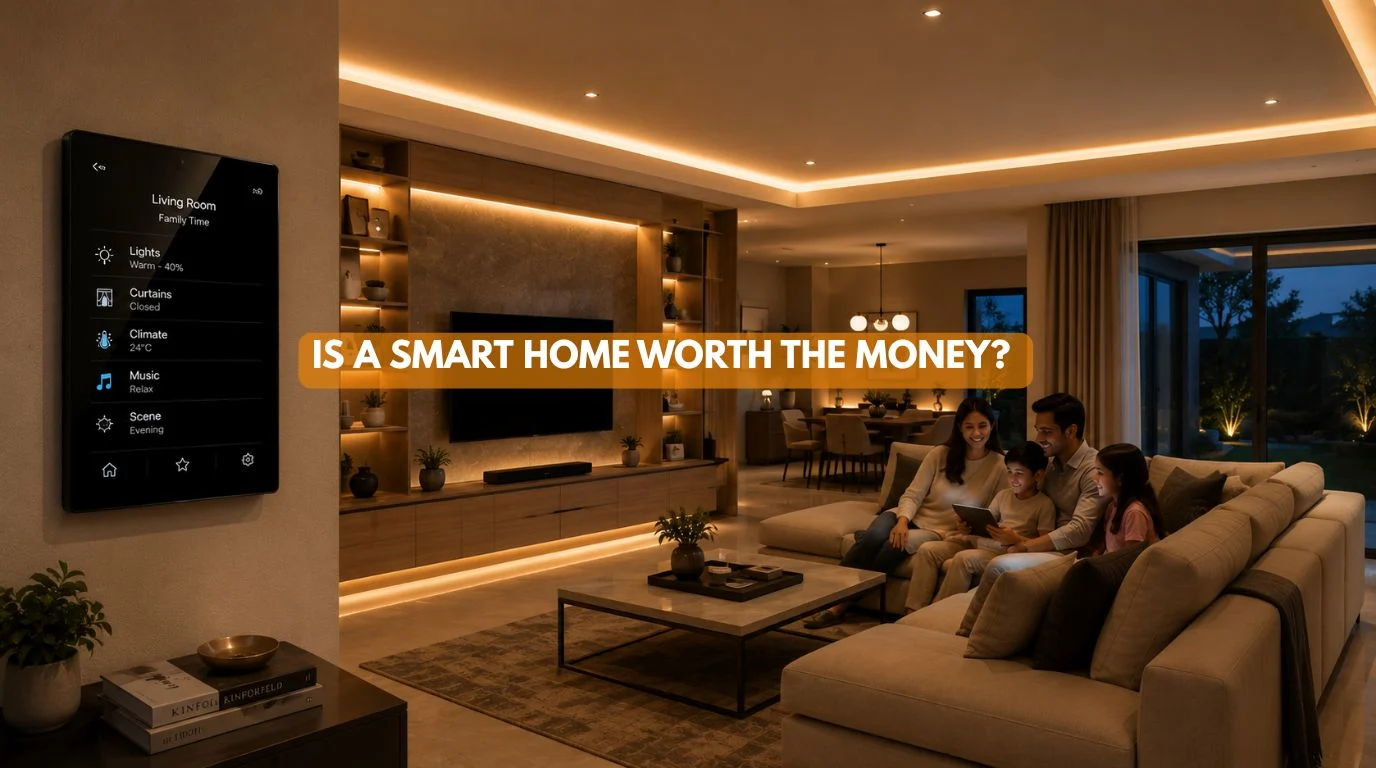
Is a Smart Home Worth the Money?
Ten years ago, smart homes were considered a luxury. Today, they’re becoming a standard feature in modern residences. Yet many homeowners still pause before upgrading and ask themselves a crucial question: Is a smart home worth it?
It’s a fair question. After all, home automation requires an investment. So before spending on smart lighting, security, motorized curtains, or climate control, it’s important to understand what you’re actually paying for.
At Techtastic, we’ve helped homeowners, architects, and developers create automated spaces across a wide range of budgets. One thing we’ve learned is this: figuring out if a smart home worth it comes down to how that technology improves your everyday life. Let’s explore whether it’s the right investment for you.
What Does “Smart Home” Actually Mean?
A smart home connects multiple systems so they work together automatically. Instead of controlling each device separately, your home can intelligently manage:
- Lighting
- Air conditioning
- Motorized curtains
- Security
- Door locks
- Entertainment
- Energy monitoring
The goal isn’t simply remote control. It’s creating a home that responds to your daily routines.
What Are You Actually Paying For?
Many people think they’re buying smart gadgets. In reality, you’re investing in an ecosystem that makes a smart home worth it:
- Convenience
- Time savings
- Security
- Comfort
- Energy efficiency
- Future flexibility
A properly designed smart home becomes part of the home’s infrastructure rather than just another electronic device.
Benefit 1: Everyday Convenience
Imagine leaving home with one tap.
Your home automatically:
- Turns off lights
- Locks doors
- Closes curtains
- Activates security
- Switches the AC to eco mode
Or imagine waking up to:
- Gradually opening curtains
- Soft lighting
- Comfortable room temperature
These small conveniences add up every day.
Benefit 2: Better Home Security
Smart home systems can improve security through:
- Smart locks
- CCTV cameras
- Motion sensors
- Video door phones
- Remote monitoring
You’ll know what’s happening at home whether you’re inside or travelling, proving that peace of mind makes a smart home worth it.
Benefit 3: Energy Savings
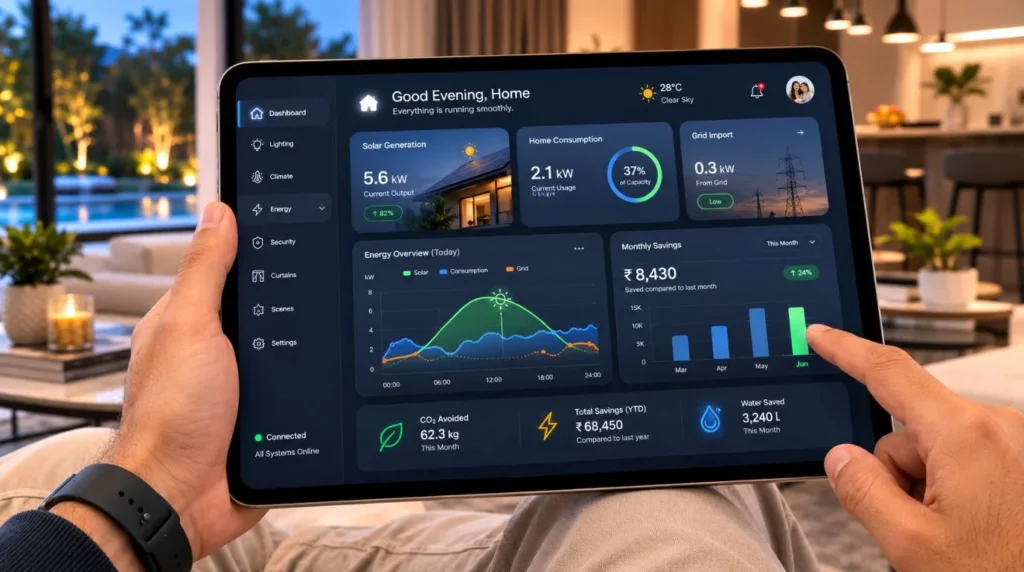
Automation can help reduce unnecessary electricity usage.
Examples include:
- Lights turning off in empty rooms
- AC adjusting automatically
- Curtains reducing solar heat gain
- Occupancy-based lighting
While the savings vary from home to home, automation helps eliminate waste rather than relying on manual habits.
Benefit 4: Increased Comfort
A smart home quietly adapts to your lifestyle.
Instead of constantly adjusting switches and thermostats, your home automatically creates comfortable environments throughout the day. Comfort isn’t about more technology. It’s about fewer decisions.
Benefit 5: Future-Proofing Your Home
Technology changes quickly.
Choosing a scalable platform allows you to add features later, such as:
- Solar integration
- EV charging
- Advanced security
- Energy management
- Water monitoring
Planning protects your investment.
Smart Home Costs vs Long-Term Value
The initial investment varies depending on:
- Home size
- Number of rooms
- Automation features
- Installation complexity
- Platform selection
Rather than asking: “How much does it cost?” A better question is: “How much value will it provide over the next 10–15 years?”
When evaluating the whole-home smart home worth, the underlying framework matters:
Wi-Fi Smart Home vs KNX Home Automation
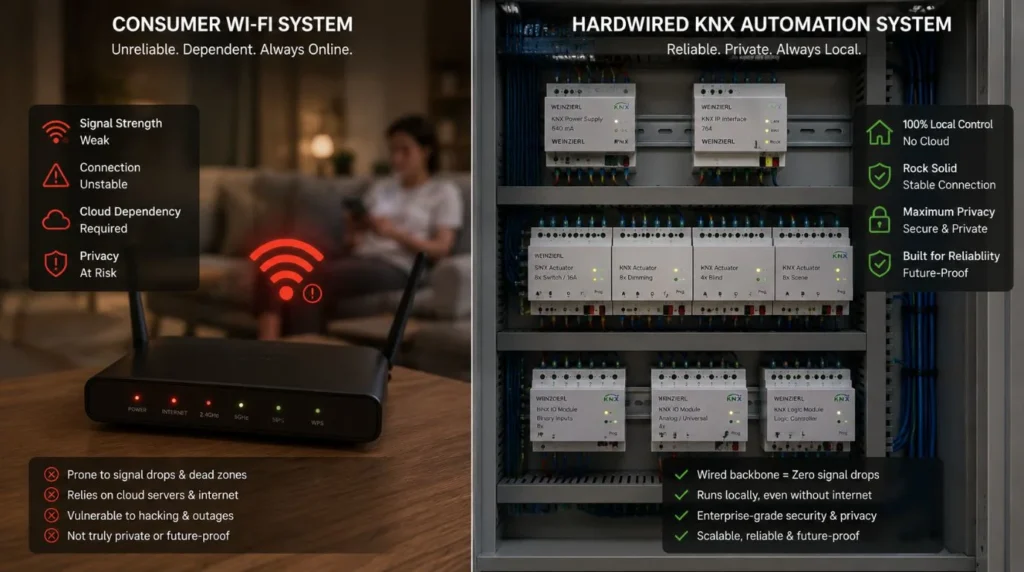
| Feature | Wi-Fi Smart Home | KNX Home Automation |
|---|---|---|
| Initial investment | Lower | Higher |
| Best for | Apartments & small homes | Villas & premium homes |
| Reliability | Good | Excellent |
| Scalability | Moderate | Outstanding |
| Local operation | Limited | Yes |
| Whole-home integration | Limited | Complete |
If you’re planning long-term automation, professional systems often provide greater value despite higher upfront costs.
Who Gets the Most Value?
An integrated smart home worth it strategy is especially lucrative if you:
- Are building a new home
- Are renovating
- Have a large property
- Travel frequently
- Want better security
- Value convenience
- Plan to stay in the home for several years
The more time you spend in your home, the greater the return on your investment.
Common Misconceptions
“Smart Homes Are Only for Luxury Villas”
Not anymore. Automation can begin with one room and grow over time.
“They’re Too Complicated”
Modern systems are designed to simplify life, not complicate it.
“They’re Just About Turning Lights On and Off”
Lighting is only one part of today’s smart homes. Modern systems integrate climate control, security, entertainment, and energy management.
“They Become Obsolete Quickly”
Professionally designed systems are built with expansion and software updates in mind, making a professional smart home worth it over DIY gadgets.
Can a Smart Home Increase Property Value?
While no technology guarantees a specific increase in resale value, professionally integrated smart home features often make premium homes more attractive to buyers.
Features such as:
- Smart lighting
- Integrated security
- Climate automation
- Energy management
Improve a property’s appeal in competitive real estate markets.
Is It Better to Start Small?
Absolutely.
Many homeowners begin with:
- Smart lighting
- Smart switches
- Security
Later, they expand into:
- Motorized curtains
- Climate control
- Entertainment
- Energy monitoring
Starting with a scalable platform makes future upgrades much easier.
Why It Matters for Modern Homes
Modern homeowners expect more than basic electrical systems.
They expect homes that are:
- Comfortable
- Secure
- Efficient
- Easy to manage
Smart home technology helps deliver these expectations while preparing homes for future innovations.
Our Perspective at Techtastic
At Techtastic, we don’t believe a smart home should be viewed as a luxury purchase. We see a well-planned smart home worth it choice as a long-term investment in the quality of everyday living.
Our goal isn’t to fill homes with technology. It’s to remove small daily inconveniences through thoughtful automation that feels natural, reliable, and almost invisible.
When lighting, climate control, security, motorized curtains, and entertainment work together seamlessly, homeowners spend less time managing their home and more time enjoying it. That’s where the real smart home worth lies.
Collaboration Opportunities for Developers, Architects & Interior Designers
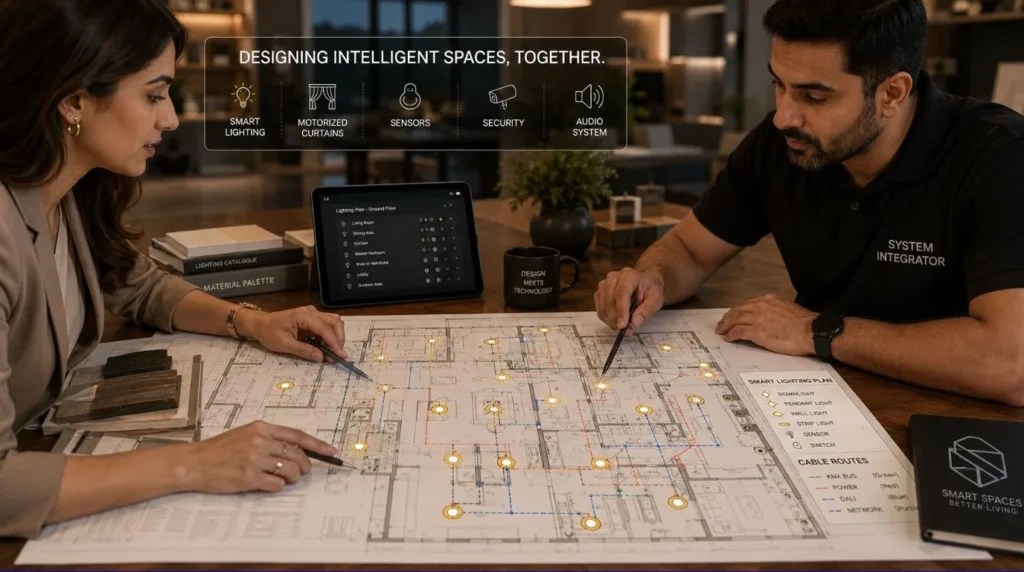
The best smart homes begin before construction is complete.
At Techtastic, we collaborate with:
- Architects
- Interior designers
- Residential developers
- Luxury home builders
- Hospitality consultants
- Commercial project planners
Smart Home Planning
Design automation alongside architecture.
KNX Infrastructure
Build scalable automation systems.
Smart Lighting Design
Create intuitive living experiences.
Structured Networking
Support reliable connected homes.
Premium Residential Projects
Deliver exceptional smart living.
Future-Ready Developments
Create homes prepared for evolving technologies.
Planning automation early reduces costs while improving long-term flexibility and the smart home worth.
Key Takeaways: Is a Smart Home Worth It?
- A smart home offers value through convenience, security, comfort, and energy efficiency.
- The biggest benefits come from integrated systems rather than standalone gadgets.
- Smart homes are suitable for apartments, family homes, and luxury villas.
- Professional planning improves reliability and future scalability, in turn making the smart home worth it.
- Starting small is perfectly acceptable if you choose a system that can grow.
- KNX provides one of the most reliable platforms for long-term whole-home automation.
- The real return on investment comes from improving everyday living, not simply adding technology.
Frequently Asked Questions
1. Is a smart home worth the money?
A. For many homeowners, yes. A well-planned smart home improves convenience, security, comfort, energy efficiency, and long-term flexibility, making it a worthwhile investment.
2. Does a smart home save money?
A. Automation can reduce unnecessary electricity usage through scheduled lighting, climate control, occupancy sensing, and energy monitoring. Savings vary depending on usage and system design.
3. Are smart homes only for luxury houses?
A. No. Smart home technology is available for apartments, independent homes, and luxury villas, with solutions suited to different budgets.
4. Can I build a smart home gradually?
A. Yes. Many homeowners start with lighting and security before expanding into climate control, motorized curtains, entertainment, and energy management.
5. Is KNX worth the investment?
A. For homeowners planning whole-home automation, KNX offers exceptional reliability, scalability, and integration, making it a strong long-term investment.
6. Will a smart home increase my property’s value?
A. Professionally integrated smart home features can enhance a home’s appeal, particularly in premium residential markets, although resale value depends on many factors.
7. Is professional installation necessary?
A. For integrated automation systems, professional installation helps ensure better performance, reliability, and room for future expansion.
8. What’s the biggest benefit of a smart home?
A. For most homeowners, the greatest benefit is the combination of convenience, comfort, security, and automation that simplifies everyday life.
Conclusion on Is a Smart Home Worth It?
Whether a smart home is worth it ultimately depends on how much you value convenience, comfort, security, and future readiness. While the initial investment may be higher than traditional electrical systems, a thoughtfully designed smart home continues to deliver benefits every day through automated routines, improved energy efficiency, enhanced safety, and seamless control of your living environment. The greatest value comes not from owning smart devices but from having a home that works intelligently around your lifestyle.
At Techtastic, we believe the best smart homes are designed with the future in mind.
📞 Call/WhatsApp: 9769145145
📍 Our Operational Hubs: Navi Mumbai | Nashik | Lonavla | Sangli
Whether you’re planning a new build, renovating an existing property, or beginning with a few smart upgrades, we help homeowners create automation systems that are reliable, scalable, and easy to use. With the right planning, you will quickly see that making your smart home worth is a lasting investment in better everyday living.
Ready to take the next step? Explore our comprehensive breakdown on Smart Home Value: Is Automation a Good Investment in 2026? to see how these requirements translate into real-world value for your property.