
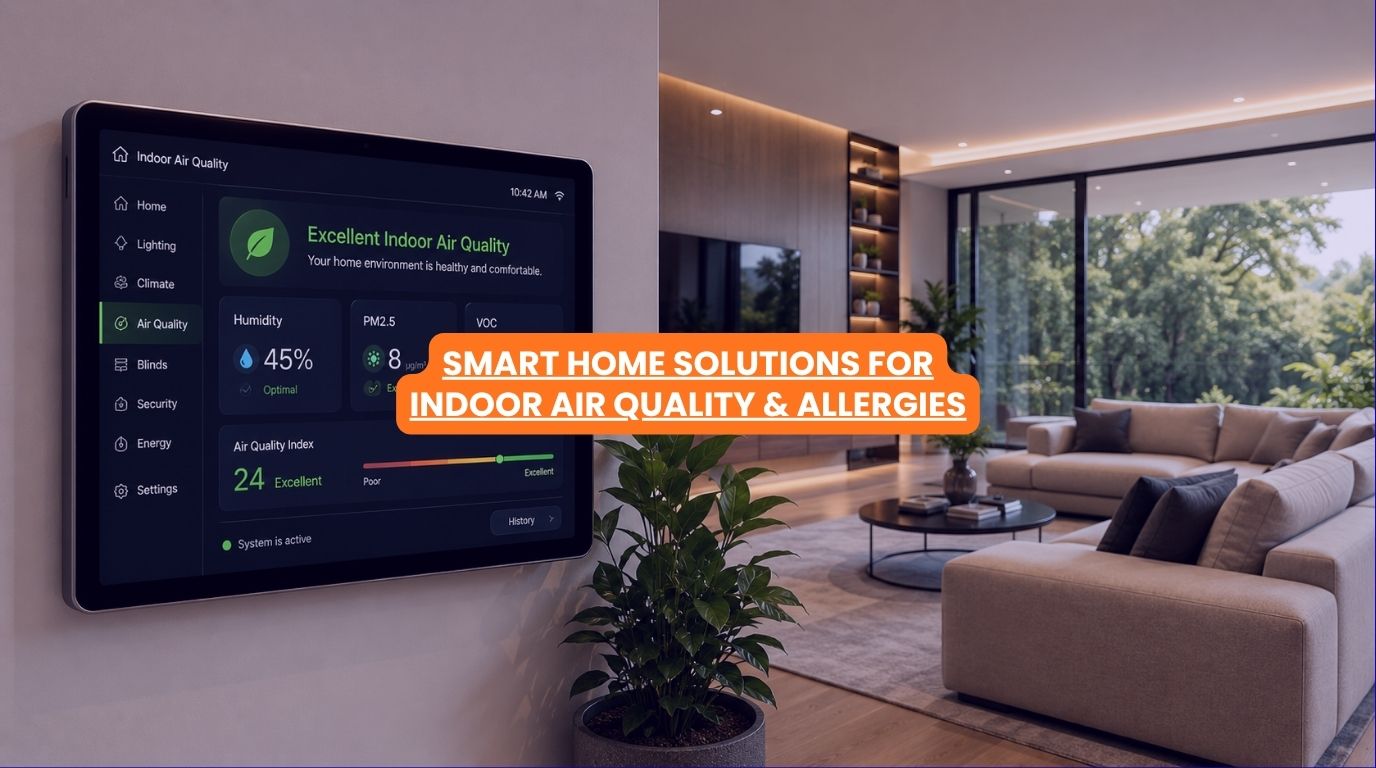
When people think about home automation, they usually focus on convenience features such as smart lighting, motorized curtains, security systems, and entertainment controls. However, one of the most overlooked benefits of a smart home is its ability to create a healthier living environment.
For millions of homeowners, indoor air quality has become an increasing concern. Dust, pollen, pet dander, mold spores, humidity imbalances, and airborne pollutants can all affect comfort and well-being, particularly for individuals with allergies, asthma, or respiratory sensitivities.
At Techtastic, we’re seeing more homeowners ask how smart home technology can contribute to healthier indoor environments.
The answer is surprisingly significant. Modern home automation systems can monitor air quality, control ventilation, automate purification systems, manage humidity levels, and help maintain cleaner indoor air throughout the day.
Let’s explore how smart homes can contribute to better indoor air quality and allergy management.
Summary
Home automation can help improve indoor air quality by monitoring air conditions, controlling HVAC systems, managing humidity levels, automating air purifiers, and optimizing ventilation. Smart sensors can detect pollutants, allergens, temperature fluctuations, and indoor environmental changes, allowing automation systems to respond automatically. While home automation does not eliminate allergies, it can help create a healthier, more comfortable indoor environment by improving air quality and reducing common allergy triggers.
Quick Answer
Yes, home automation can help improve indoor air quality and reduce exposure to common allergy triggers. Smart sensors, automated HVAC controls, air purifiers, humidity management systems, and ventilation automation can work together to monitor and maintain healthier indoor environments. While automation cannot cure allergies, it can help reduce airborne particles, improve ventilation, and create more consistent indoor comfort for homeowners and families.
Why Indoor Air Quality Matters
Many homeowners assume outdoor pollution is the primary concern.
In reality, indoor air can often contain:
- Dust particles
- Pet dander
- Pollen
- Mold spores
- Volatile Organic Compounds (VOCs)
- Cooking emissions
- Smoke particles
- Excess humidity
Because people spend a large portion of their time indoors, indoor air quality can significantly impact overall comfort and wellness.
Poor indoor air quality may contribute to:
- Allergy symptoms
- Respiratory discomfort
- Headaches
- Fatigue
- Sleep disturbances
Maintaining healthier indoor environments has become increasingly important in modern homes.
How Home Automation Improves Indoor Air Quality
1. Air Quality Monitoring
The first step toward healthier air is understanding what’s happening inside the home.
Smart air quality sensors can monitor:
- Particulate matter (PM2.5)
- Carbon dioxide levels
- VOCs
- Temperature
- Humidity
These sensors provide real-time visibility into indoor conditions.
Rather than guessing, homeowners can make informed decisions based on actual environmental data.
2. Automated HVAC Control
Heating, ventilation, and air conditioning systems play a major role in indoor air quality.
- Adjust airflow automatically
- Increase ventilation when needed
- Optimize filtration cycles
- Improve air circulation
This helps maintain healthier indoor conditions throughout the day.
3. Smart Air Purifier Integration
Many modern air purifiers can integrate with home automation platforms.
This allows systems to:
- Activate automatically when pollutants rise
- Adjust purification levels based on sensor readings
- Run efficiently when air quality changes
Automation ensures air purification responds proactively rather than manually.
4. Humidity Management
Humidity levels directly impact comfort and air quality.
Excess humidity may encourage:
- Mold growth
- Dust mites
- Musty odors
Low humidity may contribute to:
- Dry skin
- Respiratory irritation
- Discomfort
Smart automation can maintain ideal humidity levels automatically.
5. Ventilation Automation
Fresh air circulation is essential for indoor air quality.
Automation can help:
- Control mechanical ventilation systems
- Increase airflow during specific conditions
- Improve indoor freshness
Proper ventilation reduces the accumulation of indoor pollutants.
Common Allergy Triggers Smart Homes Can Help Manage
Dust
Smart HVAC scheduling and filtration support cleaner indoor environments.
Pet Dander
Air quality monitoring and purification systems help reduce airborne particles.
Pollen
Automated climate control can help manage indoor air conditions while limiting exposure during peak pollen periods.
Mold
Humidity automation helps reduce conditions that support mold growth.
Airborne Pollutants
Smart filtration and purification systems help improve overall air quality.
Smart Home Features That Support Healthier Air
Air Quality Sensors
Provide real-time environmental monitoring.
Smart HVAC Controls
Optimize airflow and filtration.
Automated Air Purifiers
Respond automatically to changing air conditions.
Smart Ventilation Systems
Improve fresh air circulation.
Humidity Sensors
Maintain healthy indoor moisture levels.
Motorized Curtains
This may surprise some homeowners.
Motorized curtains can contribute indirectly by:
- Managing solar heat gain
- Supporting temperature control
- Reducing HVAC strain
Environmental comfort often works best as an integrated system.
Can Home Automation Actually Reduce Allergies?
It’s important to be realistic.
Home automation does not cure allergies.
However, it can help reduce exposure to common environmental triggers by:
- Improving filtration
- Monitoring air quality
- Managing humidity
- Increasing ventilation
- Automating purification systems
For many homeowners, these improvements contribute to a healthier indoor environment.
How Much Does a Smart Indoor Air Quality System Cost?
The cost of improving indoor air quality with smart home technology depends on the size of your home, the number of rooms you want to monitor, and the level of automation you require. A basic setup may include a standalone air quality monitor and a smart air purifier, while a professionally designed system can integrate HVAC controls, ventilation, humidity management, motorized curtains, and centralized automation into one intelligent ecosystem.
Factors that influence the overall investment include:
- Number of air quality sensors
- Smart thermostats and HVAC controls
- Automated air purifiers
- Humidifiers and dehumidifiers
- Ventilation systems
- Smart motorized curtains
- KNX or other professional automation platforms
- Installation, programming, and ongoing support
Rather than viewing these components as individual devices, homeowners should think of them as part of a long-term wellness strategy. Professionally integrated systems provide more consistent air quality, better energy efficiency, and the flexibility to expand as household needs change.
At Techtastic, we design environmental automation systems that balance comfort, health, and long-term performance.
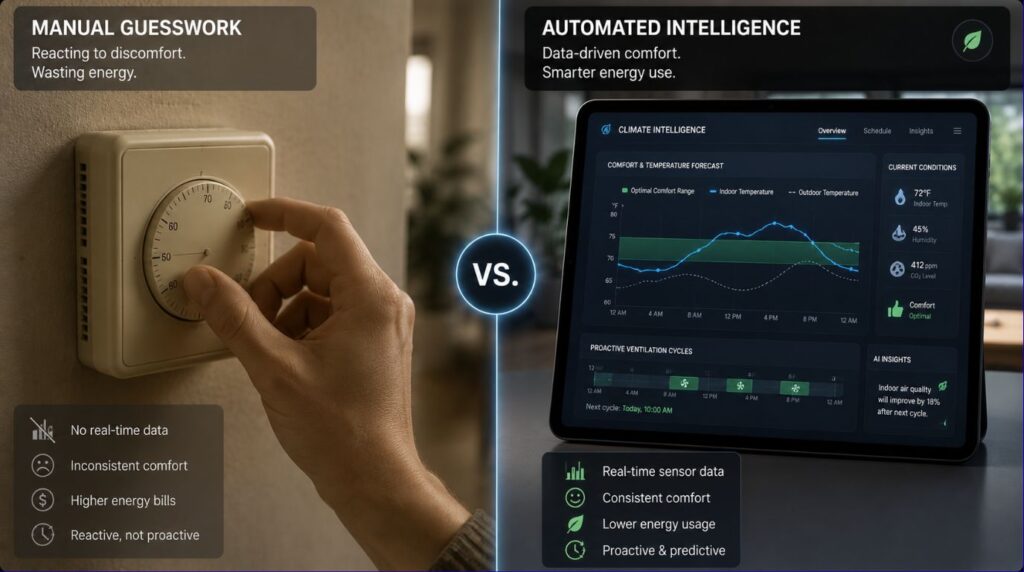
Smart Home Air Quality vs Traditional Home Management
| Traditional Approach | Smart Home Approach |
|---|---|
| Manual monitoring | Continuous monitoring |
| Reactive responses | Automated responses |
| Limited visibility | Real-time insights |
| Inconsistent control | Optimized environmental management |
| Guesswork | Data-driven decisions |
The result is greater consistency and awareness.
Why Families Benefit Most
Families with:
- Young children
- Elderly residents
- Allergy sufferers
- Asthma concerns
- Pets
Often benefit significantly from better indoor environmental management.
A healthier indoor environment supports comfort for every member of the household.
Why It Matters for Modern Homes
Today’s homeowners increasingly expect their homes to support:
- Wellness
- Comfort
- Energy efficiency
- Sustainability
- Connected living
Indoor air quality is becoming an important part of this conversation.
The future of home automation is not just about convenience—it is also about creating healthier living environments.
Our Perspective at Techtastic
At Techtastic, we believe smart homes should enhance both lifestyle and well-being.
When designing automation systems, we often encourage homeowners to consider environmental factors alongside traditional automation features.
We typically recommend integrating:
- Air quality monitoring
- Smart HVAC controls
- Humidity management
- Ventilation automation
- Scalable environmental sensors
These solutions help create smarter homes that are not only more convenient but also healthier and more comfortable.
As indoor wellness becomes a growing priority, environmental automation is becoming an increasingly valuable part of modern smart home design.
Collaboration Opportunities for Developers, Architects & Interior Designers
Health-focused home design begins during project planning.
At Techtastic, we collaborate with:
- Architects
- Interior designers
- Luxury home builders
- Residential developers
- Hospitality consultants
- Wellness-focused property designers
Healthy Home Planning
Design living spaces that prioritize comfort and wellness.
Indoor Air Quality Infrastructure
Prepare properties for smart environmental monitoring.
HVAC & Ventilation Integration
Support healthier indoor environments.
Smart Environmental Automation
Create homes that actively respond to changing conditions.
Luxury Residential Projects
Deliver premium wellness-focused living experiences.
Hospitality & Commercial Applications
Implement advanced environmental monitoring and control systems.
Early planning allows wellness technology to become a seamless part of the overall design.
Key Takeaways
- Home automation can help improve indoor air quality.
- Smart sensors provide continuous environmental monitoring.
- HVAC automation improves airflow and filtration.
- Air purifier integration helps manage airborne pollutants.
- Humidity control reduces common allergy triggers.
- Smart homes support healthier and more comfortable living environments.
Frequently Asked Questions
1. Can home automation improve indoor air quality?
A: Yes. Smart home systems can monitor air quality, automate ventilation, control humidity, and manage air purification systems.
2. Can smart homes help people with allergies?
A: While automation cannot cure allergies, it can help reduce exposure to common indoor allergens and improve environmental conditions.
3. What smart devices help improve air quality?
A: Air quality sensors, smart HVAC controls, air purifiers, humidity sensors, and ventilation systems are among the most effective solutions.
4. Can smart air purifiers work automatically?
A: Yes. Many systems can activate and adjust automatically based on sensor readings.
5. Is humidity important for indoor air quality?
A: Absolutely. Proper humidity management helps reduce mold growth and dust mite activity while improving comfort.
6. Can smart homes detect poor air quality?
A: Yes. Modern air quality sensors can monitor pollutants, VOCs, humidity, temperature, and particulate matter.
7. Do smart homes improve health?
A: Smart homes can support healthier living environments through better environmental monitoring and management.
8. What is the best smart home feature for allergy sufferers?
A: Air quality monitoring combined with HVAC automation and air purification typically provides the greatest benefit.
Conclusion
So, can home automation help with allergies and air quality?
While smart home technology is not a medical solution, it can play a meaningful role in creating healthier indoor environments. Through continuous monitoring, automated HVAC control, humidity management, ventilation optimization, and smart purification systems, homeowners can gain greater control over the air they breathe every day.
At Techtastic, we help homeowners, architects, and developers design smart home ecosystems that go beyond convenience and security.
📞 Call/WhatsApp: 9769145145
📍 Our Operational Hubs: Navi Mumbai | Nashik | Lonavla | Sangli
By integrating environmental automation into modern homes, we create living spaces that are not only intelligent but also healthier, more comfortable, and better prepared for the future.
Ready to take the next step? Explore our comprehensive breakdown on Easy Home Automation for Existing Homes: Smart 2026 Guide to see how these requirements translate into real-world value for your property.