
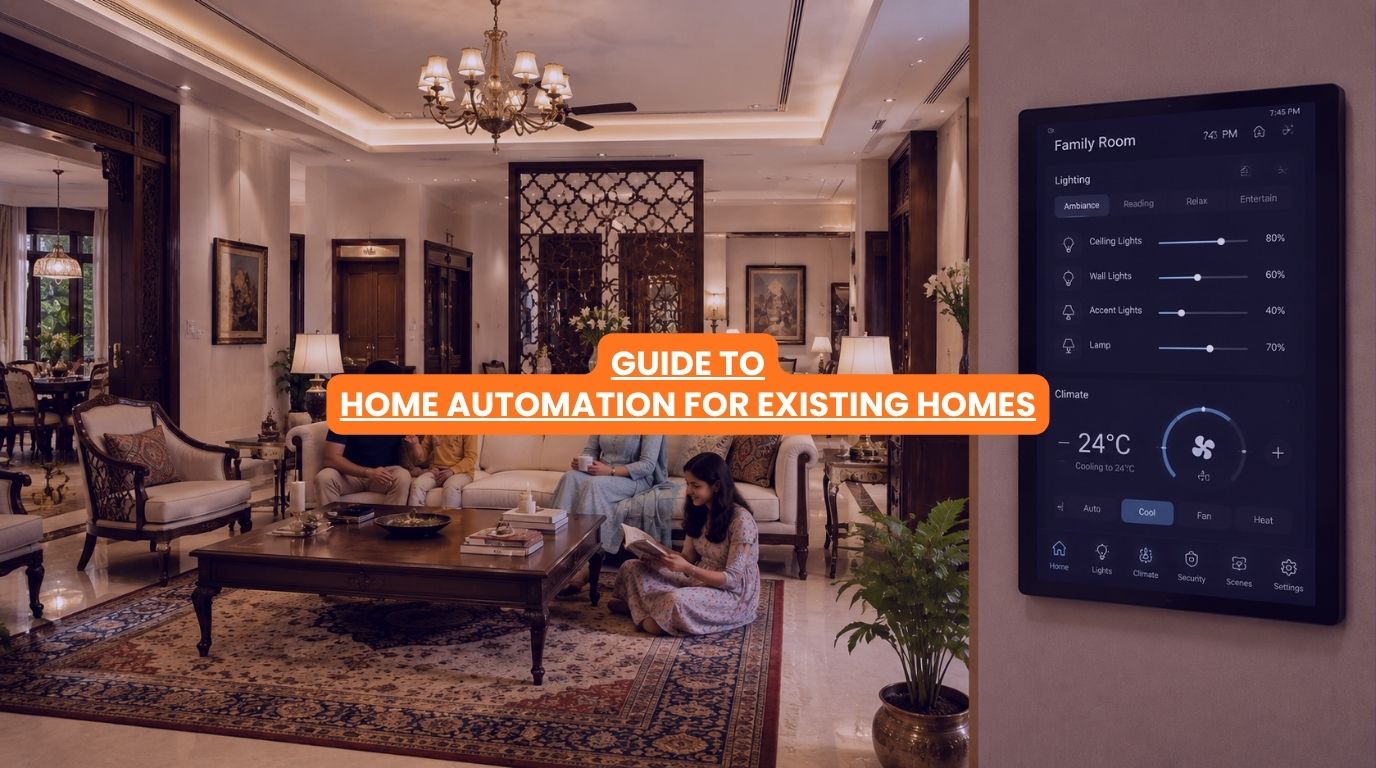
Can I Add Home Automation to My Existing House?
One of the biggest myths about home automation is that it must be planned during construction. Many homeowners assume that if their house wasn’t built as a smart home, they’ve missed the opportunity to automate it.
Fortunately, that’s not true.
At Techtastic, some of our most successful projects involve home automation for existing homes with modern automation technology. Whether it’s a family home that’s been occupied for years, a luxury villa undergoing renovation, or an apartment being modernized, smart home solutions can often be integrated without major structural changes.
The key is understanding which technologies work best in retrofit environments and how to create a future-ready automation strategy.
If you’ve ever wondered about home automation for existing homes and its validity, the answer is almost certainly yes.
Summary
Home automation can be added to most existing homes through a combination of wireless technologies, smart devices, retrofit automation systems, and scalable infrastructure upgrades. Homeowners can automate lighting, security, climate control, motorized curtains, entertainment systems, and access control without major renovations. The best approach depends on the home’s age, wiring, automation goals, and future expansion plans.
Quick Answer
Yes, home automation can be added to most existing homes. Modern smart home technologies allow homeowners to retrofit lighting control, security systems, smart locks, climate automation, motorized curtains, and centralized control without rebuilding the property. While new construction offers greater flexibility, today’s wireless and retrofit-friendly automation solutions make it possible to upgrade existing homes efficiently and gradually.
What Is Home Automation for Existing Homes?
Home automation for existing homes refers to the process of upgrading a property with smart technologies after construction is complete.
This may include:
- Smart lighting
- Security systems
- Smart locks
- Video door phones
- Motorized curtains
- Climate control
- Entertainment systems
- Centralized control platforms
Unlike new construction projects, retrofit automation focuses on minimizing disruption while maximizing functionality.
Why More Homeowners Are Retrofitting Smart Homes
Technology expectations have changed dramatically over the past decade.
Homeowners increasingly want:
- Better security
- Greater convenience
- Energy efficiency
- Remote monitoring
- Smart living experiences
Many existing homes were built before these technologies became mainstream.
Home automation for existing homes allows homeowners to enjoy modern automation without moving or rebuilding.
Can Every Existing House Be Automated?
In most cases, yes.
The level of home automation for existing homes depends on:
- Existing wiring
- Property layout
- Construction type
- Networking infrastructure
- Homeowner goals
Most homes can support at least some level of automation.
The real question is not whether automation is possible but how extensive home automation for existing homes should be.
What Smart Home Features Can Be Added to Existing Homes?
1. Smart Lighting Control
Lighting is often the easiest place to start.
Options may include:
- Smart switches
- Smart dimmers
- Automated scenes
- Scheduling
- Motion-based lighting
Benefits include:
- Convenience
- Ambience control
- Energy efficiency
Lighting upgrades often provide immediate results.
2. Smart Security Systems
Security is one of the most popular retrofit projects.
Modern upgrades may include:
- CCTV cameras
- Video door phones
- Motion sensors
- Alarm systems
- Smart locks
Many solutions can be installed with minimal disruption.
3. Smart Door Locks
Replacing traditional locks with smart access control systems can improve:
- Security
- Convenience
- Visitor management
Homeowners gain greater visibility and control over property access.
4. Climate Control Automation
Existing air conditioning systems can often be upgraded with:
- Smart thermostats
- Smart controllers
- Automated scheduling
These systems improve comfort while helping optimize energy usage.
5. Motorized Curtains
Motorized curtain systems are increasingly popular in retrofit projects.
Benefits include:
- Privacy management
- Daylight control
- Convenience
- Smart home integration
Many modern solutions are specifically designed for existing homes.
6. Smart Entertainment Systems
Entertainment upgrades may include:
- Home theatre control
- Multi-room audio
- Smart TV integration
- Voice-controlled media systems
These enhancements often require little structural modification.
Wireless vs Wired Home Automation
One of the biggest retrofit decisions involves connectivity.
Wireless Automation
Advantages:
- Faster installation
- Minimal disruption
- Lower construction impact
- Easier retrofits
Ideal for many existing homes.
Wired Automation
Advantages:
- Greater reliability
- Enhanced scalability
- Long-term flexibility
May be appropriate during major renovations.
Which Is Better?
The answer depends on the property and homeowner goals.
Many modern retrofit projects successfully combine both approaches.
What About Older Homes?
Older homes can often benefit significantly from automation.
Common upgrades include:
- Lighting modernization
- Security improvements
- Climate optimization
- Smart access control
A professional assessment helps determine the most suitable approach.
Age alone rarely prevents automation.
Common Challenges When Doing Home Automation For Existing Homes
Limited Wiring Infrastructure
Some older homes may require creative installation strategies.
Network Coverage Issues
Reliable connectivity is essential for modern automation.
Device Compatibility
Not all technologies integrate equally well.
Expansion Planning
Future growth should always be considered during initial design.
These challenges are manageable with proper planning.
Best Approach: Start Small and Expand
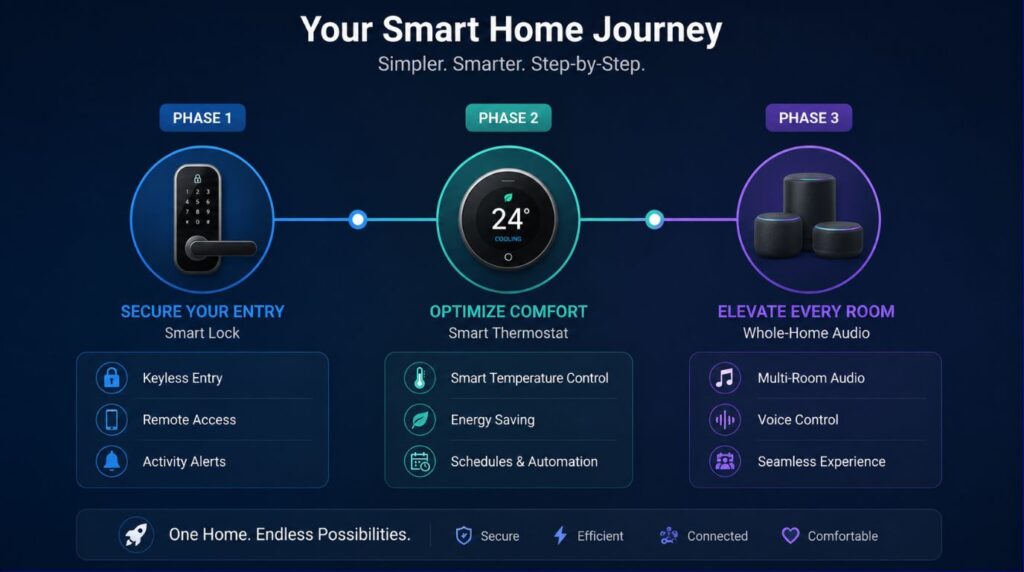
Many homeowners assume automation requires a complete transformation.
In reality, a phased approach often works best.
Typical starting points include:
Phase 1
- Security systems
- Smart lighting
- Networking upgrades
Phase 2
- Climate automation
- Motorized curtains
- Access control
Phase 3
- Whole-home integration
- Entertainment automation
- Advanced scenes
This strategy spreads investment over time while maintaining flexibility.
Home Automation Retrofit vs New Construction
| Existing Home Retrofit | New Construction |
|---|---|
| Minimal disruption preferred | Infrastructure planned from scratch |
| Often uses wireless solutions | More wired opportunities |
| Phased implementation common | Full implementation common |
| Faster upgrades possible | Greater design flexibility |
| Excellent automation potential | Maximum automation potential |
Both approaches can achieve outstanding results.
Why It Matters for Modern Homes
Modern homeowners increasingly expect:
- Security
- Convenience
- Connectivity
- Energy efficiency
- Remote control
Home automation for existing homes allows owners to meet these expectations without requiring relocation or major reconstruction.
As technology continues to evolve, upgrading an existing property often makes more sense than replacing it.
Our Perspective at Techtastic
At Techtastic, we frequently work with homeowners who initially assume automation is only practical during construction.
In reality, many existing homes are excellent candidates for smart home upgrades.
We typically recommend beginning with:
- Security systems
- Smart lighting
- Reliable networking
- Access control
- Future scalability
From there, homeowners can expand gradually based on their lifestyle needs and budget.
The goal isn’t simply to add technology—it’s to create a smarter, more enjoyable living environment.
Collaboration Opportunities for Developers, Architects & Interior Designers
Retrofit projects often benefit from professional planning.
At Techtastic, we collaborate with:
- Architects
- Interior designers
- Renovation specialists
- Luxury home builders
- Residential developers
- Hospitality consultants
Smart Home Renovation Planning
Integrate automation into existing properties efficiently.
Security & Access Control Upgrades
Enhance safety and usability.
Lighting & Comfort Automation
Improve everyday living experiences.
Structured Networking Improvements
Create reliable foundations for connected homes.
Luxury Home Modernization
Transform traditional residences into future-ready properties.
Hospitality & Commercial Retrofits
Implement scalable automation solutions.
Early planning helps maximize results while minimizing disruption.
Key Takeaways on Home Automation for Existing Homes
- Most existing homes can be upgraded with home automation.
- Smart lighting and security systems are often the best starting points when it comes to home automation for existing homes.
- Wireless technologies simplify retrofit projects.
- Home automation for existing homes can be implemented gradually over time.
- Reliable networking is essential for success.
- Home automation for existing homes can help homeowners achieve many of the same benefits as newly built smart homes.
Frequently Asked Questions
1. Is home automation for existing homes possible?
A: Yes, home automation for existing homes is possible. Most existing homes can be upgraded with smart lighting, security systems, climate control, smart locks, and other automation features.
2. Is home automation difficult to install in an older home?
A: Not necessarily. Many modern solutions are specifically designed for retrofit applications.
3. Do I need to rewire my entire house?
A: In most cases, no. Many automation systems use wireless technologies or require only limited infrastructure upgrades.
4. What is the best smart home upgrade for an existing house?
A: Smart lighting and security systems are often the most impactful starting points in home automation for existing homes.
5. Can I automate my house in stages?
A: Yes. Many homeowners begin with a few core features and expand gradually.
6. Is wireless home automation reliable?
A: Modern wireless systems can be highly reliable when supported by proper networking infrastructure.
7. Can motorized curtains be added to an existing home?
A: Yes. Many motorized curtain solutions are specifically designed for retrofit installations.
8. Does home automation increase property value?
A: Smart home features can improve property appeal and support future-ready living.
Conclusion
If you’ve been wondering whether you can add home automation to your existing house, the answer is overwhelmingly yes. Modern smart home technologies make it possible to upgrade lighting, security, climate control, entertainment, and access systems without rebuilding your property.
At Techtastic, we help homeowners transform existing residences into connected, secure, and future-ready living environments.
📞 Call/WhatsApp: 9769145145
📍 Our Operational Hubs: Navi Mumbai | Nashik | Lonavla | Sangli
Whether you’re looking for a simple smart lighting upgrade or a comprehensive home automation retrofit, the right strategy can help you enjoy the benefits of smart living without starting from scratch.
Looking for the best features to start with? Check out our practical guide on Smart Home for Renters: Things You Should Know in 2026 to plan a system that everyone can use effortlessly.