
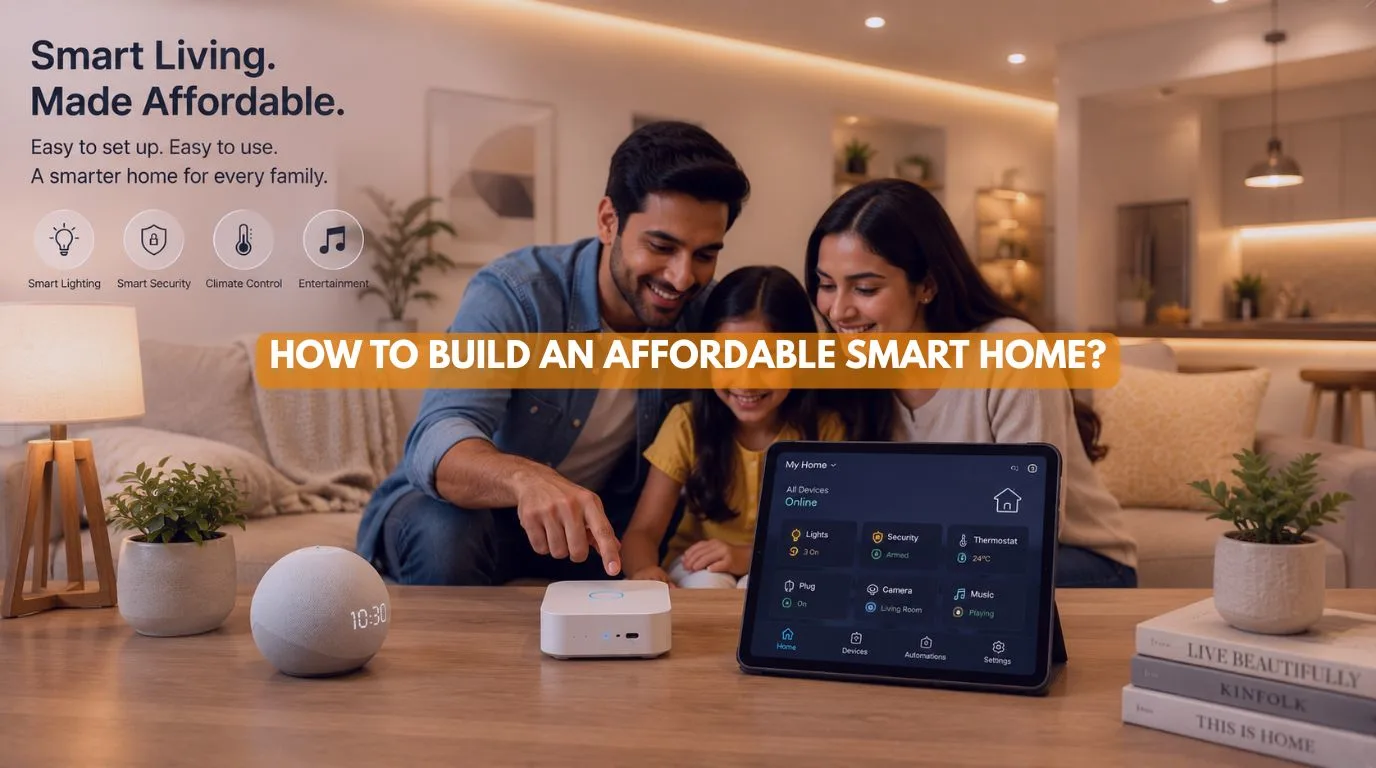
Summary
Building an affordable smart home doesn’t require automating every room at once. The smartest approach is to start with high-impact devices such as smart lighting, smart switches, voice assistants, and security cameras, then expand gradually over time. By choosing compatible products, planning for future upgrades, and investing in reliable networking, homeowners can enjoy the benefits of home automation without overspending. A phased approach delivers better value than buying multiple disconnected gadgets. An affordable smart home is easier to achieve when every upgrade is planned with future expansion in mind.
Quick Answer
You can build an affordable smart home by starting with the features you’ll use every day, rather than trying to automate your entire house at once. Smart lighting, smart switches, voice assistants, and smart security provide the biggest improvements for the lowest investment. As your budget grows, you can gradually expand into climate control, motorized curtains, energy monitoring, and whole-home automation without replacing your existing system.
How to Make Your Home Smart Without Breaking the Bank?
Many homeowners love the idea of a smart home. But they also worry about one thing: “Won’t it be too expensive?” Fortunately, the answer is no. You don’t need to automate every light, curtain, appliance, and room on day one.
The most successful home is built gradually. Every affordable smart home starts with a clear plan rather than a long shopping list of gadgets.
At Techtastic, we’ve designed automation systems ranging from simple apartment upgrades to fully integrated luxury villas. One lesson remains consistent: The smartest investment isn’t spending more, but it’s spending wisely.
With the right strategy, you can enjoy the convenience, security, and energy savings of home automation while staying within your budget.
Start with Your Everyday Problems
When it comes to building affordable smart homes, asking questions helps. But the kind of question you ask brings in the changes. Instead of asking: “Which smart gadgets should I buy?” Ask yourself: “Which daily tasks annoy me the most?”
For example:
- Forgetting to turn off the lights
- Worrying if the front door is locked
- Wasting electricity
- Walking into dark rooms
- Opening heavy curtains every morning
An affordable smart home solves real-life problems before adding unnecessary technology.
1. Start with Smart Lighting
Lighting delivers the biggest improvement for the smallest investment.
Benefits include:
- Remote control
- Voice commands
- Scheduled lighting
- Motion activation
- Energy savings
- Better convenience
Since lights are used every day, this is often the first upgrade in an affordable smart home because it delivers immediate value.
2. Upgrade to Smart Switches
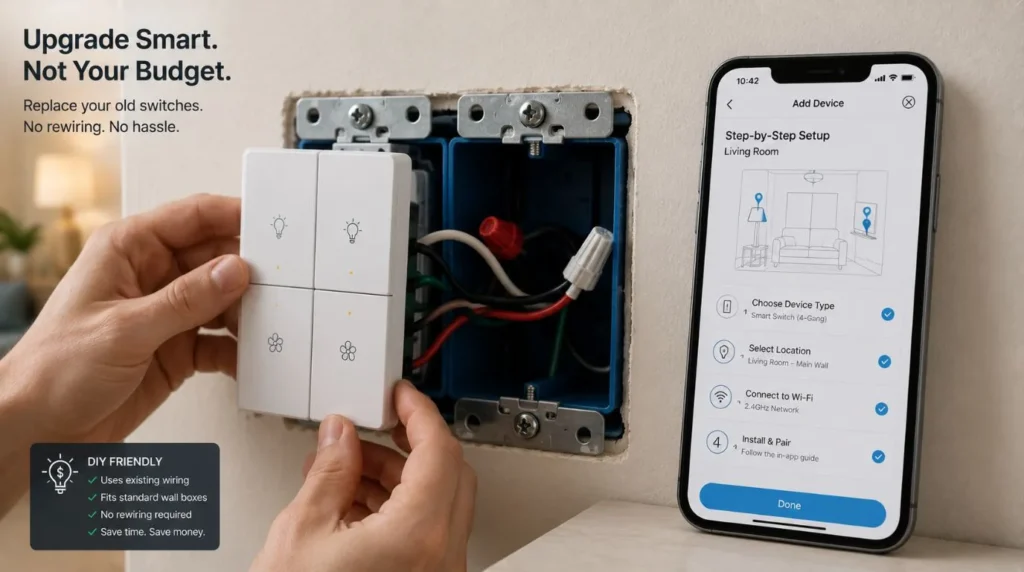
Many homeowners begin with smart bulbs.
However, smart switches often provide better long-term value because they:
- Control the entire room
- Work like normal wall switches
- Support automation
- Scale easily as your home grows
If your budget allows, smart switches are usually the better investment.
3. Add a Voice Assistant
A voice assistant can control multiple devices from one place.
Popular options include:
You’ll be able to say:
- Turn off all lights.
- Open the curtains.
- Start movie mode.
Voice control makes your smart home easier for everyone to use.
4. Improve Home Security
Security upgrades don’t have to be expensive.
Good starting points include:
- Smart doorbells
- Wi-Fi cameras
- Smart door locks
- Motion sensors
These devices improve peace of mind without requiring a complete security system.
5. Automate One Room at a Time
One of the biggest budgeting mistakes when it comes to an affordable smart home is trying to automate the entire home immediately.
Instead:
- Phase 1: Living room
- Phase 2: Bedrooms
- Phase 3: Kitchen
- Phase 4: Outdoor lighting
This spreads the investment while keeping every upgrade useful. An affordable smart home should grow gradually instead of relying on expensive one-time investments.
6. Buy Devices That Can Grow with You
Avoid buying products that only solve today’s needs.
Instead, choose devices that support:
- Additional rooms
- More automation
- Voice assistants
- Smart scenes
- Security integration
Scalable products save money over the long term.
7. Don’t Ignore Your Wi-Fi
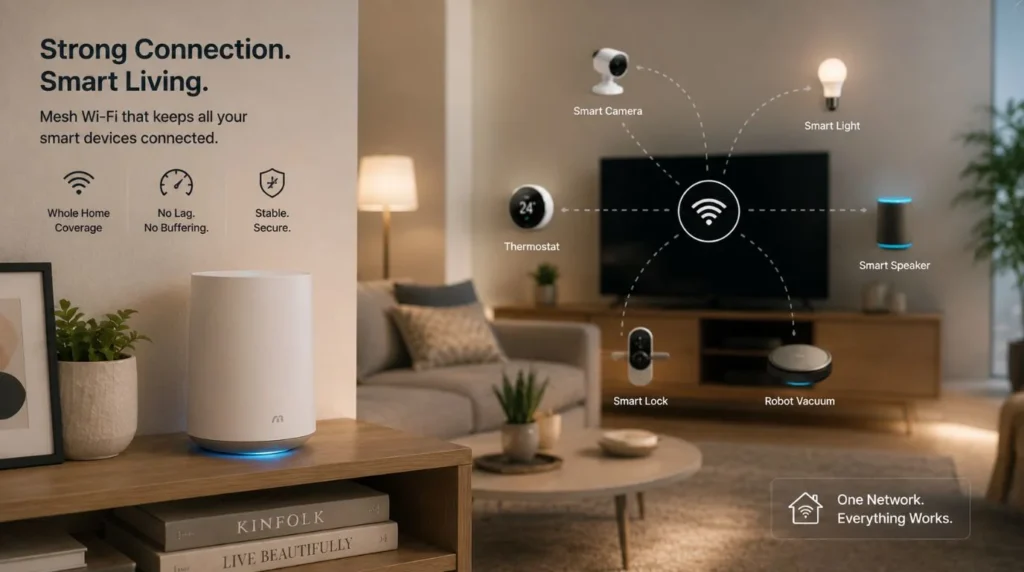
Many homeowners spend thousands on smart devices while keeping an old router. Reliable networking is essential.
Consider investing in:
- Quality router
- Mesh Wi-Fi
- Better internet coverage
A reliable network improves the performance of every connected device.
8. Automate Daily Routines
Automation provides more value than remote control.
Examples include:
Good Morning
- The lights turn on gradually
- Curtains open
- AC adjusts
- Coffee machine starts
Leaving Home
- The lights switch off
- Doors lock
- Cameras activate
These routines save time every single day.
9. Avoid Buying Random Gadgets
Many beginners purchase products simply because they’re on sale.
This often results in:
- Multiple apps
- Compatibility issues
- Poor automation
- Frustration
Plan your smart home before buying anything.
Affordable Smart Home Roadmap
| Stage | Smart Home Upgrade | Budget Priority |
|---|---|---|
| 1 | Smart lighting | ⭐⭐⭐⭐⭐ |
| 2 | Smart switches | ⭐⭐⭐⭐⭐ |
| 3 | Voice assistant | ⭐⭐⭐⭐☆ |
| 4 | Smart security | ⭐⭐⭐⭐☆ |
| 5 | Smart door locks | ⭐⭐⭐⭐☆ |
| 6 | Climate automation | ⭐⭐⭐☆☆ |
| 7 | Motorized curtains | ⭐⭐⭐☆☆ |
| 8 | Entertainment | ⭐⭐☆☆☆ |
| 9 | Energy monitoring | ⭐⭐⭐☆☆ |
This phased approach keeps costs manageable while creating a home that’s increasingly intelligent over time.
Is KNX Too Expensive?
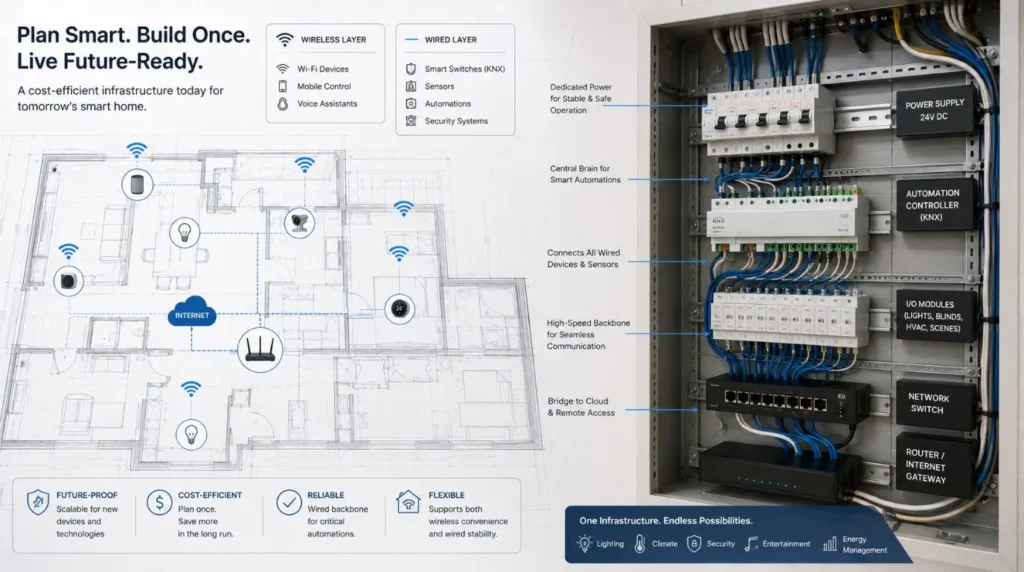
Many homeowners assume KNX home automation is only for luxury homes. That’s not entirely true.
If you’re building a new house or undertaking a major renovation, planning KNX from the beginning can actually reduce future upgrade costs because:
- Wiring is installed once.
- Expansion is easier.
- Devices integrate seamlessly.
- The system remains useful for decades.
If your budget is limited today, you can begin with Wi-Fi automation and transition to a more advanced system as your needs grow. With proper planning, an affordable smart home today can evolve into a fully integrated automation system tomorrow.
Common Budget Mistakes
Buying the Cheapest Devices
Low-cost products often lack long-term support and reliability.
Ignoring Future Expansion
Choose devices that work well together.
Mixing Too Many Brands
One ecosystem is easier to manage than five different apps.
Forgetting Installation Costs
Professional installation often improves reliability and reduces future maintenance.
Buying Everything at Once
Gradual automation usually delivers better value.
Why It Matters
A smart home isn’t about owning the most technology.
It’s about creating a home that’s:
- Easier to manage
- More comfortable
- More secure
- More energy-efficient
Even an affordable smart home can dramatically improve everyday living when it’s planned properly.
Our Perspective at Techtastic
At Techtastic, we believe every homeowner should be able to enjoy the benefits of home automation—regardless of budget.
That’s why we recommend starting with the upgrades that deliver the greatest everyday value, such as smart lighting, smart switches, and security. Once those foundations are in place, it’s easy to expand into climate control, motorized curtains, entertainment, and energy management as your needs and budget evolve.
The goal isn’t to spend the most money. The goal is to build an affordable smart home that grows with your needs instead of your expenses.
Collaboration Opportunities for Developers, Architects & Interior Designers
Budget-friendly smart homes begin with thoughtful planning.
At Techtastic, we work with:
- Architects
- Interior designers
- Residential developers
- Luxury home builders
- Hospitality consultants
- Commercial project planners
Smart Home Planning
Design scalable automation from day one.
Smart Lighting Infrastructure
Prepare homes for future upgrades.
KNX System Design
Create reliable long-term automation.
Structured Networking
Support connected living.
Premium Residential Projects
Balance technology with affordability.
Future-Ready Developments
Build homes ready for tomorrow’s innovations.
Planning early helps homeowners automate their systems gradually, without unnecessary rewiring or replacement costs.
Key Takeaways on Building an Affordable Smart Home
- Building an affordable smart home starts with solving everyday problems rather than buying random gadgets.
- Smart lighting and smart switches offer the highest return on investment.
- Voice assistants and smart security provide excellent value for beginners.
- Upgrade one room at a time to keep costs manageable.
- Invest in reliable networking to improve the performance of every smart device.
- Choose products that support future expansion instead of isolated devices.
- A phased automation strategy is more cost-effective than trying to automate an entire home at once.
Frequently Asked Questions
1. Can I build an affordable smart home?
A: Yes. Many homeowners start with smart lighting, smart switches, voice assistants, and security devices before expanding into more advanced automation over time.
2. What’s the cheapest way to start a smart home?
A: Smart lighting and a voice assistant are often the most affordable and practical first upgrades because they provide immediate convenience and are easy to expand later.
3. Are smart switches worth buying?
A: Yes. Smart switches generally offer better long-term value than smart bulbs because they control entire lighting circuits and support future automation.
4. Should I automate my whole house at once?
A: No. A phased approach allows you to spread costs over time while ensuring each upgrade delivers real value.
5. Is KNX only for expensive homes?
A: No. While KNX is popular in luxury homes, it’s also an excellent option for new construction projects where long-term reliability and scalability are priorities.
6. Can smart homes reduce electricity bills?
A: Automation can reduce unnecessary energy consumption by scheduling lighting, optimizing climate control, and turning devices off automatically when they’re not needed.
7. Do I need professional installation?
A: DIY installation works well for basic devices, but professional installation is recommended for integrated lighting, smart switches, and whole-home automation.
8. Can I expand my smart home later?
A: Absolutely. Choosing compatible, scalable products allows you to add lighting, security, climate control, and other features whenever your budget allows.
Conclusion
Creating an affordable smart home doesn’t require a large upfront investment; it requires a smart plan. By starting with high-impact upgrades such as smart lighting, smart switches, voice assistants, and basic security, you can enjoy meaningful improvements in convenience, safety, and energy efficiency without overspending. Expanding your automation one room and one feature at a time also ensures that every purchase adds lasting value while keeping your home ready for future technology. A well-planned, affordable smart home delivers long-term value without requiring a large upfront investment.
At Techtastic, we help homeowners build smart homes that fit both their lifestyle and their budget.
📞 Call/WhatsApp: 9769145145
📍 Our Operational Hubs: Navi Mumbai | Nashik | Lonavla | Sangli
Whether you’re taking your first step into home automation or planning a fully integrated KNX system, we design solutions that are scalable, reliable, and built to grow with you, proving that a smarter home doesn’t have to come with an overwhelming price tag.
Ready to take the next step? Explore our comprehensive breakdown on Is a Smart Home Worth the Money? A Complete Guide 2026 to see the real-world value for your property.