
Quick Answer
Home automation during monsoon season can improve convenience, security, lighting, climate management, and remote monitoring in Mumbai homes. Homeowners must install automation equipment away from moisture, protect electrical systems properly, and select outdoor devices based on their environmental ratings.
Professional inspection before and after the monsoon can also help identify potential issues.
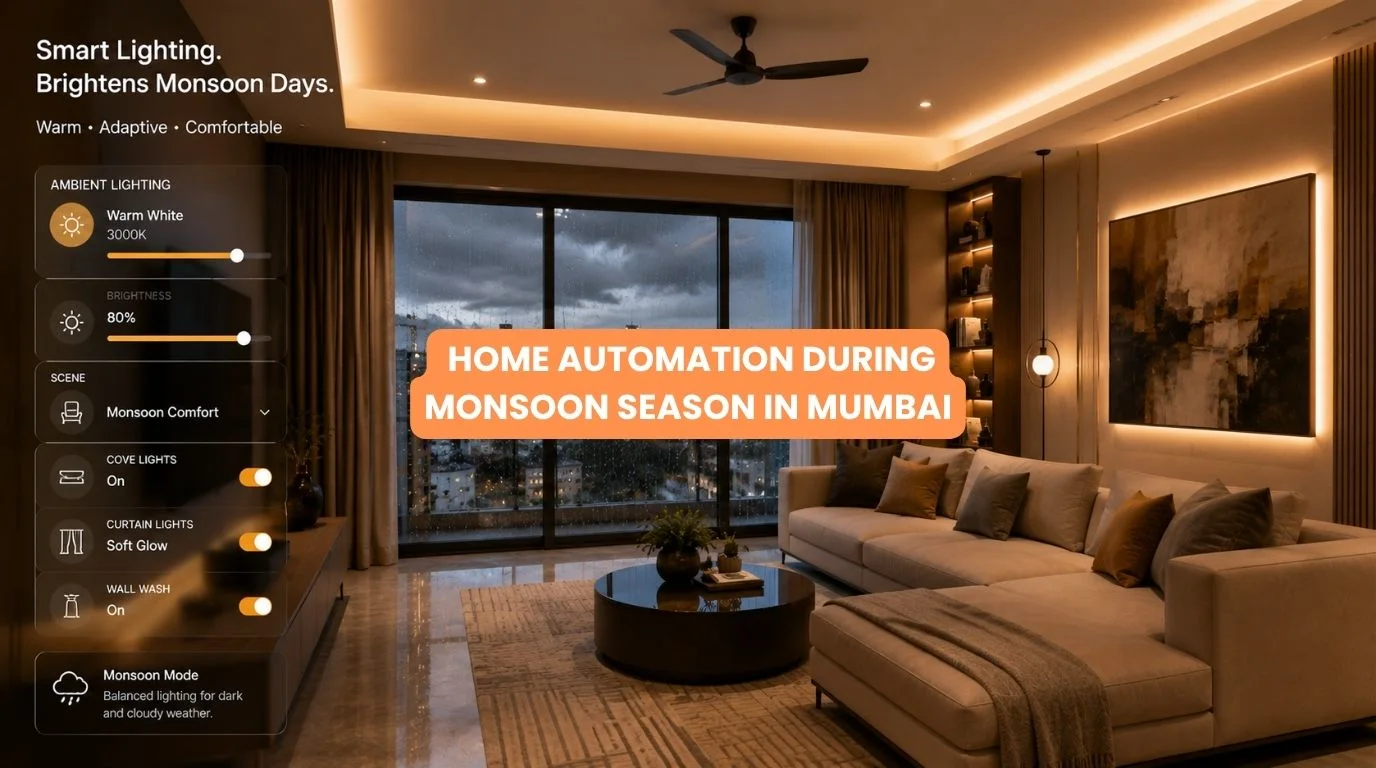
Mumbai’s monsoon can change the way a home needs to be managed. Heavy rain, high humidity, less daylight, wet entrances, power outages, and shifting indoor conditions can make home care harder. This is where home automation during monsoon season can provide practical benefits.
Smart lighting can respond to changing daylight. Homeowners can control motorized curtains without manually reaching for them. Security systems can provide greater visibility around entrances and other areas. HVAC controls can help maintain indoor comfort, while automation scenes can simplify everyday routines.
However, you must properly install, protect, and maintain a smart home during periods of high humidity and heavy rain. So, what should Mumbai homeowners know about home automation during monsoon season?
This guide covers useful apps, safety tips, maintenance steps, and ways to keep your smart home reliable during Mumbai’s rainy months.
Quick Summary
Home automation during monsoon season can help Mumbai homeowners manage:
- Smart lighting
- Motorized curtains
- Indoor climate
- Security
- Entry points
- Energy usage
- Daily routines
- Remote monitoring
The key is not simply adding more devices.
Proper installation, electrical protection, networking, moisture-aware placement, and regular maintenance are essential for reliable smart home operation during the monsoon.
Why Does the Monsoon Matter for Smart Homes?
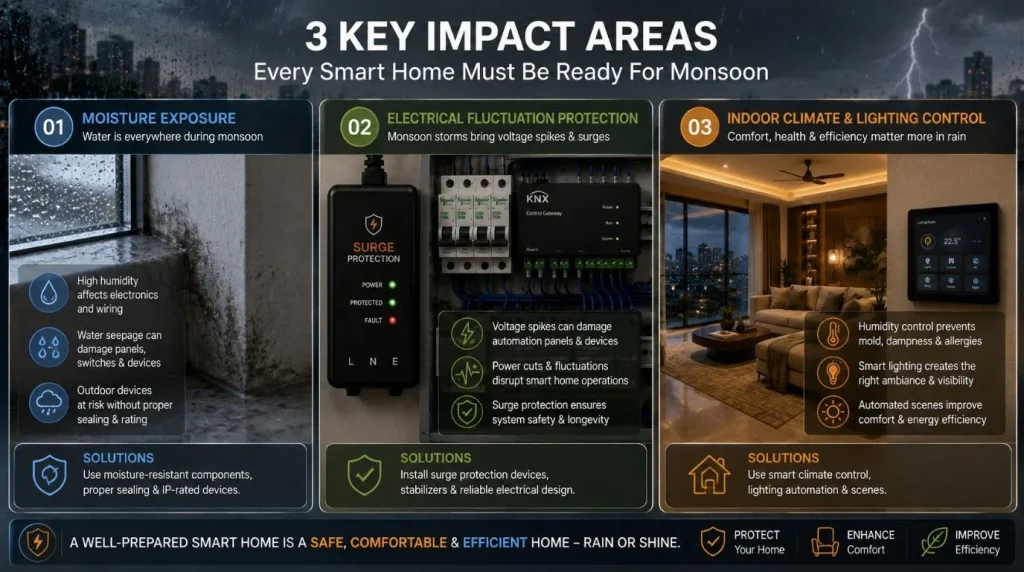
The monsoon doesn’t automatically make smart home technology unsafe. However, Mumbai has rain, humidity, moisture, electrical fluctuations, and less sunlight. Homeowners must design the system specifically for these conditions.
When planning home automation during monsoon season, consider three areas:
1. Moisture
Sensitive electronic equipment should be protected from direct water exposure and excessive moisture.
2. Electricity
Heavy storms can increase the importance of appropriate electrical protection.
3. Indoor Comfort
Rainy weather can affect temperature, humidity, lighting, and ventilation.
A well-designed automation system can help manage the third category while proper installation addresses the first two.
1. Smart Lighting During the Monsoon
Mumbai’s rainy days can make interiors noticeably darker. Smart lighting can help homeowners create automatic or easily accessible lighting scenes.
For example:
Cloudy Day Scene
Selected living-room and hallway lights turn on at a comfortable brightness.
Evening Scene
Ambient lighting gradually activates as natural daylight decreases.
Rainy Day Scene
Frequently used areas receive additional illumination without requiring multiple manual adjustments. This makes home automation during monsoon season particularly useful for homeowners who want more consistent indoor lighting.
2. Motorized Curtains
Motorized curtains can also be useful during Mumbai’s monsoon. Heavy rain may reduce natural light. Strong winds or sudden weather changes may make homeowners adjust curtains quickly.
Motorized curtains can be controlled through:
- Wall controls
- Remote controls
- Mobile apps
- Smart scenes
- Scheduled automation
For homes with large windows, automation also means curtains can be adjusted without repeatedly walking across the room.
3. Climate and Humidity Management
Mumbai’s monsoon can create uncomfortable indoor conditions. Depending on the home’s HVAC equipment, automation can help manage:
- Temperature
- AC schedules
- Room-specific comfort
- Fan operation
- Occupancy-based settings
When implementing home automation during monsoon season, particularly useful for homeowners who want more consistent indoor lighting, HVAC automation should complement—not replace—proper ventilation and appropriate humidity management.
Automation can help control equipment, but it cannot correct underlying moisture problems caused by leaks or inadequate building ventilation.
4. Smart Home Security
Rainy weather can make visibility around entrances and outdoor areas more challenging.
Smart security can include:
- Cameras
- Door sensors
- Smart locks
- Motion sensors
- Video doorbells
- Automated lighting
For example, entrance lighting can activate when movement is detected, improving visibility during dark, rainy evenings. This makes security one of the practical applications of home automation during monsoon season.
5. Water and Leak Detection
Water leaks can become particularly concerning during heavy rainfall. Depending on the system, smart sensors can potentially detect water in areas such as:
- Utility rooms
- Kitchens
- Bathrooms
- Near plumbing equipment
- Other vulnerable indoor locations
A leak sensor can provide an alert when water is detected. However, view these sensors as an early warning tool. They do not replace waterproofing, plumbing upkeep, or building repairs.
6. Power and Electrical Protection
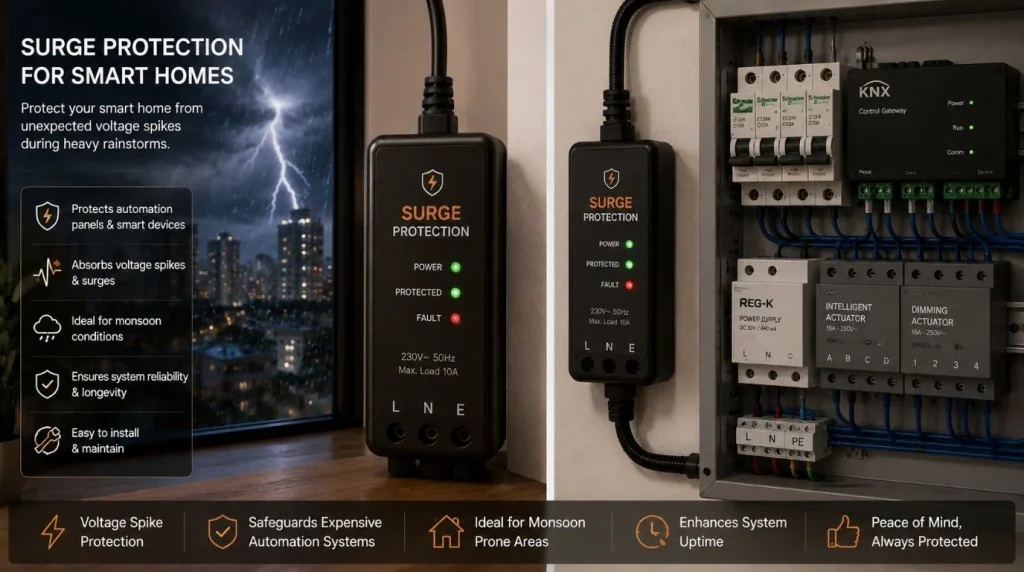
One of the most important considerations for home automation during monsoon season is electrical protection. Smart home equipment can be sensitive to electrical problems.
A properly designed installation may incorporate appropriate:
- Surge protection
- Circuit protection
- Earthing
- Distribution-board protection
- Backup power where appropriate
The exact protection required depends on the property’s electrical installation. Homeowners should have electrical work performed by qualified professionals rather than attempting modifications themselves.
7. Protecting the Smart Home Network
Many automation systems rely on network connectivity. During severe weather, homeowners may experience:
- Internet interruptions
- Router issues
- Power interruptions
- Wi-Fi instability
For larger smart homes, consider a properly designed network with:
- Reliable router
- Appropriate access points
- Structured Ethernet where required
- Network equipment protection
- Backup power for critical equipment where appropriate
Network reliability is an important but often overlooked part of home automation during monsoon season.
8. Outdoor Smart Home Equipment
Outdoor equipment deserves additional attention. Any device installed outdoors or in exposed areas should be appropriate for its intended environment.
Before the monsoon, inspect:
- Outdoor cameras
- Gate automation
- Garden lighting
- Sensors
- External access-control equipment
- Outdoor networking equipment
Don’t assume that a device designed for indoor use is suitable for a balcony, terrace, garden, or exposed entrance. Check the manufacturer’s environmental specifications and installation requirements.
Monsoon Smart Home Maintenance Checklist
| Area | What to Check |
|---|---|
| Electrical | Protection, panels, connections |
| Networking | Router, switches, access points |
| Cameras | Lens, mounting, environmental exposure |
| Sensors | Battery and operation |
| Curtains | Motor and track operation |
| Lighting | Indoor/outdoor controls |
| HVAC | Operation and comfort settings |
| Leak Sensors | Battery and detection |
| Smart Locks | Battery and operation |
| Outdoor Devices | Mounting and environmental conditions |
Regular checks can help identify problems before they become larger failures.
Wired vs Wireless During Monsoon
| Factor | Wired Automation | Wireless Automation |
|---|---|---|
| Permanent Power | Strong option | Device-dependent |
| Battery Maintenance | Lower | Higher |
| Network Dependence | Varies | Often higher |
| New Construction | Excellent | Good |
| Retrofit | More involved | Convenient |
| Large Systems | Strong option | Requires careful planning |
Neither approach is automatically better for monsoon conditions. The more important factors are proper installation, environmental protection, electrical safety, and appropriate equipment selection.
What Should You Automate During the Monsoon?
When considering home automation during monsoon season, prioritize functions that solve actual problems.
High Priority
- Entry lighting
- Security
- Motorized curtains
- HVAC control
- Leak detection
Medium Priority
- Entertainment scenes
- Energy monitoring
- Automated schedules
Optional
- Advanced lighting scenes
- Voice-controlled routines
- Additional sensors
The goal is to create useful automation rather than unnecessary complexity.
Common Mistakes to Avoid
Installing Electronics Where Water Can Reach Them
Keep sensitive equipment protected from direct moisture.
Ignoring Electrical Protection
A smart home still depends on the property’s electrical infrastructure.
Using Indoor Devices Outdoors
Always verify environmental suitability.
Forgetting Batteries
Wireless sensors and locks may need periodic battery checks.
Neglecting the Network
A reliable automation system requires appropriate connectivity.
Treating Automation as Waterproofing
Smart technology can detect or manage certain conditions, but it cannot replace building maintenance.
Skipping Preventive Maintenance
Small problems are easier to address before prolonged heavy rain exposes them.
How to Prepare Your Smart Home Before Mumbai’s Monsoon
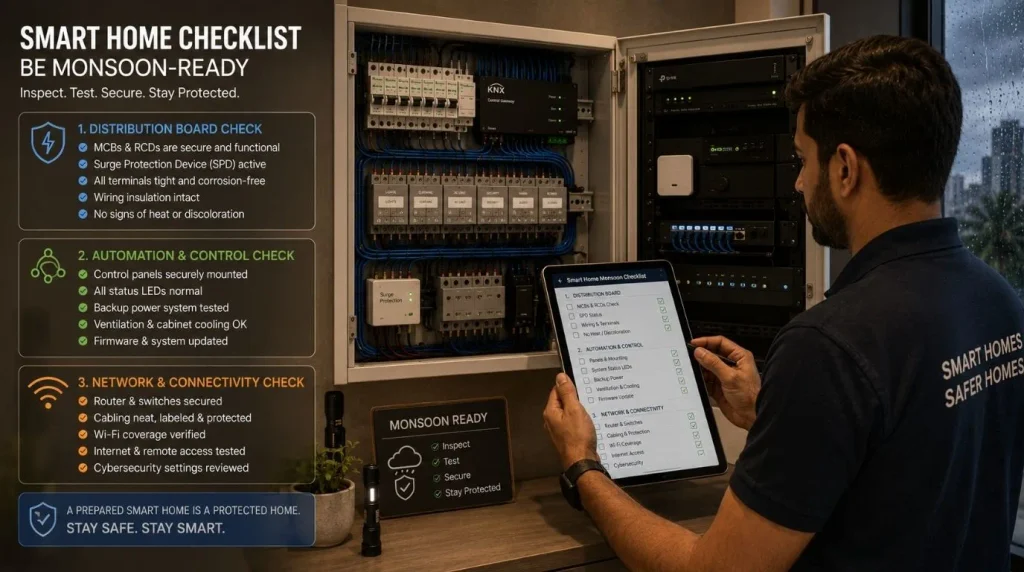
A simple pre-monsoon inspection can include:
Step 1: Check the electrical distribution system.
Step 2: Test smart lighting and automation scenes.
Step 3: Check curtain motors and tracks.
Step 4: Test security cameras and sensors.
Step 5: Inspect outdoor equipment.
Step 6: Check batteries.
Step 7: Verify network equipment.
Step 8: Test leak-detection devices if installed.
Step 9: Confirm backup power for critical equipment where appropriate.
Step 10: Record any faults that require professional attention.
This preparation can make home automation during monsoon season more reliable.
Does Monsoon Damage Smart Home Systems?
Not necessarily. Modern electronics operate reliably in humid climates when technicians correctly specify and install the equipment.
The bigger concern is direct water exposure, inappropriate installation, electrical problems, condensation, poor ventilation, or equipment installed outside its environmental rating. That’s why professional planning matters.
Representative Example
Illustrative example: This is a planning scenario, not a specific Techtastic project.
Consider a Mumbai apartment with:
- Motorized living-room curtains
- Smart lighting
- AC automation
- Security cameras
- Smart entry
- Leak sensors
During heavy rain, the homeowner can use a Rainy Evening Scene. It adjusts selected lights and curtains. It also keeps indoor climate settings comfortable. Meanwhile, security sensors can keep monitoring entrances. Leak sensors can also alert you if they detect water indoors.
This demonstrates how home automation during monsoon season can focus on practical everyday convenience rather than simply adding technology.
Is Home Automation Worth It During the Monsoon?
Yes, but the benefits depend on good system design. The biggest advantages are:
Convenience
Control lights, curtains, climate, and other systems without moving around the home.
Security
Improve visibility and monitoring during dark and rainy conditions.
Comfort
Manage indoor climate settings more easily.
Awareness
Receive alerts from selected sensors.
Control
Manage parts of the home remotely when away. However, automation should complement proper building maintenance—not replace it.
Questions to Ask Your Smart Home Installer
Before implementing home automation during monsoon season, ask:
- Which equipment is suitable for Mumbai’s climate?
- Where should sensitive electronics be installed?
- What electrical protection is recommended?
- Which outdoor devices are appropriately rated?
- How should networking equipment be protected?
- Which devices require batteries?
- What maintenance should be done before monsoon?
- What happens during a power outage?
- Can critical systems operate locally?
- Is post-installation support available?
Key Takeaways
- Home automation during monsoon season can improve convenience, security, lighting, and climate control.
- Smart lighting can compensate for reduced daylight.
- Motorized curtains make window management easier.
- Security systems can improve visibility and monitoring.
- Leak sensors can provide early alerts.
- Proper electrical protection is important.
- Outdoor devices need suitable environmental ratings.
- Network infrastructure should be planned carefully.
- Battery-powered devices should be checked before the monsoon.
- Automation doesn’t replace waterproofing, plumbing, or electrical maintenance.
- Professional installation can improve reliability.
Frequently Asked Questions
1. Is home automation during monsoon season safe?
Yes—when technicians properly select equipment and install it with suitable electrical and environmental protection.
2. Can smart home systems work during heavy rain?
Yes. Rain itself doesn’t necessarily prevent indoor automation from working. Power or internet interruptions can affect certain functions, depending on system architecture.
3. Can homeowners use smart curtains during Mumbai’s monsoon?
Yes. Motorized curtains can be operated through compatible controls and automation scenes throughout the year.
4. Can automation detect water leaks?
Compatible water-leak sensors can detect water in selected locations and provide alerts.
5. Does humidity damage smart home equipment?
Excessive humidity or condensation can affect electronics. Homeowners must install equipment according to the manufacturer’s environmental requirements.
6. Should outdoor smart devices be waterproof?
Outdoor equipment should have an environmental rating appropriate for its installation location. Check the manufacturer’s specifications rather than assuming a device is suitable.
7. Do smart homes need maintenance before monsoon?
A pre-monsoon check can be useful for testing electrical systems, networking, sensors, cameras, batteries, and automation functions.
8. What happens to smart home automation during a power cut?
The behavior depends on the system. Some functions may stop, while systems with appropriate backup power or local control may continue operating.
9. Can smart lighting automatically turn on during dark rainy days?
Compatible systems can use schedules, sensors, or programmed scenes to automate lighting, depending on the system design.
10. Does smart home automation prevent monsoon damage?
No. Automation can help monitor or manage some conditions. But it does not replace waterproofing or drainage. It also cannot replace plumbing maintenance. It cannot replace proper electrical protection.
Collaboration Opportunities for Architects & Interior Designers
When planning home automation during monsoon season, homeowners must coordinate automation with the home’s electrical, architectural, and interior systems.
Techtastic can collaborate with:
- Architects
- Interior Designers
- Builders
- Developers
- Luxury Villa Developers
- Project Management Consultants
Services include:
- KNX Home Automation
- Smart Lighting
- Motorized Curtains
- HVAC Integration
- Smart Security
- Home Theatre Automation
- Energy Management
- Structured Networking
- Programming
- Testing & Commissioning
Early coordination allows equipment locations, wiring, control panels, networking, curtain motors, and other infrastructure to be planned properly.
Areas We Serve
Techtastic provides smart home automation solutions across: Navi Mumbai • Nashik • Lonavla • Sangli
The company also serves projects across the wider Mumbai and Thane region.
Final Verdict
Home automation during monsoon season isn’t about making your home “rainproof” with technology. It is about making daily home management more convenient, responsive, and organized. This matters in a season when lighting, security, comfort, and indoor conditions can change fast.
- Smart lighting can respond to darker interiors.
- Motorized curtains can be adjusted effortlessly.
- Security systems can provide better visibility.
- Climate automation can simplify indoor comfort.
- Leak sensors can provide useful early warnings.
But the foundation remains proper installation, electrical safety, environmental protection, and preventive maintenance.
For Mumbai homeowners, the smartest approach is to design automation with the local climate in mind from the beginning. At Techtastic, our team plans smart home systems around your property’s architecture, electrical infrastructure, lifestyle, and long-term requirements.
Talk to Techtastic about designing a reliable smart home system for your Mumbai home—through the monsoon and beyond.
Contact Techtastic
Website: Techtastic Website
Call / WhatsApp: 9769145145
Service Areas: Navi Mumbai • Nashik • Lonavla • Sangli