
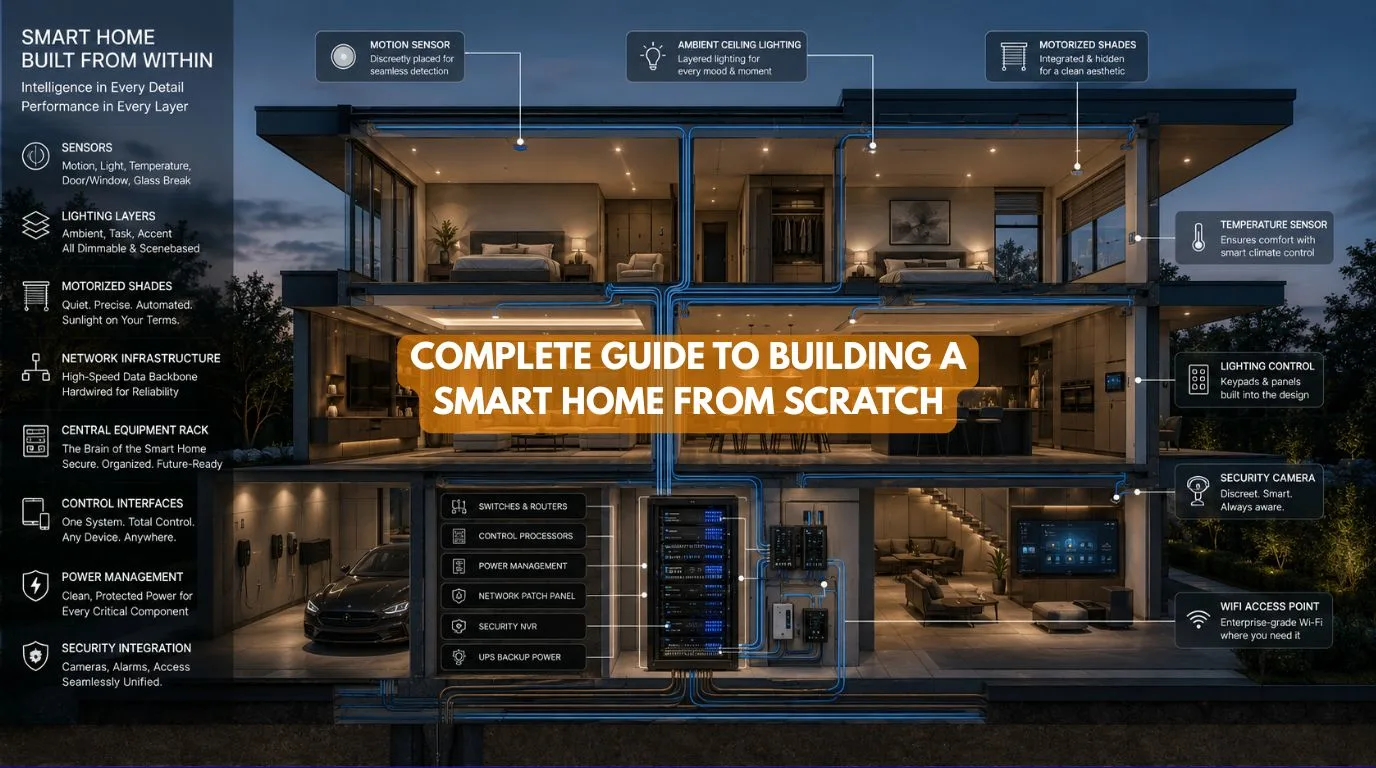
Quick Answer
The best way to approach building a smart home from scratch is to think of your home as one connected ecosystem rather than a collection of individual gadgets. Start by planning your lifestyle needs, selecting a scalable automation platform, designing a strong networking infrastructure, and deciding which systems you want to automate first. Whether you’re building a smart home from scratch or renovating an existing one, thoughtful planning makes future upgrades easier, improves reliability, and helps you avoid expensive compatibility issues.
Summary
Building a smart home from scratch starts with careful planning rather than buying individual devices. The most successful smart homes begin by identifying lifestyle needs, choosing a scalable automation platform, designing a reliable networking infrastructure, and integrating systems such as lighting, climate control, motorized curtains, security, entertainment, and energy management into one unified ecosystem. Professional planning ensures better reliability, easier expansion, and a smarter home that remains valuable for years to come.
Complete Guide to Building a Smart Home From Scratch
Building a smart home from scratch is no longer just about controlling lights with your phone. Today’s homeowners expect technology that works together seamlessly to improve comfort, convenience, security, and energy efficiency.
A well-designed smart home can automatically:
- Turn the lights on when you enter a room
- Adjust air conditioning based on occupancy
- Close curtains during hot afternoons
- Lock the doors when everyone leaves
- Activate security at night
- Reduce unnecessary electricity usage
But here’s the challenge. Many homeowners start by buying random smart devices online. Months later, they end up with:
- Multiple mobile apps
- Devices that don’t communicate
- Wi-Fi problems
- Limited automation
- Expensive upgrades
At Techtastic, we’ve designed smart homes for homeowners, architects, interior designers, and builders across India. The biggest lesson we’ve learned is simple: The smartest homes are planned and not purchased one device at a time.
This guide to building a smart home from scratch will walk you through everything you need to know before starting your smart home journey.
Step 1: Define Your Lifestyle Goals
Before choosing any technology, ask yourself:
- What daily tasks do I want to simplify?
- Which rooms matter most?
- Do I travel frequently?
- Is energy efficiency important?
- Do I want convenience, security, or luxury?
Your answers determine which automation features will provide the greatest value. Every successful smart home from scratch begins with understanding how you live each day. Remember: Technology should adapt to your lifestyle. Not the other way around.
Step 2: Decide What You Want to Automate
Every homeowner has different priorities.
Common automation categories include:
Smart Lighting
- Scheduled lighting
- Dimming
- Motion sensors
- Scene control
Climate Control
- Air conditioning
- Heating
- Ceiling fans
- Ventilation
Motorized Curtains
- Sunrise routines
- Privacy automation
- Temperature control
Home Security
- CCTV
- Smart locks
- Video door phones
- Motion sensors
- Alarm systems
Entertainment
- Home theatres
- Multi-room audio
- TV automation
Energy Management
- Electricity monitoring
- Occupancy automation
- Smart scheduling
- Solar integration
List your priorities before choosing products, before building your smart home from scratch
Step 3: Choose the Right Automation Platform
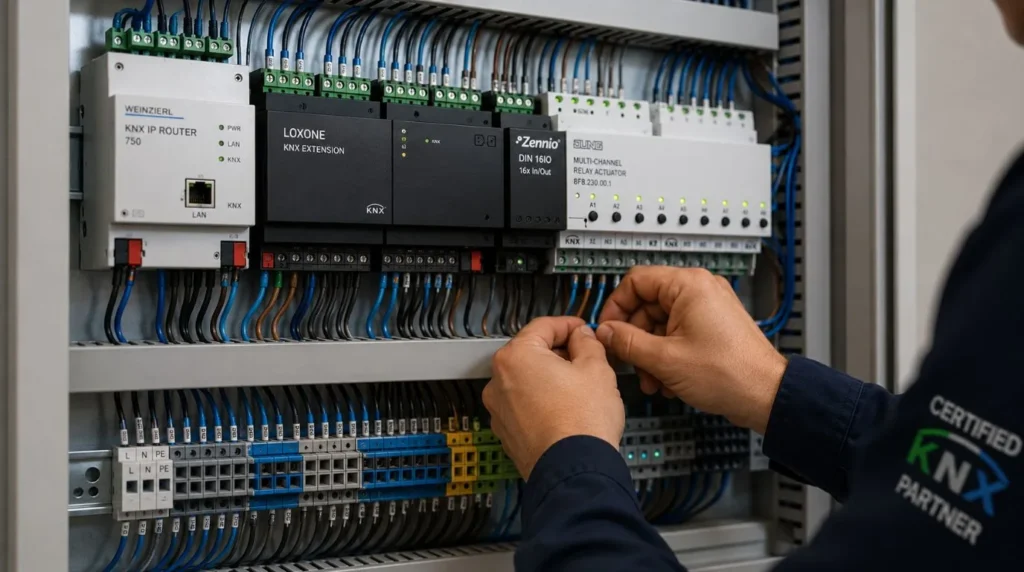
One of the most important decisions you’ll make is selecting your automation platform.
Wi-Fi Smart Home
Ideal for:
- Apartments
- Smaller homes
- Individual devices
Pros:
- Lower initial investment
- Easy installation
Limitations:
- Limited scalability
- Greater dependence on Wi-Fi
KNX Home Automation
Ideal for:
- Villas
- Luxury homes
- New construction
- Whole-home automation
Advantages:
- Exceptional reliability
- Local operation
- Future scalability
- Whole-home integration
Choosing the right platform is one of the most important decisions when creating a smart home from scratch. Professional platforms like KNX offer significantly greater long-term value for larger projects.
Step 4: Build a Strong Network First
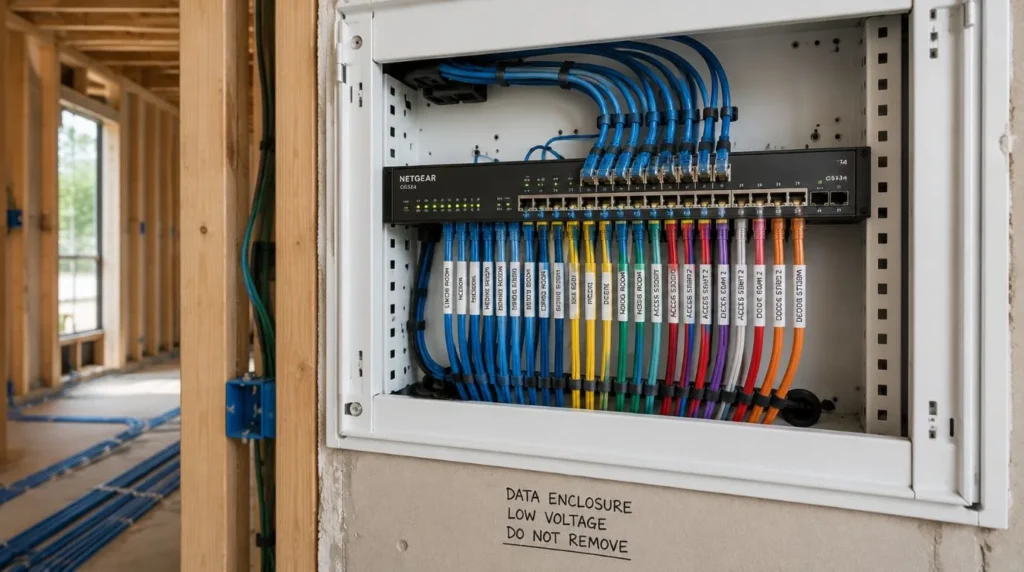
A smart home is only as reliable as its network.
Invest in:
- Enterprise-grade Wi-Fi
- Structured cabling
- Quality routers
- Access points
- Network switches
Poor networking is one of the leading causes of smart home issues.
Step 5: Plan the Electrical Infrastructure
If you’re building a new home, now is the perfect time to plan:
- Smart switch locations
- Sensor placement
- Touch panels
- Equipment racks
- Electrical panels
- Future wiring requirements
Early planning reduces installation costs and simplifies future upgrades.
Step 6: Start with Smart Lighting
Lighting is the foundation for most people when building their smart home from scratch.
Benefits include:
- Remote control
- Voice commands
- Automated schedules
- Motion activation
- Energy savings
- Custom lighting scenes
Properly designed lighting transforms how you experience your home every day.
Step 7: Add Climate Automation
Air conditioning often consumes the most electricity.
Smart climate control allows you to:
- Maintain comfortable temperatures
- Reduce energy waste
- Automate cooling schedules
- Adjust settings remotely
Comfort and efficiency improve together.
Step 8: Automate Curtains and Blinds
Motorized curtains provide much more than luxury.
They help:
- Control sunlight
- Improve privacy
- Reduce cooling loads
- Enhance daily convenience
When integrated with lighting and HVAC, they become an important part of your home’s energy strategy.
Step 9: Secure Your Home
A complete smart home should include:
- CCTV cameras
- Smart door locks
- Motion sensors
- Alarm systems
- Video door phones
Automation can activate security automatically when you leave and deactivate it when you return.
Step 10: Add Entertainment
Smart entertainment systems can include:
- Home theatres
- Projectors
- Multi-room audio
- Streaming devices
Combine them with lighting and curtains for immersive scenes like:
Movie Night
- Curtains close
- Lights dim
- Projector starts
- Audio activates
Step 11: Monitor Your Energy
Energy monitoring helps you understand:
- Electricity consumption
- HVAC usage
- Lighting efficiency
- Appliance performance
Automation can then optimize these systems automatically.
Step 12: Create Smart Scenes
This is where smart homes become truly intelligent.
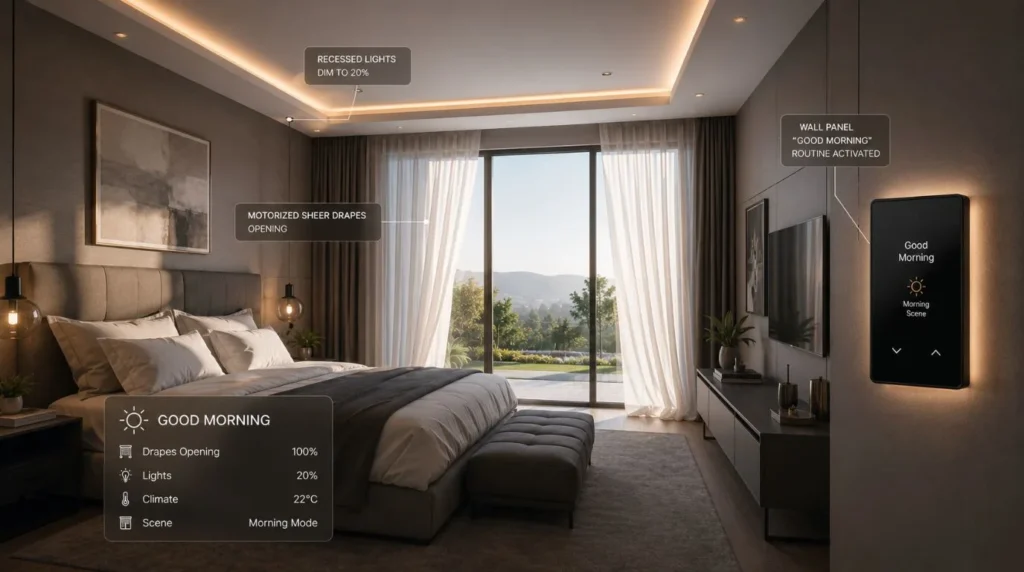
Good Morning
- Curtains open
- Lights brighten gradually
- AC adjusts
- Music begins
Leaving Home
- The lights switch off
- Doors lock
- Security activates
- Curtains close
Good Night
- Bedroom lights dim
- Climate adjusts
- Security arms
- Outdoor lighting activates
Automation scenes are what truly bring a smart home from scratch to life.
Step 13: Think About Future Expansion
Most homeowners continue adding automation over time.
Plan today for:
- Solar panels
- EV charging
- Battery storage
- Water management
- Garden irrigation
- Additional rooms
Choosing scalable infrastructure protects your investment.
Roadmap for Building a Smart Home from Scratch
The process of building a smart home from scratch, one phase at a time.
| Phase | Focus |
|---|---|
| Phase 1 | Networking & electrical planning |
| Phase 2 | Smart lighting |
| Phase 3 | Climate control |
| Phase 4 | Security & access control |
| Phase 5 | Motorized curtains |
| Phase 6 | Entertainment |
| Phase 7 | Energy monitoring |
| Phase 8 | Whole-home automation & scenes |
This phased approach makes budgeting easier while ensuring every upgrade builds on a strong foundation.
Common Mistakes to Avoid
Buying Devices Before Planning
Start with a strategy, not shopping.
Mixing Too Many Brands
One integrated ecosystem is easier to manage.
Ignoring Networking
Reliable connectivity is essential.
Choosing Only Based on Price
Focus on long-term value.
Forgetting Future Expansion
Your smart home should grow with your family.
Skipping Professional Advice
Expert planning prevents costly mistakes.
Why It Matters for Modern Homes
A smart home is no longer a luxury reserved for technology enthusiasts.
It has become an investment in:
- Convenience
- Comfort
- Security
- Energy efficiency
- Property value
A professionally designed smart home from scratch delivers long-term convenience and reliability.
Our Perspective at Techtastic
At Techtastic, we don’t begin with products. We begin with people. Every home is different because every family lives differently. Some homeowners prioritize entertainment. Others focus on security. Many simply want everyday tasks to happen automatically.
Our role is to design your smart home from scratch, reflecting your lifestyle while remaining reliable, scalable, and easy to use for years to come. We believe the best smart home isn’t the one with the most technology. It’s the one that feels the most natural to live in.
Collaboration Opportunities for Developers, Architects & Interior Designers
Planning a smart home from scratch during the design phase ensures seamless integration and easier future expansion.
At Techtastic, we work closely with:
- Architects
- Interior designers
- Residential developers
- Luxury home builders
- Hospitality consultants
- Commercial project planners
Smart Home Master Planning
Design automation alongside architecture.
KNX Infrastructure
Build scalable, future-ready systems.
Lighting & Interior Coordination
Blend technology seamlessly into beautiful spaces.
Structured Networking
Support high-performance connected homes.
Premium Residential Projects
Deliver luxury living experiences.
Future-Ready Developments
Create properties designed for evolving technologies.
Early collaboration results in cleaner installations, better user experiences, and significantly greater long-term value.
Key Takeaways
- Start with your lifestyle and not individual gadgets.
- Building a smart home from scratch starts with smart planning, not smart devices
- Choose a scalable automation platform that supports future expansion.
- Invest in reliable networking before adding smart devices.
- Automate lighting first, then expand to climate, security, curtains, and entertainment.
- Create automation scenes that simplify daily routines.
- Monitor energy usage to improve efficiency.
- Smart home from scratch reduces compatibility issues and protects your long-term investment.
Frequently Asked Questions
1. Where should I start when building a smart home from scratch?
A. Begin by identifying your lifestyle needs and deciding which areas, such as lighting, security, or climate control, you want to automate first.
2. Is it better to build a smart home during construction?
A. Yes. Planning automation during construction allows for better wiring, cleaner installations, and easier future expansion.
3. Which smart home platform is best?
A. For small projects, Wi-Fi systems work well. For whole-home automation, platforms like KNX offer greater reliability, scalability, and long-term value.
4. How much does smart home installation cost?
A. The cost depends on your home’s size, the automation features you choose, the networking infrastructure, and the installation complexity.
5. Can I build a smart home gradually?
A. Absolutely. Many homeowners start with smart lighting and expand to climate control, security, motorized curtains, and entertainment over time.
6. Do I need professional installation?
A. For integrated smart homes, professional planning and installation improve reliability, simplify operation, and support future upgrades.
7. Will a smart home increase property value?
A. Professionally designed smart homes often enhance a property’s appeal, particularly in premium residential markets.
8. How long does it take to install a smart home?
A. The timeline depends on the project’s size and whether it’s part of new construction or a retrofit. Planning early typically shortens the overall installation process.
Conclusion
Building a smart home from scratch is one of the best opportunities to create a home that’s more comfortable, secure, energy-efficient, and ready for the future. The key is to begin with a clear plan, invest in reliable infrastructure, and choose a scalable automation platform that can grow alongside your lifestyle. Rather than focusing on individual gadgets, think about how every system, from lighting and climate control to security and entertainment, can work together as one intelligent ecosystem.
At Techtastic, we help homeowners, architects, interior designers, and developers transform new builds and renovation projects into thoughtfully connected living spaces. From the first wiring plan to the final automation scene, we design smart home solutions that are intuitive, dependable, and built for long-term performance.
📞 Call/WhatsApp: 9769145145
📍 Our Operational Hubs: Navi Mumbai | Nashik | Lonavla | Sangli
Whether you’re planning a modern apartment or a luxury villa, the right strategy today will ensure your home continues to deliver value for many years to come.
Ready to take the next step? Explore our comprehensive breakdown on Smart Home Ideas: Complete Beginner’s Roadmap for 2026 to see how these ideas translate into real-world value.