
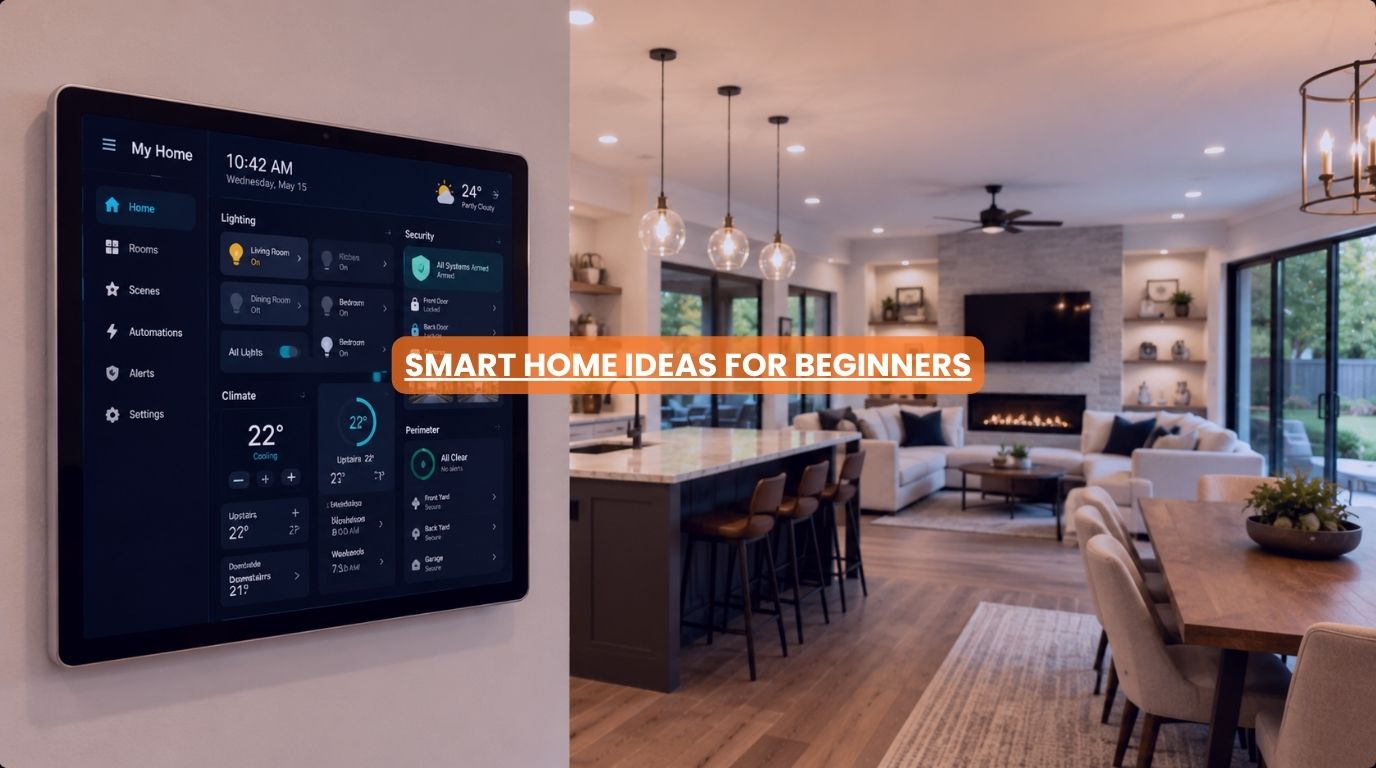
Smart homes are no longer futuristic concepts. Today, homeowners can control lighting, security systems, curtains, entertainment, climate control, and even appliances from a smartphone, touch panel, or voice assistant. But if you’re new to the world of smart home automation, the number of options available can feel overwhelming.
Should you start with smart lights? Do you need a smart home hub? What’s the difference between smart devices and a complete automation system?
And perhaps most importantly: How do you build a smart home without wasting money on technology you’ll eventually outgrow?
At Techtastic, we often work with homeowners who are just beginning their smart home journey. The good news is that creating a smart home doesn’t require automating everything at once. The smartest approach is to start with a clear roadmap.
Let’s walk through a bunch of smart home ideas on exactly how beginners should approach automation.
Summary
Smart home automation allows homeowners to control and automate lighting, security, climate, entertainment, curtains, and other household systems through connected technologies. The best way to get started with smart home ideas is to identify lifestyle needs, build a strong networking foundation, prioritize high-impact features such as lighting and security, and choose scalable systems that support future expansion. A well-planned smart home improves convenience, safety, comfort, energy efficiency, and long-term property value.
Quick Answer
The easiest way to get started with smart home ideas is to focus on your lifestyle needs rather than individual gadgets. Begin with a reliable network, identify the features that matter most—such as lighting, security, climate control, or motorized curtains—and choose systems that can grow with your home. A scalable approach helps homeowners avoid compatibility issues while creating a smarter, more connected living environment
What Is Smart Home Automation?
Smart home automation refers to technology that allows different systems within a home to communicate and operate intelligently.
Examples include:
- Lighting control
- Climate control
- Security systems
- Motorized curtains
- Entertainment systems
- Access control
- Energy management
Rather than manually controlling every device, automation allows systems to respond automatically based on schedules, sensors, occupancy, or homeowner preferences.
Why Are Homeowners Investing in Smart Home Automation?
Most people assume automation is primarily about convenience. While convenience is important, homeowners are increasingly interested in:
Improved Security
Better monitoring and protection.
Enhanced Comfort
Personalized living experiences.
Energy Efficiency
Reduced waste and smarter consumption.
Time Savings
Fewer repetitive daily tasks.
Property Value
Future-ready homes are increasingly attractive.
Smart home automation delivers benefits across multiple aspects of daily living.
Step 1: Define Your Goals
The first question isn’t: “Which smart devices should I buy?”
Instead ask: “What problems am I trying to solve?”
Common homeowner priorities include:
- Better security
- Convenience
- Energy efficiency
- Privacy
- Entertainment
- Luxury living
Your goals should guide every future decision.
Step 2: Start With Networking
This is the step most beginners overlook. Every smart home depends on connectivity.
A strong network supports:
- Cameras
- Smart locks
- Voice assistants
- Mobile control
- Automation systems
Without reliable networking, even the best smart home ideas and devices can become frustrating.
At Techtastic, we often say: “Your smart home is only as smart as your network.”
Step 3: Prioritize High-Impact Features
You don’t need to automate everything immediately. Start with smart home ideas that deliver daily value.
Smart Lighting
Lighting is often the best entry point.
Benefits include:
- Automated schedules
- Mood lighting
- Energy savings
- Occupancy-based control
Because lighting is used every day, homeowners quickly notice the benefits.
Smart Security
Security is another popular starting point.
Features include:
- CCTV cameras
- Video door phones
- Smart locks
- Motion alerts
These systems improve both safety and peace of mind.
Motorized Curtains
Automated curtains improve:
- Privacy
- Comfort
- Energy efficiency
- Convenience
They are often one of the most appreciated smart home ideas after installation.
Step 4: Understand the Difference Between Smart Devices and Smart Systems
Many homeowners begin by purchasing individual smart products.
Examples include:
- Smart bulbs
- Smart plugs
- Smart speakers
These devices work well independently but can become difficult to manage as the home grows.
A complete smart home system focuses on:
- Integration
- Centralized control
- Scalability
- Reliability
This distinction becomes increasingly important over time.
Step 5: Decide How You Want to Control Your Home
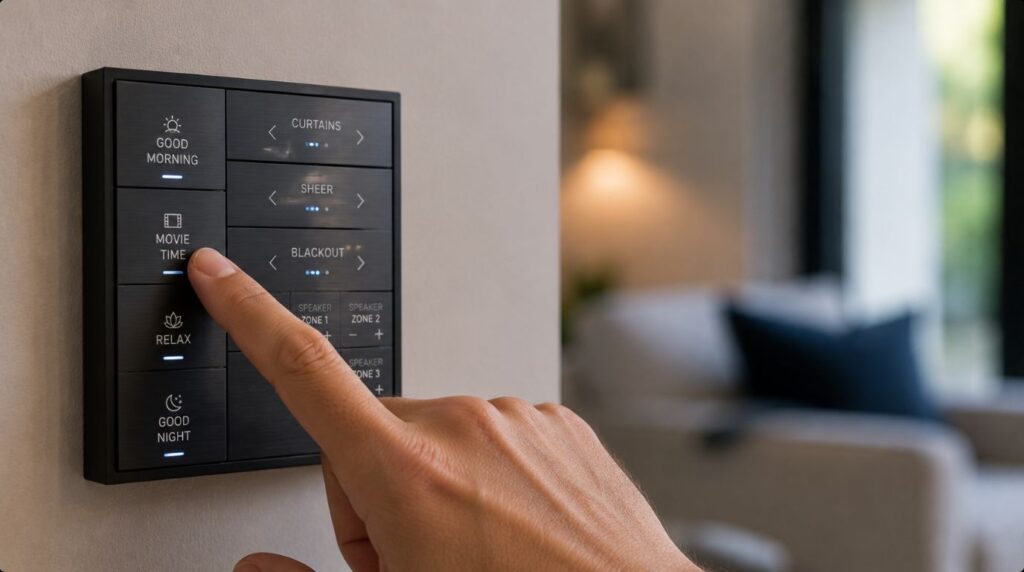
Modern smart home ideas typically offer multiple control options.
Mobile Apps
Control from anywhere.
Voice Assistants
Hands-free operation.
Examples:
- Alexa
- Google Assistant
- Siri
Smart Switches
Familiar and intuitive.
Touch Panels
Centralized home control.
Automation
The most advanced option because no user interaction is required.
The best smart home ideas combine several methods.
Step 6: Think About Future Expansion
One of the most common mistakes beginners make is planning only for today’s needs. Smart homes often evolve.
Future additions may include:
- Home theatres
- Advanced security
- Energy management
- EV charging integration
- Solar monitoring
- Additional automation scenes
Choosing scalable systems from the beginning helps avoid expensive upgrades later.
Step 7: Consider Professional Automation Platforms
As automation requirements grow, homeowners often explore professional systems such as KNX.
Benefits include:
- Reliability
- Scalability
- Multi-brand compatibility
- Long-term support
- Centralized control
Professional platforms are especially popular in larger homes and luxury residences.
Common Beginner Mistakes
Buying Too Many Devices Too Quickly
Start with priorities.
Ignoring Networking
Poor networking causes many smart home problems.
Choosing Products Without Expansion Plans
Think beyond immediate needs.
Focusing Only on Gadgets
Infrastructure matters more than individual devices.
Overcomplicating Automation
The best smart homes feel simple and intuitive.
Smart Home Ideas & Features Ranked by Beginner Value
| Feature | Beginner Value |
|---|---|
| Smart lighting | Excellent |
| Smart security | Excellent |
| Motorized curtains | High |
| Voice control | High |
| Climate automation | High |
| Home theatre integration | Moderate |
| Energy management | Moderate |
| Advanced automation scenes | Moderate |
These features provide the strongest early benefits.
Beginner Smart Home Ideas Roadmap
Phase 1: Foundation
- Networking
- WiFi coverage
- Security planning
Phase 2: Daily Convenience
- Smart lighting
- Voice control
- Smart curtains
Phase 3: Security & Comfort
- Cameras
- Smart locks
- Climate control
Phase 4: Advanced Automation
- Scenes
- Sensors
- Whole-home integration
Phase 5: Future Expansion
- KNX systems
- Energy management
- Advanced automation ecosystems
This staged approach keeps investments manageable while supporting long-term growth.
Why It Matters for Modern Homes
Today’s homeowners expect technology to make life easier—not more complicated.
Smart home automation helps achieve:
- Convenience
- Security
- Comfort
- Energy efficiency
- Connected living
As technology continues evolving, automation is becoming a standard part of modern residential design.
Our Perspective at Techtastic
At Techtastic, we encourage homeowners to think strategically rather than focusing on individual products.
The most successful smart home ideas are built around:
- Lifestyle requirements
- Reliable infrastructure
- Scalability
- Simplicity
- Long-term value
We typically recommend beginning with networking, lighting, and security before expanding into more advanced automation. A smart home should grow with your lifestyle, not force you to redesign it later.
Collaboration Opportunities for Developers, Architects & Interior Designers
The best smart homes begin during the planning stages.
At Techtastic, we collaborate with:
- Architects
- Interior designers
- Residential developers
- Luxury home builders
- Hospitality consultants
- Commercial project planners
Smart Infrastructure Planning
Create future-ready properties.
Lighting & Automation Design
Integrate technology seamlessly.
Security System Planning
Enhance safety and usability.
Structured Networking Design
Support reliable connectivity.
Luxury Residential Projects
Deliver intelligent living experiences.
Future-Ready Developments
Prepare homes for evolving technology trends.
Early collaboration creates smarter, more adaptable homes.
Key Takeaways on Smart Home Ideas
- Smart home automation begins with identifying lifestyle goals.
- Reliable networking is the foundation of every successful smart home.
- Smart lighting and security are ideal starting points.
- Motorized curtains provide excellent comfort and privacy benefits.
- Scalable systems help avoid future compatibility issues.
- Professional automation platforms support long-term growth.
- The best smart homes evolve gradually rather than being built all at once.
Frequently Asked Questions: Smart Home Ideas
1. What is smart home automation?
A: Smart home automation allows connected devices and systems to operate intelligently through centralized control, schedules, sensors, and automation rules.
2. What should I automate first in my home?
A: Smart lighting and security systems are usually the best starting point for smart home ideas because they deliver immediate daily benefits.
3. Do I need a smart home hub?
A: Not always. Some systems operate independently, while larger automation ecosystems may benefit from centralized control platforms.
4. Is smart home automation expensive?
A: Costs vary widely depending on the size of the home, chosen features, and level of integration.
5. Can I add automation to an existing house?
A: Yes. Many smart home technologies can be installed in both new and existing homes.
6. What is the most important part of a smart home?
A: Reliable networking infrastructure is often the foundation of a successful smart home.
7. Are professional systems better than consumer smart devices?
A: Professional systems typically offer greater scalability, integration, and long-term reliability.
8. Is smart home automation worth it?
A: For many homeowners, the benefits of convenience, security, comfort, and future readiness make automation a valuable investment.
Conclusion
Getting started with smart home automation doesn’t require transforming your entire house overnight. The most successful smart home ideas begin with a clear understanding of lifestyle needs, a strong networking foundation, and carefully selected features that provide meaningful daily value.
At Techtastic, we help homeowners, architects, and developers create smart home ecosystems that are reliable, scalable, and designed for the future.
📞 Call/WhatsApp: 9769145145
📍 Our Operational Hubs: Navi Mumbai | Nashik | Lonavla | Sangli
Whether you’re taking your first steps into automation or planning a fully integrated smart home, a thoughtful roadmap ensures that every investment contributes to a smarter, safer, and more enjoyable living experience.
Looking for the best smart home ideas to start with? Check out our practical guide on Best Smart Home Systems for Apartments (2026) to plan a system that everyone can use effortlessly.