
Summary
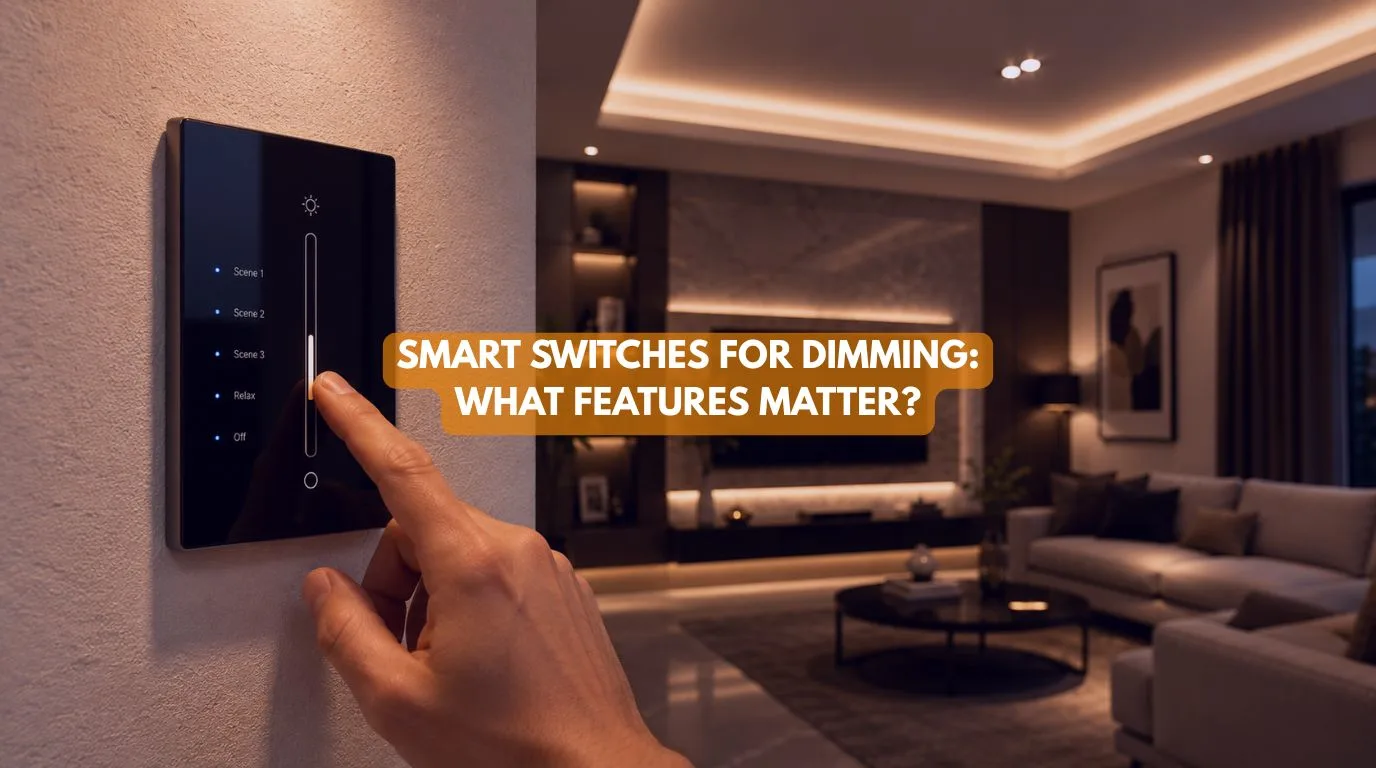
Choosing the right smart switches for dimming is about more than adjusting brightness. Modern smart dimmers offer smooth LED compatibility, customizable lighting scenes, scheduling, occupancy-based automation, remote control, and integration with broader smart home systems. The best solution depends on your lighting fixtures, home automation goals, and whether you want a standalone smart switch or a professionally integrated lighting control system.
Quick Answer
The best smart switches for dimming should provide smooth brightness control, compatibility with LED lighting, customizable scenes, scheduling, occupancy-based automation, and seamless integration with your smart home platform. For premium homes, professional lighting systems such as KNX home automation offer advanced dimming, centralized control, and long-term scalability.
Lighting affects far more than visibility. It influences:
- Comfort
- Productivity
- Relaxation
- Entertainment
- Energy efficiency
That’s why dimming has become one of the most popular smart home features. Instead of simply turning lights on or off, smart switches for dimming allow homeowners to create the perfect lighting level for every activity.
At Techtastic, we believe great lighting should adapt to the people using the space and not the other way around.
Why Dimming Matters
Different activities require different lighting levels. For example:
Movie Night
Soft ambient lighting.
Working
Bright task lighting.
Dining
Warm, comfortable lighting.
Bedtime
Low brightness that prepares your eyes for sleep. Dimming makes one room suitable for many different situations.
Features to Look for in Smart Switches for Dimming
Smooth LED Compatibility
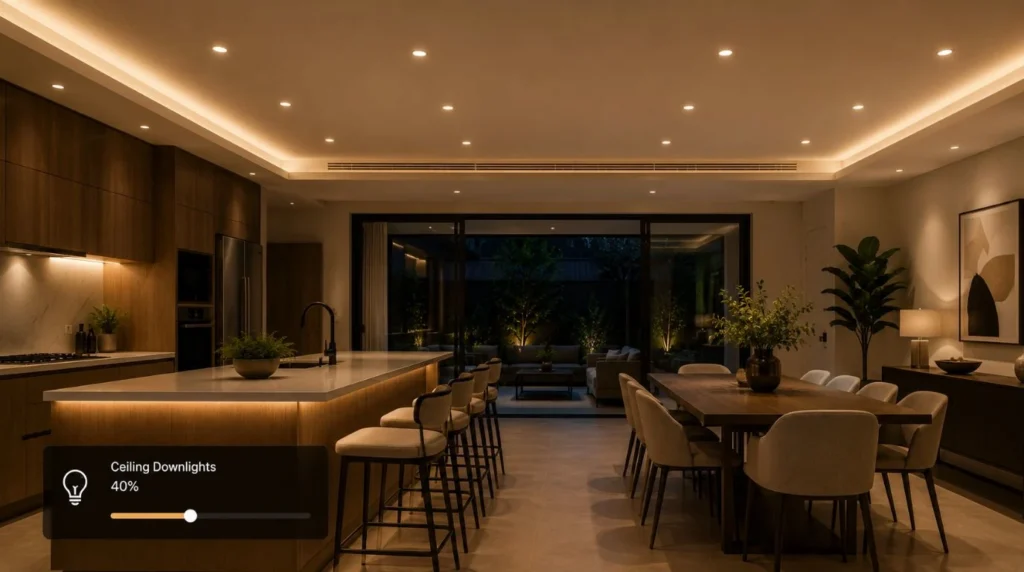
Not all LED bulbs dim equally. Choose switches that support:
- Modern LED fixtures
- Flicker-free dimming
- Stable brightness
- Wide dimming range
Compatibility between the switch and lighting fixtures is essential for reliable performance.
Adjustable Brightness Levels
The best smart dimmers provide gradual brightness adjustment rather than noticeable jumps.
This creates:
- Better comfort
- More natural lighting
- Improved visual appeal
Lighting Scenes
One-touch scenes allow multiple lights to change simultaneously.
Examples include:
- Relax
- Reading
- Dinner
- Movie
- Night
- Entertaining
Scenes eliminate the need to adjust every light individually.
Scheduling
Automatically dim lights:
- At sunset
- Before bedtime
- During the evening
- When leaving home
Scheduling improves convenience while reducing unnecessary energy consumption.
Occupancy-Based Dimming
Instead of switching lights fully on, smart systems can adjust brightness based on occupancy.
Examples include:
- Hallways at 30% during the night
- Bathrooms with soft overnight lighting
- Staircases with safety lighting
This improves both comfort and energy efficiency.
Voice & App Control
Many smart dimmers support:
- Mobile apps
- Voice assistants
- Touch panels
- Wall switches
Providing multiple control methods makes the system easier to use.
Dimming Isn’t Just About Brightness
A well-designed lighting system can also adjust:
- Color temperature (where supported)
- Time of day
- Occupancy
- Natural daylight
- Activity
This creates lighting that feels natural throughout the day.
Energy Savings with Smart Switches for Dimming
Lower brightness generally means lower energy consumption.
Combined with automation, dimming helps reduce electricity use by:
- Preventing unnecessary full brightness
- Turning lights off automatically
- Responding to daylight levels
- Limiting operation in unused rooms
While savings vary by fixture type and usage habits, automation often provides the greatest long-term benefit.
Why KNX Excels at Lighting Control
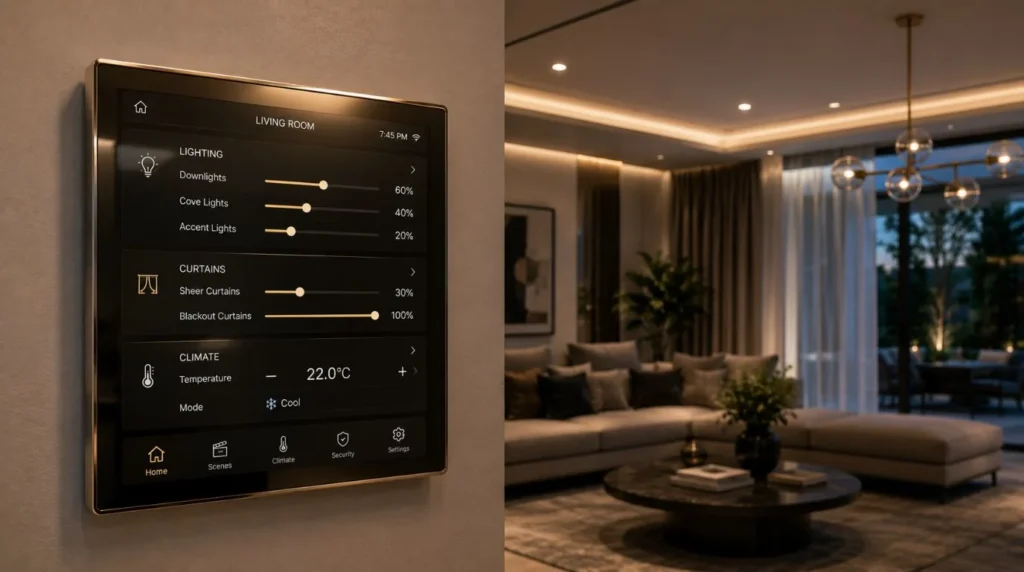
For homeowners seeking advanced lighting automation, KNX offers exceptional flexibility.
KNX lighting systems can integrate:
- Smart dimmers
- Occupancy sensors
- Daylight sensors
- Motorized curtains
- HVAC
- Security
- Touch panels
Instead of individual switches operating independently, every lighting decision becomes part of a coordinated automation strategy.
Common Mistakes
Buying Incompatible Dimmers
Always verify compatibility with your lighting fixtures.
Ignoring Lighting Design
The quality of the lighting layout is just as important as the smart switch.
Using Only Manual Control
Automation unlocks the full value of smart switches for dimming.
Installing Different Switch Types Throughout the Home
Consistent controls improve usability.
Planning Only for Today’s Needs
Choose a scalable system that supports future expansion.
Why It Matters
Good lighting improves:
- Comfort
- Mood
- Productivity
- Sleep quality
- Energy efficiency
- Home value
Smart switches for dimming aren’t simply a luxury feature, but it creates a more enjoyable living environment.
Our Perspective at Techtastic
At Techtastic, we believe lighting should be intuitive, comfortable, and adaptable to everyday life. Rather than treating dimming as a standalone feature, we design lighting systems that respond intelligently to occupancy, daylight, schedules, and personal preferences, creating spaces that feel natural throughout the day.
For luxury homes, we often recommend KNX home automation because it enables centralized lighting control, seamless scene creation, and smooth integration with climate control, motorized curtains, and security systems. This holistic approach delivers a lighting experience that is both elegant and future-ready.
Collaboration Opportunities for Developers, Architects & Interior Designers
Exceptional lighting begins with thoughtful planning.
At Techtastic, we collaborate with:
- Architects
- Interior designers
- Residential developers
- Luxury home builders
- Lighting designers
- MEP consultants
Intelligent Lighting Design
Plan layered lighting that supports comfort, functionality, and aesthetics.
KNX Lighting Infrastructure
Create scalable dimming systems that integrate with the entire smart home.
Daylight Integration
Coordinate artificial lighting with natural daylight to improve efficiency.
Scene-Based Automation
Design lighting environments tailored to different activities and lifestyles.
Premium Residential Projects
Deliver sophisticated lighting experiences that enhance modern living.
Future-Ready Developments
Prepare homes for evolving lighting technologies and smart home expansion.
Careful planning ensures lighting remains beautiful, efficient, and adaptable for years to come.
Key Takeaways
- Smart switches for dimming provide far more than brightness adjustment; they improve comfort, flexibility, and energy efficiency.
- Look for LED compatibility, smooth dimming, lighting scenes, scheduling, and occupancy-based automation.
- Proper compatibility between dimmers and lighting fixtures is essential for reliable performance.
- Automated lighting scenes create a more convenient and personalized living experience.
- Smart switches for dimming can contribute to lower energy consumption when combined with intelligent automation.
- KNX home automation offers advanced lighting control with seamless integration across the entire home.
- A well-designed lighting system enhances both the functionality and value of your property.
Frequently Asked Questions
1. Can all smart switches dim lights?
A. No. Only smart dimmer switches are designed to adjust brightness. Standard smart switches typically provide on/off control only.
2. Do I need special bulbs for smart switches for dimming?
A. Most smart dimmer switches work best with dimmable LED bulbs or compatible lighting fixtures. Always check the manufacturer’s compatibility recommendations before installation.
3. Can smart dimmers save energy?
A. Yes. Dimming lights reduces power consumption, and when combined with automation, scheduling, and occupancy sensors, it can further reduce unnecessary electricity usage.
4. Can I create different lighting scenes?
A. Yes. Most smart switches for dimming systems allow you to save scenes such as Reading, Movie Night, Dining, or Relax, adjusting multiple lights with a single command.
5. Can smart switches for dimming work with voice assistants?
A. Many smart dimmer switches support voice control through compatible smart home platforms, allowing hands-free adjustment of lighting levels.
6. Is professional installation necessary?
A. For basic smart dimmers, DIY installation may be possible if appropriate and safe. However, larger or integrated lighting systems benefit from professional design and installation to ensure compatibility, reliability, and future scalability.
7. Does KNX support advanced dimming?
A. Yes. KNX supports sophisticated dimming functions, scene control, daylight integration, occupancy-based lighting, and seamless coordination with other smart home systems.
8. Should I install smart dimmers throughout the whole house?
A. Not necessarily. Many homeowners begin with frequently used spaces such as the living room, dining room, bedrooms, and home theatre, then expand their lighting automation over time.
Conclusion
Choosing the right smart switches for dimming is about creating lighting that adapts to the way you live. Features such as smooth LED compatibility, customizable scenes, occupancy-based automation, and intelligent scheduling deliver greater comfort, improved energy efficiency, and a more enjoyable home environment. When thoughtfully designed, smart switches for dimming become an essential part of everyday living rather than just a convenience.
At Techtastic, we design lighting solutions that combine aesthetics, performance, and long-term flexibility. Whether you’re upgrading a single room or building a fully integrated KNX home automation system, we create lighting experiences that are intuitive, scalable, and built to enhance your home for years to come.
📞 Call/WhatsApp: 9769145145
📍 Our Operational Hubs: Navi Mumbai | Nashik | Lonavla | Sangli
Ready to take the next step? Explore our comprehensive breakdown on Home Automation Switches: Best Connection Guide for 2026.