
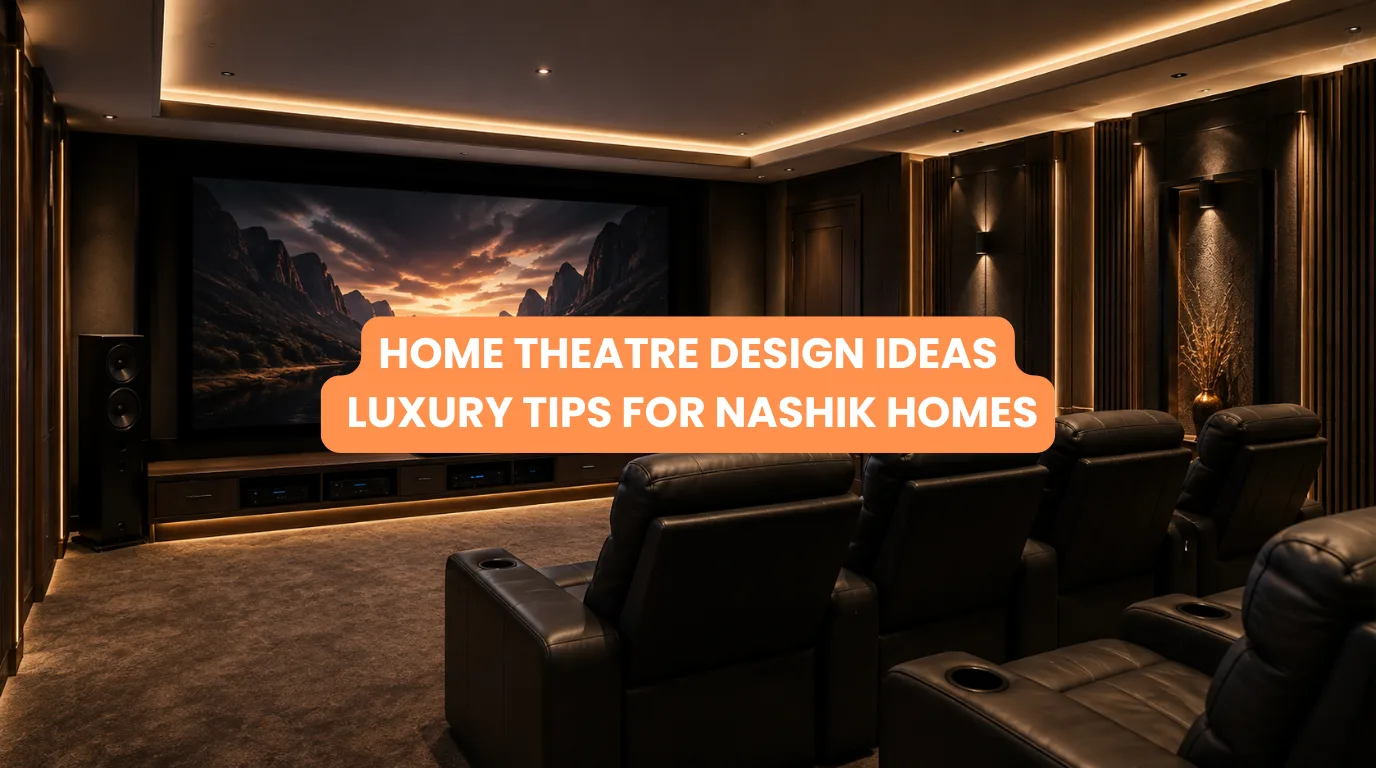
Luxury homes in Nashik are becoming more experience-driven. Homeowners are no longer satisfied with beautiful living rooms and premium finishes alone. They want spaces that offer privacy, comfort, entertainment, and technology in one seamless environment.
That is why private home theatres are becoming increasingly popular in high-end residences.
The right home theatre design ideas can transform an unused room, basement, lounge, or even a large living area into an immersive entertainment space. But creating a great home theatre is about much more than buying a large screen and powerful speakers.
Room proportions, acoustics, lighting, seating, ventilation, wiring, screen placement, and automation all influence the final experience. For luxury homes in Nashik, the best approach is to plan the theatre as part of the architecture rather than adding technology after the interiors are complete.
In this guide, we explore practical home theatre design ideas that combine cinematic performance with elegant interiors, smart automation, and the comfort expected from a premium residence.
Quick Answer
The best home theatre design ideas for luxury homes in Nashik combine a dedicated or flexible entertainment space with acoustic treatment, sound isolation, a correctly sized screen, immersive surround sound, comfortable seating, layered lighting, concealed AV equipment, and smart automation. The goal is not simply to create a room filled with technology. The goal is to create a space where technology disappears, and the movie becomes the focus.
Quick Summary
✓ Home theatre design ideas should begin with room planning rather than equipment selection.
✓ Acoustic treatment improves dialogue clarity and overall sound quality.
✓ Sound isolation prevents movie sound from disturbing other areas of the home.
✓ A correctly sized screen creates a more comfortable viewing experience.
✓ Layered lighting makes the room functional before and after movies.
✓ Premium seating should support the room layout and viewing angles.
✓ Concealed speakers and equipment create a cleaner luxury aesthetic.
✓ Smart automation can activate an entire movie scene with one command.
✓ A media room is a flexible alternative to a dedicated theatre.
✓ Early planning makes future technology upgrades easier.
Why Luxury Homes in Nashik Are Adding Private Theatres
The modern luxury home is becoming more personalized. Homeowners want spaces designed around their lifestyles, whether that means a private gym, wine cellar, gaming room, spa, or entertainment lounge. A home theatre fits naturally into this trend because it provides a dedicated experience for families and guests.
Nashik’s luxury residential market includes large bungalows, villas, and spacious homes where dedicated entertainment areas are practical.
A professionally designed theatre can provide:
- A private movie-watching environment
- Better audio and visual quality
- Greater control over lighting
- Comfortable seating
- Gaming and sports viewing
- Integration with wider home automation
- A premium entertainment experience for guests
However, simply dedicating a room to entertainment does not guarantee a cinematic result. This is where thoughtful home theatre design ideas become important.
1. Start With the Right Room
One of the first decisions is choosing the location.
A dedicated theatre room is usually the easiest option because the room can be designed specifically for audio-visual performance. However, it is not the only possibility.
You could consider:
- A dedicated entertainment room
- Basement cinema
- Large family lounge
- Media room
- Converted bedroom
- Poolside entertainment room
- Large living room
The room should ideally provide enough distance between the screen and seating while allowing speakers to be positioned correctly. A room that is too narrow can restrict speaker placement. A room that is excessively reflective can make dialogue sound unclear.
One of the most valuable home theatre design ideas is to finalize these fundamentals before selecting the projector or screen.
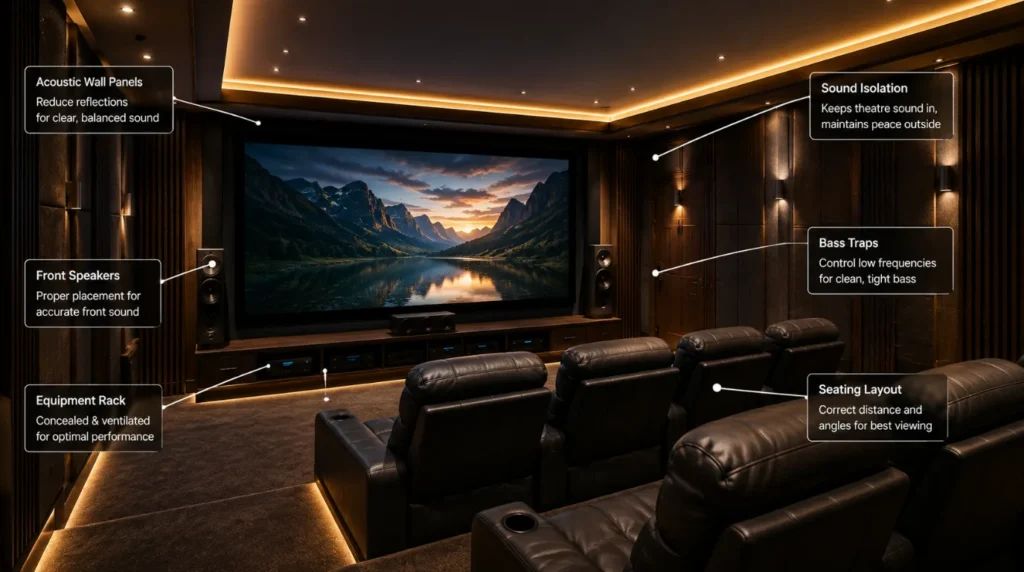
2. Create an Immersive Acoustic Environment
Sound is arguably more important than the screen during planning for home theatre design ideas. A large 4K display cannot compensate for poor audio. If dialogue echoes, bass becomes muddy, or sound leaks into bedrooms, the experience quickly becomes frustrating.
Acoustic Treatment
Acoustic panels can absorb unwanted reflections and improve clarity.
Depending on the room, treatments may include:
- Fabric acoustic panels
- Wooden acoustic panels
- Bass traps
- Diffusers
- Acoustic ceiling treatments
- Carpet or suitable flooring
The objective is to control reflections rather than make the room completely dead.
Sound Isolation
Sound isolation is different from acoustic treatment.
For a premium installation, consider construction techniques such as isolated wall assemblies, additional mass, damping layers, acoustic doors, and suitable floor isolation. For new construction, soundproofing should ideally be addressed before the final interior finishes.
This is one of the home theatre design ideas that is easiest and most cost-effective to implement when planned early.
3. Choose the Right Screen Size
Bigger does not always mean better.
The screen should be selected according to:
- Room length
- Seating distance
- Projector capability
- Screen aspect ratio
- Viewing preferences
- Content type
A screen that is too large for the room can cause viewing fatigue. A screen that is too small may not provide the immersive experience homeowners expect.
Professional home theatre design ideas should always consider the relationship between screen size, viewing distance, and room dimensions.
4. Build a Proper Surround Sound System
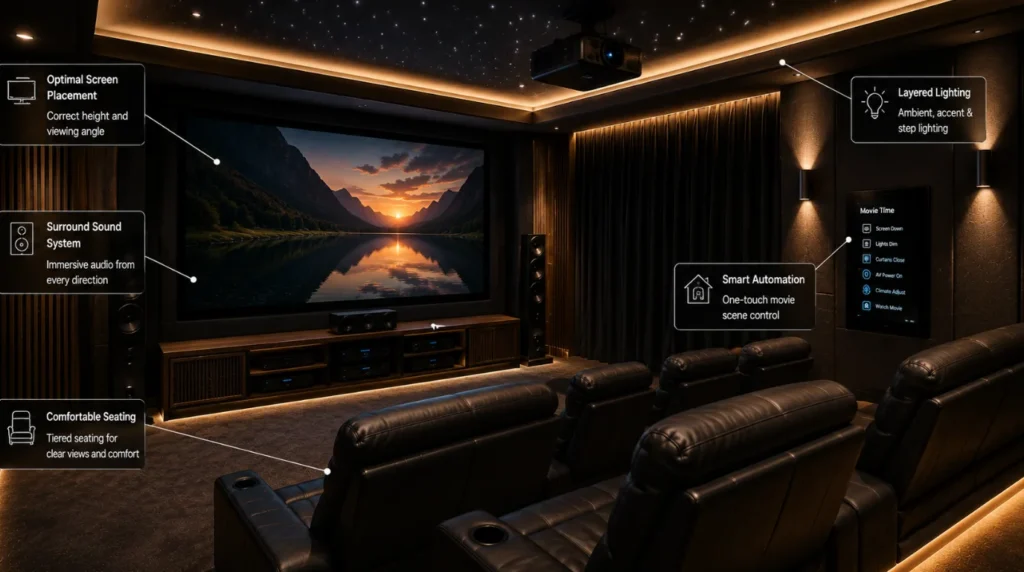
A cinema should sound immersive from every seat. Modern surround sound systems can create directional audio that makes viewers feel closer to the action.
A typical high-performance setup may include:
- Front left and right speakers
- Center channel
- Surround speakers
- Height speakers
- One or more subwoofers
- AV receiver or processor
- Dedicated amplification where required
The speaker positions should be planned around the screen, seating, room geometry, and selected audio format. Subwoofer placement also requires careful consideration because low frequencies interact strongly with room boundaries.
Among the most useful home theatre design ideas is to plan speaker locations before the walls and ceilings are finished.
5. Use Smart Lighting to Create the Right Mood
Lighting can completely change the character of a theatre. A bright ceiling light may be useful while cleaning the room, but it is not appropriate during a movie. Instead, consider several independent lighting layers.
Ambient Lighting
Soft indirect lighting provides comfortable illumination before and after a movie.
Step Lighting
Low-level lighting around stairs or seating platforms provides safety without distracting from the screen.
Accent Lighting
Subtle lighting can highlight architectural features, wall textures, or decorative elements.
Movie Lighting
A dedicated movie scene can gradually dim the room when the film starts.
This is where automation makes the experience feel polished. This combination of technology and interior planning is among the most effective home theatre design ideas for luxury residences.
6. Invest in Comfortable and Functional Seating
Luxury theatre seating is not simply about appearance. Homeowners may spend two or three hours in the room at a time, so ergonomics matter.
Popular options include:
- Powered reclining cinema seats
- Leather recliners
- Fabric theatre seating
- Large sofas
- Custom upholstered seating
- Tiered seating arrangements
The best home theatre design ideas balance cinematic performance with the way the family actually intends to use the room.
7. Make the Technology Invisible
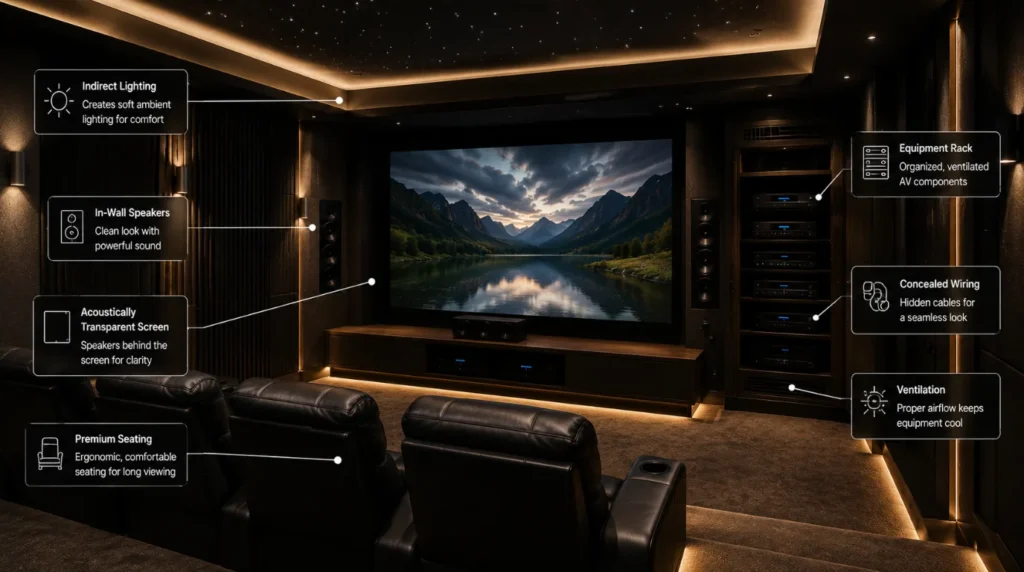
One of the biggest differences between an ordinary entertainment room and a luxury theatre is how technology is integrated. You do not necessarily want to see cables, routers, amplifiers, speakers, and multiple remotes everywhere.
Modern home theatre design ideas increasingly focus on invisible technology.
Concealed Speakers
In-wall and in-ceiling speakers can reduce visual clutter.
An acoustically transparent projection screen can also allow front speakers to be positioned behind the screen, creating a cleaner visual arrangement.
Centralized Equipment Rack
Amplifiers, AV processors, media servers, network equipment, and other components can be located in a dedicated rack. The rack should be properly ventilated and accessible for maintenance.
Motorized Screens and Curtains
Motorized components can disappear when not in use. A screen can retract into the ceiling, while curtains can close automatically when a movie scene is activated.
These details help create the feeling of an Invisible Cinema.
8. Add Complete Home Theatre Automation
Automation takes a good theatre and makes it effortless. Instead of operating separate remotes for every device, homeowners can create scenes based on activities.
Automation can also integrate the theatre with the wider smart home system. For example, when the movie starts, hallway lights can remain at a low level while unnecessary lighting throughout the entertainment area switches off.
These home theatre design ideas are especially useful in large luxury residences where multiple systems need to work together.
9. Don’t Forget Climate and Ventilation
A room filled with people and electronic equipment generates heat. Projectors, amplifiers, media servers, gaming systems, and other equipment can raise the temperature quickly.
At the same time, an enclosed theatre requires adequate fresh air. Poorly planned air conditioning can become a significant source of background noise. A luxury home theatre design ideas strategy should therefore treat HVAC as part of the AV design rather than an unrelated building service.
Why Professional Home Theatre Installation Matters
A luxury theatre involves several technical disciplines. Acoustics, AV, electrical systems, HVAC, lighting, interiors, networking, and automation all need to work together. If each component is installed independently, problems can appear later.
A professional integrator can coordinate:
- Speaker positioning
- Screen placement
- Projector calculations
- Acoustic treatment
- Wiring
- Equipment rack
- Lighting automation
- HVAC coordination
- Control interfaces
This integrated approach ensures that home theatre design ideas are converted into a functional and reliable entertainment environment.
At Techtastic Technologies, we work with homeowners, architects, interior designers, and builders to integrate technology into the architectural planning process.
The Future of Luxury Home Theatres in Nashik
Home entertainment technology continues to evolve.
Higher-resolution displays, immersive audio, gaming, streaming platforms, intelligent automation, and invisible AV systems are changing what homeowners expect of home theatre design ideas for private entertainment spaces.
The future is not necessarily about adding more gadgets but about making the experience simpler. A homeowner should not have to understand how the projector, AV processor, amplifier, lighting controller, and curtain motor communicate.
One command should be enough. This is why the next generation of home theatre design ideas will focus increasingly on integrated automation, architectural concealment, flexible infrastructure, and personalized experiences.
Key Takeaways
- Start planning home theatre design ideas during the architectural design stage.
- Treat acoustics and sound isolation as priorities.
- Select screen size according to viewing distance and room dimensions.
- Plan speaker locations before finishing walls and ceilings.
- Use layered lighting instead of a single overhead fixture.
- Choose seating according to room size and viewing requirements.
- Conceal speakers, cables, screens, and AV equipment wherever practical.
- Provide dedicated ventilation and electrical infrastructure.
- Use automation to control multiple systems through one command.
- Choose home theatre design ideas that match your property’s architecture and lifestyle.
Frequently Asked Questions
1. What are the best Home Theatre Design Ideas for a luxury home?
A. The best home theatre design ideas combine acoustic treatment, sound isolation, a correctly sized screen, immersive audio, comfortable seating, smart lighting, concealed equipment, and automation.
2. Is a dedicated room necessary for a home theatre?
A. No. A dedicated room provides greater control, but a well-designed media room or living area can also deliver an excellent entertainment experience.
3. Should I choose a projector or a large television?
A. It depends on the room, screen size requirements, viewing distance, lighting conditions, and personal preference. Projectors are particularly effective when a very large image is desired.
4. How important is acoustic treatment?
A. It is extremely important. Acoustic treatment controls reflections and helps improve dialogue clarity, imaging, and overall sound quality.
5. Can home theatre speakers be hidden?
A. Yes. In-wall, in-ceiling, and acoustically transparent speaker solutions can reduce visual clutter while maintaining high-quality audio when correctly designed and installed.
6. Can lighting be automated?
A. Yes. Lighting can be integrated into movie scenes so that the room dims automatically when playback begins and returns to a comfortable level afterward.
7. Should the AV equipment be inside the theatre?
A. It can be, but a centralized and ventilated equipment rack outside the main viewing area often provides a cleaner and quieter solution.
8. Can a home theatre be connected to the home’s existing automation system?
A. Yes. Lighting, curtains, HVAC, screens, projectors, AV equipment, and other systems can be integrated depending on the chosen automation platform and equipment compatibility.
9. When should I plan my home theatre?
A. Ideally, plan it during the architectural, electrical, and interior design stages. Early planning makes concealed wiring, acoustic construction, speaker placement, and automation integration significantly easier.
10. How much space is required for a luxury home theatre?
A. There is no single ideal room size. The required space depends on the number of seats, screen size, speaker layout, room proportions, equipment, and whether the space is dedicated or multipurpose.
Collaboration Opportunities for Builders and Architects
Builders, architects, and interior designers can significantly enhance luxury residential projects by integrating dedicated home theatre rooms and smart entertainment systems during the design stage.
Techtastic collaborates with industry professionals to ensure audiovisual systems and automation technologies integrate seamlessly with architectural layouts and interior concepts.
Partner with Techtastic to implement premium home theatre and automation solutions for your upcoming residential projects in Nashik.
Areas We Serve
Techtastic Technologies works with luxury homeowners, architects, interior designers, builders, and developers across:
Nashik | Navi Mumbai | Lonavla | Sangli
We provide smart home automation, home theatre, AV integration, lighting automation, and related technology solutions for premium residential projects.
Upgrade Your Home Entertainment with Techtastic
The right home theatre design ideas can transform an ordinary room into an immersive private cinema. But the best results come when acoustics, AV, lighting, interiors, electrical infrastructure, and automation are considered together.
Whether you are designing a dedicated theatre room, basement cinema, or multipurpose media lounge, Techtastic Technologies can help create an entertainment space that looks refined and performs exceptionally.
Contact Techtastic
🌐 Website: Techtastic Website
📞 Phone: 9769145145
📍 Service Areas: Mumbai • Navi Mumbai • Pune • Lonavala • Nashik • Sangli
Planning a premium entertainment space in your basement? Explore our Basement Home Theater: 10 Best Design Tips for Nashik for practical ideas to create a comfortable and immersive viewing experience.