
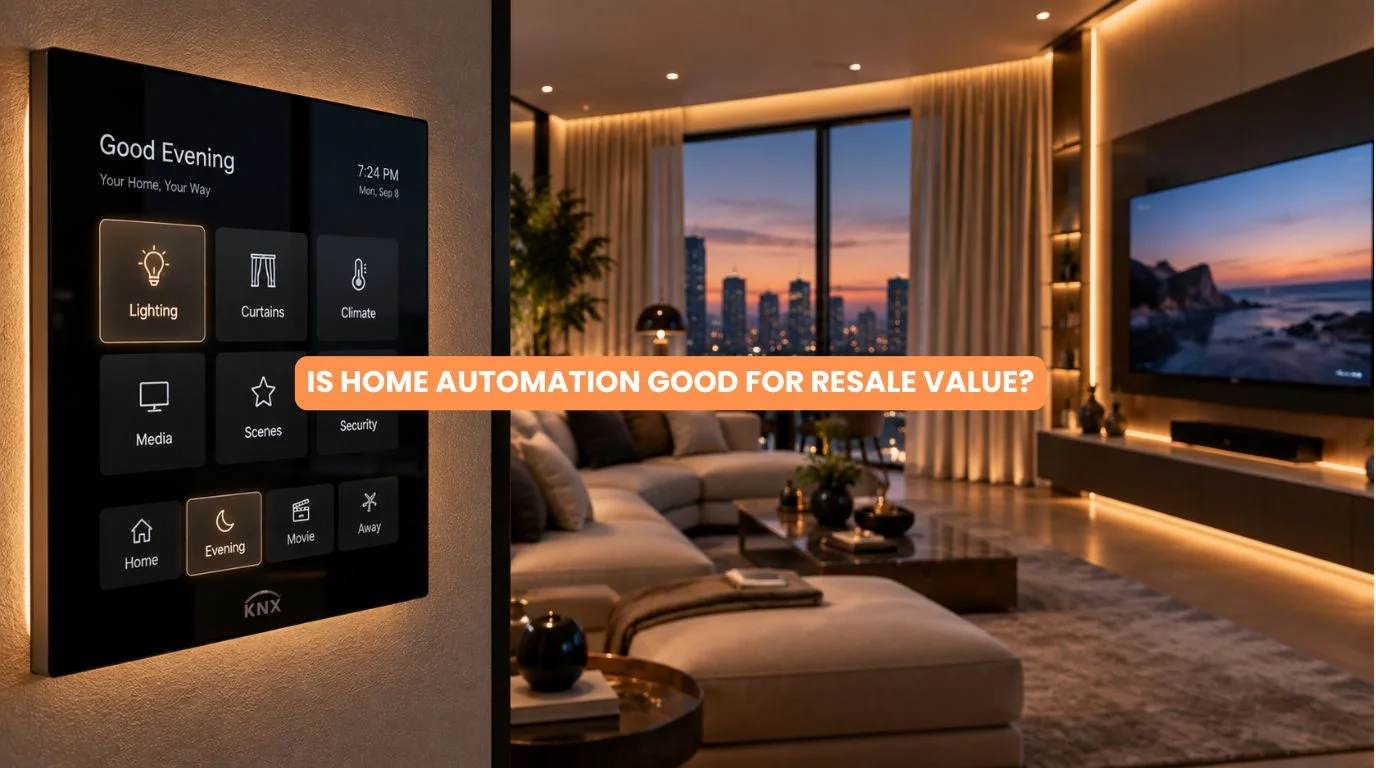
If you’re buying a premium home, it’s normal to ask this: Is home automation good for resale value? Or is it just a cost that improves your life while you live there?
The honest answer is yes: home automation can boost resale value. But quality, design, integration, and the target market matter a lot.
A few smart bulbs and a Wi-Fi plug are unlikely to affect a property’s selling price materially. A professionally designed automation system integrating lighting, security, climate control, curtains, entertainment, and energy management is a completely different proposition.
At Techtastic, we see home automation as a long-term property feature rather than simply a collection of gadgets. In premium residential markets, a well-integrated smart home can set a property apart. It can boost move-in appeal and attract tech-conscious buyers.
Industry guidance from the KNX Association also points to integrated smart systems. It highlights security, energy efficiency, and open technologies as factors that can support property value.
So, is home automation good for resale value? Yes—but you need to design it as part of the home, not add it as an afterthought.
Quick Summary
✓ Yes, particularly for premium apartments, villas, and luxury residences.
✓ Integrated security can make a property more attractive to buyers.
✓ Smart lighting, climate control, and curtains improve everyday convenience.
✓ Energy management can strengthen the long-term value proposition.
✓ Wired and open-protocol systems such as KNX can provide better long-term flexibility.
✓ Professional documentation, programming, and support can make the system easier for a new owner to understand.
✓ Poorly integrated, outdated, or proprietary automation can actually become a concern for buyers.
Quick Answer
Yes, home automation can boost resale appeal. It can also raise property value, especially in premium and luxury homes. However, there is no universal percentage that every automated home will gain.
Your location, property segment, quality of interiors, automation brand, system integration, reliability and buyer expectations all influence the outcome.
A useful way to think about it is:
Home automation may not create the value of the property, but it can strengthen the property’s overall proposition.
For example, imagine two similar luxury apartments in the same building.
One has conventional switches, separate remotes, manual curtains, and standalone security equipment. The other offers:
- Centralized lighting control
- Motorized curtains
- Smart security
- Climate automation
- Scene-based controls
- Energy monitoring
- Integrated entertainment
- A professionally configured automation system
The second property has a stronger move-in-ready technology proposition. That difference can matter when a buyer is comparing otherwise similar homes.
Why Home Automation Can Improve Property Value
When considering is home automation good for resale value, it helps to understand what actually creates the value. Automation doesn’t necessarily add value simply because technology exists inside the home.
It adds value when technology solves problems buyers value.
1. Convenience
A buyer doesn’t necessarily want “automation.” They want to walk into the house and press one button to create an evening environment.
For example:
Good Night Scene
- Lights switch off
- Curtains close
- AC adjusts
- Security system activates
Or:
Movie Scene
- Main lights dim
- Curtains close
- Projector starts
- AV system activates
This type of integration makes the home feel easier to operate.
That is one reason to is home automation good for resale value, that its is ultimately a question of experience rather than hardware.
2. Smart Security Can Be a Strong Selling Point
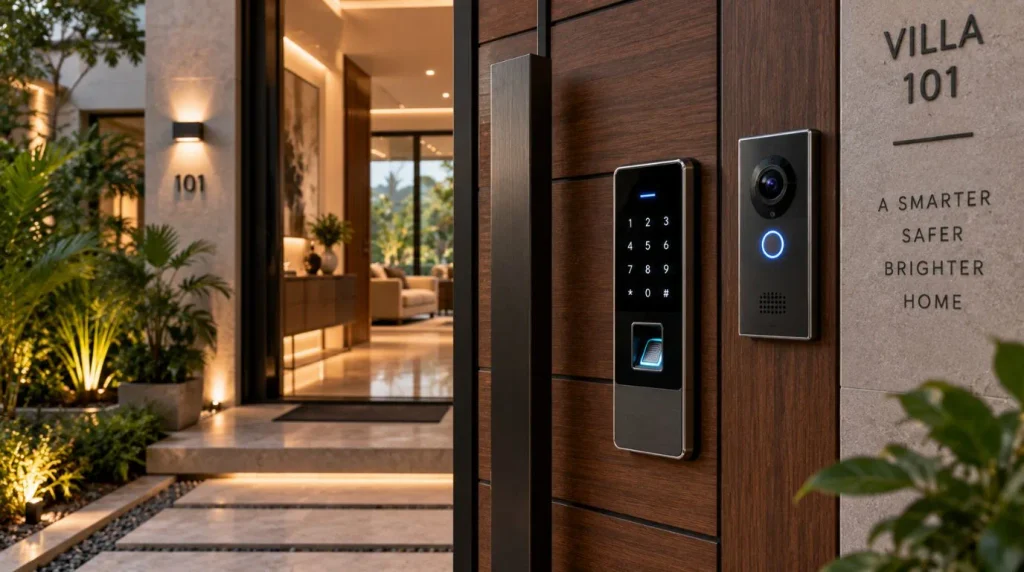
Security is one of the most understandable smart-home benefits for a future buyer. Modern automation can integrate:
- Smart locks
- Video door phones
- CCTV
- Motion sensors
- Door and window sensors
- Intrusion alerts
- Access control
- Automated security scenes
The KNX Association also highlights security as one of the important smart-home applications buyers value. This matters because people don’t perceive security as a luxury gadget. It is a practical feature.
When evaluating is home automation good for resale value, security automation is therefore one of the strongest areas to consider.
3. Energy Management Can Strengthen the Investment
Energy efficiency is becoming increasingly important for homeowners.
Automation can help homeowners monitor and manage:
- Lighting
- Air conditioning
- HVAC
- Appliances
- Occupancy
- Energy consumption
- Scheduled loads
For example, automation can turn off unnecessary lighting when a room is unoccupied or coordinate climate control with occupancy.
The objective isn’t simply to make the house “smart.” It is to make the house more efficient to operate. That gives a future buyer another reason to appreciate the system. So when asking is home automation good for resale value, energy saving and management should not be overlooked.
4. Lighting Automation Adds Both Function and Luxury
Lighting is one of the most visible areas where automation can transform a home. Instead of controlling every light individually, homeowners can create scenes such as:
Morning
Soft bedroom lighting → curtains open → selected lights activate.
Evening
Living room lights → dining lights → ambient lighting.
Away
All unnecessary lights off → security activated → selected devices shut down.
For luxury properties, this can create an experience that conventional electrical systems simply cannot replicate. So when asking is home automation good for resale value, integrated lighting should not be overlooked.
5. Motorized Curtains Increase Perceived Luxury
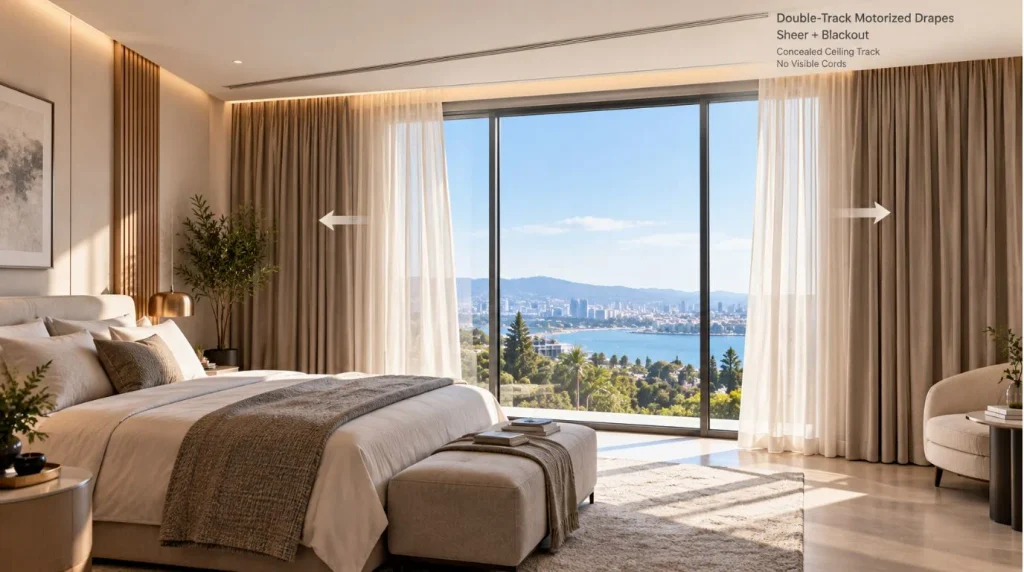
Motorized curtains are another feature that buyers immediately understand. They can be programmed based on:
- Time of day
- Sunlight
- Temperature
- Scene selection
- Occupancy
They can also work together with lighting and climate systems.
For a premium apartment or villa, this creates a polished experience without adding visual clutter. Smart Home World has also highlighted automated blinds and curtains, lighting, climate control, and integrated security. These are smart investments that can add perceived value in premium homes.
Wired vs Wireless: Which Is Better for Resale?
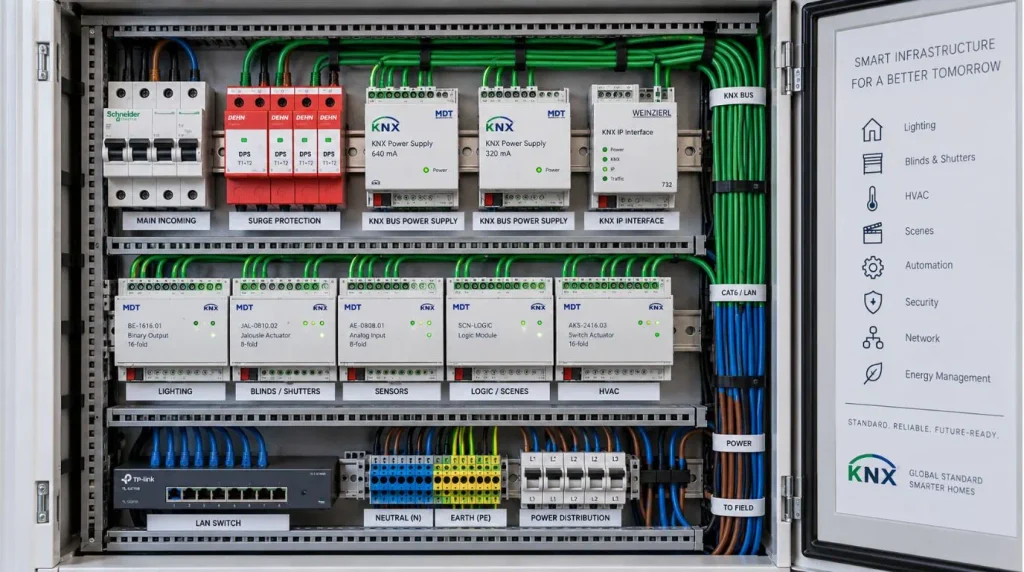
This is an important question when discussing is home automation good for resale value. Not every smart-home system offers the same long-term proposition.
| Factor | Wireless Automation | Wired / Professional Automation |
|---|---|---|
| Installation | Easier | Requires planning |
| Retrofit | Generally easier | More complex |
| Scalability | Depends on ecosystem | Strong with proper infrastructure |
| Reliability | Depends on network | Strong local infrastructure |
| Buyer perception | Varies | Often stronger in premium homes |
| Long-term planning | Important | Strong when designed correctly |
| Best suited for | Existing homes | New builds / major renovations |
For premium new construction, wired professional systems can be particularly attractive because the infrastructure is designed into the property.
KNX is especially relevant here. It is an open standard, not one manufacturer’s ecosystem. This can offer more flexibility when the home changes owners.
Why Open Standards Matter for Resale
Imagine purchasing a luxury home and discovering that every automation component depends on a discontinued proprietary platform. That immediately creates uncertainty.
A buyer may ask:
- Who will maintain it?
- Can we still replace components?
- What happens if the installer disappears?
- Can I change the system later?
- Will I need to replace everything?
This is why is home automation good for resale value is also a question of future compatibility.
Open and well-supported technologies can reduce the concern associated with inheriting someone else’s automation system. For a premium property, that can be an important advantage.
Does Home Automation Guarantee a Higher Selling Price?
No. This is one of the most important points homeowners should understand. There is no universal rule saying:
“Spend ₹5 lakh on automation and your home will automatically sell for ₹7 lakh more.”
Property value depends on many variables. These include:
- Location
- Carpet area
- Floor
- Building quality
- Parking
- Amenities
- Views
- Interior quality
- Market conditions
- Buyer demand
- Property age
- Technology quality
Recent commentary on India’s smart-home market suggests that professional automation can raise prices in premium markets. The premium depends on the location, property type, and integration quality.
Therefore, is home automation good for resale value should never be evaluated in isolation from the rest of the property.
What Kind of Automation Adds the Most Resale Appeal?
If resale is one of your objectives, prioritize features with obvious practical benefits.
High-value automation features
| Feature | Resale Appeal | Why |
|---|---|---|
| Smart Security | ⭐⭐⭐⭐⭐ | Safety and peace of mind |
| Lighting Automation | ⭐⭐⭐⭐⭐ | Convenience + luxury |
| Climate Control | ⭐⭐⭐⭐ | Comfort + efficiency |
| Motorized Curtains | ⭐⭐⭐⭐ | Premium experience |
| Energy Management | ⭐⭐⭐⭐ | Operational efficiency |
| Integrated AV | ⭐⭐⭐ | Lifestyle enhancement |
| Voice Control | ⭐⭐⭐ | Convenience |
| Random Smart Gadgets | ⭐⭐ | Limited integrated value |
The key principle is integration. A professionally integrated system is generally more compelling than 20 unrelated smart devices.
What Can Reduce Resale Appeal?
Not all automation is automatically positive. Potential problems include:
Outdated Technology
A system that hasn’t been updated or documented for years can become a liability.
Too Many Apps
If a buyer needs six different applications to operate the house, the system may feel complicated rather than intelligent.
Proprietary Ecosystems
Systems that depend heavily on one unavailable manufacturer or installer can create future maintenance concerns.
Poor Documentation
A buyer should ideally receive information about:
- System architecture
- Device list
- Programming
- Network configuration
- Warranty
- Service history
- User controls
Visible Retrofit Work
Poorly installed wiring, excessive sensors, or mismatched switches can reduce the premium appearance of an otherwise luxury property.
This is why is home automation good for resale value depends heavily on how professionally the technology has been implemented.
Does Home Automation Make a Home Easier to Sell?
Potentially, yes. Think about two different benefits:
Direct value
A buyer may be willing to pay more because the home already includes desirable automation.
Indirect value
The automation may make the property:
- More memorable
- More differentiated
- More attractive during a viewing
- More move-in ready
- More aligned with premium buyer expectations
The second category can be just as important. A buyer might remember the apartment where the entire lighting, curtain, and climate experience worked seamlessly. That creates differentiation.
Should You Install Home Automation Just for Resale?
We wouldn’t recommend it. If you plan to sell your home soon, an expensive automation system may not be worth it. But if you’re living in the property for several years, the calculation changes.
You receive the benefits every day:
- Comfort
- Security
- Convenience
- Energy management
- Entertainment
- Lifestyle improvement
And when you eventually sell, the automation becomes an additional property feature. That is a much healthier way to think about is home automation good for resale value.
Our Approach at Techtastic
At Techtastic, we don’t recommend automation simply because a home can accommodate more technology. We first look at how people will use the property.
For a new luxury home, we consider:
- Electrical planning
- Automation infrastructure
- Lighting requirements
- HVAC and climate control
- Security
- Curtains and shading
- Networking
- Audio/video
- Energy management
- Future expansion
The goal is to create a system that works for the current homeowner and stays clear and flexible for future owners. That is particularly important when considering is home automation good for resale value.
A smart home should still make sense five or ten years later.
Key Takeaways: Is Home Automation Good for Resale Value?
If you’re still asking is home automation good for resale value, remember these points:
- Yes, it can strengthen resale appeal.
- The impact is strongest in premium and luxury properties.
- Integrated systems are more valuable than isolated smart gadgets.
- Security and energy management are particularly meaningful.
- Lighting, climate, and curtain automation improve lifestyle appeal.
- Open and scalable systems can reduce future compatibility concerns.
- Poorly documented or outdated systems can become a liability.
- Don’t install expensive automation purely to chase resale ROI.
- Design the system primarily for your lifestyle, with future buyers in mind.
Frequently Asked Questions (FAQs)
1. Is home automation good for resale value?
Yes. Is home automation good for resale value depends on the property segment, location, system quality and buyer expectations. Professionally integrated automation can improve differentiation and buyer appeal.
2. Does smart home automation increase property price?
It can, particularly in premium properties. However, there is no guaranteed percentage increase because real estate value depends on many factors beyond automation.
3. Which smart home features add the most resale value?
Security, lighting, climate control, energy management, and motorized curtains are among the most compelling features because buyers can immediately understand their practical benefits.
4. Is KNX good for property resale?
KNX is a strong choice for premium properties. It is an open standard for professional building automation.
5. Should I choose wired or wireless automation?
For new construction or major renovations, wired professional automation can offer strong infrastructure and scalability. Wireless systems can be useful for existing homes where rewiring isn’t practical.
6. Can outdated home automation reduce property appeal?
Yes. If the system is hard to use, buyers may see it as a maintenance issue.
If it is unsupported, buyers may see it as a maintenance issue. If it has poor documentation, buyers may see it as a maintenance issue. If it is built on outdated parts, buyers may see it as a maintenance issue.
7. Should I automate my home before selling it?
Usually, don’t install a costly system solely for resale. If you already live in the home, automation can improve your daily life for years. It can also help sell the home later.
8. Does home automation help luxury villas?
Yes. Large villas often benefit significantly from integrated lighting, HVAC, security, curtains, networking, entertainment and energy management because multiple systems need to work together.
9. Can automation help a home stand out during resale?
Yes. A seamless smart-home demonstration can make a property more memorable and differentiate it from otherwise similar homes.
10. What is more valuable: smart devices or complete automation?
A complete, professionally integrated system usually offers better value than disconnected smart devices because buyers get one cohesive experience, not gadgets.
Collaboration Opportunities for Architects & Interior Designers
For architects and interior designers, automation should ideally be considered during the design stage rather than after the interiors are complete.
Early collaboration allows us to coordinate:
- Lighting layouts
- Switch locations
- Curtain pockets
- HVAC controls
- Sensor positioning
- AV requirements
- Network infrastructure
- Automation panels
- Concealed wiring
- Future expansion
This creates a cleaner finished environment and helps ensure the automation supports the design instead of competing with it. For premium projects, planning makes the difference. It can turn a home with smart devices into a home that feels intelligent.
Areas We Serve
Techtastic works with homeowners, architects, interior designers, builders, and developers across: Navi Mumbai | Nashik | Lonavla | Sangli
For premium residences, we design automation around the property’s architecture, lifestyle requirements, and long-term technology needs.
Final Verdict: Is Home Automation Good for Resale Value?
So, is home automation good for resale value? Yes—but don’t think of it as a guaranteed price multiplier.
The real opportunity is to create a property that is more convenient, secure, efficient, luxurious, and future-ready.
A professionally integrated system can become part of the home’s overall value proposition, particularly in premium residential markets where buyers increasingly expect technology to be integrated into the living experience.
Indian premium real-estate commentary also shows that developers increasingly position smart-home technology as part of the specification of contemporary luxury properties.
The smartest approach is therefore simple: Build automation for today’s homeowner, but design it intelligently enough for tomorrow’s homeowner.
That’s when home automation becomes more than technology. It becomes part of the property itself.
Contact Techtastic
🌐 Website: Techtastic Website
📞 Phone: 9769145145
📍 Service Areas: Mumbai • Navi Mumbai • Pune • Lonavala • Nashik • Sangli