
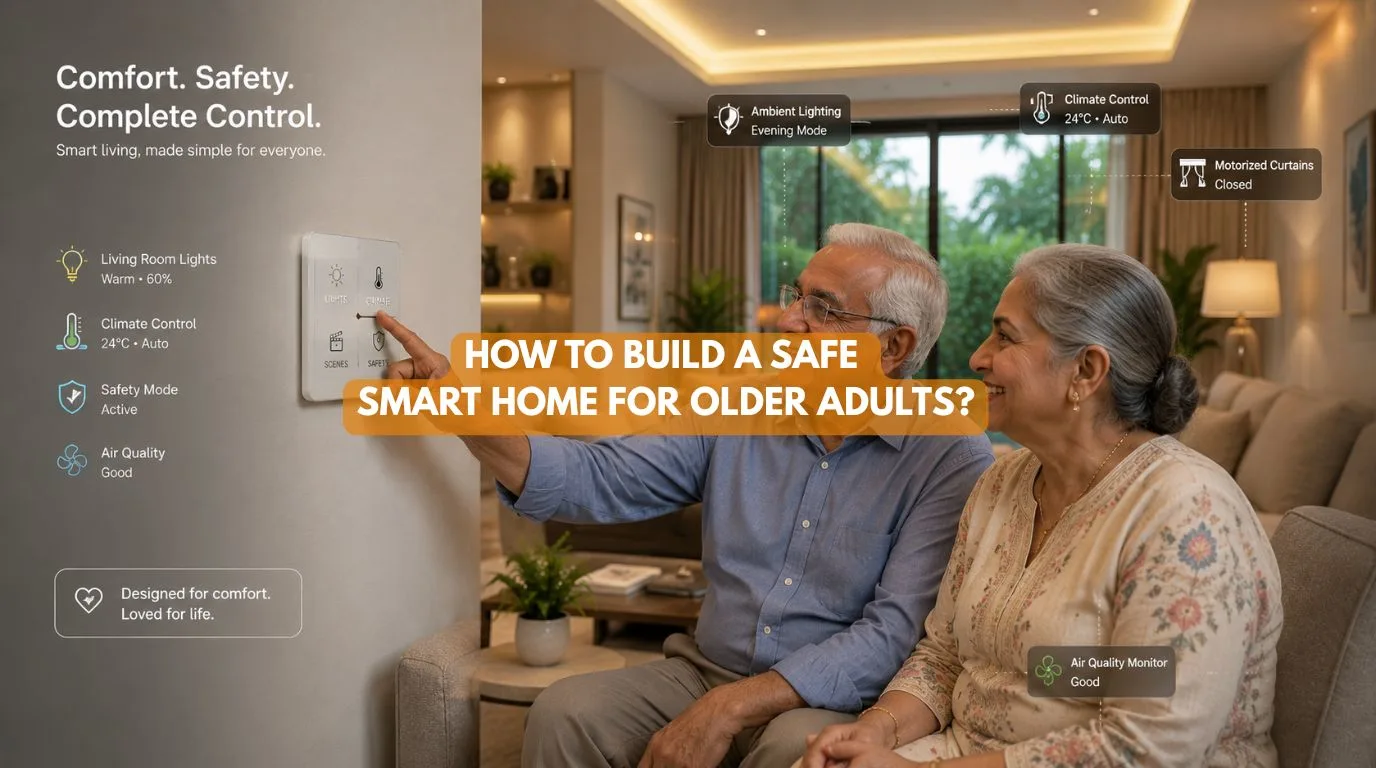
Summary
A smart home for older adults should focus on safety, simplicity, and independence rather than complicated technology. The best starting point is smart lighting, voice control, smart door locks, emergency alerts, security cameras, and automated climate control. As needs change, homeowners can expand to motorized curtains, fall detection systems, energy monitoring, and integrated automation platforms like KNX. The goal is to reduce daily effort, improve safety, and help older adults live comfortably and confidently in their own homes.
Quick Answer
The best way to build a smart home for older adults is to start with technology that makes everyday life safer and easier. Smart lighting, voice assistants, smart door locks, and automated climate control can reduce physical effort while improving comfort and security. Rather than adding unnecessary gadgets, focus on simple automation that supports independence and can easily expand as needs evolve.
Smart Home Setup for Older Adults: Where to Start
Growing older doesn’t mean giving up independence. In fact, modern smart home technology can help older adults live safely and comfortably in their own homes for longer.
A thoughtfully designed smart home for older adults can reduce everyday effort by automating routine tasks such as:
- Turning lights on at night
- Locking doors
- Adjusting room temperature
- Opening curtains
- Monitoring visitors
- Sending alerts during emergencies
The key is keeping the technology simple.
At Techtastic, we believe the best smart home for older adults isn’t the one with the most devices—it’s the one that’s easiest to use. If you’re planning a smart home for older adults, yourself, your parents, or another loved one, here’s where to begin.
Why Smart Homes Are Valuable for Older Adults
As mobility and vision change with age, simple daily activities can become more challenging. Home automation helps reduce these challenges by improving:
- Safety
- Convenience
- Independence
- Comfort
- Peace of mind
Instead of requiring constant interaction, the smart home for older adults quietly supports everyday living.
1. Start with Smart Lighting
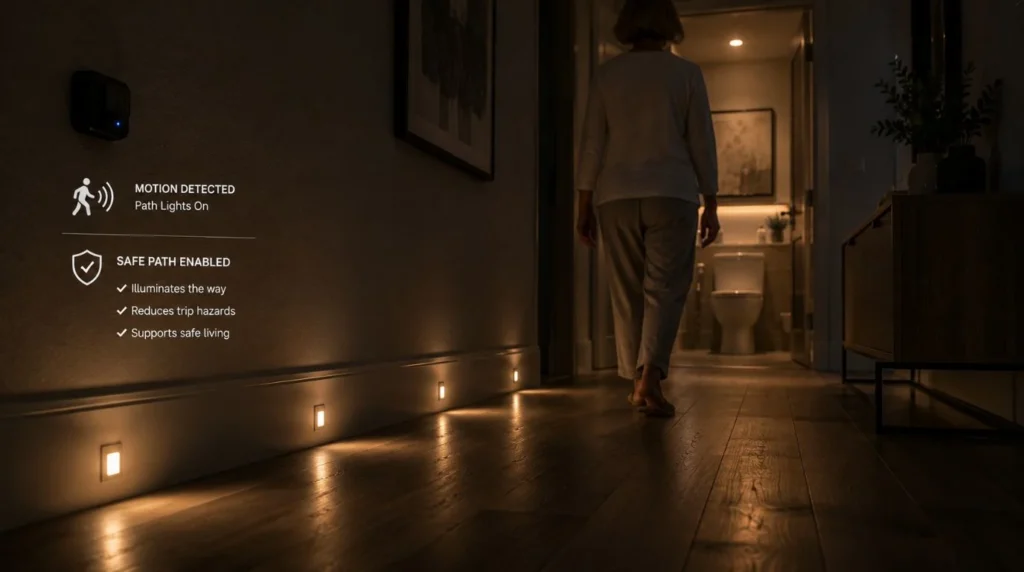
Lighting is the most important place to begin.
Benefits include:
- Motion-activated lights
- Automatic night lighting
- Scheduled lighting
- Voice-controlled lights
- One-touch lighting scenes
Better lighting reduces the risk of trips and falls, especially during the night.
2. Add Voice Control
Voice assistants make technology accessible without complicated apps.
Older adults can simply say:
- Turn on the lights
- Close the curtains
- Lock the front door
- Increase the temperature
- Call a family member
Voice control removes the need to reach for switches or phones.
3. Install Smart Door Locks
Smart locks improve both convenience and security.
Benefits include:
- Keyless entry
- Remote locking
- Temporary access for caregivers
- Automatic locking
- Family notifications
There’s no need to worry about misplaced keys.
4. Improve Home Security
Security provides confidence for both seniors and their families.
Useful devices include:
- Video door phones
- Smart doorbells
- Security cameras
- Motion sensors
- Smart alarms
Family members can also check in remotely when appropriate.
5. Automate Climate Control
Maintaining a comfortable temperature is important for health and well-being.
Smart climate systems can:
- Adjust automatically
- Reduce energy waste
- Maintain consistent comfort
- Be controlled remotely by trusted family members if needed
6. Install Motorized Curtains
Heavy curtains can be difficult to operate.
Motorized curtains allow users to:
- Open curtains automatically every morning
- Close them in the evening
- Reduce glare
- Improve privacy
- Help regulate indoor temperature
This small upgrade often makes a noticeable difference in daily comfort.
7. Consider Emergency Features
Depending on individual needs, additional technologies may include:
- Emergency alert buttons
- Fall detection systems
- Smoke and gas alerts
- Water leak detection
- Caregiver notifications
These systems can add an extra layer of safety without reducing independence.
8. Keep Controls Simple
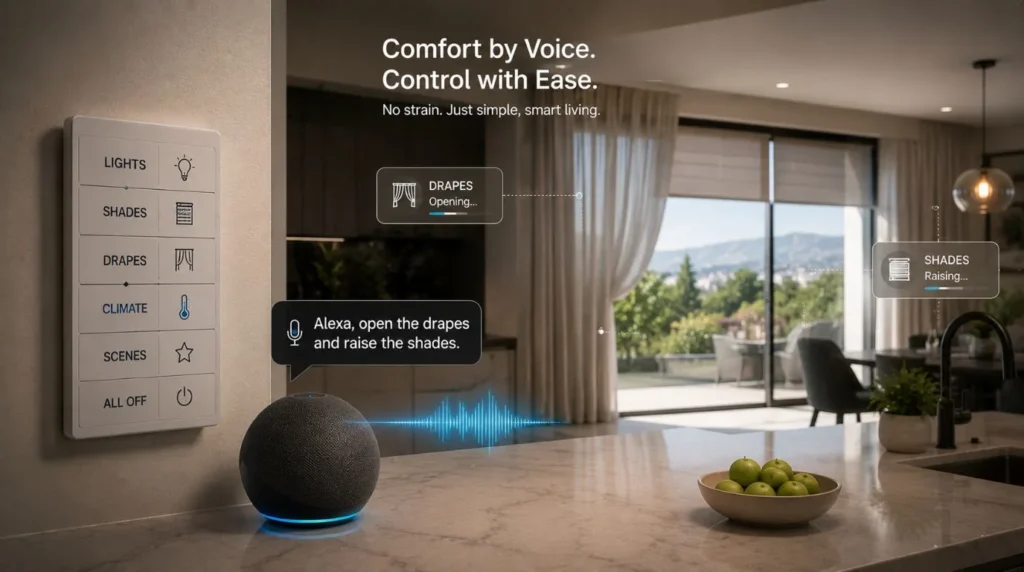
One of the biggest mistakes is adding too much complexity.
The best smart home for older adults should include:
- Familiar wall switches
- Large touch panels
- Simple voice commands
- Easy-to-use mobile apps for caregivers
Technology should feel intuitive—not overwhelming.
Suggested Installation Order
| Priority | Smart Home Feature | Primary Benefit |
|---|---|---|
| 1 | Smart lighting | Safety |
| 2 | Voice assistant | Easy control |
| 3 | Smart door locks | Security |
| 4 | Smart security cameras | Peace of mind |
| 5 | Smart climate control | Comfort |
| 6 | Motorized curtains | Convenience |
| 7 | Emergency monitoring | Added protection |
| 8 | Whole-home automation | Long-term independence |
This phased approach allows families to start with the most valuable upgrades.
Why KNX Is Ideal for Aging in Place
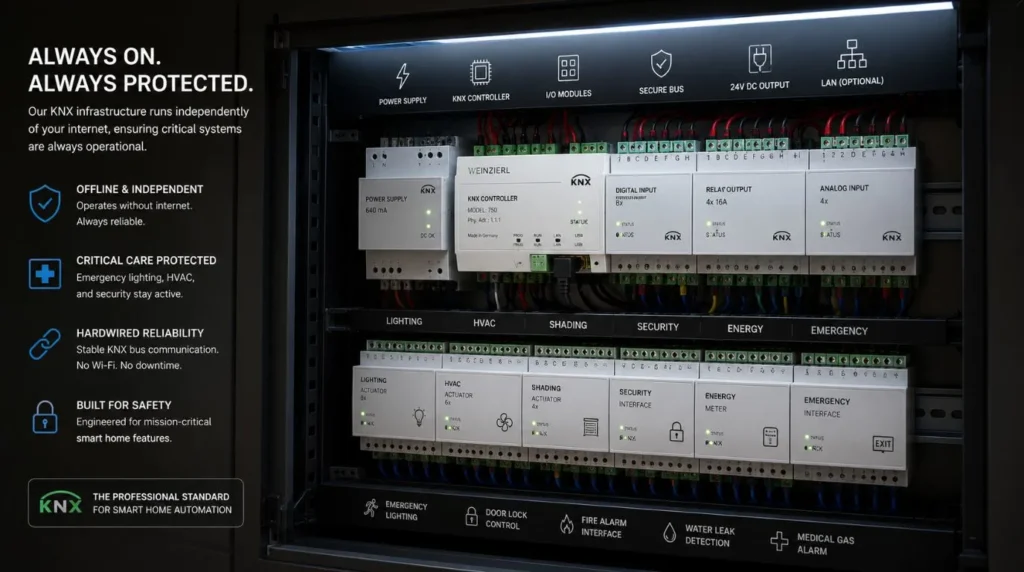
For homeowners planning a long-term residence, KNX home automation provides several advantages. Because KNX uses a dedicated automation network, it offers:
- Highly reliable operation
- Local control
- Whole-home integration
- Easy expansion
- Long product life
It can seamlessly coordinate:
- Lighting
- Climate control
- Motorized curtains
- Security
- Emergency systems
- Energy management
As needs change over time, new features can be added without replacing the existing system.
Common Mistakes Families Make
Buying Too Many Gadgets
Simple systems are easier to use and maintain.
Ignoring Ease of Use
Technology should support daily life—not complicate it.
Forgetting Future Needs
Choose a system that can grow as requirements change.
Overlooking Lighting
Good lighting is one of the most effective safety improvements.
Choosing Incompatible Devices
A single integrated ecosystem provides a better experience than multiple disconnected apps.
Why It Matters
Many older adults want to remain in their own homes for as long as possible. Smart home technology can support that goal by making everyday tasks easier while helping families feel more confident about safety and well-being.
The focus isn’t on replacing human care. It’s about making independent living more comfortable and secure.
Our Perspective at Techtastic
At Techtastic, we believe smart home technology should empower people at every stage of life. For older adults, the priority isn’t having the newest gadgets—it’s creating a home that quietly removes everyday obstacles.
We design systems that are intuitive, dependable, and easy to operate, allowing seniors to maintain their independence while giving families greater peace of mind. Whether it’s automatic lighting, voice-controlled devices, motorized curtains, or a fully integrated KNX automation system, our goal is always the same: make daily living simpler, safer, and more comfortable.
Collaboration Opportunities for Developers, Architects & Interior Designers
A Smart home for older adults is becoming increasingly important in modern residential design.
At Techtastic, we collaborate with:
- Architects
- Interior designers
- Residential developers
- Luxury home builders
- Senior living consultants
- Healthcare-focused property planners
Aging-in-Place Design
Create homes that support long-term independence.
Smart Lighting Planning
Improve safety and visibility.
KNX Infrastructure
Build reliable, future-ready automation systems.
Accessible Home Controls
Design intuitive user experiences.
Premium Residential Projects
Integrate technology without compromising aesthetics.
Future-Ready Developments
Prepare homes for changing family needs.
Planning these features early creates safer, more adaptable homes with lasting value.
Key Takeaways
- Start with smart lighting to improve safety and reduce fall risks when designing a smart home for older adults.
- Voice assistants simplify everyday interaction with technology.
- Smart locks and security systems enhance safety while supporting independence.
- Motorized curtains and climate automation improve comfort with minimal effort.
- Emergency monitoring features can provide additional peace of mind.
- Keep controls simple and intuitive for everyday use.
- A scalable platform like KNX supports aging in place and future expansion.
Frequently Asked Questions
1. What is the best smart home for older adults?
A: A good smart home for older adults typically includes smart lighting, voice control, smart door locks, security cameras, climate control, and simple automation routines that improve safety and convenience.
2. Can smart homes help older adults live independently?
A: Yes. Home automation can reduce physical effort, improve safety, and make daily routines easier, helping many older adults remain independent for longer.
3. Are smart homes difficult for seniors to use?
A: Not when designed properly. Simple voice commands, familiar wall switches, and intuitive controls make smart homes accessible even for people with limited technical experience.
4. What smart home devices improve safety?
A: Motion-activated lighting, smart locks, video doorbells, security cameras, emergency alerts, smoke detectors, and water leak sensors all contribute to a safer living environment.
5. Should older adults use voice assistants?
A: Yes. Voice assistants can make controlling lights, climate, and other smart devices much easier without requiring smartphones or complicated menus.
6. Is KNX a good choice for seniors?
A: Yes. KNX provides reliable, locally controlled automation that can integrate lighting, climate, security, and emergency features into one easy-to-use system.
7. Can smart homes reduce energy costs?
A: Yes. Automated lighting, climate control, and energy management help reduce unnecessary electricity consumption while maintaining comfort.
8. Is professional installation recommended?
A: Yes. Professional installation ensures that the system is reliable, easy to operate, and designed around the user’s specific needs, making it especially valuable for older adults.
Conclusion
A well-designed smart home for older adults is about creating a safer, more comfortable, and more independent lifestyle—not filling a house with technology. By starting with essentials such as smart lighting, voice control, security, climate automation, and motorized curtains, older adults can enjoy everyday conveniences that reduce physical effort and provide greater peace of mind. As needs evolve, these systems can expand to include additional safety and accessibility features without becoming complicated to use.
At Techtastic, we design smart home solutions that put people first.
📞 Call/WhatsApp: 9769145145
📍 Our Operational Hubs: Navi Mumbai | Nashik | Lonavla | Sangli
Whether you’re helping aging parents remain independent, planning an accessible new home, or upgrading an existing property, we create automation systems that are reliable, intuitive, and built to adapt over time. The right smart home doesn’t just make life easier—it helps make the home a safer place to live for years to come.
Want to ensure your system investment is fully protected? Head over to our deep dive on How Secure Is The KNX Smart System in 2026? to learn how to future-proof your smart home infrastructure.