
Summary
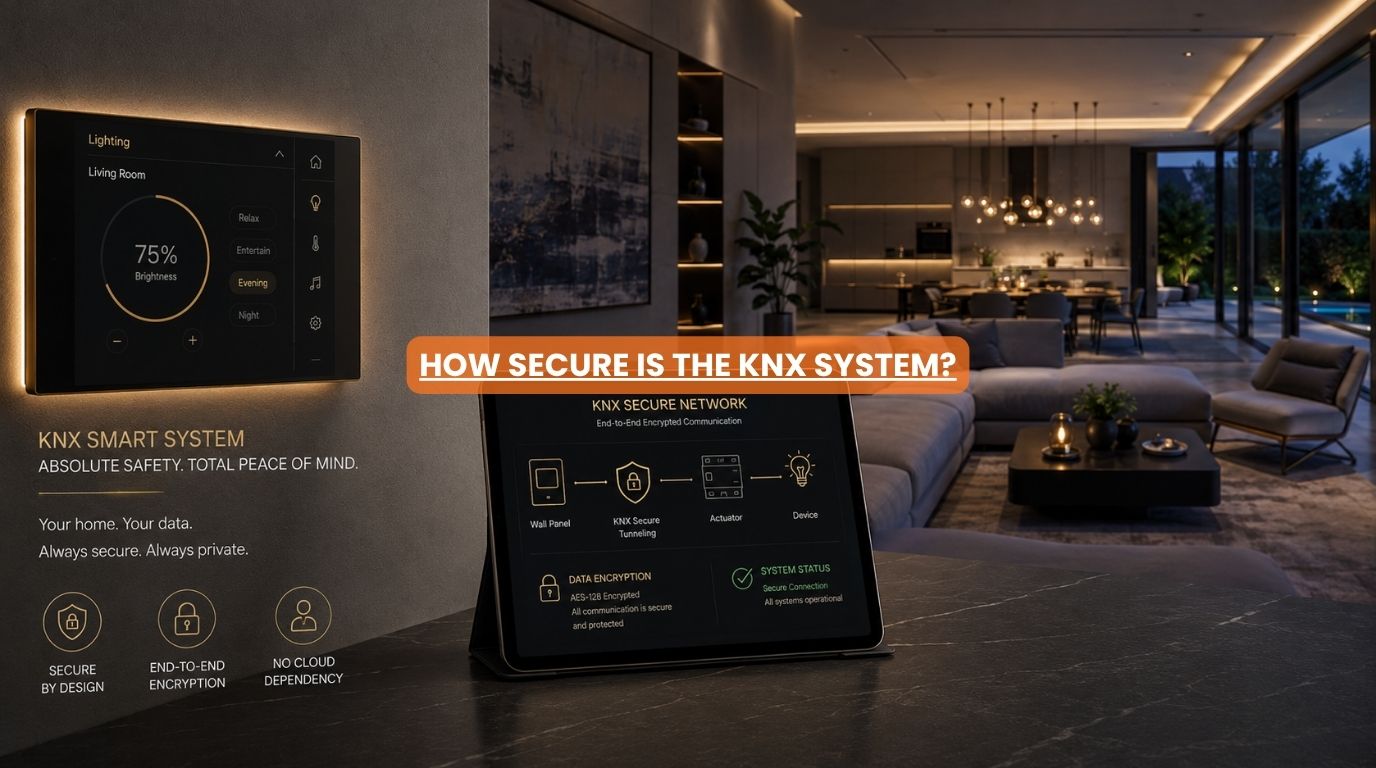
The KNX smart system is considered one of the most secure smart home platforms available because it was designed with reliability, decentralization, and long-term building automation in mind. Modern KNX systems support KNX Secure, which encrypts communication between devices and protects against unauthorized access. Since most KNX systems operate locally rather than relying entirely on cloud services, they offer greater privacy, reliability, and cybersecurity than many consumer smart home platforms.
Introduction
One of the biggest concerns homeowners have before investing in a smart home is: “How secure is it?”
It’s a fair question. After all, a modern smart home can control:
- Lighting
- Door locks
- CCTV cameras
- Motorized curtains
- Air conditioning
- Alarm systems
- Access control
No homeowner wants these systems to be vulnerable to hackers or unauthorized access.
At Techtastic, security is one of the first topics we discuss with homeowners planning a KNX smart system. The good news is that KNX has earned a global reputation as one of the most secure and reliable building automation standards available.
Let’s understand why.
Quick Answer
The KNX smart system is one of the most secure smart home technologies available today. It uses decentralized architecture, supports encrypted communication through KNX Secure, and can operate locally without relying on cloud services. This minimizes cybersecurity risks while providing reliable control over lighting, climate, security, motorized curtains, and other smart home systems. Proper installation, secure networking, and professional configuration further enhance KNX’s security.
What Makes The KNX Smart System Different?
Unlike many consumer smart home products, the KNX smart system wasn’t originally developed for hobbyists or individual gadgets.
It was designed for:
- Residential buildings
- Hotels
- Hospitals
- Airports
- Office complexes
- Commercial buildings
These environments demand:
- High reliability
- Long-term stability
- Strong security
That’s why KNX follows a very different design philosophy compared to many Wi-Fi-based smart home devices.
How KNX Smart System Protects Your Home
KNX incorporates multiple layers of protection.
These include:
- Decentralized system architecture
- Local communication
- Encrypted communication (KNX Secure)
- Controlled network access
- Professional programming
Together, these features create a highly resilient smart home ecosystem.
Decentralized Architecture Improves Security
One of KNX’s greatest strengths is its decentralized design. Unlike many smart home platforms that rely on a single hub or cloud server, KNX distributes intelligence across devices.
This means:
- Each switch operates independently.
- Each actuator performs its own tasks.
- Each sensor communicates directly.
There is no single point of failure. This improves both reliability and security.
What Is KNX Secure?
Modern KNX installations can support KNX Secure, an advanced security standard developed specifically to protect KNX communication.
KNX Secure includes:
Authentication
Ensures only authorized devices communicate.
Encryption
Protects data transmitted between devices.
Tamper Protection
Helps prevent unauthorized access.
Device Verification
Confirms that approved devices join the system. This makes interception or manipulation significantly more difficult.
Local Operation Improves Privacy
Many homeowners don’t realize that cloud dependency affects security. Some consumer smart home systems require constant internet connectivity.
The KNX smart system operates differently. Most functions work locally, including:
- Lighting
- Climate control
- Motorized curtains
- Scene automation
- Occupancy control
Because the system doesn’t rely on external cloud servers for everyday operation, there are fewer opportunities for external attacks.
What Happens If the Internet Goes Down?
This is one of the biggest advantages of the KNX smart system. If your internet connection fails:
- Lighting still works.
- Climate control continues.
- Curtain automation operates.
- Scheduled scenes continue.
Only features such as:
- Remote mobile access
- Cloud notifications
may become temporarily unavailable. Local functionality remains unaffected.
Is KNX Safer Than Wi-Fi Smart Home Devices?
Every smart home technology has its strengths, but KNX is often preferred for professional installations because of its architecture.
| Feature | KNX Home Automation | Typical Wi-Fi Smart Devices |
| Local operation | Yes | Often cloud-dependent |
| Encrypted communication | Yes (KNX Secure) | Varies by manufacturer |
| Decentralized architecture | Yes | Usually centralized |
| Internet dependency | Low | Often high |
| Professional installation | Yes | Usually DIY |
| Long-term support | Excellent | Varies |
For larger homes and premium projects, these differences become increasingly important.
Can Hackers Access a KNX Smart System?
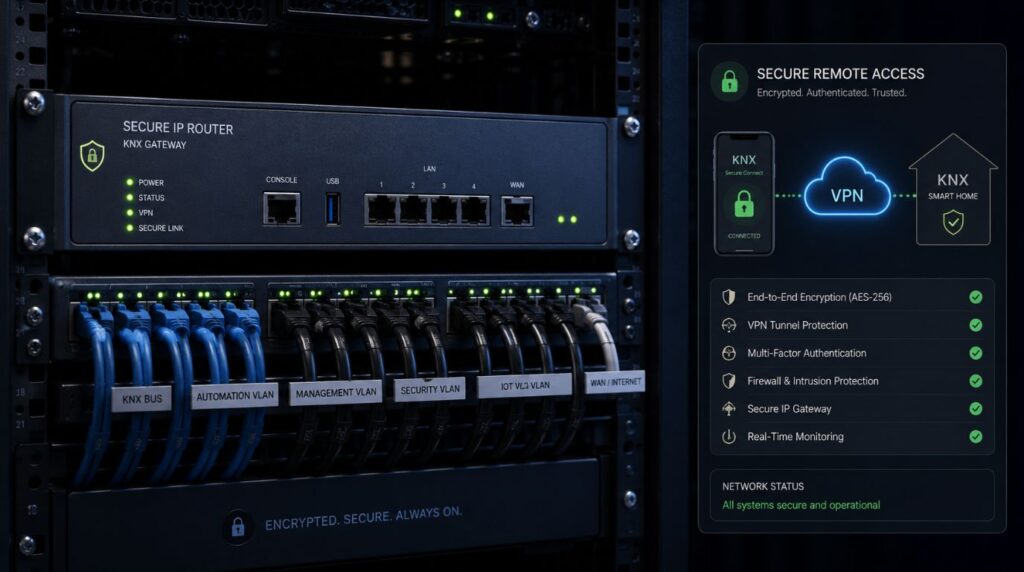
Like any connected technology, no system can be described as completely immune to cyber threats. However, a properly configured KNX smart system installation with:
- KNX Secure
- Secure networking
- Strong passwords
- Controlled remote accessIt
is significantly more difficult to compromise than many consumer-grade smart home products. Most security incidents arise from poor network configuration rather than weaknesses in the KNX protocol itself.
Best Practices to Keep Your KNX Smart System Secure
Security starts with proper planning.
Use KNX Secure-Compatible Devices
Choose products that support encrypted communication.
Secure Your Home Network
Protect routers with strong passwords and modern encryption.
Enable Secure Remote Access
Avoid exposing devices directly to the internet.
Keep Software Updated
Install manufacturer-recommended firmware updates.
Work with Experienced KNX Integrators
Professional configuration significantly reduces security risks.
Common Security Myths
Myth 1: Smart Homes Are Easy to Hack
Modern professional systems incorporate multiple layers of protection.
Myth 2: Internet Failure Means Everything Stops
KNX continues operating locally.
Myth 3: Cloud Services Are Always Required
KNX can function without continuous cloud connectivity.
Myth 4: One Device Failure Compromises the Entire Home
KNX’s decentralized architecture isolates devices, improving both reliability and security.
How KNX Protects Your Privacy
Privacy is becoming just as important as cybersecurity. Because KNX can operate locally:
- Less information leaves your home.
- Daily routines remain private.
- Device communication stays within the local system.
For homeowners concerned about data privacy, this is a major advantage.
Why Businesses Trust KNX
KNX isn’t only used in homes.
It’s trusted in:
- Luxury hotels
- Corporate offices
- Hospitals
- Airports
- Educational institutions
These environments require dependable security and reliability, which is why KNX has become a global standard for building automation.
Why It Matters for Modern Homes
Today’s smart homes manage far more than lighting. They often control:
- Security systems
- Entry points
- Energy management
- Climate
- Entertainment
Choosing a secure automation platform protects both convenience and peace of mind. For homeowners planning long-term automation, security should be considered just as important as features.
Our Perspective at Techtastic
At Techtastic, we believe a smart home should never compromise security.
That’s why we recommend systems that prioritize:
- Local operation
- Professional installation
- Secure networking
- Future scalability
- Reliable automation
When implemented correctly, the KNX smart system offers one of the safest and most dependable automation platforms available today. For us, smart living starts with secure living.
Collaboration Opportunities for Developers, Architects & Interior Designers
Security should be incorporated during the design stage—not added later.
At Techtastic, we collaborate with:
- Architects
- Interior designers
- Residential developers
- Luxury home builders
- Hospitality consultants
- Commercial project planners
Secure Smart Home Planning
Design automation with cybersecurity in mind.
KNX Infrastructure Design
Create reliable, future-ready systems.
Secure Networking
Protect connected devices and data.
Luxury Residential Projects
Deliver intelligent and secure living environments.
Hospitality Automation
Implement scalable and protected building systems.
Future-Ready Developments
Build homes prepared for evolving security standards. Early collaboration helps create smarter and safer properties.
Key Takeaways
- KNX smart system is one of the most secure smart home platforms available.
- KNX Secure encrypts communication between compatible devices.
- Most KNX systems operate locally, improving both privacy and reliability.
- Decentralized architecture reduces single points of failure.
- Secure networking and professional installation are essential.
- Internet outages rarely affect core KNX functionality.
- KNX is trusted in homes, hotels, hospitals, airports, and commercial buildings worldwide.
Frequently Asked Questions
1. Is the KNX smart system secure?
A: Yes. KNX is considered one of the most secure professional smart home platforms, especially when implemented with KNX Secure and proper network security.
2. What is KNX Secure?
A: KNX Secure is an encryption and authentication standard that protects communication between KNX devices from unauthorized access.
3. Can a KNX work without the internet?
A: Yes. Most KNX functions, including lighting, climate control, and automation scenes, operate locally without requiring an internet connection.
4. Can hackers access a KNX smart home?
A: A professionally configured KNX system with secure networking and KNX Secure is highly resistant to unauthorized access. As with any connected system, good cybersecurity practices remain important.
5. Is KNX safer than Wi-Fi smart home devices?
A: KNX often offers stronger reliability, local operation, and professional-grade security, making it a preferred choice for premium smart homes and commercial buildings.
6. Does KNX store my personal data in the cloud?
A: Not necessarily. Many KNX installations operate locally, minimizing the amount of data shared with external services.
7. Do I need KNX Secure for every installation?
A: While not mandatory for every project, KNX Secure is highly recommended for new installations to provide encrypted communication and enhanced protection.
8. How can I make my KNX smart system more secure?
A: Use KNX Secure-compatible devices, secure your home network, keep firmware updated, enable secure remote access, and work with experienced KNX professionals.
Conclusion
Security is one of the biggest reasons homeowners, architects, and developers choose the KNX smart system. Its decentralized architecture, local operation, encrypted communication through KNX Secure, and professional implementation make it one of the most reliable and secure automation platforms available. Rather than depending heavily on cloud services, KNX prioritizes stable, private, and resilient control of your home’s most important systems.
At Techtastic, we design KNX solutions that combine convenience with robust cybersecurity.
📞 Call/WhatsApp: 9769145145
📍 Our Operational Hubs: Navi Mumbai | Nashik | Lonavla | Sangli
Whether you’re automating a luxury villa, a premium apartment, or a commercial property, our goal is to create smart spaces that are not only intelligent and efficient but also secure for years to come.
Want to ensure your system investment is fully protected? Head over to our deep dive on KNX Systems Wired vs Wireless: Which Is Better in 2026? to learn how we can future-proof your smart home infrastructure.