
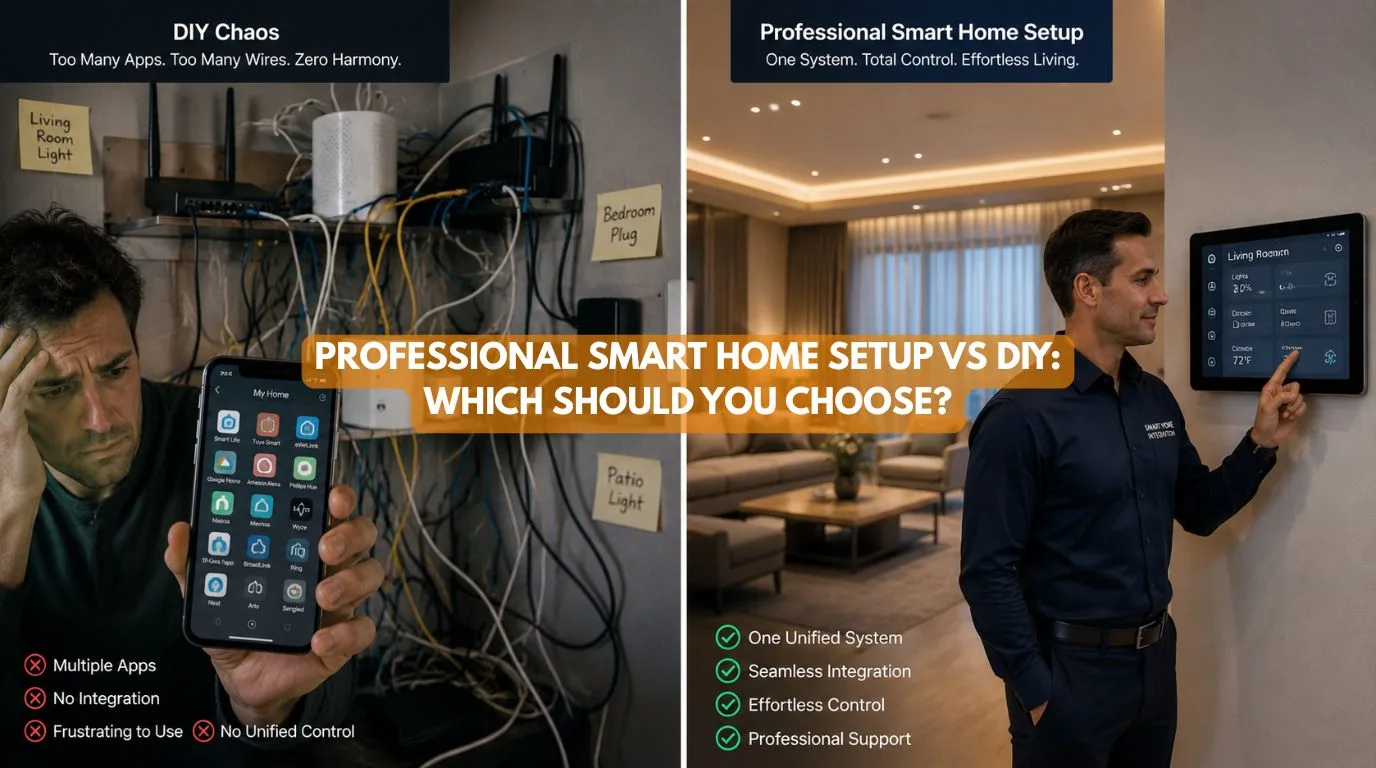
Quick Answer
DIY smart home installation works well for individual devices such as smart bulbs, smart plugs, and voice assistants. However, if you’re automating multiple systems, including lighting, HVAC, motorized curtains, security, entertainment, and networking, a professional smart home setup offers better reliability, cleaner integration, improved security, and greater long-term value. The larger and more sophisticated your smart home becomes, the more beneficial professional planning and installation are.
Summary
When comparing a professional smart home setup with DIY solutions, the right choice depends on the size and complexity of your project. DIY installation is ideal for simple devices like smart speakers, bulbs, and plugs, offering lower upfront costs and quick setup. Professional installation is better suited to integrated systems involving lighting, climate control, security, motorized curtains, networking, and platforms such as KNX. It provides expert planning, seamless integration, greater reliability, future scalability, and long-term support, making it the preferred option for whole-home automation.
Professional Smart Home Setup vs DIY: Which Should You Choose?
Building a smart home has never been easier. Today, you can order dozens of smart devices online and install many of them yourself. That raises an important question: “Should I install my smart home myself, or hire a professional?”
At Techtastic, we meet homeowners at both ends of the spectrum.
Some have already installed:
- Smart bulbs
- Smart speakers
- Wi-Fi cameras
- Smart plugs
Others are building new homes and want a complete professional smart home setup for:
- Lighting
- Climate control
- Motorized curtains
- Security
- Home theatres
- Energy management
The right approach depends on your goals and not just your budget. Let’s compare both options.
What Is DIY Smart Home Installation?
DIY (Do-It-Yourself) installation means purchasing and setting up smart home devices without professional assistance.
Typical DIY products include:
- Smart bulbs
- Smart plugs
- Smart speakers
- Wi-Fi cameras
- Video doorbells
- Smart displays
Most are designed for quick installation using a mobile app.
What Is a Professional Smart Home Setup?
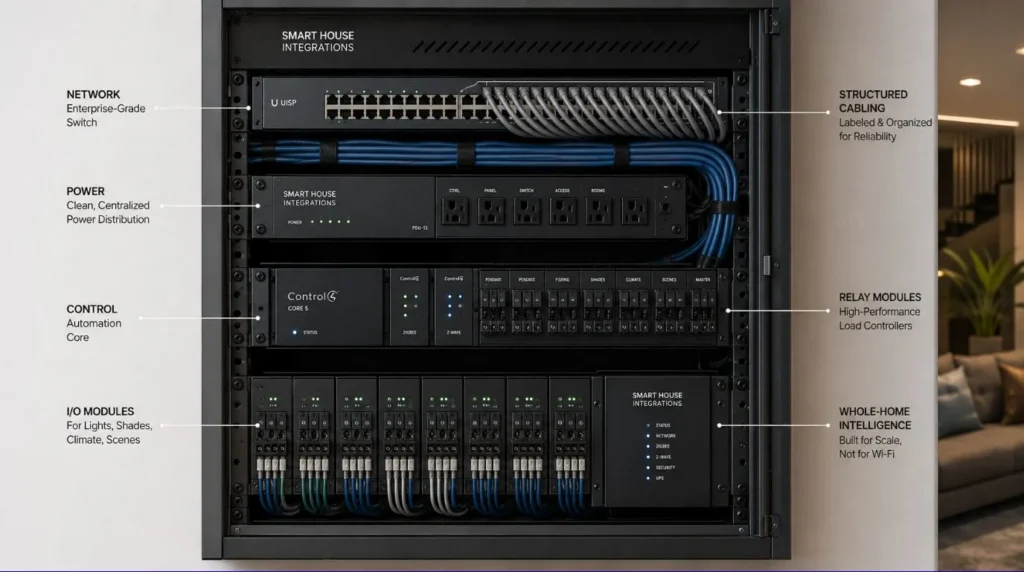
A professional installer doesn’t simply connect devices. They design an integrated automation system tailored to your home and lifestyle.
This typically includes:
- Automation planning
- Device selection
- Electrical coordination
- Structured networking
- Installation
- Programming
- Scene creation
- Mobile app configuration
- User training
- Ongoing support
The result is a home where every system works together seamlessly.
DIY vs Professional Smart Home Setup
| Feature | DIY Installation | Professional Installation |
|---|---|---|
| Initial cost | Lower | Higher |
| Setup difficulty | Easy to Moderate | Managed for you |
| Best for | Individual devices | Whole-home automation |
| Integration | Limited | Comprehensive |
| Scalability | Moderate | Excellent |
| Technical support | Self-managed | Professional support |
| Reliability | Depends on setup | Optimized and tested |
| Future expansion | Can become complex | Designed from the start |
A professional smart home setup offers greater reliability, seamless integration, and long-term flexibility, while DIY installation is often better suited for smaller, standalone smart home projects.
When DIY Is the Right Choice
DIY is ideal if you want to automate a few everyday tasks.
Examples include:
- Smart lighting in one room
- Voice-controlled speakers
- Smart plugs
- Wi-Fi security cameras
- Smart doorbells
Advantages include:
- Lower upfront investment
- Easy installation
- Immediate setup
- Great for renters
- Good for learning about smart home technology
For small projects, DIY can be an excellent starting point.
When Professional Installation Makes More Sense
As automation grows, so does complexity.
A professional smart home setup is recommended for:
- Whole-home lighting
- Climate control
- Motorized curtains
- Security systems
- Multi-room audio
- Home theatres
- Structured networking
- Energy monitoring
- KNX home automation
These systems require careful planning to ensure everything works together reliably.
The Biggest Difference: Planning
This is where professionals add the most value. DIY often begins with: “I’ll buy this smart device.” Professional installation begins with: “How do you want your home to work?”
That difference changes everything. Instead of buying random products, you build an integrated ecosystem. A professional smart home setup ensures every device works together seamlessly, creating a reliable, scalable system tailored to your lifestyle. It also makes future upgrades easier, so your home automation can grow with your needs without unnecessary complexity.
Everyday Example
DIY Smart Home
Morning routine:
- Open one app for lights.
- Another app for curtains.
- Another app for cameras.
Professionally Installed Smart Home
One tap or no tap at all.
The home automatically:
- Opens curtains
- Adjusts lighting
- Sets the ideal temperature
- Disarms security
- Starts background music
The result is a professional smart home setup that works seamlessly every day, while DIY installation often requires multiple apps and manual control.
Reliability Matters
One of the biggest complaints about DIY smart homes is inconsistency.
Problems often include:
- Devices disconnecting
- Weak Wi-Fi coverage
- Compatibility issues
- Multiple apps
- Failed automations
Professional installations reduce these problems through:
- Better networking
- Compatible devices
- Centralized control
- Thorough testing
What About KNX Home Automation?
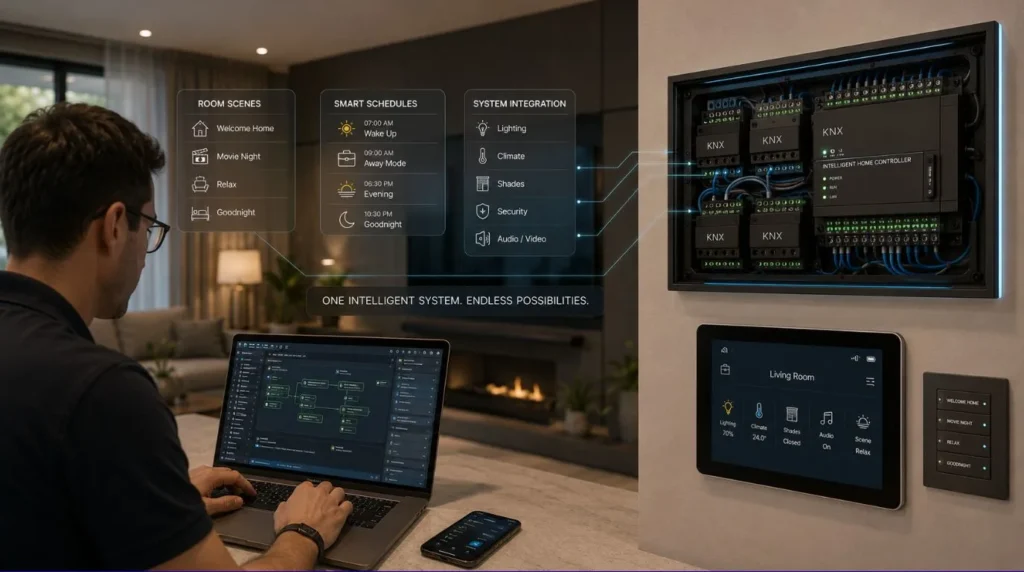
KNX home automation is a professional building automation standard.
Unlike most consumer smart devices, KNX requires:
- System design
- Electrical planning
- Programming
- Commissioning
It isn’t a DIY platform.
The benefit is a highly reliable, scalable system capable of integrating:
- Lighting
- HVAC
- Motorized curtains
- Security
- Energy management
- Entertainment
Into one unified ecosystem.
A professional smart home setup ensures every KNX component is configured to work seamlessly from day one, delivering dependable performance and a better user experience.
Cost vs Long-Term Value
DIY generally costs less upfront.
However, homeowners often spend more time when they:
- Replace incompatible devices
- Buy duplicate products
- Upgrade networking
- Reconfigure automation
Professional systems typically require a larger initial investment but often deliver:
- Better reliability
- Longer lifespan
- Easier upgrades
- Lower maintenance
- Higher property value
Think beyond today’s budget and consider tomorrow’s needs.
Common DIY Mistakes
Buying Products Before Planning
This often leads to compatibility issues.
Mixing Multiple Ecosystems
Too many apps create confusion.
Ignoring Network Quality
Poor Wi-Fi affects every connected device.
Choosing Cheap Devices
Low-cost products may lack long-term support.
Underestimating Future Expansion
Most homeowners add more automation over time.
Most DIY mistakes happen because there’s no overall plan. A professional smart home setup eliminates compatibility issues, simplifies future upgrades, and ensures every device works together as one reliable system. Investing in proper planning today can prevent costly changes.
Can You Combine DIY and Professional Smart Home Setup?
Absolutely. Many homeowners begin with DIY products and later transition to professionally integrated systems.
For example:
DIY
- Smart speakers
- Smart plugs
- Decorative lighting
Professional
- Smart switches
- Climate control
- Security
- Motorized curtains
- KNX automation
This hybrid approach offers flexibility while allowing gradual upgrades.
Why It Matters for Modern Homes
Today’s smart homes are expected to deliver:
- Comfort
- Convenience
- Security
- Energy efficiency
- Reliability
Whether you choose a DIY or smart home setup, your system should make everyday life simpler and not more complicated.
Our Perspective at Techtastic
At Techtastic, we don’t believe every smart home requires professional installation.
If your goal is to automate a few lights or add a smart speaker, DIY products are often a practical and cost-effective choice. However, when homeowners begin integrating lighting, climate control, security, motorized curtains, entertainment, and energy management, careful planning becomes essential.
Our role is to design systems that remain simple to use, reliable every day, and flexible enough to grow with your family’s needs. We believe the best smart home isn’t the one with the most technology, but it’s the one that feels effortless to live in.
Collaboration Opportunities for Developers, Architects & Interior Designers
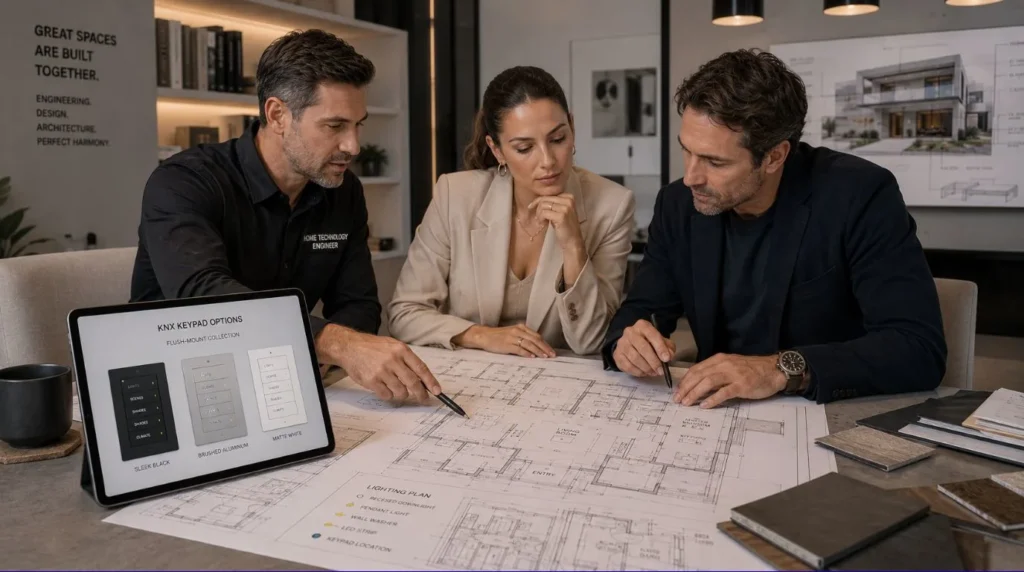
Professional smart home planning creates better results when it’s integrated into the design process.
At Techtastic, we collaborate with:
- Architects
- Interior designers
- Residential developers
- Luxury home builders
- Hospitality consultants
- Commercial project planners
Smart Home Master Planning
Design automation before construction begins.
KNX Infrastructure
Build scalable, reliable automation systems.
Lighting & Interior Integration
Combine intelligent control with elegant design.
Structured Networking
Support high-performance connected homes.
Premium Residential Projects
Deliver seamless smart living experiences.
Future-Ready Developments
Create homes designed for evolving technology.
Early collaboration reduces installation complexity, lowers future upgrade costs, and enhances the homeowner experience.
Key Takeaways
- DIY smart homes are ideal for simple devices and smaller projects.
- A professional smart home setup is better for integrated, whole-home automation.
- Planning is the biggest difference between the two approaches.
- Reliable networking is essential regardless of the installation method.
- KNX automation should always be professionally designed and installed.
- A hybrid approach combining DIY and professional systems can work well.
- Long-term value depends on scalability, compatibility, and thoughtful planning.
Frequently Asked Questions
1. Is DIY smart home installation worth it?
A. Yes. DIY installation is ideal for simple devices like smart bulbs, smart plugs, and smart speakers.
2. When should I hire a professional smart home installer?
A. A professional smart home setup is recommended when automating multiple systems such as lighting, security, climate control, motorized curtains, or whole-home automation.
3. Is a professional smart home setup expensive?
A. It requires a higher upfront investment than DIY, but it often delivers better reliability, integration, and long-term value.
4. Can I mix DIY and professionally installed smart home devices?
A. Yes. Many homeowners combine DIY devices with professionally integrated automation systems.
5. Does KNX require professional installation?
A. Yes. KNX systems should be designed, programmed, and commissioned by trained professionals.
6. Which option is better for a new home?
A. A professional smart home setup is usually the better choice because automation can be planned alongside electrical and networking infrastructure.
7. Which option is better for renters?
A. DIY smart home devices are generally more suitable because they’re portable and require minimal modifications.
8. Will professional installation make my smart home easier to use?
A. Yes. Professional installers create a unified system with centralized control, making everyday operation much simpler.
Conclusion
Choosing between DIY and professional smart home setup depends on the type of experience you want. DIY solutions are a great way to automate a few devices and explore smart home technology with minimal investment. However, if you’re looking for a connected home where lighting, climate control, security, motorized curtains, entertainment, and energy management work together seamlessly, professional installation delivers a level of reliability, integration, and future scalability that DIY systems often can’t match.
At Techtastic, we help homeowners choose the approach that best fits their lifestyle, property, and long-term goals.
📞 Call/WhatsApp: 9769145145
📍 Our Operational Hubs: Navi Mumbai | Nashik | Lonavla | Sangli
Whether you’re starting with a few smart devices or planning a fully integrated professional smart home setup, we design solutions that are intuitive, dependable, and built to grow with you, so your smart home remains as effortless tomorrow as it is on day one.
Most automation bugs aren’t caused by faulty hardware, but by poor network layout and messy programming. You can avoid these headaches entirely by investing in a certified smart home installation expert from the start.