
Summary
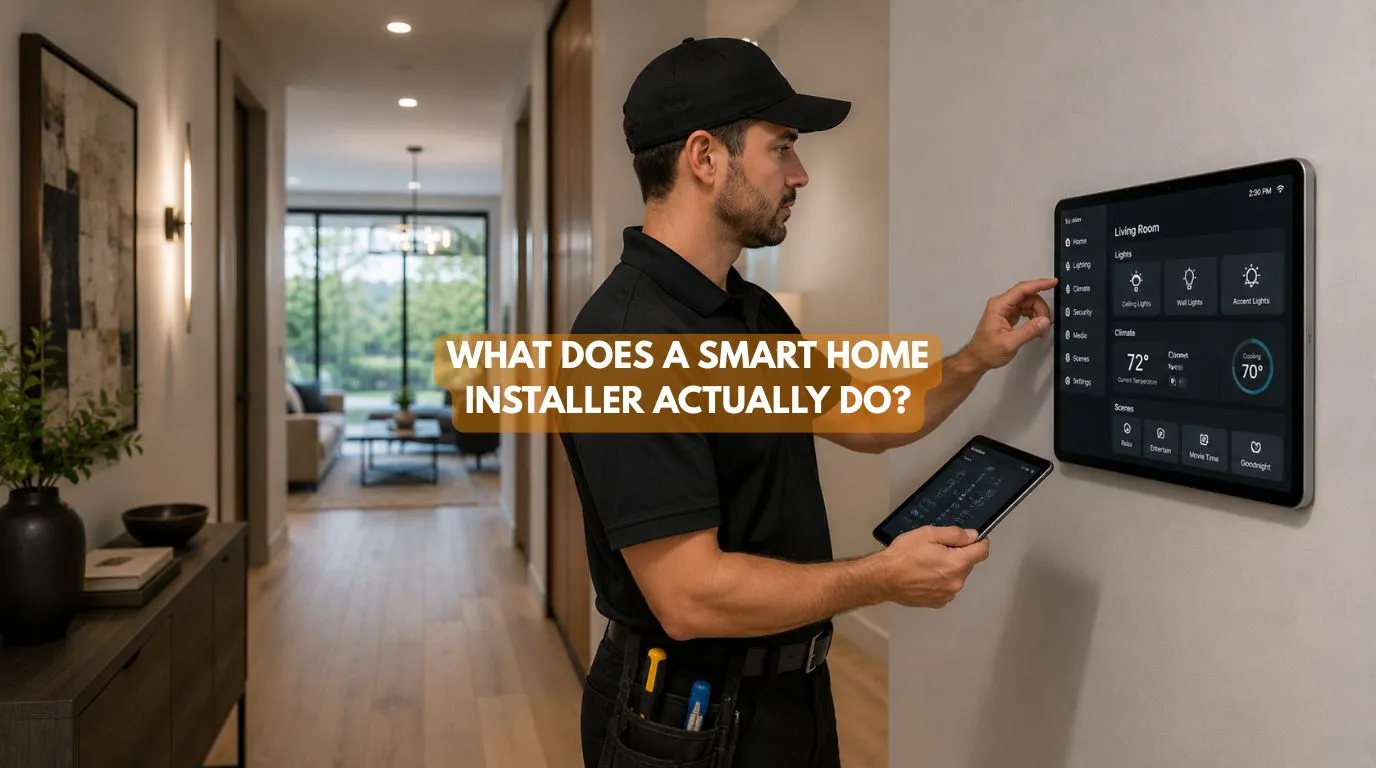
A smart home installer does far more than install devices. They assess your home’s layout, recommend compatible technologies, design an integrated automation system, install hardware, configure networking, program automation scenes, and ensure all smart devices work seamlessly together. Professional installers also plan for future expansion, provide user training, and offer ongoing support, making them essential for reliable and scalable smart home automation.
Quick Answer
A smart home installer designs, installs, programs, and integrates smart home technologies into one seamless system. Their work includes planning automation for lighting, climate control, motorized curtains, security, networking, entertainment, and energy management. Beyond installation, they ensure all devices communicate reliably, optimize performance, configure mobile apps and automation routines, and prepare the home for future upgrades.
What Does a Smart Home Installer Actually Do?
Buying smart home devices has never been easier. With just a few clicks, you can order:
- Smart lights
- Smart switches
- Security cameras
- Smart locks
- Video doorbells
- Motorized curtains
But once those products arrive, many homeowners quickly realize something. Installing devices isn’t the same as building a smart home.
At Techtastic, we often meet homeowners who already own several smart products, but they’re controlled through different apps, operate independently, and don’t communicate with one another.
That’s where a smart home installer makes all the difference. Instead of simply installing gadgets, they create a connected ecosystem that works intelligently and reliably every day.
What Is a Smart Home Installer?
A smart home installer is a professional who designs, installs, configures, and integrates home automation systems.
Rather than focusing on individual products, they build an intelligent environment where multiple technologies work together seamlessly.
Their goal is to make your home:
- Easier to use
- More secure
- More energy efficient
- Future-ready
What Does a Smart Home Installer Actually Do?
Their responsibilities extend far beyond mounting devices on walls.
1. Understand Your Lifestyle
Every project begins with understanding how you live.
A professional installer will ask questions like:
- Which rooms do you use most?
- What daily routines would you like to automate?
- Do you travel often?
- Are energy savings important?
- Are you building a new home or renovating?
Automation should adapt to your lifestyle and not the other way around.
2. Design the Right Smart Home System
Rather than recommending random devices, installers design a complete solution.
This includes selecting technologies for:
- Lighting
- Climate control
- Motorized curtains
- Smart locks
- Security cameras
- Home theatres
- Multi-room audio
- Networking
- Energy monitoring
Everything is planned to work together.
3. Plan the Electrical and Network Infrastructure
A reliable smart home begins behind the walls.
Professional installers assess:
- Electrical wiring
- Switch locations
- Wi-Fi coverage
- Structured cabling
- Internet connectivity
- Equipment placement
Proper infrastructure reduces future issues and improves system reliability.
4. Install Smart Devices
Once planning is complete, installation begins.
Typical devices include:
- Smart switches
- Touch panels
- Motion sensors
- Smart thermostats
- Motorized curtain motors
- CCTV cameras
- Smart door locks
- Video door phones
Installation is carried out with safety, aesthetics, and long-term maintenance in mind.
5. Integrate Multiple Systems
This is where professional installers provide the greatest value. Instead of managing multiple apps, they integrate everything into one ecosystem.
For example, a single “Leaving Home” scene can:
- Turn off the lights
- Close curtains
- Lock doors
- Arm the security system
- Switch off the air conditioning
This level of integration creates a truly intelligent home.
6. Program Automation Scenes
Smart homes become truly useful when they automate everyday routines.
Examples include:
Good Morning
- Curtains open
- Lights brighten gradually
- Air conditioning adjusts
- The music starts playing
Movie Night
- Curtains close
- Lights dim
- Home theatre powers on
Good Night
- Doors lock
- The lights switch off
- Security activates
- Bedroom climate adjusts
Automation scenes simplify daily living.
7. Configure Mobile Apps and Voice Control
Installers also connect your home to:
- Smartphone apps
- Tablets
- Touch panels
- Amazon Alexa
- Google Assistant
- Apple Siri
This gives homeowners multiple ways to control their smart home.
8. Test the Entire System
Before handover, every feature is thoroughly tested.
This includes:
- Device communication
- Automation routines
- Remote access
- Security functions
- Internet connectivity
- Backup operation
The goal is to deliver a dependable system from day one.
9. Train Homeowners
Technology should feel simple.
Professional installers demonstrate:
- Daily operation
- Mobile app usage
- Automation scenes
- Voice commands
- Basic troubleshooting
Homeowners leave feeling confident using their new smart home.
10. Provide Ongoing Support
Technology evolves.
Many installers continue to assist with:
- Software updates
- Device upgrades
- Additional automation
- System expansion
- Performance optimization
A smart home should continue improving long after installation.
Smart Home Installer vs Electrician
Many homeowners assume they’re the same. They’re not.
| Electrician | Smart Home Installer |
|---|---|
| Installs electrical wiring | Designs intelligent automation |
| Installs switches | Programs automation scenes |
| Focuses on power distribution | Focuses on connected living |
| Limited smart integration | Complete system integration |
| Basic electrical work | Networking, automation, programming, user experience |
Both professionals play important roles, but their expertise is different.
When Should You Hire a Smart Home Installer?
Professional installation is recommended when your project includes:
- Multiple smart devices
- Whole-home automation
- Smart lighting
- Motorized curtains
- Security integration
- Home theatres
- Structured networking
- Energy management
- KNX home automation
The larger the project, the greater the benefit of expert planning.
Why KNX Projects Require Professional Installers
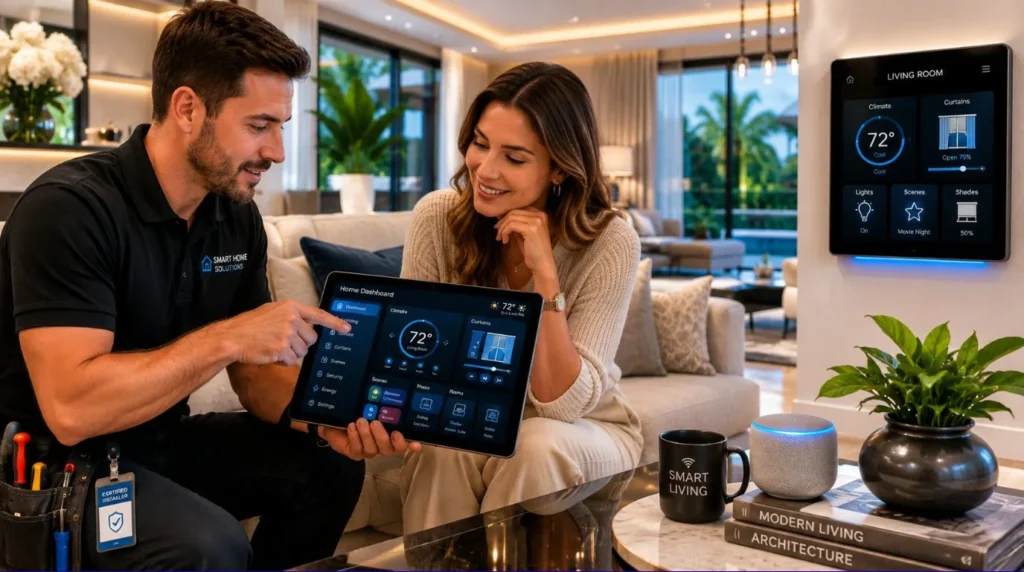
KNX home automation is one of the world’s leading building automation standards.
Because it integrates multiple systems, including lighting, HVAC, security, and energy management, it requires professional design, programming, and commissioning.
A trained installer ensures the system is:
- Reliable
- Scalable
- Secure
- Easy to maintain
This is why KNX is commonly used in luxury homes, hotels, commercial buildings, and premium residential developments.
Common Mistakes Homeowners Make
Buying Devices Before Planning
Products may not be compatible.
Choosing Based Only on Price
Lower-cost devices can create long-term limitations.
Ignoring Network Quality
Poor networking affects every smart device.
Installing Too Many Separate Ecosystems
Multiple apps reduce the smart home experience.
Skipping Professional Advice
Expert planning often prevents expensive future upgrades.
Why It Matters for Modern Homes
Today’s smart homes involve much more than lighting.
They integrate:
- Security
- Climate control
- Entertainment
- Energy management
- Networking
- Access control
A professional installer ensures these systems work together seamlessly rather than operating independently.
Our Perspective at Techtastic
At Techtastic, we see ourselves as technology planners and not simply installers.
Before recommending any product, we take the time to understand how you live, how your family uses each space, and how your needs may evolve over the coming years.
From there, we design intelligent ecosystems that integrate lighting, climate control, motorized curtains, security, entertainment, networking, and energy management into one seamless experience. Our goal isn’t to fill your home with technology. It’s to make technology almost invisible and work quietly in the background to make everyday life easier, safer, and more comfortable.
Collaboration Opportunities for Developers, Architects & Interior Designers
The best smart homes begin during the planning phase.
At Techtastic, we collaborate with:
- Architects
- Interior designers
- Residential developers
- Luxury home builders
- Hospitality consultants
- Commercial project planners
Smart Home Planning
Integrate automation into architectural designs.
Lighting & Interior Coordination
Combine aesthetics with intelligent control.
KNX System Design
Develop scalable, future-ready automation.
Structured Networking
Create reliable digital infrastructure.
Premium Residential Projects
Deliver luxury smart living experiences.
Future-Ready Developments
Design homes prepared for tomorrow’s technologies.
Early collaboration leads to cleaner installations, better user experiences, and greater long-term value.
Key Takeaways
- A smart home installer designs and integrates complete home automation systems.
- Their role includes planning, installation, programming, networking, testing, and user training.
- Professional installers ensure all smart devices work together seamlessly.
- They create automation scenes that simplify everyday living.
- KNX home automation requires specialized design and programming expertise.
- Good installers also provide ongoing support and future expansion planning.
- A professionally designed smart home delivers greater reliability, convenience, and long-term value.
Frequently Asked Questions
1. What does a smart home installer do?
A. A smart home installer designs, installs, programs, and integrates connected technologies such as lighting, climate control, security, motorized curtains, entertainment, and networking into one unified system.
2. Do I need a smart home installer?
A. If you’re installing multiple smart devices or planning whole-home automation, a professional installer helps ensure reliable performance, seamless integration, and future scalability.
3. Can a smart home installer work with devices I already own?
A. Yes. Many installers can integrate compatible smart devices into a single automation platform and improve their overall functionality.
4. What’s the difference between an electrician and a smart home installer?
A. An electrician focuses on electrical systems, while a smart home installer specializes in automation design, networking, programming, and integrating connected devices.
5. Can a smart home installer configure voice assistants?
A. Yes. Most installers can integrate Amazon Alexa, Google Assistant, Apple Siri, and smartphone apps with your automation system.
6. Do smart home installers provide ongoing support?
A. Many professional installers offer maintenance, software updates, troubleshooting, and future system upgrades.
7. Can a smart home installer install KNX systems?
A. Yes. KNX home automation should be installed and programmed by trained professionals experienced with the platform.
8. Is hiring a smart home installer worth it?
A. For integrated automation projects, professional installation often results in better reliability, cleaner installations, easier operation, and greater long-term value.
Conclusion
A smart home installer does much more than connect devices; they design intelligent living environments that make technology simple, reliable, and enjoyable to use. From planning and installation to programming, integration, testing, and ongoing support, they ensure every part of your smart home works together seamlessly.
At Techtastic, we believe great automation begins with understanding how people live.
📞 Call/WhatsApp: 9769145145
📍 Our Operational Hubs: Navi Mumbai | Nashik | Lonavla | Sangli
Whether you’re automating a single room or building a fully connected luxury home, we create tailored smart home solutions that combine thoughtful design, professional installation, and future-ready technology to deliver comfort, convenience, security, and lasting value.
Most automation bugs aren’t caused by faulty hardware, but by poor network layout and messy programming. You can avoid these headaches entirely by investing in a certified smart home device installation from the start.