
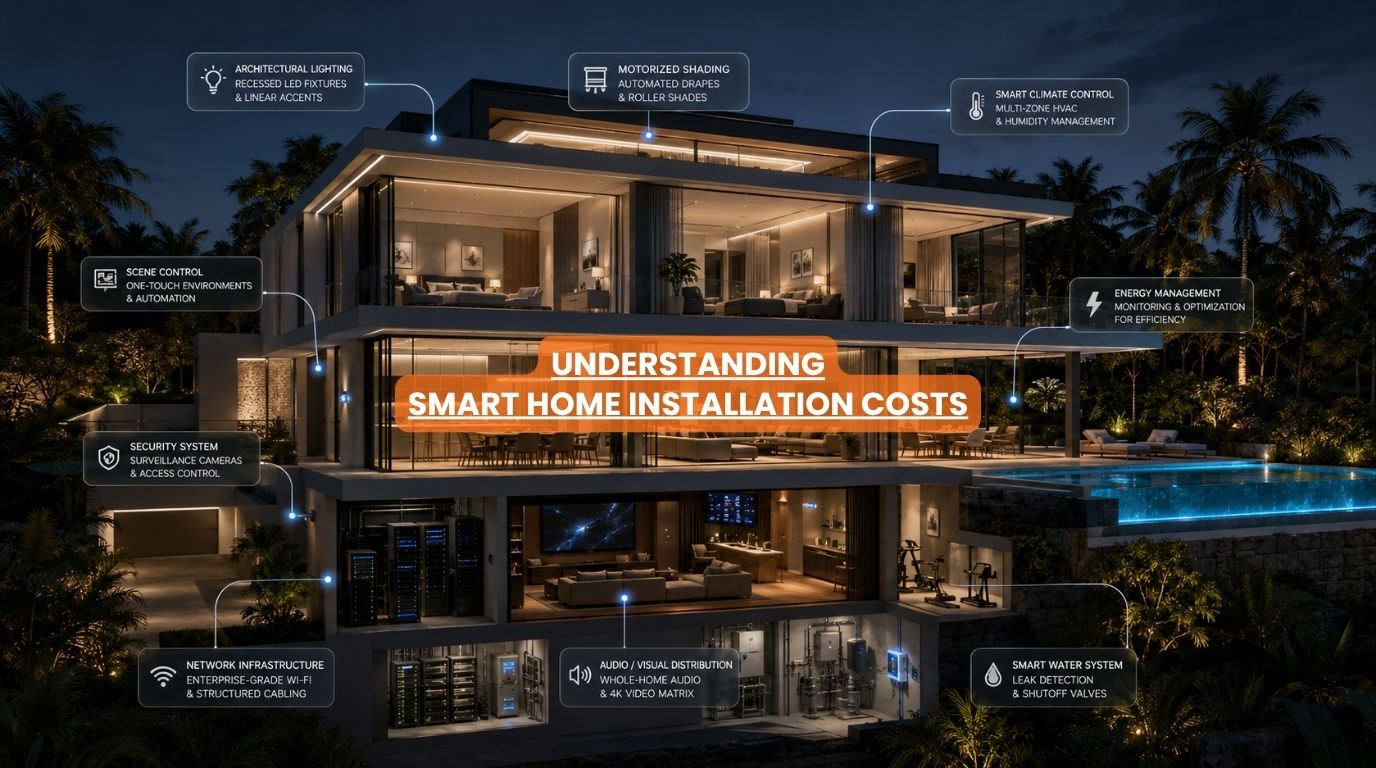
One of the first questions homeowners ask when considering automation is: “How are smart home installation costs calculated ?” The answer can sometimes feel confusing. Some online advertisements promise complete smart homes at extremely low prices. Meanwhile, luxury automation projects can involve much larger investments.
At Techtastic, we believe the better question is: “What kind of smart home experience do you want to create?” Because smart home installation costs can vary significantly depending on:
- Property size
- Automation goals
- Technology choices
- Integration requirements
- Future expansion plans
Understanding these factors helps homeowners better estimate smart home installation Costs, make informed decisions, and avoid unnecessary expenses
Summary
Smart home installation costs vary depending on the size of the home, automation features, system type, and level of integration. Basic smart home solutions may cost significantly less than professionally designed automation systems. Factors such as lighting control, motorized curtains, climate automation, security integration, networking infrastructure, and KNX systems all influence the final investment. Proper planning helps homeowners prioritize features and build scalable automation systems within their budgets. Understanding smart home installation costs early in the project helps ensure realistic budgeting and better long-term value from an automation investment.
Quick Answer
The smart home installation costs depend on the home’s size, the number of automated systems, and the level of integration required. Entry-level smart home systems generally cost less, while professionally designed automation systems with lighting, climate control, motorized curtains, security, and centralized control require a larger investment. Homeowners can often start with essential automation features and expand gradually over time.
Why Smart Home Costs Vary So Much
Two homes with similar sizes may have completely different automation budgets.
This happens because smart homes are highly customizable.
A homeowner may want:
- Smart lighting only
Another may want:
- Lighting
- Motorized curtains
- Climate control
- Security integration
- Multi-room audio
- Home theatre
- KNX automation
Smart home Installation costs ultimately depend on the scope of automation you choose.
The Biggest Factors That Affect Smart Home Installation Costs
1. Size of the Home
Larger homes typically require:
- More devices
- More wiring
- Additional controllers
- Greater networking coverage
Examples:
- Apartments
- Villas
- Duplex homes
- Large residences
Property size influences infrastructure requirements.
2. Number of Automated Systems
The more systems integrated, the higher the investment.
Common systems include:
- Lighting
- Curtains
- Air conditioning
- Security
- Audio-video
- Access control
Every additional system increases both functionality and complexity. As a result, smart home installation costs also tend to rise as more devices and integrations are added.
3. Type of Automation Platform
Not all automation systems are the same.
Examples include:
- Wi-Fi-based smart devices
- Hybrid automation systems
- KNX home automation
Professional systems often offer:
- Greater reliability
- Better integration
- Long-term scalability
4. Wiring and Infrastructure
New construction projects often allow easier installation.
Existing homes may require:
- Additional wiring
- Renovation work
- Infrastructure upgrades
Planning early usually reduces installation complexity.
Smart Home Cost Categories
Although every project is unique, homeowners can think in terms of three broad categories.
Entry-Level Smart Homes
Features may include:
- Smart lighting
- Smart speakers
- App control
- Basic automation
Suitable for:
- Apartments
- Small homes
- First-time users
Mid-Level Automation
Features may include:
- Lighting scenes
- Motorized curtains
- Climate control
- Security integration
Suitable for:
- Family homes
- Premium apartments
- Renovation projects
Premium Smart Homes
Features may include:
- KNX automation
- Whole-home control
- Home theatres
- Multi-room audio
- Advanced scenes
- Energy management
Suitable for:
- Luxury homes
- Villas
- Large residences
Understanding lifestyle needs and future expansion plans can help select the right level of automation while keeping smart home installation costs aligned.
Where Most Homeowners Spend Their Budget
Based on our experience, investment is often distributed across:
| System | Importance |
| Lighting automation | Very high |
| Networking infrastructure | Very high |
| Security systems | High |
| Motorized curtains | High |
| Climate control | High |
| Entertainment systems | Moderate |
| Touch panels | Moderate |
A balanced investment often delivers the best experience.
Smart Home Features That Deliver the Highest Value
Some features provide value every day.
Smart Lighting
Used constantly.
Improves:
- Convenience
- Energy efficiency
- Ambience
Motorized Curtains
Enhance:
- Privacy
- Comfort
- Luxury
Climate Automation
Improves:
- Comfort
- Energy savings
Security Integration
Provides:
- Safety
- Peace of mind
Many homeowners begin with these features.
Why Networking Matters
One of the most overlooked costs is networking.
Reliable automation requires:
- Strong Wi-Fi
- Structured cabling
- Access points
- Network switches
At Techtastic, we often say: “The network is the foundation of the smart home.” Poor networking can negatively affect every connected device.
Can You Build a Smart Home in Stages?
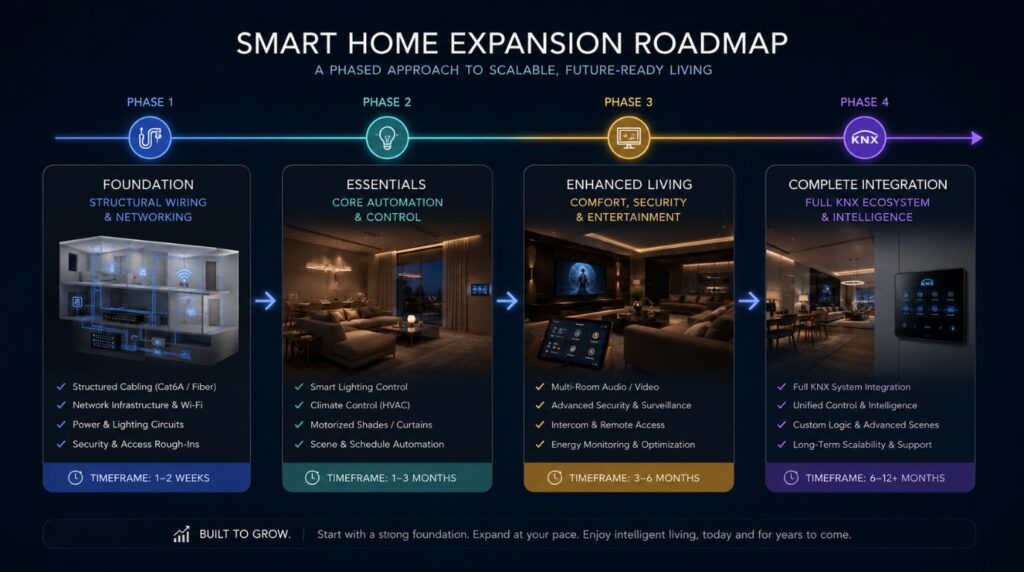
Absolutely. One of the biggest misconceptions is that everything must be installed at once.
Many homeowners begin with:
Phase 1
- Networking
- Lighting
Phase 2
- Curtains
- Climate control
Phase 3
- Security
- Audio-video
Phase 4
- Advanced automation
- KNX integration
This phased approach makes automation more accessible.
Is KNX More Expensive?
Smart home installation costs for KNX systems are often higher initially because they offer:
- Greater reliability
- Professional infrastructure
- Long-term scalability
- Multi-brand compatibility
However, it can also reduce:
- Future upgrade costs
- Device replacement costs
- Compatibility issues
Many homeowners view KNX as long-term infrastructure rather than a gadget purchase.
Hidden Costs Homeowners Should Consider
Future Expansion
Plan for additional devices.
Networking Upgrades
Strong infrastructure matters.
Interior Planning
Automation should align with design.
Electrical Planning
Early planning reduces later costs.
Professional Programming
Proper system design improves reliability.
Thinking long-term often saves money.
Common Budgeting Mistakes
Focusing Only on Device Prices
Devices represent only part of the investment.
Ignoring Infrastructure
Poor networking creates problems.
Buying Incompatible Products
Can lead to expensive upgrades.
Not Planning for Expansion
Future changes become more costly.
Choosing Only Based on Price
Lowest cost rarely delivers the best experience.
Smart Home Investment vs Long-Term Value
Automation can provide:
- Convenience
- Energy savings
- Security
- Comfort
- Property appeal
Many homeowners also value:
- Reduced daily effort
- Better living experiences
- Future readiness
The value often extends beyond the technology itself.
Why It Matters for Modern Homes
Homeowners increasingly expect:
- Connected living
- Intelligent lighting
- Enhanced security
- Automated comfort
Smart homes are gradually becoming part of modern residential expectations. Planning appropriately ensures that technology remains useful for years.
Our Perspective at Techtastic
At Techtastic, we encourage homeowners to think about outcomes rather than devices.
We typically ask:
- What problems are you solving?
- Which experiences matter most?
- How do you want your home to feel?
Our recommendations focus on:
- Scalability
- Reliability
- Long-term value
- User experience
A well-designed automation system should continue delivering value long after installation.
Collaboration Opportunities for Developers, Architects & Interior Designers
Budget planning works best when technology is discussed early.
At Techtastic, we collaborate with:
- Architects
- Interior designers
- Residential developers
- Luxury home builders
- Project consultants
Smart Infrastructure Planning
Reduce future upgrade costs.
Automation Budget Planning
Align technology with project goals.
Lighting & Automation Design
Improve functionality.
KNX Planning
Enable future scalability.
Luxury Residential Projects
Deliver premium experiences.
Future-Ready Developments
Support evolving homeowner expectations.
Early collaboration helps optimize both budget and performance.
Key Takeaways
- Smart home installation costs vary depending on property size and automation goals.
- Lighting, security, climate, and curtains often provide the highest value.
- Networking infrastructure is essential.
- Homeowners can implement automation in phases.
- KNX offers long-term scalability and reliability.
- Planning early reduces installation complexity.
- Smart home investments should focus on experience rather than devices.
Frequently Asked Questions
1. How much does a smart home installation cost?
A. The cost depends on home size, automation features, and system complexity.
2. What affects smart home installation costs?
A. Property size, number of devices, networking infrastructure, and automation platform all influence costs.
3. Is home automation expensive?
A. Automation can be customized to different budgets and implemented gradually.
4. Is KNX more expensive than smart devices?
A. KNX typically requires a larger initial investment but offers greater reliability and scalability.
5. Can I install a smart home in phases?
A. Yes. Many homeowners begin with essential features and expand over time.
6. What is the most important smart home investment?
A. Networking infrastructure often provides the foundation for reliable automation.
7. Do smart homes increase property value?
A. Modern automation can improve property appeal and future readiness.
8. Is smart home automation worth the investment?
A. Many homeowners find that the benefits of convenience, comfort, security, and efficiency justify the investment.
Conclusion
Smart home installation costs can vary significantly because every home and every homeowner has different priorities. Whether you’re considering basic automation or a fully integrated KNX ecosystem, understanding the factors that influence cost helps you make better decisions and avoid unnecessary expenses.
At Techtastic, we help homeowners, architects, designers, and developers create automation solutions that align with both their budgets and their long-term goals. We also provide transparent guidance on smart home installation costs, helping clients understand where their investment goes and how to maximize value at every stage of the project.
📞 Call/WhatsApp: 9769145145
📍 Our Operational Hubs: Navi Mumbai | Nashik | Lonavla | Sangli
With proper planning, scalable infrastructure, and thoughtful technology choices, a smart home can become one of the most valuable investments in modern living.
Ready to take the next step? Explore our comprehensive breakdown on Smart Home Investment: How Much Money Can You Save in 2026? to see how these requirements translate into real-world value for your property.