
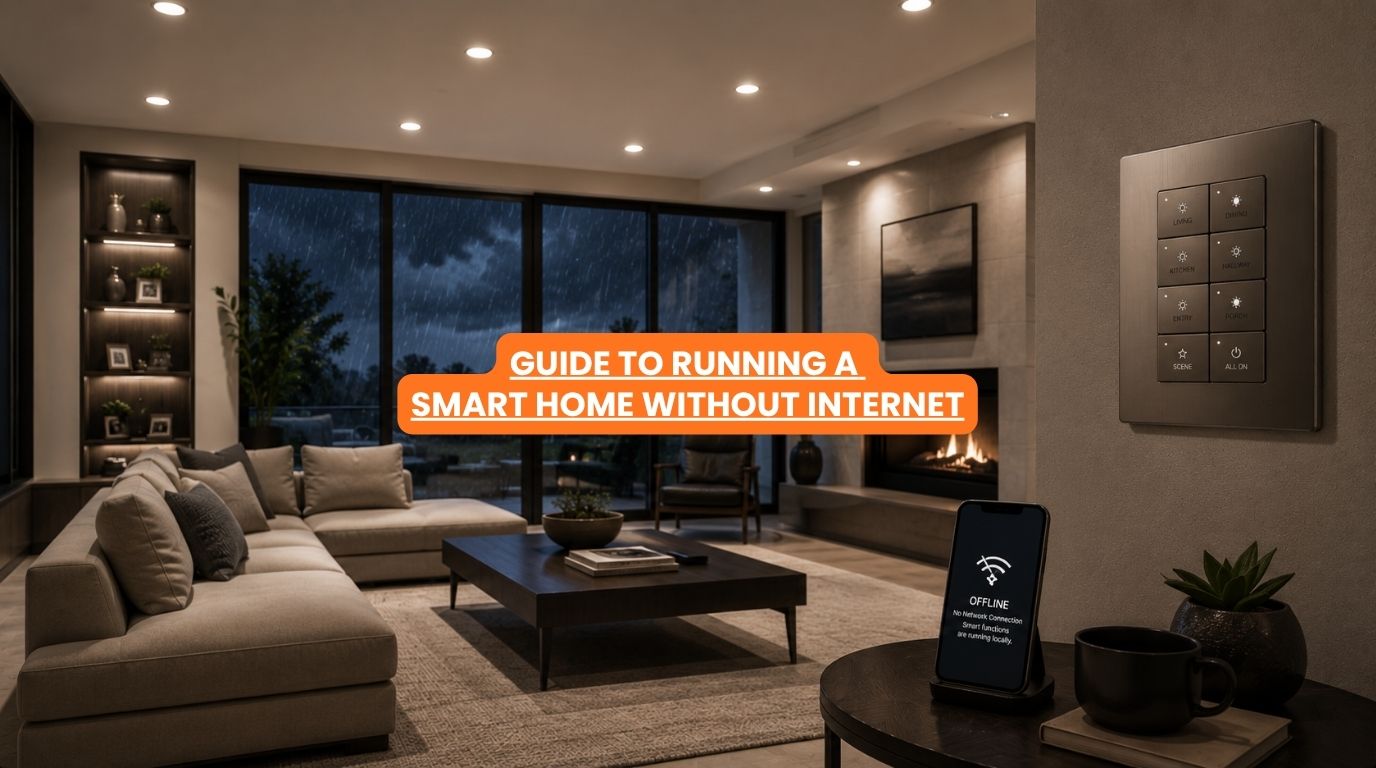
One of the most common concerns homeowners have when considering home automation is surprisingly simple: “What happens to a smart home without internet?”
It’s a fair question.
After all, modern smart homes control everything from lighting and climate systems to security cameras, motorized curtains, entertainment systems, and access control. Many people assume that a smart home without internet could render the entire system useless.
At Techtastic, we hear this concern frequently.
Fortunately, the reality is much better than most homeowners expect. A professionally designed smart home should not stop functioning simply because the internet connection is unavailable. In fact, many advanced automation systems are specifically designed to continue operating independently of the internet.
Understanding the workings of a smart home without internet outages can help homeowners make more informed automation decisions.
Summary
Most professionally designed smart home systems continue functioning even when the internet goes down. Core features such as lighting control, climate automation, motorized curtains, security systems, and automation scenes typically operate locally through the home’s automation controller or KNX infrastructure. Internet outages primarily affect remote access, cloud-based services, voice assistants, and certain mobile app functions. The most reliable smart homes are designed with local control capabilities to ensure uninterrupted operation.
Quick Answer
A well-designed smart home should continue operating even if the internet goes down. Features such as lighting control, climate automation, motorized curtains, security systems, and pre-programmed automation scenes can often function locally without an internet connection. However, remote access, cloud-based integrations, mobile notifications, and some voice assistant features may become temporarily unavailable until connectivity is restored.
Does a Smart Home Need Internet to Function?
The answer depends on the type of smart home system.
Many homeowners assume: Smart Home = Internet
In reality: Smart Home ≠ Internet-Dependent Home
There are two broad categories:
Cloud-Based Smart Homes
Many consumer smart devices rely heavily on cloud services.
Locally Controlled Smart Homes
Professional automation systems often process commands locally.
This distinction significantly affects reliability during outages.
What Continues Working in a Smart Home Without Internet?
In a professionally designed smart home, many core functions remain operational.
Lighting Control
Most local automation systems continue controlling:
- Lights
- Dimmers
- Scenes
- Scheduled lighting
Homeowners can still operate lighting normally in a smart home without internet.
Motorized Curtains
Motorized curtain systems generally continue functioning in a smart home without internet.
You can still:
- Open curtains
- Close curtains
- Run automation scenes
Provided the automation controller remains active.
Climate Control
Temperature automation often continues working in a smart home without internet because:
- Schedules are stored locally
- Sensors remain active
- Controllers continue operating
Comfort is typically unaffected.
Security Systems
Many smart security systems continue functioning locally.
This may include:
- Motion detection
- Intrusion alarms
- Access control
- Security sensors
Core protection generally remains active in a smart home without internet.
Automation Scenes
Scenes such as:
Good Morning
- Open curtains
- Adjust lighting
- Set temperature
Good Night
- Lock doors
- Turn off the lights
- Arm security
typically continue working because they are stored within the automation system itself.
What Stops Working in a Smart Home Without Internet?
While core automation often continues functioning, some features may be affected.
Remote Access
You may lose the ability to:
- Control your home remotely
- Monitor devices from outside the property
- Access dashboards through the internet
Local control generally remains available.
Mobile Notifications
Alerts such as:
- Security notifications
- Visitor alerts
- Camera notifications
may be delayed or unavailable until connectivity returns.
Voice Assistants
Cloud-based voice assistants often depend on internet access.
Examples include:
- Voice commands
- Cloud processing
- Online integrations
These services may be temporarily unavailable in a smart home without internet.
Cloud-Based Integrations
Some third-party services rely on internet connectivity.
Examples include:
- Weather services
- Cloud analytics
- Certain smart device integrations
These features may pause until the connection is restored.
Smart Home Without Internet: Consumer Devices vs Professional Automation
This is where system design becomes extremely important.
| Consumer Smart Devices | Professional Automation Systems |
|---|---|
| Often cloud-dependent | Primarily local operation |
| Primarily a local operation | Core functions remain active |
| Greater outage impact | Minimal outage impact |
| Remote processing | Local processing |
| Lower reliability during outages | Higher reliability during outages |
The architecture matters far more than most homeowners realize.
Why KNX Systems Are Different
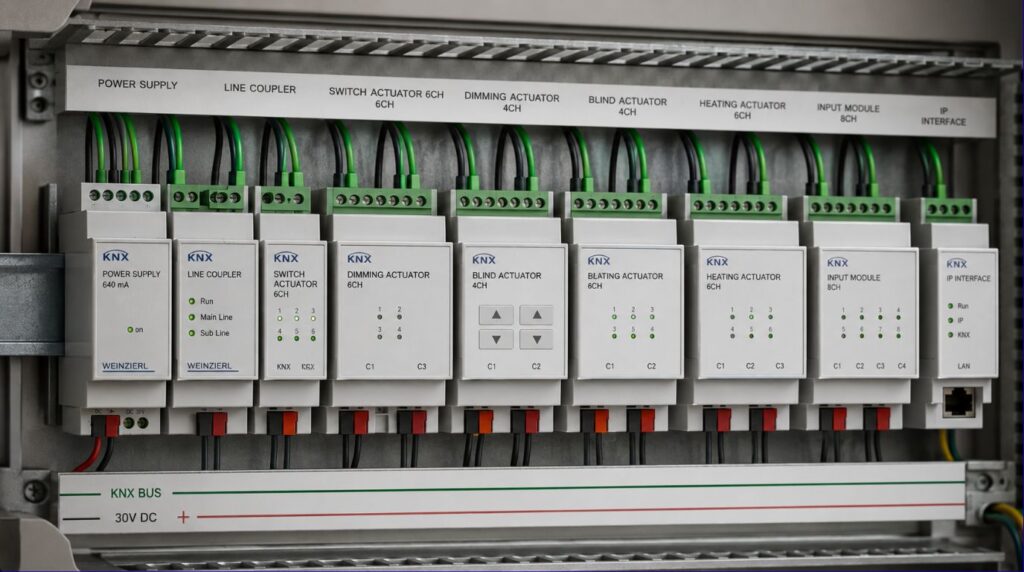
One reason KNX is widely used in luxury homes, commercial buildings, and hospitality projects is its ability to function independently of internet connectivity.
In a KNX-based smart home:
- Devices communicate locally.
- Automation logic remains active.
- Lighting control continues.
- Climate control continues.
- Security integrations remain operational.
Internet access is generally used for convenience features rather than core functionality.
This significantly improves reliability in a smart home without internet.
Real-Life Internet Outage Scenario
Imagine a typical evening: Your internet provider experiences a temporary outage.
What happens?
Lighting
Still works.
Motorized Curtains
Still work.
Security System
Still active.
Climate Control
Still functioning.
Scheduled Automations
Continue running.
Remote Smartphone Access
May be unavailable.
Voice Assistant Commands
May stop temporarily.
For most homeowners, daily living continues with minimal disruption in a smart home without internet.
Why Local Control Matters
A truly intelligent home should not become unusable because of an internet issue.
Local control provides:
- Reliability
- Faster response times
- Improved security
- Reduced dependency on external services
This is one reason professional automation systems remain popular in premium residential projects.
Common Myths About Smart Homes and Internet Outages
“Everything Stops Working”
Not true. Most professionally designed systems continue operating locally.
“Internet Is Required for Automation”
Internet is often required for remote access, not for automation itself.
“Smart Homes Are Less Reliable Than Traditional Homes”
Properly designed automation systems can be extremely reliable.
“Voice Control Means Full Automation”
Voice assistants are only one control method.
Touch panels, keypads, sensors, and schedules often continue working.
How to Build a Smart Home That Survives Internet Outages
Choose Local Automation Platforms
Systems with local processing are generally more reliable.
Invest in Professional Networking
A strong network improves overall performance.
Prioritize Local Control
Critical functions should operate independently of cloud services.
Plan for Redundancy
Professional systems often include backup strategies for important functions.
Work with Experienced Integrators
Proper system architecture significantly improves reliability.
Why It Matters for Modern Homes
Homeowners increasingly depend on technology for:
- Security
- Comfort
- Energy management
- Convenience
Reliability is essential.
A smart home should enhance daily living—not create dependency on a single internet connection.
The best automation systems are designed to continue functioning even when connectivity issues occur.
Our Perspective at Techtastic
At Techtastic, one of our core design principles is reliability.
We believe homeowners should never worry that a temporary internet outage will prevent them from using their home.
That’s why we typically recommend:
- Local automation architecture
- Reliable networking infrastructure
- Scalable control systems
- Professional-grade automation platforms
- Future-ready design strategies
We’ve found that homeowners gain far greater confidence in their smart home investment when they understand that critical functions continue operating independently of internet availability.
Collaboration Opportunities for Developers, Architects & Interior Designers
Reliability should be considered during project planning.
At Techtastic, we collaborate with:
- Architects
- Interior designers
- Luxury home builders
- Real estate developers
- Hospitality consultants
- Commercial project planners
Resilient Automation Design
Create systems that continue operating during connectivity disruptions.
Smart Infrastructure Planning
Build future-ready and reliable technology ecosystems.
Security & Access Control Integration
Maintain protection regardless of internet status.
Networking Architecture Design
Support stable long-term performance.
Luxury Residential Projects
Deliver dependable smart living experiences.
Hospitality & Commercial Applications
Implement enterprise-grade automation solutions.
Early planning creates more reliable and future-proof smart environments.
Key Takeaways on a Smart Home Without Internet
- Most professionally designed smart homes continue functioning during internet outages.
- Lighting, climate control, security systems, and automation scenes typically operate locally.
- Remote access and cloud services may be temporarily unavailable.
- KNX and locally controlled systems offer greater reliability.
- Internet outages rarely impact core automation functions.
- Local control architecture is one of the most important smart home design considerations.
Frequently Asked Questions
1. Does a smart home work without internet?
A: Yes. Many professionally designed smart homes continue operating locally even when internet connectivity is unavailable.
2. What smart home features stop working without internet?
A: Remote access, mobile notifications, cloud services, and some voice assistant features may be temporarily unavailable.
3. Do smart lights work without internet?
A: Many professionally integrated lighting systems continue functioning locally.
4. Does KNX work without the internet?
A: Yes. KNX devices communicate locally and continue operating even during internet outages.
5. Will my security system still work if the internet goes down?
A: Most locally integrated security systems continue functioning, although remote alerts may be affected.
6. Can I still control my smart home manually?
A: Yes. Local control methods such as keypads, touch panels, switches, and sensors typically remain available.
7. Are cloud-based smart homes less reliable?
A: Cloud-dependent systems may experience greater limitations during internet outages.
8. What is the most reliable smart home setup?
A: A locally controlled automation platform with strong networking infrastructure generally provides the highest reliability.
Conclusion
So, what happens to a smart home without internet?
In a professionally designed system, surprisingly, a smart home without internet works well. Core functions such as lighting, climate control, motorized curtains, security systems, and automation scenes typically continue operating normally. The primary impact is usually limited to remote access and cloud-based services.
At Techtastic, we help homeowners, architects, and developers create smart home ecosystems designed for reliability, resilience, and long-term performance.
📞 Call/WhatsApp: 9769145145
📍 Our Operational Hubs: Navi Mumbai | Nashik | Lonavla | Sangli
By prioritizing local control and future-ready infrastructure, we ensure that smart homes remain intelligent—even when the internet isn’t.
Looking for the best features to start with? Check out our practical guide on How to Master a Future-Proof Smart Home System in 2026 to plan a system that everyone can use effortlessly.