
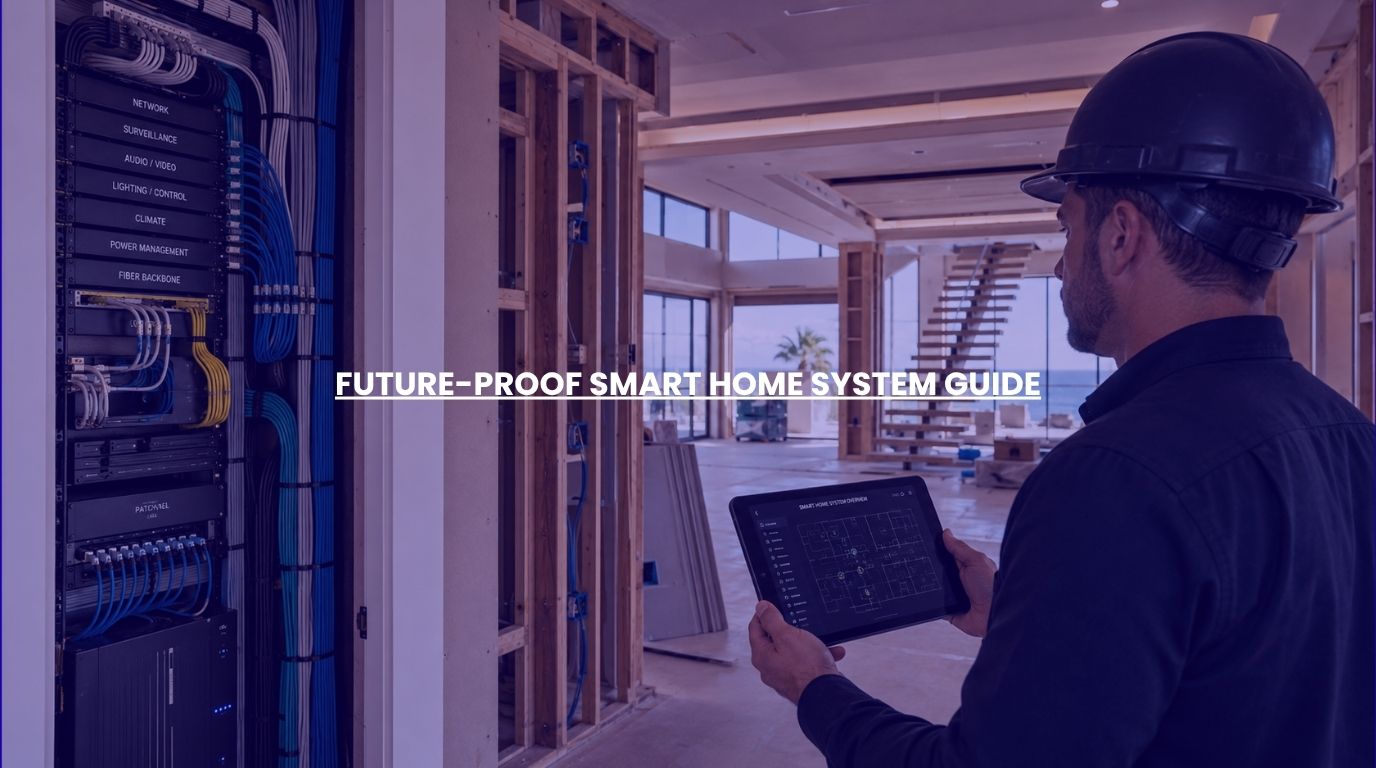
One of the biggest concerns homeowners have when considering home automation is surprisingly simple: “What if the technology becomes outdated?”
It’s a valid concern.
Technology evolves rapidly. New devices enter the market every year, communication protocols continue to develop, and smart home capabilities are expanding faster than ever. As a result, many homeowners worry that the automation system they install today could become obsolete tomorrow.
At Techtastic, we hear this question frequently from homeowners, architects, interior designers, and developers planning smart homes.
The good news is that a properly designed smart home system should not become outdated simply because new technologies emerge. In fact, the most successful smart homes are designed with flexibility, scalability, and long-term adaptability in mind from the very beginning.
The secret isn’t predicting the future—it’s building a future-proof smart home system that can evolve with it.
Summary
A future-proof smart home system is designed with scalability, open automation standards, reliable infrastructure, and long-term compatibility in mind. Instead of focusing on individual devices, homeowners should prioritize networking, structured cabling, open platforms, integration flexibility, and expansion capabilities. By planning for future technologies during the design phase, homeowners can avoid expensive upgrades, maintain compatibility with innovations, and maximize the long-term value of their smart home investment.
Quick Answer
To build a future-proof smart home system, focus on scalable infrastructure rather than specific devices. Invest in reliable networking, structured cabling, open automation platforms, centralized control, and systems that support future expansion. The goal is to create a flexible technology foundation that can adapt to new devices, automation features, energy management solutions, and smart home innovations without requiring major renovations or complete system replacements.
What Does “Future-Proof Smart Home System” Actually Mean?
A future-proof smart home system is not a home that never changes.
Instead, it’s a home designed to adapt to change.
A future-ready automation system should be able to:
- Support new devices
- Accommodate lifestyle changes
- Integrate emerging technologies
- Expand over time
- Maintain long-term usability
The emphasis is on flexibility rather than predicting specific future products.
Why Smart Homes Become Outdated
Many homeowners assume technology itself becomes obsolete.
In reality, most smart home problems stem from poor planning.
Common causes include:
- Closed ecosystems
- Limited expansion capabilities
- Poor networking infrastructure
- Proprietary devices
- Inadequate wiring
- Lack of integration planning
The technology may still function, but the system becomes difficult to expand or modernize.
Step 1: Build a Strong Networking Foundation
Every smart home relies on connectivity.
Your network supports:
- Security cameras
- Smart lighting
- Automation controllers
- Mobile access
- Entertainment systems
- Voice assistants
A future-proof network should include:
Structured Cabling
Provides reliable communication and future capacity.
Enterprise-Grade Wi-Fi
Ensures strong coverage throughout the property.
Dedicated Equipment Spaces
Supports future upgrades and expansion.
Capacity for Additional Devices
Modern homes continue adding connected technologies.
At Techtastic, networking is often the first element we discuss because everything else depends on it.
Step 2: Choose Open Automation Platforms
One of the most important future-proofing decisions involves platform selection.
Open platforms generally offer:
- Greater compatibility
- Multi-brand support
- Easier expansion
- Long-term flexibility
Examples include automation ecosystems that support integration across multiple manufacturers rather than locking homeowners into a single vendor.
This flexibility protects investments over time.
Step 3: Design for Scalability
Many homeowners start small.
Common initial features include:
- Smart lighting
- Security systems
- Mobile control
Later additions may include:
- Motorized curtains
- Climate automation
- Home theatres
- Energy management
- EV charging integration
A scalable system supports this growth without requiring major infrastructure changes.
Step 4: Plan Wiring Before Construction
The most cost-effective time to future-proof a smart home is during construction or renovation.
Consider:
- Additional conduits
- Spare cabling capacity
- Automation-ready electrical design
- Future device locations
Even if certain technologies aren’t installed immediately, preparation reduces future costs significantly.
Step 5: Prioritize Integration Over Gadgets
Many homeowners focus on purchasing devices.
The better approach is to focus on integration.
For example:
Instead of buying:
- Smart lights
- Smart locks
- Smart thermostats
independently,
Consider how they will work together.
The most valuable smart homes operate as connected ecosystems rather than collections of gadgets.
Step 6: Centralize Control
As homes become more connected, managing multiple apps becomes frustrating.
Future-proof systems benefit from:
- Unified interfaces
- Centralized dashboards
- Consistent user experiences
- Simplified management
Centralized control improves both usability and scalability.
Step 7: Plan for Energy Management
Future homes will increasingly incorporate:
- Solar power systems
- Battery storage
- EV charging
- Smart energy monitoring
Preparing for these technologies today can simplify future integration.
Energy management is becoming a major component of modern home automation.
Step 8: Design Around Lifestyle Changes
Homes evolve.
Families grow.
Children become teenagers.
Work patterns change.
Technology requirements shift.
A future-proof smart home system should accommodate:
- New occupants
- Additional rooms
- Changing schedules
- Evolving preferences
Flexibility is key.
Common Mistakes That Make Smart Homes Obsolete
Choosing the Cheapest Solution
Short-term savings can create long-term limitations.
Ignoring Infrastructure
Strong infrastructure often matters more than individual devices.
Relying on Closed Ecosystems
Limited compatibility can restrict future expansion.
Planning Only for Current Needs
Technology investments should support future requirements as well.
Treating Automation as an Afterthought
The best results occur when automation planning begins early.
Future-Proof Smart Home System vs Traditional Smart Home System
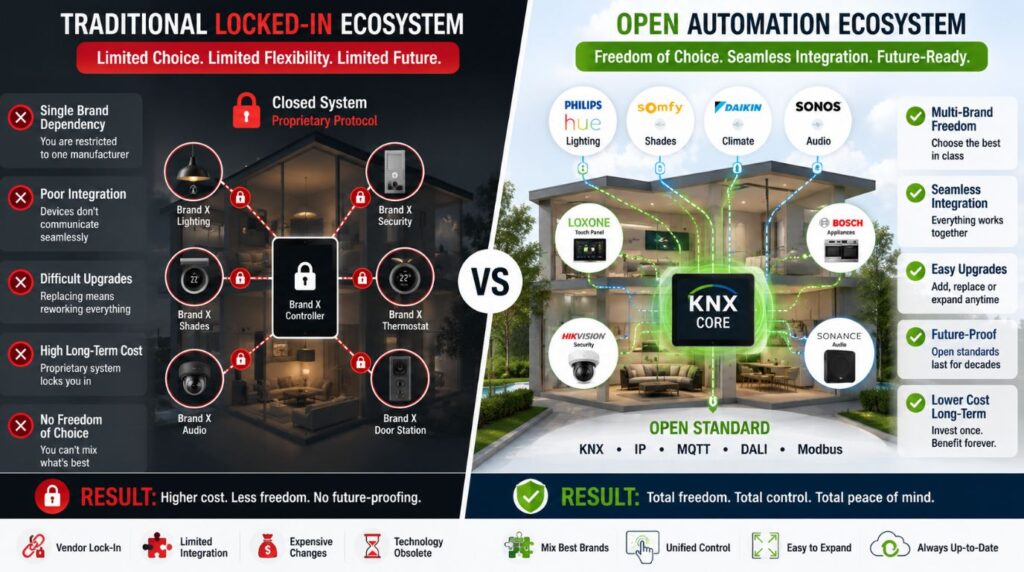
| Traditional Smart Home System | Future-Proof Smart Home System |
|---|---|
| Device-focused | Infrastructure-focused |
| Limited scalability | Designed for expansion |
| Multiple apps | Centralized control |
| Short-term thinking | Long-term planning |
| Brand dependent | Integration focused |
| Reactive upgrades | Future-ready design |
The difference often determines long-term satisfaction.
Emerging Smart Home Trends Worth Planning For
While no one can predict the future perfectly, several trends are likely to grow:
AI-Driven Automation
Systems that learn user behavior.
Energy Optimization
Greater integration with renewable energy systems.
Electric Vehicle Integration
Connected charging and energy management.
Advanced Security Automation
More intelligent threat detection and response.
Unified Smart Home Platforms
Improved interoperability across technologies.
Future-ready infrastructure supports these developments more easily.
Why It Matters for Modern Homes
A home is a long-term investment.
Technology should enhance that investment rather than limit it.
Future-proof planning helps homeowners:
- Protect budgets
- Reduce upgrade costs
- Increase flexibility
- Improve property appeal
- Support evolving lifestyles
As smart homes become increasingly mainstream, adaptability is becoming just as important as functionality.
Our Perspective at Techtastic
At Techtastic, we believe homeowners should focus less on today’s devices and more on tomorrow’s possibilities.
We typically recommend prioritizing:
- Structured networking
- Open automation platforms
- Scalable architecture
- Security integration
- Centralized control
- Future-ready infrastructure
The most successful smart homes we’ve worked on are not necessarily the most technologically advanced—they’re the ones designed to evolve gracefully over time.
That’s what true future-proofing looks like.
Collaboration Opportunities for Developers, Architects & Interior Designers
A future-proof smart home system begins during the planning phase.
At Techtastic, we collaborate with:
- Architects
- Interior designers
- Luxury home builders
- Real estate developers
- Hospitality consultants
Smart Infrastructure Planning
Prepare homes for long-term technology evolution.
Structured Networking Design
Build reliable foundations for connected living.
Automation Integration Planning
Ensure flexibility for future upgrades.
Security & Access Control Design
Create scalable protection systems.
Energy Management Readiness
Support future sustainability initiatives.
Luxury Residential Developments
Differentiate projects through future-ready technology ecosystems.
Early collaboration helps create homes that remain relevant and valuable for years to come.
Key Takeaways
- Future-proof smart home system focuses on infrastructure rather than devices.
- Reliable networking is essential for long-term success.
- Open platforms provide greater flexibility and compatibility.
- Scalability allows systems to evolve with homeowner needs.
- Early planning significantly reduces future upgrade costs.
- Integration and centralized control improve long-term usability.
Frequently Asked Questions
1. What is a future-proof smart home system?
A: A future-proof smart home system is designed to support future technologies, expansion, and evolving homeowner requirements.
2. How can I prevent my smart home from becoming outdated?
A: Focus on infrastructure, scalability, open platforms, and integration rather than individual devices.
3. Is smart home wiring important?
A: Yes. Proper wiring and networking infrastructure provide the foundation for future expansion.
4. What is the best platform for a future-proof smart home system?
A: Platforms that support open standards and broad integration capabilities typically offer the greatest flexibility for a future-proof smart home system.
5. Can I upgrade a smart home later?
A: Yes. A scalable system allows homeowners to expand and update features over time.
6. Why is networking so important?
A: Nearly every smart home technology depends on reliable connectivity for performance and integration.
7. Is a future-proof smart home system more expensive?
A: Not necessarily. Proper planning often reduces future upgrade costs and improves the long-term value of a future-proof smart home system.
8. Does future-proofing increase property value?
A: Technology-ready homes may be more attractive to future buyers and easier to upgrade over time.
Conclusion
Technology will continue to evolve, but that doesn’t mean your smart home has to become obsolete. By focusing on infrastructure, scalability, open platforms, and thoughtful planning, homeowners can create automation systems that remain flexible and relevant for years to come.
At Techtastic, we help homeowners, architects, and developers design a future-proof smart home system that balances current needs with long-term adaptability.
📞 Call/WhatsApp: 9769145145
📍 Our Operational Hubs: Navi Mumbai | Nashik | Lonavla | Sangli
Whether you’re building a new home or upgrading an existing property, investing in the right foundation today can help ensure your smart home continues delivering value well into the future.
Wondering how to manage all these requirements? Read our expert guide on Smart Home System Requirements: What to Know Before You Buy (2026) to discover the best way to unify your system’s infrastructure.