
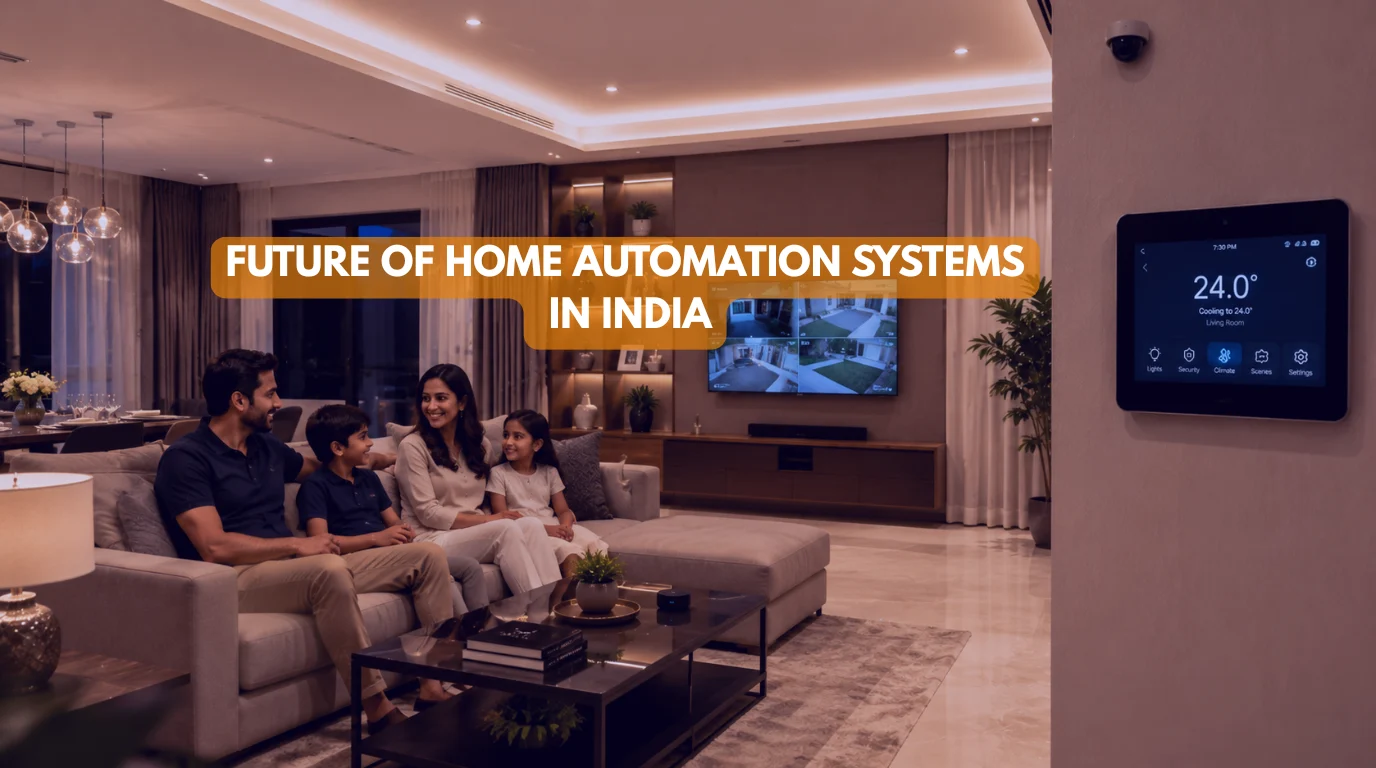
The way Indians interact with their homes is changing rapidly. What was once considered a luxury reserved for premium villas and high-end apartments is now becoming an essential part of modern living. Today’s home automation systems do much more than switch lights on and off. They improve energy efficiency, strengthen home security, enhance comfort, and simplify everyday life.
As technologies like Artificial Intelligence (AI), the Matter protocol, Thread networking, 5G connectivity, and predictive automation continue to evolve, home automation systems are becoming smarter, faster, and more reliable than ever before. Instead of waiting for your command, these systems are learning your routines, adapting to your lifestyle, and making intelligent decisions automatically.
At Techtastic, we’ve seen a significant shift in how homeowners, architects, builders, and interior designers approach automation projects across Mumbai, Navi Mumbai, Pune, Lonavala, Nashik, and Sangli. More clients are planning home automation systems during the design phase rather than adding smart devices after construction. This proactive approach delivers cleaner installations, better integration, and long-term scalability.
Whether you’re building a luxury residence, renovating an apartment, or simply curious about where smart homes are heading, understanding the future of home automation systems will help you make informed decisions for years to come.
In this guide, we’ll explore the technologies driving the next generation of smart homes, explain why automation is becoming more intelligent, and discuss the trends shaping the future of connected living in India.
Quick Answer
The future of home automation systems in India is driven by AI-powered automation, Matter compatibility, predictive intelligence, energy management, advanced security, and seamless integration between smart devices. Modern systems are becoming more reliable, energy-efficient, and capable of learning homeowners’ routines while reducing manual effort.
Quick Summary
✔ Home automation systems are becoming a standard feature in modern Indian homes.
✔ AI is enabling homes to learn user habits instead of simply responding to commands.
✔ Matter allows products from different manufacturers to work together.
✔ Smart energy management helps reduce electricity consumption.
✔ Intelligent security systems provide real-time monitoring and faster alerts.
✔ Health and wellness automation is becoming an important part of modern homes.
✔ Professional planning ensures better long-term performance and scalability.
Why Home Automation Systems Are Growing Rapidly in India
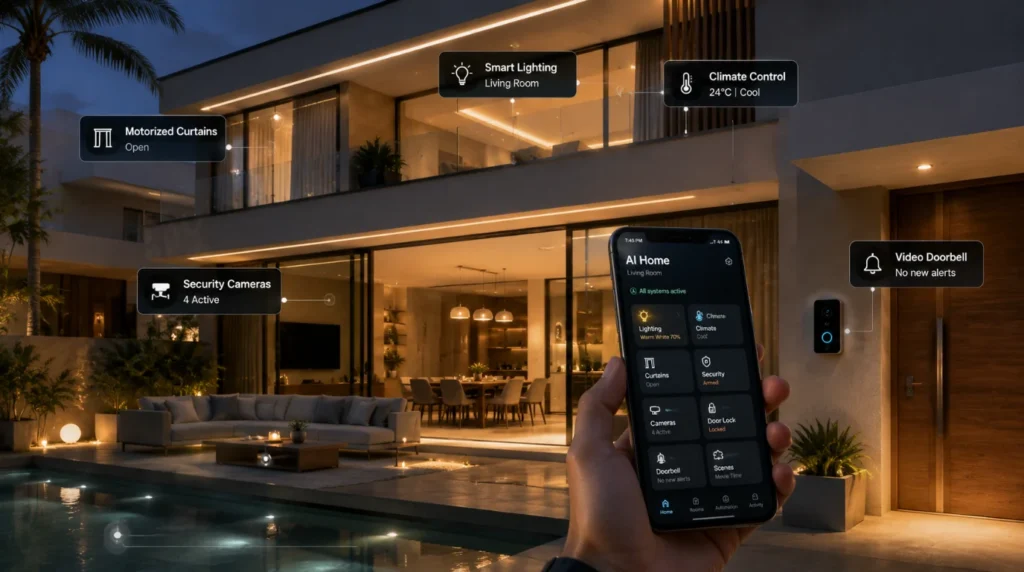
India’s smart home industry has evolved significantly over the past decade. Rising disposable incomes, increasing awareness of energy efficiency, better internet connectivity, and affordable automation technologies have accelerated adoption across both metropolitan and emerging cities.
Today’s homeowners expect more than convenience. They want home automation systems that improve everyday living while offering long-term value.
As automation technology becomes more accessible, home automation systems are no longer limited to luxury homes; they are becoming practical investments for modern families.
How Matter Is Transforming Home Automation Systems: End of App Fatigue
One of the biggest frustrations homeowners faced during the early years of smart homes was managing multiple mobile applications.
Your lighting required one app, security cameras used another, and your air conditioner relied on a completely different platform.
Instead of simplifying life, automation often became more complicated. Fortunately, this is changing.
The introduction of the Matter protocol is revolutionizing how home automation systems operate. Matter acts as a universal communication standard that allows products from different manufacturers to work together seamlessly.
Whether you purchase a smart lock from one company, lighting from another, and sensors from a third manufacturer, Matter enables them to communicate within the same ecosystem.
Benefits of Matter-Compatible Home Automation Systems
- Reduced dependence on multiple apps
- Easier device integration
- Faster communication
- Greater flexibility when choosing products
- Improved long-term compatibility
- Better user experience
Rather than locking homeowners into one manufacturer’s ecosystem, Matter gives them the freedom to build automation solutions around their individual requirements.
For anyone planning new home automation systems, choosing Matter-compatible products helps future-proof the investment.
AI-Powered Home Automation Systems That Learn Your Lifestyle
Artificial Intelligence is changing automation from reactive to predictive.
Instead of waiting for homeowners to issue commands, modern home automation systems learn daily habits and make intelligent decisions automatically.
This shift from command-based automation to predictive automation represents one of the biggest advancements in smart home technology.
Intelligent Climate Control
Imagine returning home every evening around 6:30 PM.
After observing your routine for several days, the home automation systems automatically begin cooling your living room shortly before your arrival.
Later at night, the system adjusts the temperature slightly to improve sleeping comfort while reducing unnecessary electricity consumption.
No commands are required as the home simply understands your routine.
Circadian Lighting
Lighting automation has become much more sophisticated than simple scheduling.
Modern home automation systems now adjust brightness and colour temperature according to natural daylight.
| Time of Day | Lighting Behaviour |
|---|---|
| Morning | Bright cool white lighting improves alertness |
| Afternoon | Balanced neutral lighting |
| Evening | Warm amber tones encourage relaxation |
| Night | Soft low-intensity lighting minimizes sleep disruption |
These intelligent lighting adjustments improve comfort while supporting healthier daily routines.
Personalized Automation
AI also enables home automation systems to remember individual family preferences.
Different family members can have customized automation profiles based on:
- Preferred room temperatures
- Lighting brightness
- Entertainment settings
- Security preferences
- Wake-up schedules
- Night routines
Instead of manually adjusting every device, the entire home adapts automatically.
Energy Management: Smarter Homes That Reduce Electricity Bills
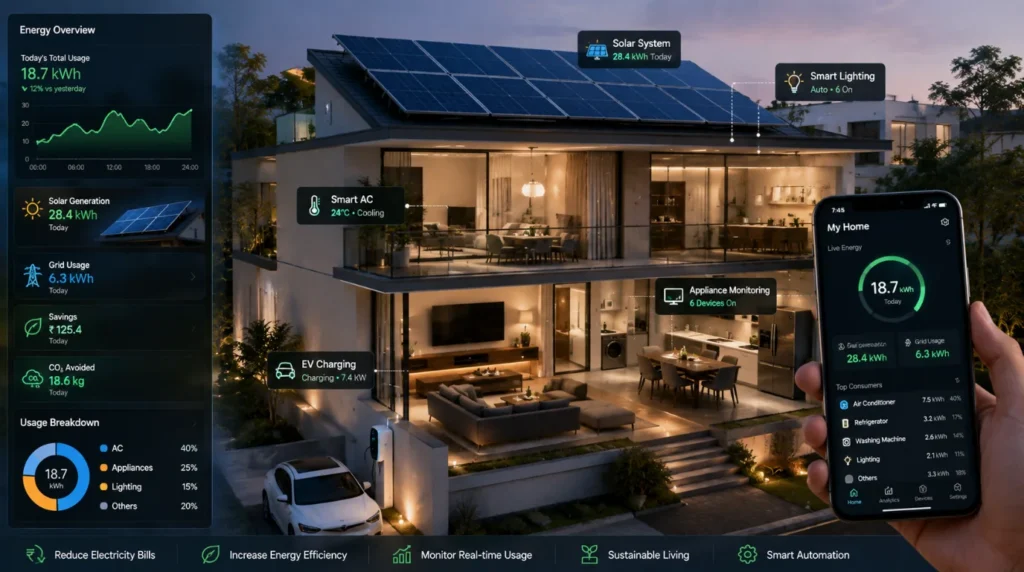
Energy efficiency is becoming one of the strongest reasons homeowners invest in home automation systems.
Electricity costs continue to rise across India, particularly during long summer months when air conditioners operate for extended periods.
Modern automation platforms continuously monitor energy usage and identify opportunities to reduce unnecessary consumption.
Smart Energy Monitoring
Instead of waiting for the monthly electricity bill, homeowners can now view real-time energy consumption for individual appliances.
This allows users to identify:
- High-energy appliances
- Standby power consumption
- Peak usage hours
- Opportunities for optimization
Intelligent Appliance Scheduling
One of the smartest features of modern home automation systems is automatic appliance scheduling.
Rather than running heavy appliances throughout the day, the system schedules them during periods of lower electricity demand or maximum solar energy production.
Examples include:
- Washing machines
- Water heaters
- Pool pumps
- EV charging
- Dishwashers
Solar Integration
With rooftop solar installations becoming increasingly popular across India, home automation systems are beginning to function as intelligent energy managers.
Instead of exporting excess solar power back to the grid immediately, automation systems can prioritize household appliances while solar generation is highest.
This maximizes energy efficiency and improves return on investment.
Smart Plug Automation
Even appliances that appear switched off often continue consuming electricity.
Known as standby or “phantom” power, this hidden energy usage can increase household electricity bills.
Smart plugs integrated with home automation systems automatically disconnect unused appliances, helping homeowners reduce unnecessary energy waste.
For many households, this simple automation feature can contribute to noticeable annual energy savings.
How Home Automation Systems Are Redefining Safety
Security has always been one of the primary reasons homeowners invest in home automation systems. However, modern automation has evolved far beyond traditional CCTV cameras and alarm systems.
Today’s AI-powered security solutions don’t just record events but understand what’s happening around your property and respond intelligently.
Modern home automation systems can identify:
- Family members arriving home
- Delivery personnel at the entrance
- Vehicles entering the driveway
- Pets moving around the property
- Unusual activity after dark
Instead of receiving constant notifications for every movement, homeowners receive meaningful alerts only when necessary.
Intelligent Security Features
| Feature | Benefit |
|---|---|
| AI Video Analytics | Identifies people, vehicles, and unusual movement |
| Smart Video Doorbells | View and communicate with visitors remotely |
| Smart Door Locks | Secure access with PINs, biometrics, or mobile devices |
| Motion Sensors | Detect movement and trigger automation |
| Instant Mobile Alerts | Receive notifications in real time |
| Emergency Scenes | Activate lights, sirens, and cameras automatically |
For urban homes, villas, and gated communities, home automation systems provide an additional layer of security while reducing the need for constant manual monitoring.
Health & Wellness: The Next Evolution of Home Automation Systems
The future of automation isn’t just about convenience; it is increasingly focused on improving health and overall well-being.
Modern home automation systems are becoming active participants in creating healthier indoor environments.
Air Quality Monitoring
Indoor air quality has become a growing concern in many Indian cities.
Smart sensors continuously monitor:
- PM2.5 levels
- Carbon dioxide
- Humidity
- Temperature
- Volatile Organic Compounds (VOCs)
When air quality drops below acceptable levels, home automation systems can automatically activate air purifiers or ventilation systems without any manual intervention.
Circadian Wellness
Lighting has a significant impact on our sleep cycles. Instead of using one fixed colour temperature throughout the day, intelligent lighting adjusts automatically.
Morning lighting promotes alertness and evening lighting becomes warmer to encourage natural melatonin production.
This simple automation improves comfort while supporting healthier daily routines.
Elderly Care
One of the fastest-growing applications of home automation systems is assisted living.
Without using intrusive cameras, motion and presence sensors can monitor activity patterns and notify family members if unusual inactivity is detected.
This allows elderly residents to maintain independence while giving families additional peace of mind.
5G and the Future of Connected Homes
As 5G networks continue expanding across India, they are improving the performance of connected devices.
While a professionally designed home automation system setup should always rely primarily on local processing, faster internet connectivity improves several cloud-based features.
These include:
- Faster remote access
- Improved video streaming from security cameras
- Quicker firmware updates
- Better voice assistant responsiveness
- Reliable communication while travelling
However, it’s important to understand that a premium automation installation should never stop functioning simply because the internet is unavailable.
The best home automation systems continue operating locally while using cloud connectivity only when necessary.
Predictive Automation vs Traditional Automation
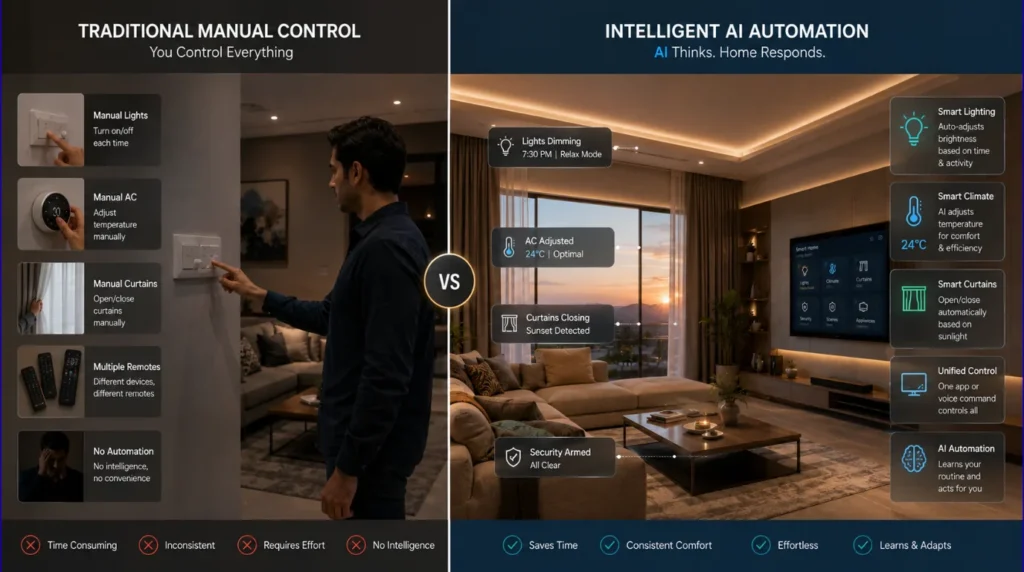
Automation technology has changed dramatically over the past decade.
Earlier systems depended almost entirely on manual commands. Modern home automation systems increasingly anticipate user behaviour before commands are even given.
| Traditional Automation | Predictive Automation |
|---|---|
| Responds to commands | Learns daily habits |
| Fixed schedules | Dynamic behaviour |
| Manual adjustments | Automatic optimisation |
| User-controlled | AI-assisted decisions |
| Limited personalization | Highly personalized experiences |
Instead of asking your home to switch on the lights every evening, intelligent automation recognizes your routine and performs the action automatically.
This shift toward predictive intelligence represents the future of residential automation.
Common Mistakes to Avoid
As demand for home automation systems grows, many homeowners make decisions that limit future performance.
Avoid these common mistakes:
Choosing Devices Instead of Choosing a System
Buying several unrelated smart gadgets often creates multiple apps and inconsistent performance. An integrated automation platform provides a much smoother experience.
Ignoring Infrastructure Planning
The best time to install structured wiring, electrical provisions, and automation infrastructure is during construction. Late planning often increases installation costs.
Focusing Only on Initial Cost
Cheaper products may save money initially but often require more maintenance and offer limited compatibility. Reliable home automation systems should be viewed as long-term investments.
Overlooking Future Expansion
Even if you only plan to automate lighting today, prepare your home for future additions such as:
- Motorized curtains
- Smart security
- Home theatre
- Energy management
- Smart irrigation
- EV charging
Planning makes future upgrades significantly easier.
Our Recommendation
At Techtastic, we believe successful home automation systems are built around people and not products. Technology should quietly improve everyday life without requiring constant attention.
For existing apartments, wireless automation offers an excellent starting point. For new homes and luxury villas, we recommend planning a professionally designed KNX-based automation solution during construction.
This provides:
- Greater reliability
- Better scalability
- Cleaner installations
- Easier maintenance
- Long-term flexibility
Rather than filling your home with isolated smart gadgets, invest in a unified automation platform that grows alongside your family’s needs.
Key Takeaways
- Home automation systems are becoming essential features in modern Indian homes.
- Matter is making products from different brands work together seamlessly.
- AI-powered automation learns routines instead of waiting for commands.
- Smart energy management reduces electricity consumption and operating costs.
- Intelligent security systems provide proactive monitoring and faster alerts.
- Health and wellness automation is becoming increasingly important.
- Predictive automation represents the next generation of smart living.
- Proper planning during construction produces the best long-term results.
- Open automation platforms provide better flexibility and future expansion.
- Professionally designed home automation systems deliver greater reliability and value than standalone smart devices.
Frequently Asked Questions
1. What are home automation systems?
A. Home automation systems are integrated platforms that connect lighting, security, climate control, entertainment, and other smart devices into one intelligent ecosystem that can be controlled automatically or remotely.
2. Are home automation systems suitable for existing homes?
A. Yes. Modern retrofit solutions allow home automation systems to be installed in existing apartments and houses without major structural changes or wall demolition.
3. How do home automation systems reduce electricity bills?
A. They automatically control lighting, air conditioning, appliances, and energy consumption based on occupancy, schedules, daylight, and user behaviour, reducing unnecessary power usage.
4. Can home automation systems work without the internet?
A. Yes. Professional home automation systems, particularly KNX-based solutions, continue operating locally even during internet outages. Remote access may be unavailable, but core automation continues functioning.
5. What is the Matter protocol?
A. Matter is a universal communication standard that enables products from different manufacturers to work together seamlessly within the same smart home ecosystem.
6. Are home automation systems secure?
A. Yes. Modern automation platforms use encrypted communication, secure authentication, and local processing to protect user privacy and reduce cybersecurity risks.
7. Can home automation systems integrate with solar panels?
A. Absolutely. Many home automation systems intelligently manage solar energy by scheduling appliances and maximizing self-consumption of generated electricity.
8. Is AI necessary in home automation systems?
A. AI is not essential but greatly enhances automation by learning user behaviour, optimizing energy consumption, and personalizing daily routines.
9. When should I install home automation systems?
A. The ideal time is during construction or renovation when electrical layouts and automation infrastructure can be planned efficiently.
10. Are home automation systems worth the investment?
A. Yes. Professionally installed home automation systems improve convenience, security, energy efficiency, comfort, and long-term property value while preparing homes for future technologies.
Collaboration Opportunities for Developers, Architects & Interior Designers
Modern homes are no longer designed around individual smart devices; they’re designed around integrated home automation systems that enhance everyday living.
At Techtastic, we collaborate with:
- Architects
- Interior Designers
- Builders
- Real Estate Developers
- Project Management Consultants (PMCs)
- Luxury Villa Developers
Our expertise includes:
- KNX Home Automation Planning
- Smart Lighting Design
- Electrical Layout Coordination
- Structured Cabling Solutions
- Motorized Curtain Integration
- Home Theatre Planning
- Smart Security Systems
- Networking Infrastructure
- Future Expansion Strategies
By involving Techtastic during the planning stage, project teams can reduce rework, improve aesthetics, and deliver intelligent, future-ready residential spaces.
Areas We Serve
Techtastic proudly delivers premium smart home automation solutions across:
- Mumbai
- Navi Mumbai
- Pune
- Lonavala
- Nashik
- Sangli
Whether you’re planning a luxury villa, modern apartment, or commercial project, our team designs customized automation solutions that match your lifestyle and long-term goals.
Ready to Experience the Future of Smart Living?
The future of home automation systems is not about owning more gadgets; it’s about creating a home that understands your lifestyle, improves energy efficiency, enhances security, and delivers effortless comfort every day.
At Techtastic, we specialize in designing intelligent automation solutions that combine smart lighting, climate control, security, motorized curtains, home theatres, networking, and KNX technology into one seamless ecosystem.
From planning and design to installation and ongoing support, we help homeowners, architects, builders, and interior designers create reliable, future-ready living spaces that continue delivering value for years to come.
📞 Call/WhatsApp: 9769145145
📍 Our Operational Hubs: Navi Mumbai | Nashik | Lonavla | Sangli
Looking to cut energy bills with smart technology? Check out Smart Home Energy Savings 2026: Real Costs vs. Real Savings for a realistic breakdown.