
Summary
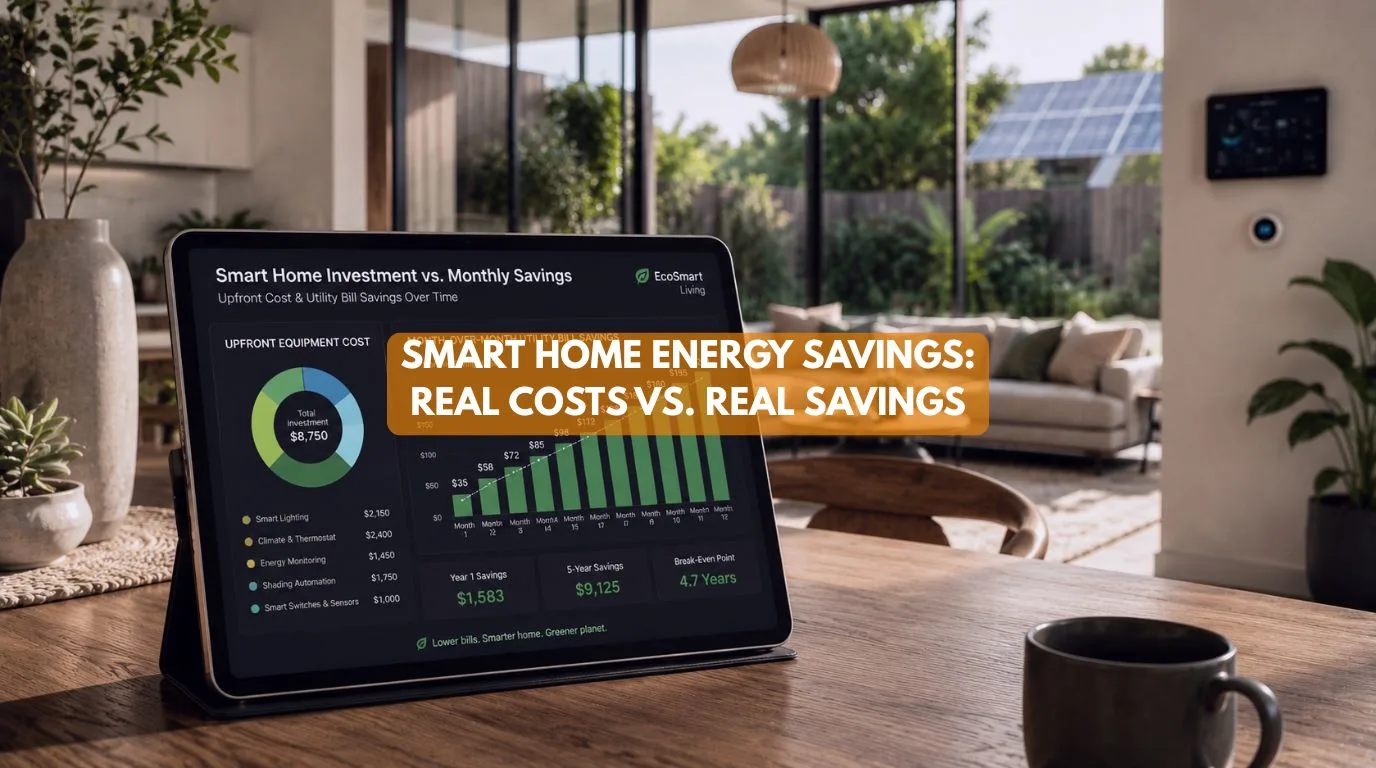
Smart home energy savings come from reducing unnecessary energy consumption rather than simply installing connected devices. While smart home technology requires an upfront investment, automation can lower ongoing electricity costs by optimizing heating, cooling, lighting, shading, and appliance usage. The greatest return on investment comes from integrated systems that combine smart thermostats, occupancy sensors, lighting control, motorized curtains, and energy monitoring to make intelligent decisions automatically.
Quick Answer
Yes, smart homes can reduce energy costs, but the savings depend on how the system is designed and used. The biggest reductions usually come from automating heating and cooling, lighting, occupancy-based controls, and energy monitoring. Rather than focusing on individual gadgets, homeowners achieve the best results by creating smart home energy savings routines that eliminate unnecessary energy consumption every day.
One of the most common questions homeowners ask before investing in automation is: “Will a smart home actually save me money?”
The answer is yes, but not simply because you install smart devices.
A smart home saves money by reducing waste. Instead of leaving lights on, cooling empty rooms, or running appliances unnecessarily, automation ensures energy is used only when and where it’s needed.
At Techtastic, we encourage homeowners to view smart home energy savings as a long-term investment in comfort, efficiency, and sustainability, and not just a collection of connected devices.
Understanding the Upfront Costs
The cost of a smart home varies depending on its size and complexity.
A basic setup might include:
- Smart lighting
- Smart plugs
- Smart thermostat
- Video doorbell
A larger integrated system may add:
- Occupancy sensors
- Motorized curtains
- Multi-room climate control
- Energy monitoring
- Centralized automation
While the initial investment is higher, these systems are designed to deliver benefits over many years.
Where the Smart Home Energy Savings Come From
Smart Thermostats
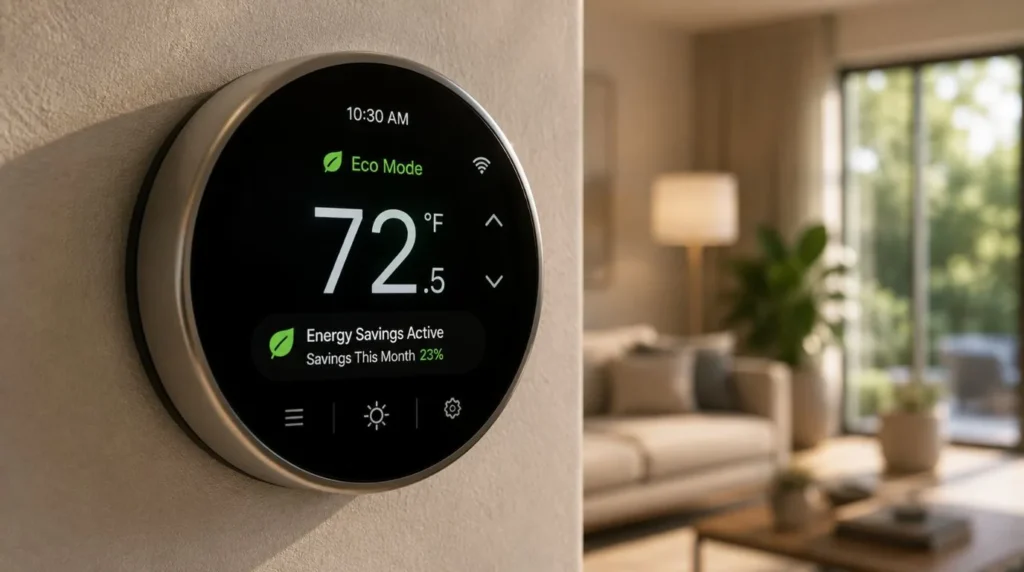
Heating and cooling often account for the largest share of household energy use.
Smart thermostats help by:
- Adjusting temperatures automatically
- Learning occupancy patterns
- Switching to eco mode when the house is empty
- Preventing unnecessary HVAC operation
For many homes, this provides the greatest opportunity for long-term savings.
Smart Lighting
Lighting automation reduces wasted electricity through:
- Motion-based activation
- Occupancy sensing
- Daylight harvesting
- Scheduled operation
- Automatic shutoff
LED smart lighting combined with automation further improves efficiency.
Occupancy Sensors
Instead of relying on people to switch devices off, occupancy sensors automate:
- Lighting
- Bathroom ventilation
- Hallway lights
- Utility rooms
- Selected appliances
This helps reduce everyday energy waste.
Motorized Curtains
Smart shading improves energy efficiency by managing sunlight throughout the day.
Motorized curtains can:
- Reduce solar heat gain during summer
- Increase natural daylight
- Improve insulation during colder months
This lowers the workload on heating and cooling systems.
Smart Energy Monitoring
One of the most valuable smart home energy savings tools is understanding where energy is actually being used.
Energy monitoring systems help homeowners:
- Track electricity usage
- Identify energy-hungry appliances
- Detect unusual consumption
- Measure the impact of automation
Better visibility often leads to smarter energy habits.
Automation Delivers the Biggest ROI
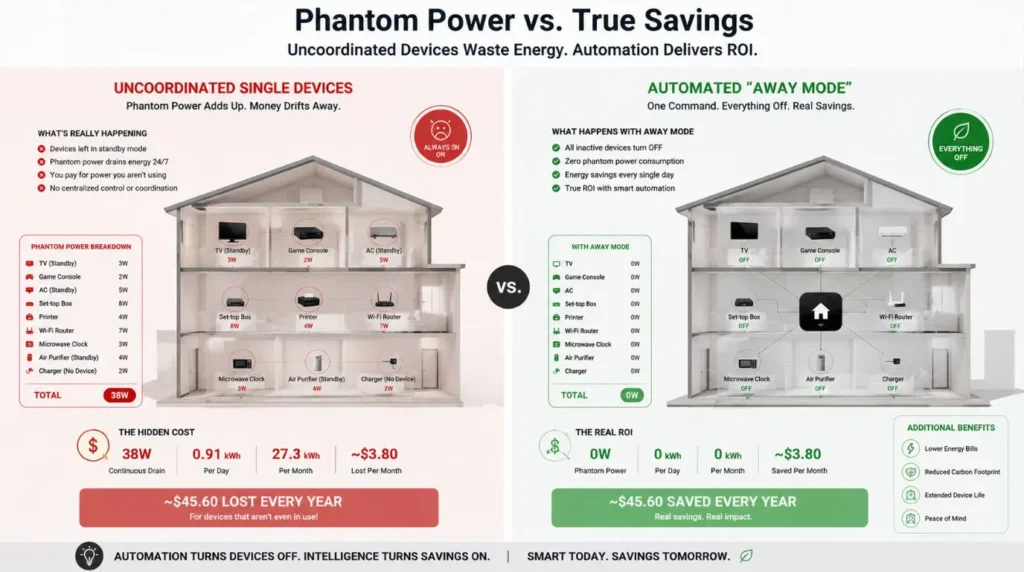
The greatest savings don’t come from individual devices but from intelligent routines.
Leaving Home
- Lights switch off
- HVAC enters eco mode
- Smart plugs disconnect selected appliances
- Curtains close to reduce heat gain
Returning Home
- Comfortable temperature resumes
- Essential lights activate
- Curtains adjust for daylight
Night Mode
- Unused lights turn off
- Entertainment devices power down
- Temperature adjusts for sleeping
Automation ensures these energy-saving actions happen consistently without relying on memory.
Real Savings Beyond Electricity Bills
While lower utility bills are important, homeowners often experience additional long-term value through:
- Reduced wear on HVAC systems
- Longer lifespan for lighting
- Improved home comfort
- Increased property value
- Better indoor climate
- Lower environmental impact
These benefits contribute to the overall return on investment.
Why KNX Maximizes Long-Term Savings
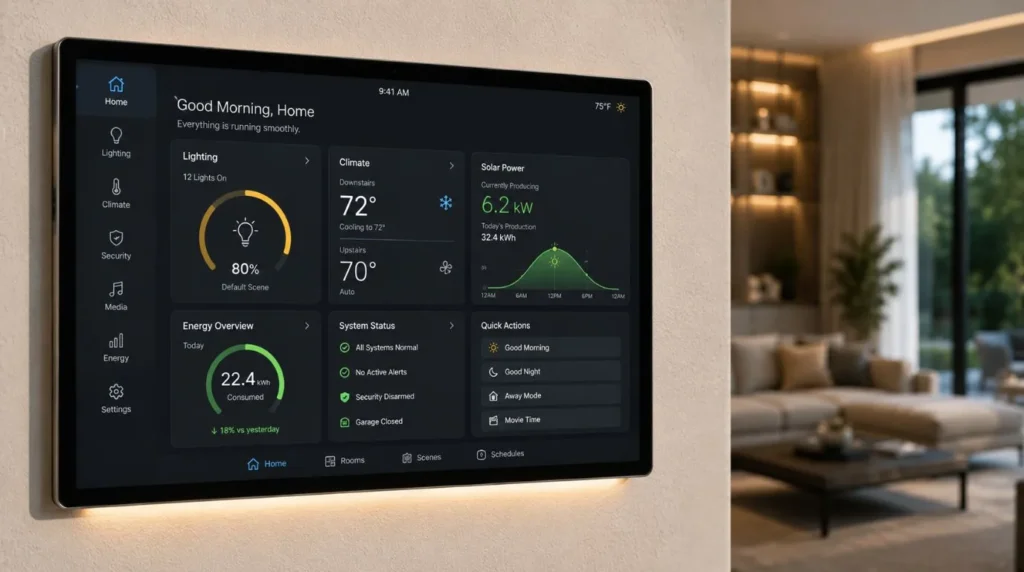
For homeowners planning a long-term investment, KNX home automation provides comprehensive energy management.
KNX integrates:
- Smart lighting
- HVAC
- Motorized curtains
- Occupancy sensors
- Energy monitoring
- Smart switches
- Renewable energy systems
Instead of operating independently, these systems communicate with each other to optimize energy use across the entire home. This coordinated approach often delivers greater efficiency than standalone smart devices.
Common Misconceptions
“Smart Devices Automatically Save Energy”
Only when they’re configured with meaningful automation.
“The Cheapest Device Provides the Best ROI”
Reliable, scalable systems often provide greater long-term value than low-cost products.
“Lighting Creates the Biggest Savings”
Lighting helps, but HVAC optimization usually has the largest impact.
“Automation Is Only About Convenience”
Comfort is important, but well-designed automation also improves efficiency and sustainability.
“Savings Happen Immediately”
Smart home energy savings accumulate over time through consistent daily optimization.
Why It Matters
Investing in smart home energy savings isn’t just about reducing electricity bills.
It’s about creating a home that:
- Uses energy intelligently
- Reduces waste automatically
- Improves comfort
- Supports sustainability
- Protects long-term property value
The smartest homes don’t consume less energy by chance—they’re designed to use it more efficiently.
Our Perspective at Techtastic
At Techtastic, we believe the true value of a smart home lies in its ability to make intelligent decisions automatically. Rather than relying on homeowners to constantly adjust lights, air conditioning, or appliances, we design smart home energy savings systems that optimize energy use based on occupancy, schedules, daylight, and real-world living patterns.
For premium homes, we often recommend KNX home automation because it allows lighting, HVAC, shading, and energy monitoring to work together as one coordinated system. This not only improves comfort but also delivers meaningful long-term smart home energy savings and a stronger return on investment.
Collaboration Opportunities for Developers, Architects & Interior Designers
Smart home energy savings start with smart planning.
At Techtastic, we collaborate with:
- Architects
- Interior designers
- Residential developers
- Luxury home builders
- MEP consultants
- Sustainability consultants
Intelligent Energy Design
Plan homes that reduce waste through automation rather than manual control.
KNX Infrastructure
Integrate lighting, climate, and shading into one energy-efficient platform.
Smart Lighting & Daylight Planning
Optimize natural and artificial lighting to reduce electricity consumption.
HVAC & Climate Integration
Design efficient temperature control systems based on occupancy and usage patterns.
Premium Residential Projects
Deliver homes that combine luxury, comfort, and measurable energy efficiency.
Future-Ready Developments
Prepare properties for renewable energy systems, battery storage, and evolving smart home technologies.
Planning energy management from the beginning creates better-performing homes with lower long-term operating costs.
Key Takeaways
- Smart home energy savings come from reducing waste through automation, not simply installing connected devices.
- Smart thermostats, lighting, occupancy sensors, motorized curtains, and energy monitoring provide the greatest opportunities for smart home energy savings.
- HVAC optimization typically delivers the largest reduction in electricity consumption.
- Automation routines create more consistent savings than manual operation.
- Long-term benefits include lower energy bills, improved comfort, extended equipment life, and increased property value.
- KNX home automation coordinates multiple systems to maximize efficiency across the home.
- The best return on investment comes from thoughtful planning and scalable automation rather than isolated smart gadgets.
Frequently Asked Questions
1. Do smart homes really save money?
A: Yes. Smart home energy savings can reduce costs by automating heating, cooling, lighting, and appliances, helping eliminate unnecessary electricity consumption.
2. Which device provides the biggest smart home energy savings?
A: A smart thermostat is often the most effective because heating and cooling typically account for the largest share of household energy use.
3. How long does it take to recover the cost of smart home automation?
A: The payback period depends on the size of the installation, local energy prices, and how extensively automation is used. While savings vary, many homeowners also value improved comfort, convenience, and property value alongside reduced utility bills.
4. Does smart lighting significantly reduce electricity bills?
A: Smart lighting helps reduce waste through scheduling, occupancy sensing, and automatic shutoff, especially when paired with energy-efficient LED bulbs.
5. Is energy monitoring worth it?
A: Yes. Home energy monitoring provides insights into electricity consumption, helping homeowners identify inefficient appliances and measure the impact of automation.
6. Can motorized curtains reduce energy costs?
A: Yes. By managing sunlight and indoor temperatures throughout the day, motorized curtains help reduce the demand on heating and cooling systems.
7. Does KNX support energy-efficient homes?
A: Yes. KNX integrates lighting, HVAC, occupancy sensors, shading, and energy monitoring into one coordinated platform, making it one of the most effective solutions for long-term energy management.
8. Should I automate my whole house at once?
A: Not necessarily. Many homeowners begin with high-impact areas such as climate control and lighting, then expand their system over time while maintaining a unified automation platform.
Conclusion
Smart home energy savings are achieved through intelligent automation that reduces unnecessary energy consumption every day. While there is an upfront investment, the real value comes from coordinating systems like heating, cooling, lighting, shading, and energy monitoring so they work together efficiently. Over time, homeowners benefit from lower utility bills, greater comfort, improved sustainability, and a home that responds automatically to their lifestyle.
At Techtastic, we design automation systems that deliver more than convenience; they create measurable long-term value. Whether you’re starting with smart thermostats and lighting or planning a fully integrated KNX home automation system, we build future-ready solutions that help your home operate smarter, more efficiently, and more sustainably.
📞 Call/WhatsApp: 9769145145
📍 Our Operational Hubs: Navi Mumbai | Nashik | Lonavla | Sangli
Wondering how to manage all these requirements? Read our expert guide on Smart Home Energy Monitoring: 7 Best Energy Saving Devices.