
Summary
Smart home automation is now a must-have in high-end residential design. People want homes that don’t just look stunning; they want them smart, too. Homeowners expect technology to make life easier, safer, and more efficient, all while blending in with beautiful interiors. That means interior designers need to get comfortable with things like smart lighting, automated curtains, climate control, and integrated security. When you plan for these features from the start, they fit right in and don’t mess with your overall look. In this guide, we’ll break down the smart home automation systems every interior designer needs to know.
The Growing Importance of Smart Homes in Interior Design
Interior design is evolving alongside technology. Modern homes are no longer designed solely for aesthetics and comfort. They are also expected to provide intelligent functionality that improves everyday living.
Smart home automation allows homeowners to control multiple systems within their home through a single interface. Lighting, climate control, entertainment systems, and security can all be managed through mobile devices or centralized control panels.
For interior designers, understanding these technologies ensures that automation systems are integrated into the design without compromising visual harmony.
Smart Lighting Automation
Lighting plays a crucial role in interior design, influencing both mood and functionality. Smart lighting systems allow designers to create dynamic lighting environments that adapt to different activities.
Key capabilities of smart lighting include:
- Adjustable brightness levels
- Custom lighting scenes for different moods
- Automated schedules for daily routines
- Mobile or touch panel control
For example, designers can create lighting scenes such as relaxation mode, dinner mode, or entertainment mode to enhance the ambience of a space.
Smart lighting also helps reduce energy consumption by automatically turning lights off when rooms are not occupied.
Motorized Curtains and Blinds
Window treatments are an important design element in luxury homes. Motorized curtains and blinds provide both convenience and elegance while maintaining the overall aesthetic of the interior space.
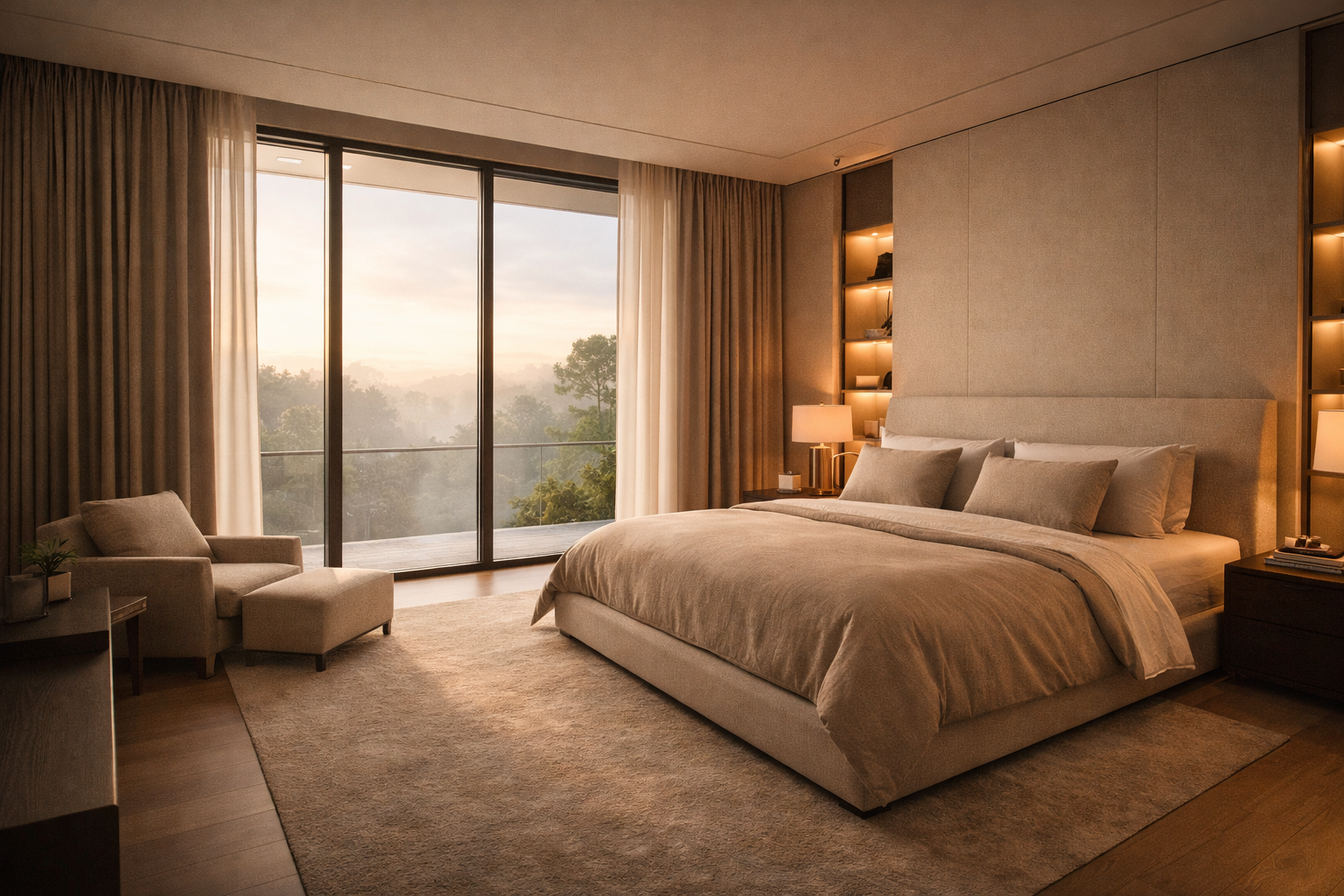
These systems allow homeowners to control natural light and privacy through automation. Curtains can be scheduled to open in the morning and close in the evening automatically.
Interior designers can also integrate curtain automation with lighting systems so that indoor lighting adjusts when natural light levels change.
Climate Control Automation
Comfort is a major aspect of residential design. Smart climate control systems allow homeowners to maintain ideal indoor temperatures while improving energy efficiency.
These systems can automatically adjust air conditioning based on room occupancy, time schedules, or environmental conditions.
For interior designers, this means fewer visible thermostats and more streamlined wall designs since climate systems can be controlled through centralized automation panels.
Smart Security Integration
Security systems are increasingly being integrated into luxury residential interiors. Modern automation platforms allow security features to be managed alongside other home systems.
Some common security integrations include:
- Video door phones
- Smart door locks
- CCTV monitoring systems
- Motion sensors and alarm systems
These features can be accessed remotely through mobile applications, allowing homeowners to monitor their homes from anywhere.
Designers can coordinate the placement of these devices so they blend seamlessly with interior layouts.
Home Theatre and Entertainment Systems
Many luxury homes include dedicated entertainment areas such as media rooms or home theatres. Automation systems allow these spaces to deliver immersive experiences while maintaining design consistency.
Smart automation can control:
- Audiovisual systems
- Projectors and screens
- Lighting scenes for movie viewing
- Surround sound systems
With a single command, a room can switch into “movie mode” where lights dim, curtains close, and the home theatre system activates.
Centralized Control Systems
One of the most important features of smart home automation is centralized control. Instead of managing multiple switches and remotes, homeowners can control all smart systems through a single platform.
Common control options include:
- Wall-mounted touch panels
- Mobile applications
- Voice-enabled control systems
For interior designers, centralized control reduces clutter on walls and simplifies the user experience for homeowners.
Planning Automation During the Interior Design Stage
The best results are achieved when automation systems are planned during the early stages of the interior design process.
Early planning allows designers to coordinate lighting layouts, wiring infrastructure, and control panel placement within the overall design concept.
This ensures that automation systems remain discreet while still providing powerful functionality.
Collaboration between interior designers and automation specialists helps achieve seamless integration between design and technology.
Enhancing Luxury Living Through Smart Design
Smart home automation enhances luxury living by combining intelligent technology with sophisticated interior design.
When implemented correctly, automation systems provide:
- Greater convenience for homeowners
- Enhanced lighting ambience
- Improved energy efficiency
- Seamless control of multiple home systems
Interior designers who understand smart automation can create homes that deliver both aesthetic excellence and modern functionality.
Final Thoughts
Smart home automation is becoming an essential component of modern residential design. For interior designers, understanding automation technologies allows them to create homes that combine elegant interiors with advanced functionality.
By integrating smart lighting, automated curtains, climate control, and security systems into the design process, designers can deliver homes that offer comfort, convenience, and intelligent living experiences.
As technology continues to evolve, smart automation will play an even greater role in shaping the future of interior design.
Upgrade Modern Interiors with Smart Home Automation
Modern luxury homes require intelligent automation systems that enhance comfort, convenience, and energy efficiency. Smart home automation allows homeowners to control lighting, climate systems, security, and entertainment through a single integrated platform.
Techtastic Technologies designs and installs advanced smart home automation systems powered by KNX technology for premium residential interiors.
Call us at 9769145145 today to explore smart home automation solutions for modern residential projects.
Collaboration Opportunities for Builders and Architects
Developers, architects, and interior designers can enhance residential projects by integrating smart home automation during the planning and design stages.
Techtastic collaborates with industry professionals to ensure automation technology integrates seamlessly with architectural layouts, lighting plans, and interior design concepts.
Partner with Techtastic to implement smart home automation solutions for your upcoming residential projects.
If you found this helpful, you might also be interested in our blog about smart lighting automation by interior designers here.