
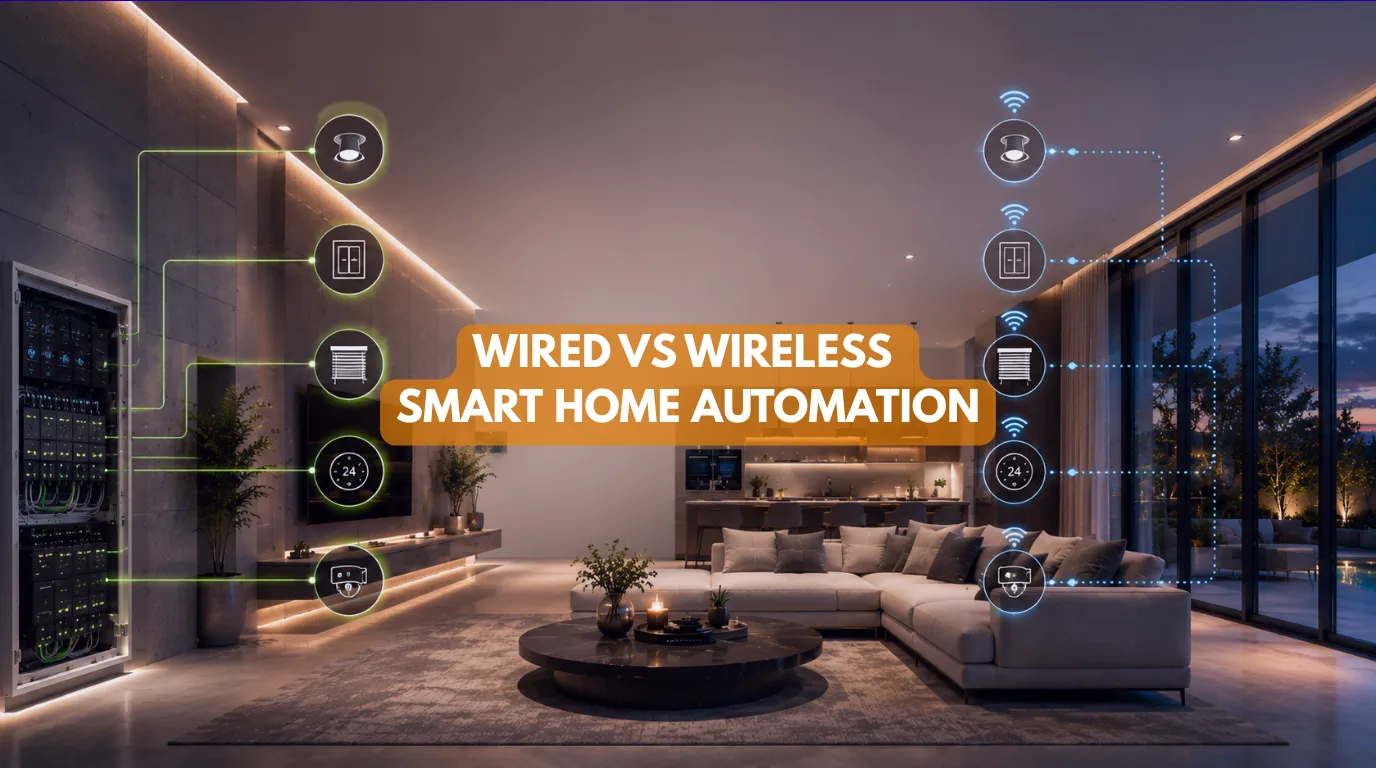
Building a luxury villa is about more than beautiful architecture and premium interiors; it’s about creating a home that delivers comfort, convenience, security, and long-term value. As smart living becomes the standard for modern homes, one of the biggest decisions homeowners face is choosing: Wired vs Wireless Smart Home Automation.
Both technologies can automate lighting, climate control, motorized curtains, entertainment, security, and other connected devices. However, they differ significantly in reliability, installation, scalability, maintenance, and future expansion. Choosing the wrong solution when it comes to wired vs. wireless smart home automation can affect your home’s performance for years, while selecting the right automation platform creates a seamless living experience that continues to evolve with your needs.
At Techtastic, we work closely with homeowners, architects, builders, and interior designers across Mumbai, Navi Mumbai, Pune, Lonavala, Nashik, and Sangli to design automation systems that match each property’s requirements.
One question we hear repeatedly during the planning stage is, “Which is better: wired vs wireless smart home automation?” The answer depends on your property’s construction stage, project size, long-term goals, and expectations from automation.
In this guide, we’ll compare Wired vs Wireless Smart Home Automation, explain how each technology works, discuss their advantages and limitations, and help you determine which solution is best suited for luxury villas and premium residences.
Quick Answer
Wired vs Wireless Smart Home Automation depends largely on your home’s construction stage and long-term requirements. Wired automation systems such as KNX offer greater reliability, scalability, and long-term performance, making them ideal for new luxury homes and villas. Wireless automation is easier to install in existing homes and works well for retrofit projects where rewiring is not practical.
Quick Summary
✔ Wired vs Wireless Smart Home Automation is one of the most important decisions when designing a smart home.
✔ Wired automation delivers greater reliability and long-term stability.
✔ Wireless automation offers faster installation for existing homes.
✔ KNX wired systems are ideal for luxury villas and new construction.
✔ Wireless systems are well suited for apartments and renovation projects.
✔ Wired infrastructure supports future expansion more efficiently.
✔ Choosing the right automation platform depends on your home’s current stage and plans.
Understanding Wired vs Wireless Smart Home Automation
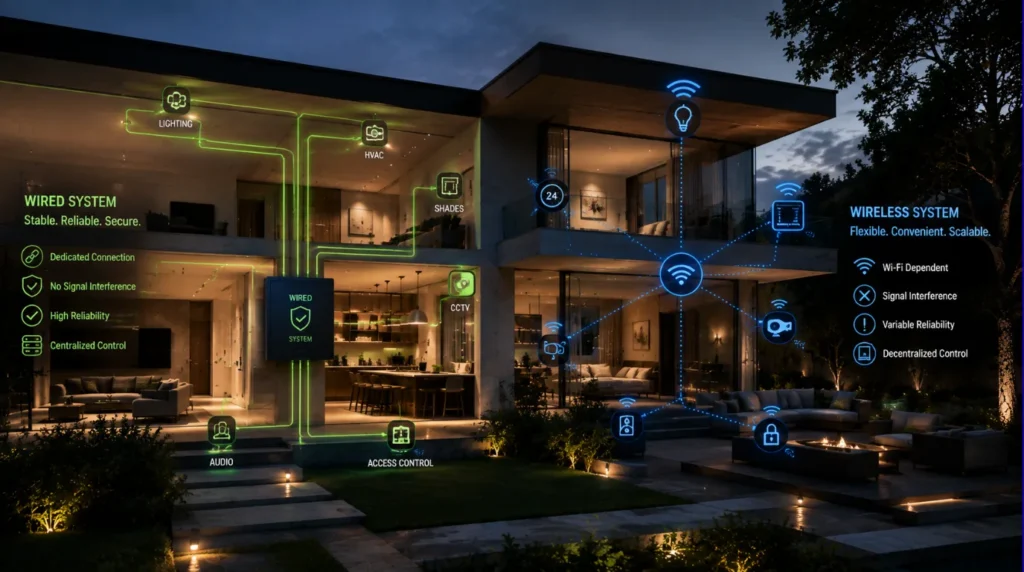
Before comparing the two technologies, it’s important to understand what Wired vs Wireless Smart Home Automation actually means.
Both systems are designed to automate everyday functions within your home, including:
- Smart lighting
- Climate control
- Motorized curtains
- Home theatres
- Security systems
- Door access
- Energy management
- Entertainment systems
The primary difference lies in how the devices communicate.
In wired automation, communication takes place through dedicated communication cables installed throughout the building. In wireless automation, devices communicate through technologies such as Wi-Fi, Zigbee, Thread, Matter, or Bluetooth.
Although both approaches provide smart control, their long-term performance differs significantly, particularly in larger properties.
What Is Wired Smart Home Automation?
A luxury villa using a professionally installed wired automation system relies on dedicated communication infrastructure that connects every intelligent device.
Rather than depending on wireless signals, wired systems allow sensors, switches, controllers, lighting, HVAC equipment, and motorized curtains to communicate through physical communication cables.
One of the world’s most widely adopted technologies for this purpose is KNX.
KNX has become the preferred automation standard for luxury residences, hotels, airports, commercial buildings, and premium villas because of its exceptional reliability and flexibility.
Advantages of Wired Smart Home Automation
- Stable communication
- Minimal interference
- Faster response times
- Excellent long-term reliability
- Easy future expansion
- Professional integration with electrical infrastructure
For homeowners constructing new villas, wired automation creates an intelligent foundation that supports decades of future technology.
Why Wired Automation Is Preferred for Luxury Villas
Luxury homes often include:
- Multiple floors
- Large living spaces
- Home theatres
- Outdoor lighting
- Swimming pools
- Landscape lighting
- Multiple HVAC zones
- Motorized curtains
Managing all these systems requires dependable communication.
This is why many architects recommend wired infrastructure when evaluating Wired vs Wireless Smart Home Automation for premium residences.
Instead of relying on wireless signals that may weaken over long distances, dedicated communication wiring delivers consistent performance throughout the property.
What Is Wireless Smart Home Automation?
Wireless automation eliminates the need for dedicated communication cables by allowing devices to communicate over wireless protocols.
Depending on the product, communication may occur through:
- Wi-Fi
- Zigbee
- Matter
- Thread
- Bluetooth
- Proprietary RF technologies
Wireless automation has become increasingly popular because it can often be installed without structural modifications.
For homeowners upgrading an existing apartment, wireless solutions provide a practical way to introduce automation without opening walls or replacing existing electrical infrastructure.
Advantages of Wireless Smart Home Automation
Wireless systems offer several important benefits.
Faster Installation
Because communication occurs wirelessly, installation is generally quicker than wired automation. Many devices can be configured within hours rather than days.
Ideal for Existing Homes
One of the biggest reasons homeowners choose wireless automation is retrofit flexibility. Instead of replacing existing switchboards or running communication cables, wireless modules integrate with existing electrical systems.
Lower Initial Installation Effort
Wireless automation usually requires fewer infrastructure changes. For smaller homes with limited automation requirements, this approach can reduce installation complexity.
Easy Device Expansion
Many wireless devices can be added individually over time.
Homeowners often begin with:
- Smart lighting
- Smart plugs
- Smart doorbells
Later expanding into security, climate control, and entertainment automation.
Wired vs Wireless Smart Home Automation: Feature Comparison
| Feature | Wired Smart Home Automation | Wireless Smart Home Automation |
|---|---|---|
| Installation Stage | Best during construction | Best for existing homes |
| Communication | Dedicated wired network | Wi-Fi, Zigbee, Matter, Thread |
| Reliability | Excellent | Good |
| Signal Interference | None | Possible |
| Internet Dependency | Minimal | Higher |
| Maintenance | Very Low | Moderate |
| Scalability | Excellent | Good |
| Long-Term Performance | Outstanding | Good |
| Best For | Luxury villas & new homes | Apartments & retrofit projects |
This comparison highlights why Wired vs Wireless Smart Home Automation depends heavily on the type of property being automated.
Reliability: Why Communication Matters
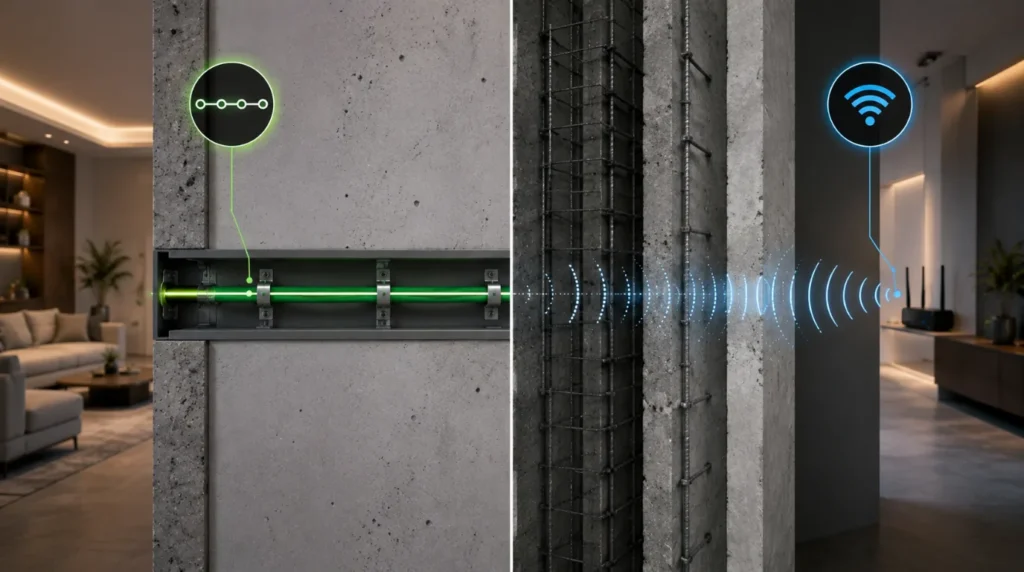
Reliability is one of the biggest differences when comparing Wired vs Wireless Smart Home Automation.
Imagine returning home after work. You press a switch expecting:
- Lights to turn on.
- Curtains to open.
- Air conditioning to activate.
In a wired system, commands travel through dedicated communication wiring, allowing devices to respond almost instantly.
Wireless automation also performs well under normal conditions but depends on network quality.
Factors that may influence wireless performance include:
- Router placement
- Building materials
- Network congestion
- Signal interference
- Number of connected devices
For smaller apartments, these limitations may be minimal. However, in luxury villas with multiple floors and outdoor spaces, communication consistency becomes far more important.
This is one reason professionals often recommend wired infrastructure for larger residential projects.
Scalability: Building a Home That Grows With You
Many homeowners begin their automation journey with lighting.
A few years later, they may want:
- Motorized curtains
- Home theatre automation
- Smart irrigation
- EV charging
- Landscape lighting
- Solar integration
- Multi-room audio
This is where Wired vs Wireless Smart Home Automation becomes an important long-term consideration.
A professionally planned wired infrastructure allows additional automation modules to be integrated much more easily as the property evolves.
Wireless systems can also expand, but increasing numbers of connected devices may require stronger networking infrastructure and more careful signal planning.
Planning for future expansion during construction often provides greater flexibility while avoiding costly modifications later.
Installation Comparison: When Should You Choose Each System?
One of the biggest deciding factors in Wired vs Wireless Smart Home Automation is the stage of your project. While both technologies offer intelligent control, the installation process differs considerably.
Wired Smart Home Automation
A wired automation system is installed during the construction or major renovation phase. Communication cables are routed alongside the electrical wiring before the walls and ceilings are finished.
Planning wired automation early offers several advantages:
- Concealed wiring for a cleaner finish
- Better integration with electrical infrastructure
- Easier installation of sensors and controllers
- Lower future modification costs
- Greater flexibility for expanding the system later
For homeowners building a new luxury villa, planning Wired vs Wireless Smart Home Automation before construction is completed ensures the automation system becomes part of the home’s infrastructure rather than an afterthought.
Wireless Smart Home Automation
Wireless automation is designed for retrofit projects where running additional communication cables may not be practical.
Installation generally involves:
- Smart switches
- Smart plugs
- Wireless controllers
- Smart sensors
- Smart locks
- Wi-Fi or Zigbee devices
Because there is minimal civil work involved, homeowners can begin automating selected rooms without disrupting existing interiors.
For completed apartments or homes undergoing minor upgrades, wireless automation offers a practical and convenient solution.
Performance in Luxury Villas
Luxury villas present unique automation challenges.
Large living spaces, multiple floors, landscaped gardens, swimming pools, outdoor entertainment areas, and home theatres require automation systems capable of maintaining reliable communication across the entire property.
When comparing Wired vs Wireless Smart Home Automation, wired systems generally perform better in larger residences because they are unaffected by:
- Wi-Fi congestion
- Thick concrete walls
- Long communication distances
- Network interference
- Router limitations
Luxury villas often include dozens or even hundreds of connected devices.
These may include:
- Smart lighting
- HVAC zones
- Motorized curtains
- Security cameras
- Smart door locks
- Garden lighting
- Pool automation
- Home theatre systems
- Audio distribution
- Energy monitoring
A professionally designed wired automation system manages all these devices consistently without depending on wireless signal strength.
Wireless automation performs extremely well in smaller homes but may require additional access points, repeaters, or mesh networks as property size increases.
Cost Comparison: Wired vs Wireless Smart Home Automation
Cost is often one of the first considerations for homeowners evaluating Wired vs Wireless Smart Home Automation. While wireless systems generally require a lower upfront investment, long-term value should also be considered.
| Factor | Wired Smart Home Automation | Wireless Smart Home Automation |
|---|---|---|
| Initial Installation Cost | Higher | Lower |
| Civil Work | Required during construction | Minimal |
| Long-Term Maintenance | Low | Moderate |
| Future Expansion | Easier | Depends on network capacity |
| Reliability | Excellent | Good |
| Best Investment | New luxury homes | Existing homes |
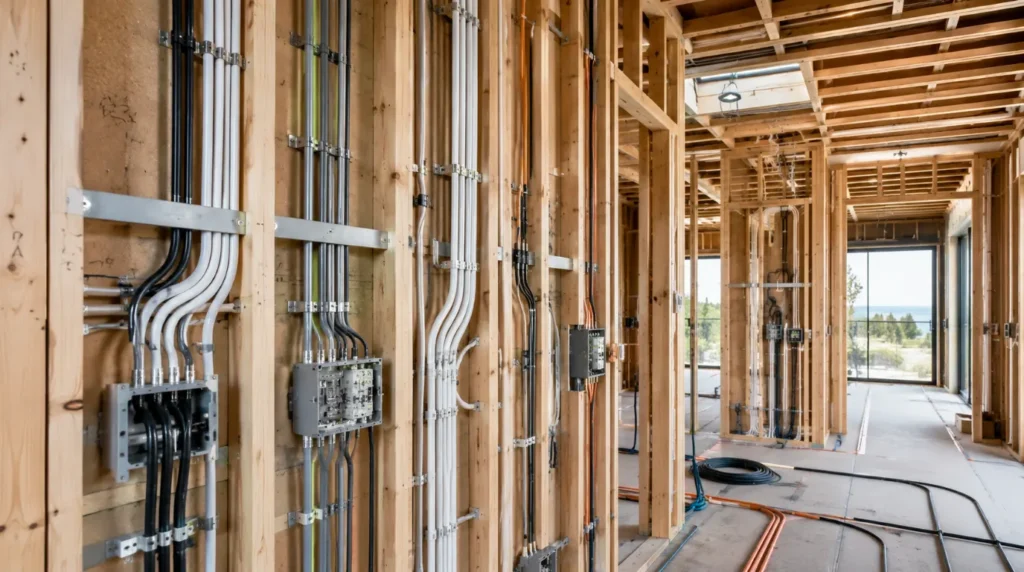
It is important to compare the total ownership cost rather than only the initial installation expense.
A professionally installed wired system often delivers greater value over 15–20 years because of its reliability, longevity, and lower maintenance requirements.
Which System Should You Choose?
The answer to Wired vs Wireless Smart Home Automation depends on your home’s current stage and future goals.
Choose Wired Smart Home Automation If:
- You’re building a new villa.
- You’re undertaking a major renovation.
- You want maximum reliability.
- Long-term scalability is important.
- You plan to integrate lighting, HVAC, security, home theatre, and motorized curtains.
- You want a future-proof automation infrastructure.
Choose Wireless Smart Home Automation If:
- Your home is already completed.
- You want minimal installation work.
- You’re automating only a few rooms.
- You need a faster installation.
- You’re looking for an entry-level automation solution.
For luxury villas in Lonavala and other premium residential developments, wired automation remains the preferred solution because it offers superior long-term performance and reliability.
Want a clear breakdown of smart home installation costs? Check out our Average Price of a Smart Home Installation (2026 Cost Guide) before you get started.
Common Mistakes to Avoid
Many homeowners focus on buying smart devices instead of designing a complete automation strategy. Avoid these common mistakes when planning Wired vs Wireless Smart Home Automation.
Waiting Too Long to Plan Automation
The best time to design a wired system is before electrical work begins. Planning later often increases installation costs and limits future flexibility.
Choosing Only on Price
The cheapest system is rarely the best long-term investment.
Consider:
- Reliability
- Product quality
- Manufacturer support
- Future upgrades
- Maintenance requirements
Ignoring Future Expansion
Even if you’re automating only lighting today, plan for:
- Motorized curtains
- Smart security
- Multi-room audio
- Home theatre
- Smart irrigation
- EV charging
- Energy monitoring
Preparing the infrastructure today saves significant effort tomorrow.
Buying Closed Ecosystems
Some smart home brands allow only their own products to work together. Choosing open platforms like KNX provides greater flexibility and allows future upgrades without replacing the entire system.
Hiring Inexperienced Integrators
Automation is more than installing smart switches. A professional integrator designs the electrical layout, automation logic, programming, and commissioning to ensure every system works together seamlessly.
Our Recommendation
At Techtastic, we believe there is no universal answer to Wired vs. wireless smart home automation; the right choice depends on the property and the homeowner’s goals.
For apartments and completed homes, wireless automation provides an excellent starting point. For luxury villas, premium residences, and new construction projects, we strongly recommend a wired KNX-based automation system.
A professionally planned wired infrastructure provides:
- Exceptional reliability
- Better performance
- Seamless integration
- Easier future expansion
- Greater property value
- Long-term peace of mind
Rather than focusing only on today’s requirements, invest in an automation platform that can continue evolving with your home.
Key Takeaways
- Wired vs Wireless Smart Home Automation depends on your property’s construction stage and long-term requirements.
- Wired automation delivers greater reliability and stability for luxury homes.
- Wireless automation is ideal for retrofit projects and existing properties.
- KNX wired systems provide excellent scalability and long-term flexibility.
- Wireless systems offer quicker installation with minimal structural work.
- Luxury villas benefit from wired infrastructure because of larger property sizes.
- Planning automation during construction produces better results.
- Future expansion should always be considered during system design.
- Professional integration ensures maximum performance and reliability.
- Choosing the right automation platform creates a smarter, more valuable home.
Frequently Asked Questions
1. What is the difference between wired vs wireless smart home automation?
A. The primary difference is communication. Wired systems use dedicated communication cables, while wireless systems rely on Wi-Fi, Zigbee, Matter, or similar wireless technologies to connect devices.
2. Which is better for a luxury villa when choosing wired vs wireless smart home automation?
A. For new luxury villas, wired vs. wireless smart home automation generally favors wired systems because they provide greater reliability, scalability, and long-term performance.
3. Can I install wireless automation in an existing home?
A. Yes. Wireless automation is specifically designed for retrofit projects and allows homeowners to upgrade existing properties without major structural changes.
4. Is wired automation more reliable?
A. Yes. Wired systems are not affected by Wi-Fi congestion, signal interference, or router limitations, making them more reliable for larger properties.
5. Does wired automation require internet connectivity?
A. No. Most professional wired automation platforms, including KNX, continue functioning even when the internet is unavailable because communication occurs locally.
6. Is wireless automation suitable for large villas?
A. It can be, but larger homes often require additional networking equipment to maintain consistent performance. Wired systems generally provide a more dependable solution for expansive properties.
7. Which automation system is easier to expand?
A. Both systems can expand, but wired automation typically offers better long-term scalability because it is designed as permanent building infrastructure.
8. Does automation increase property value?
A. Yes. Professionally installed smart home automation can improve convenience, energy efficiency, security, and the perceived value of premium homes.
9. When should I plan smart home automation?
A. The ideal time is during the architectural and electrical planning stage, especially for wired systems, as this allows communication wiring to be integrated efficiently.
10. Is Wired vs Wireless Smart Home Automation worth the investment?
A. Absolutely. Choosing the right automation solution improves comfort, security, energy efficiency, and future readiness while enhancing the overall living experience.
Collaboration Opportunities for Developers, Architects & Interior Designers
The decision between Wired vs Wireless Smart Home Automation should begin during the planning phase of every premium residential project.
At Techtastic, we collaborate with:
- Architects
- Interior Designers
- Builders
- Real Estate Developers
- Project Management Consultants (PMCs)
- Luxury Villa Developers
Our services include:
- KNX Automation Planning
- Smart Lighting Design
- Electrical Layout Coordination
- Structured Cabling Solutions
- Motorized Curtain Integration
- Home Theatre Planning
- Smart Security Systems
- Networking Infrastructure
- Future Expansion Planning
By involving Techtastic early, project teams can create elegant, future-ready homes while minimizing costly modifications later.
Areas We Serve
Techtastic proudly delivers premium smart home automation solutions across:
- Mumbai
- Navi Mumbai
- Pune
- Lonavala
- Nashik
- Sangli
Whether you’re building a luxury villa, renovating an apartment, or developing a premium residential project, our team can design a customized automation solution that fits your lifestyle and long-term goals.
Ready to Build a Smarter Luxury Villa?
Choosing between Wired vs Wireless Smart Home Automation is one of the most important decisions you’ll make when designing a modern smart home. The right system should not only meet your current needs but also support future technologies, improve everyday comfort, and deliver reliable performance for years to come.
At Techtastic, we specialize in designing intelligent automation solutions that integrate lighting, climate control, motorized curtains, home theatres, networking, security, and KNX technology into one seamless ecosystem. From planning and design to installation and ongoing support, we help homeowners, architects, and builders create smart homes that are built to last.
Book a consultation today and let our experts help you create a smart home that’s ready for the future.
Contact Techtastic
Website: Techtastic Website
Phone: 9769145145
Service Areas: Mumbai • Navi Mumbai • Pune • Lonavala • Nashik • Sangli