
Summary
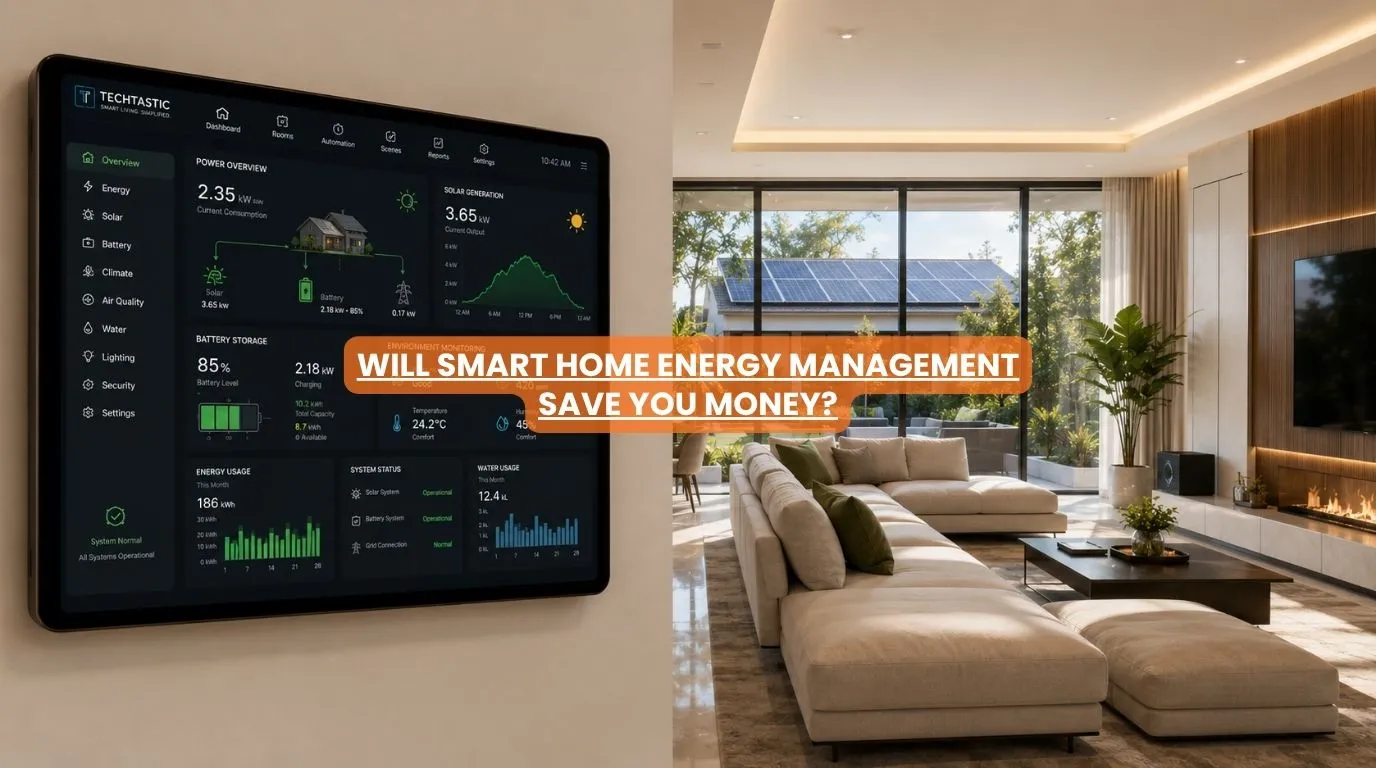
Smart home energy management uses automation, sensors, and intelligent controls to reduce unnecessary electricity consumption without compromising comfort. By automatically managing lighting, HVAC systems, motorized curtains, appliances, and occupancy-based automation, homeowners can optimize energy usage throughout the day. While savings vary depending on the home and lifestyle, professionally designed smart home systems can improve energy efficiency while increasing comfort, convenience, and long-term property value.
Quick Answer
Smart home energy management is the process of using intelligent automation to monitor and optimize electricity usage throughout your home. Rather than relying on manual control, the system automatically adjusts lighting, air conditioning, heating, motorized curtains, appliances, and other connected devices based on occupancy, schedules, daylight, and environmental conditions. While actual savings depend on your home’s size and energy habits, smart home energy management can reduce unnecessary electricity consumption while improving comfort and convenience.
What Is Smart Home Energy Management and Will It Save Money?
Most homeowners think of home automation as a luxury. They picture:
- Voice-controlled lights
- Smart speakers
- Motorized curtains
- Mobile apps
- Home theatres
While these features certainly make life more convenient, one of the biggest long-term advantages is often overlooked: Energy management.
At Techtastic, many homeowners initially invest in automation for comfort and convenience. Over time, they often discover another significant benefit: a home that uses energy more intelligently. Rather than simply turning devices on and off remotely, smart home energy management allows your home to make intelligent decisions that reduce unnecessary electricity consumption without sacrificing comfort.
Let’s explore how it works.
What Is Smart Home Energy Management?
Smart home energy management is the intelligent control of electrical systems to improve efficiency and reduce waste.
Instead of operating every device manually, the home automatically manages:
- Lighting
- Air conditioning
- Heating
- Motorized curtains
- Ventilation
- Appliances
- Water pumps
- Entertainment systems
- EV charging (where applicable)
The goal isn’t simply to consume less electricity. It’s to consume electricity more efficiently.
How Does Smart Home Energy Management Work?
A smart home collects information from devices such as:
- Motion sensors
- Occupancy sensors
- Temperature sensors
- Light sensors
- Smart switches
- Smart thermostats
- Energy meters
The automation system then makes intelligent decisions based on that information.
For example, instead of leaving the air conditioning running all day, the system adjusts cooling based on occupancy and room temperature.
Where Does a Smart Home Save Energy?
1. Intelligent Lighting Control
Lighting is one of the easiest places to reduce unnecessary electricity usage.
Instead of relying on occupants to switch lights off, automation can:
- Turn lights off in empty rooms
- Dim lights based on daylight
- Schedule outdoor lighting
- Create energy-efficient lighting scenes
This reduces wasted electricity without affecting convenience.
2. Smarter Climate Control
Air conditioning is often the largest contributor to residential electricity bills.
Smart automation helps by:
- Adjusting temperatures automatically
- Cooling only occupied rooms
- Switching to energy-saving modes
- Scheduling HVAC operation
Instead of running continuously, the system provides comfort only when needed.
3. Motorized Curtains
Motorized curtains contribute to energy management in surprising ways.
They can:
- Close during peak afternoon sunlight
- Reduce solar heat gain
- Lower cooling demand
- Open during winter mornings for natural warmth
This passive temperature control helps HVAC systems work more efficiently.
4. Occupancy-Based Automation
Why cool or light an empty room? With occupancy sensors, the home automatically responds to activity.
Examples include:
- Lights switch off when rooms are vacant.
- Air conditioning adjusts after everyone leaves.
- Entertainment systems power down automatically.
This prevents unnecessary energy use.
5. Appliance Automation
Smart automation can control:
- Water heaters
- Exhaust fans
- Garden pumps
- Outdoor lighting
- Decorative lighting
Instead of operating continuously, these systems run only when required.
6. Energy Monitoring
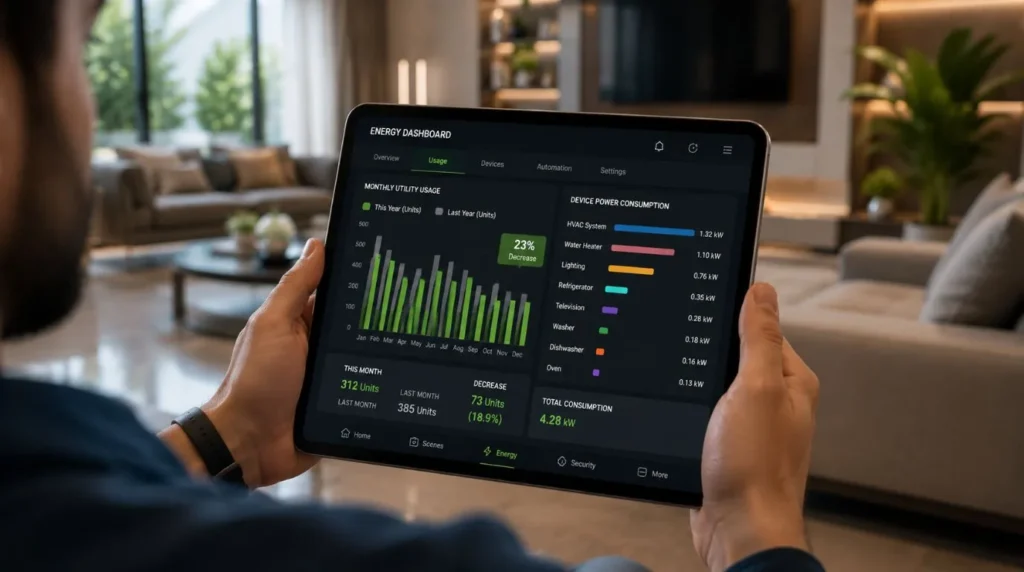
Many advanced systems provide real-time energy insights.
Homeowners can:
- Track electricity consumption
- Identify high-energy devices
- Compare daily usage
- Spot unusual energy patterns
Better visibility often leads to smarter energy habits.
KNX Smart Home Energy Management
One of the biggest strengths of KNX home automation is its ability to integrate multiple systems into one intelligent platform.
Rather than optimizing individual devices, KNX coordinates:
- Lighting
- HVAC
- Curtains
- Blinds
- Occupancy sensors
- Weather sensors
- Energy meters
For example, on a hot afternoon:
- Curtains close automatically.
- Air conditioning adjusts.
- Lighting dims because natural light decreases.
Everything works together to maximize comfort while minimizing energy waste.
Can Smart Homes Really Reduce Electricity Bills?
Yes, but it’s important to have realistic expectations. A smart home energy management system doesn’t create energy. Instead, it helps eliminate waste.
Savings typically come from:
- Lights are left on unnecessarily
- Overused air conditioning
- Inefficient schedules
- Standby devices
- Excessive heating or cooling
The greater the waste in a home today, the greater the potential savings after automation.
Smart Home vs Traditional Home
| Feature | Traditional Home | Smart Home |
| Lighting control | Manual | Automated |
| HVAC control | Manual | Intelligent scheduling |
| Curtain operation | Manual | Automated sunlight control |
| Energy monitoring | Limited | Real-time insights |
| Occupancy detection | No | Yes |
| Energy optimization | User dependent | Automatic |
Automation improves consistency and reduces human error.
Factors That Influence Energy Savings
Every home is different.
Savings depend on factors such as:
- Home size
- Climate
- Occupancy patterns
- Number of automated systems
- Existing energy habits
- HVAC efficiency
- Window orientation
Homes with larger spaces and higher energy consumption often see the greatest benefits.
Common Misconceptions
“Smart Homes Automatically Cut Bills in Half”
Not necessarily. Automation improves efficiency but doesn’t eliminate energy costs.
“Only Large Homes Benefit”
Even apartments can benefit from intelligent lighting, climate control, and scheduling.
“Energy Management Is Only About Lighting”
Lighting is just one part. HVAC, curtains, appliances, and occupancy automation often have an even greater impact.
“Automation Is Complicated”
Modern systems are designed to work quietly in the background with minimal user interaction.
Why It Matters for Modern Homes
Energy costs continue to rise, and homeowners are becoming more conscious of sustainability.
Smart home energy management helps create homes that are:
- More efficient
- More comfortable
- Easier to manage
- Better prepared for future technologies
It’s no longer just about convenience; it’s about making homes work smarter every day.
Our Perspective at Techtastic
At Techtastic, we don’t see energy management as a separate feature. We see it as the result of intelligent automation.
When we design a smart home, we look at how lighting, climate control, motorized curtains, occupancy sensing, and energy monitoring can work together to reduce waste without affecting comfort.
Rather than asking homeowners to constantly think about saving energy, we design homes that make those decisions automatically. That’s where automation delivers its greatest long-term value.
Collaboration Opportunities for Developers, Architects & Interior Designers
Energy efficiency begins long before homeowners move in.
At Techtastic, we collaborate with:
- Architects
- Interior designers
- Residential developers
- Luxury home builders
- Hospitality consultants
- Commercial project planners
Smart Energy Planning
Design homes with efficient automation from the start.
Lighting & HVAC Integration
Reduce unnecessary energy consumption.
Motorized Curtain Planning
Improve passive temperature control.
KNX Home Automation
Create scalable, energy-efficient buildings.
Luxury Residential Projects
Combine sustainability with premium living.
Future-Ready Developments
Deliver homes prepared for evolving energy standards.
Early planning results in smarter, more efficient buildings with lower long-term operating costs.
Key Takeaways
- Smart home energy management reduces unnecessary electricity consumption through intelligent automation.
- Lighting, HVAC, motorized curtains, and occupancy sensing work together to improve efficiency.
- KNX home automation integrates multiple systems into one energy-optimized platform.
- Energy monitoring helps homeowners understand and reduce electricity usage.
- Savings depend on the home’s size, energy habits, and level of automation.
- Automation improves comfort while reducing waste.
- Long-term value comes from smarter energy usage rather than simply using less electricity.
Frequently Asked Questions
1. What is smart home energy management?
A. Smart home energy management uses automation to monitor and optimize electricity usage by intelligently controlling lighting, HVAC, motorized curtains, appliances, and other connected systems.
2. Can smart home automation reduce electricity bills?
A. Yes. By reducing unnecessary energy consumption and optimizing how systems operate, automation can help lower electricity costs over time.
3. Which smart home features save the most energy?
A. Climate control, lighting automation, occupancy sensors, and motorized curtains typically provide the greatest energy-saving opportunities.
4. Does KNX help with energy management?
A. Yes. KNX integrates multiple building systems, allowing them to work together for improved efficiency and reduced energy waste.
5. Can smart homes monitor electricity usage?
A. Many advanced systems include energy monitoring that provides real-time insights into electricity consumption.
6. Are smart homes environmentally friendly?
A. Yes. By reducing unnecessary energy use, smart homes can help lower a household’s environmental impact.
7. Is smart home energy management worth it?
A. For many homeowners, the combination of improved comfort, convenience, and long-term energy efficiency makes it a worthwhile investment.
8. Can energy management be added to an existing home?
A. Yes. Many automation features can be integrated into existing homes, although new construction offers the greatest flexibility.
Conclusion
Smart home energy management is about more than lowering electricity bills—it’s about creating a home that uses energy intelligently. By automating lighting, climate control, motorized curtains, occupancy sensing, and other connected systems, homeowners can reduce waste, improve comfort, and enjoy a more efficient lifestyle without constantly adjusting devices themselves.
At Techtastic, we design smart home solutions that combine intelligent automation with practical energy management.
📞 Call/WhatsApp: 9769145145
📍 Our Operational Hubs: Navi Mumbai | Nashik | Lonavla | Sangli
Whether you’re building a new home or upgrading an existing one, our goal is to create connected living spaces that are comfortable, future-ready, and designed to make every unit of energy work smarter.
To see exactly how much heat enters through your windows, read our complete guide on the 5 Best Ways an Automated Curtain Helps Control Temperature.