
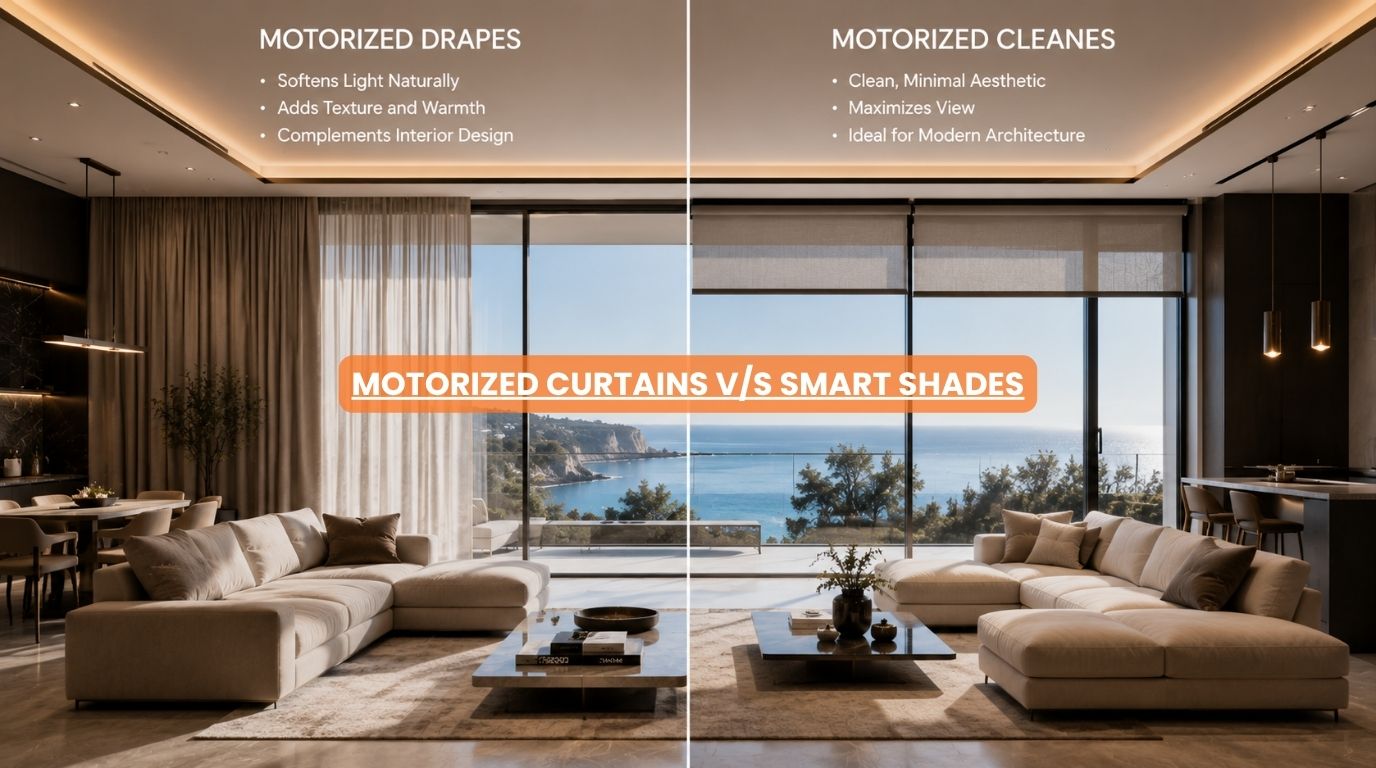
As smart home technology continues evolving, homeowners have more options than ever when it comes to automated window treatments.
Two of the most popular choices are:
- Motorized curtains
- Smart shades
At first glance, they seem very similar.
Both can:
- Open automatically
- Close automatically
- Connect to smart home systems
- Respond to schedules
- Support voice control
However, they are designed for different purposes and create very different experiences within a home. At Techtastic, one of the most common questions we hear during automation planning is: “Should I choose motorized curtains or smart shades?”
The answer depends on several factors, including aesthetics, privacy requirements, lighting control goals, and overall smart home strategy. Let’s break down the differences.
Summary
Motorized curtains and smart shades both automate window coverings, but serve different purposes. Motorized curtains use fabric drapes that slide horizontally across a track, while smart window shades typically roll, fold, or raise vertically within the window frame. Motorized curtains often provide a softer, luxury aesthetic and are ideal for large windows, while smart window shades offer a cleaner, minimalist appearance. The best choice depends on interior design preferences, privacy requirements, light-control needs, and smart-home automation goals.
Quick Answer
The primary differences between motorized curtains and smart shades are their operation and visual style. Motorized curtains move horizontally along a track using fabric drapes, while smart shades move vertically and typically roll or fold within the window frame. Motorized curtains are often preferred for luxury living rooms, large windows, and elegant interiors, while smart blinds are popular in modern, minimalist spaces that prioritize precise light control and a streamlined appearance.
What Are Motorized Curtains?
Motorized curtains use an electric motor to move traditional fabric curtains along a track.
They typically:
- Open from the center
- Open from one side
- Close automatically
- Operate silently
Motorized curtains maintain the soft, luxurious appearance of traditional drapery while adding automation and convenience.
What Are Smart Shades?
These types of shades automate window coverings that move vertically rather than horizontally.
Popular examples include:
- Roller shades
- Roman shades
- Honeycomb shades
- Cellular shades
- Zebra shades
These systems typically retract upward into a compact housing or cassette. Smart window shades are often chosen for modern and minimalist interiors.
The Biggest Difference: Style and Appearance
The most noticeable distinction is visual design.
Motorized Curtains
Create:
- Soft textures
- Luxury aesthetics
- Elegant interiors
- Hotel-style environments
They often become a major design feature within the room.
Smart Shades
Create:
- Clean lines
- Minimalist aesthetics
- Contemporary design
- Streamlined window treatments
They tend to blend into the architecture.
Motorized Curtains vs Smart Shades: Visual Comparison
| Feature | Motorized Curtains | Smart Shades |
| Appearance | Soft and luxurious | Clean and minimalist |
| Operation | Horizontal movement | Vertical movement |
| Fabric options | Extensive | Moderate |
| Design impact | Strong visual statement | Subtle integration |
| Best for luxury interiors | Excellent | Good |
| Best for modern minimalism | Good | Excellent |
The decision often begins with interior design goals.
Light Control Differences
Both options manage sunlight, but they do so differently.
Smart Shades
Offer highly precise light management.
Examples:
- Partial opening
- Specific height adjustments
- Fine daylight control
This makes them popular in:
- Home offices
- Bedrooms
- Modern apartments
Motorized Curtains
Focus more on:
- Full privacy
- Ambient light control
- Soft light diffusion
They create a warmer visual experience.
Privacy Performance
Privacy requirements vary throughout the home.
Motorized Curtains
Excellent for:
- Living rooms
- Master bedrooms
- Luxury spaces
Heavy fabrics provide exceptional privacy.
Smart Shades
Excellent for:
- Daytime privacy
- Street-facing windows
- Urban apartments
Some shade styles allow light while maintaining privacy.
Best Option for Large Windows
Large windows are increasingly common in modern architecture.
Examples:
- Floor-to-ceiling glass
- Double-height living rooms
- Luxury villas
Motorized Curtains
Typically perform exceptionally well.
Advantages include:
- Elegant coverage
- Large span capability
- Premium aesthetics
Smart Shades
Can also work well, but may require:
- Multiple shade sections
- Larger motor systems
For dramatically large windows, curtains often create a stronger visual impact.
Energy Efficiency Comparison
Both solutions can support energy efficiency.
Smart Shades
Particularly effective for:
- Heat reduction
- Solar control
- Daylight management
Motorized Curtains
Help reduce:
- Heat gain
- Heat loss
- Glare
Especially when using thermal or blackout fabrics.
Smart Home Integration
Modern window automation systems support integration with:
- Alexa
- Google Home
- Apple HomeKit
- KNX home automation
- Smart lighting systems
- Climate control systems
Both smart window shades and motorized curtains can participate in automation routines.
Example
Morning Scene
- Curtains or shades open
- Lighting adjusts
- Climate control activates
Evening Scene
- Window coverings close
- Privacy mode activates
- Security systems engage
The automation possibilities are very similar.
Which Option Works Better with KNX?
Both can integrate effectively with KNX home automation.
However, at Techtastic, we often see:
Motorized Curtains
Used in:
- Luxury residences
- Formal living spaces
- Entertainment rooms
Smart Shades
Used in:
- Modern apartments
- Home offices
- Contemporary interiors
The automation capabilities are largely equal. And so the decision usually comes down to design goals.
Maintenance Comparison
Both systems require minimal maintenance.
Motorized Curtains
Maintenance typically includes:
- Track cleaning
- Fabric care
- Motor inspections
Smart Shades
Maintenance typically includes:
- Shade cleaning
- Roller inspections
- Motor maintenance
Neither option is particularly demanding.
Cost Considerations
Costs vary based on:
- Window size
- Fabric selection
- Motor quality
- Automation integration
Smart Shades
Can be more cost-effective for smaller windows.
Motorized Curtains
May require larger fabric systems and tracks, but often deliver a more luxurious appearance.
So, it is the overall project scope that determines actual costs.
Which Option Is Better for Different Rooms?
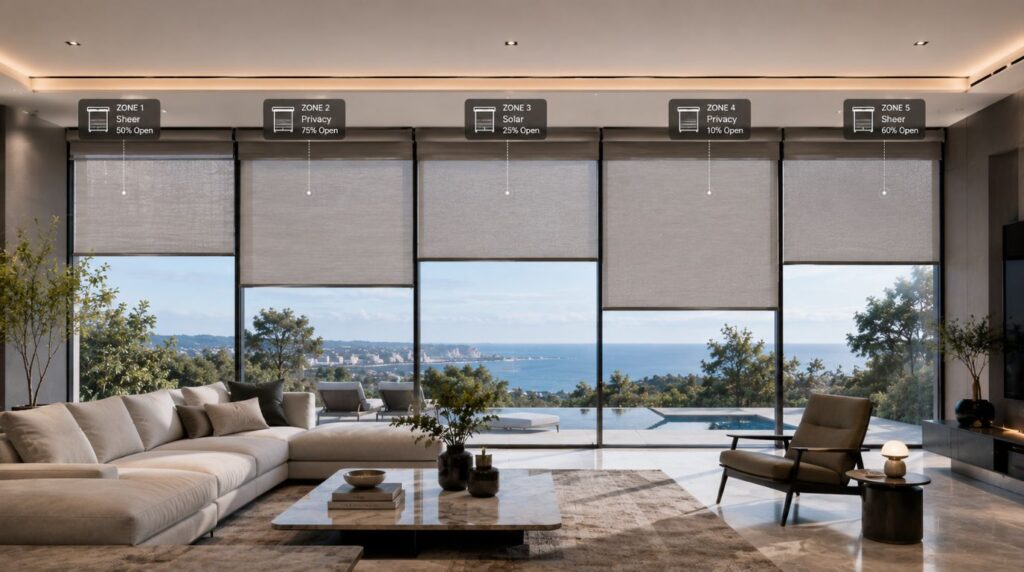
| Room | Best Choice |
| Luxury living room | Motorized curtains |
| Home theatre | Motorized curtains |
| Master bedroom | Motorized curtains |
| Home office | Smart shades |
| Contemporary apartment | Smart shades |
| Large glass walls | Motorized curtains |
| Minimalist interiors | Smart shades |
| Premium villas | Often, a combination of both |
Many luxury homes use both systems strategically.
Common Homeowner Mistakes
Choosing Based Only on Appearance
Functionality matters too.
Ignoring Smart Home Integration
Compatibility should be evaluated early.
Not Considering Window Size
Large windows require appropriate motor sizing.
Forgetting Future Automation Plans
Window treatments should fit into broader smart home strategies.
Why It Matters for Modern Homes
Window coverings influence:
- Privacy
- Comfort
- Energy efficiency
- Aesthetics
- Automation experiences
Choosing the right solution affects how homeowners interact with their spaces every day. The best choice is often the one that complements both the home’s design and the homeowner’s lifestyle.
Our Perspective at Techtastic
At Techtastic, we rarely view this as an either-or decision. Many of the most successful projects use both.
Motorized Curtains
For:
- Living rooms
- Bedrooms
- Entertainment spaces
Smart Shades
For:
- Offices
- Kitchens
- Contemporary spaces
Our recommendation is always based on:
- Interior design goals
- Privacy requirements
- Automation strategy
- User preferences
The right solution should enhance both aesthetics and functionality.
Collaboration Opportunities for Developers, Architects & Interior Designers
Window automation works best when incorporated into the design process.
At Techtastic, we collaborate with:
- Architects
- Interior designers
- Residential developers
- Luxury home builders
- Hospitality consultants
- Project planners
Automated Window Treatment Design
Align functionality with aesthetics.
Smart Home Integration
Coordinate window automation with broader systems.
Lighting & Daylight Planning
Improve comfort and efficiency.
Luxury Residential Projects
Deliver premium smart living experiences.
Hospitality Projects
Enhance guest comfort and convenience.
Future-Ready Developments
Support evolving automation expectations.
Early planning ensures seamless integration and better results.
Key Takeaways
- Motorized curtains move horizontally, while smart shades move vertically.
- Motorized curtains offer a softer, more luxurious appearance.
- Smart shades provide a cleaner, more minimalist aesthetic.
- Both support smart home integration and automation.
- Smart shades excel at precise daylight control.
- Motorized curtains are often preferred for large windows and premium interiors.
- Many luxury homes combine both solutions strategically.
Frequently Asked Questions
1. Are smart shades the same as motorized curtains?
A. No. Smart window shades move vertically, while motorized curtains move horizontally along a track.
2. Which is better: motorized curtains or smart shades?
A. The best choice depends on design preferences, privacy requirements, window size, and automation goals.
3. Do smart shades work with Alexa and Google Home?
A. Yes. Many smart shade systems support voice assistant integration.
4. Are motorized curtains more luxurious than smart shades?
A. Motorized curtains are often associated with luxury interiors due to their soft fabrics and dramatic appearance.
5. Which option is better for large windows?
A. Motorized curtains are often preferred for large glass walls and expansive living spaces.
6. Can both systems integrate with KNX?
A. Yes. Both smart window shades and motorized curtains can be integrated into KNX home automation systems.
7. Which option provides better energy efficiency?
A. Both can improve energy efficiency when properly automated.
8. Can I use smart shades and motorized curtains together?
A. Absolutely. Many premium homes combine both systems to achieve optimal aesthetics, privacy, and functionality.
Conclusion
While smart shades and motorized curtains both automate window coverings, they serve different design and lifestyle objectives. Smart window shades excel in modern, minimalist environments where precise light control and clean aesthetics are priorities. Motorized curtains, on the other hand, create a softer, more luxurious atmosphere and often perform exceptionally well in large living spaces, bedrooms, and premium residential interiors.
At Techtastic, we help homeowners, architects, and designers select window automation solutions that align with both their smart home goals and interior design vision.
📞 Call/WhatsApp: 9769145145
📍 Our Operational Hubs: Navi Mumbai | Nashik | Lonavla | Sangli
Whether you choose motorized curtains, smart shades, or a combination of both, the right system can dramatically improve comfort, privacy, convenience, and the overall living experience.
Looking for the best features to start with? Check out our practical guide on Smart Home Curtains for Renters: Easy Automation Ideas 2026 to plan a system that everyone can use effortlessly.