
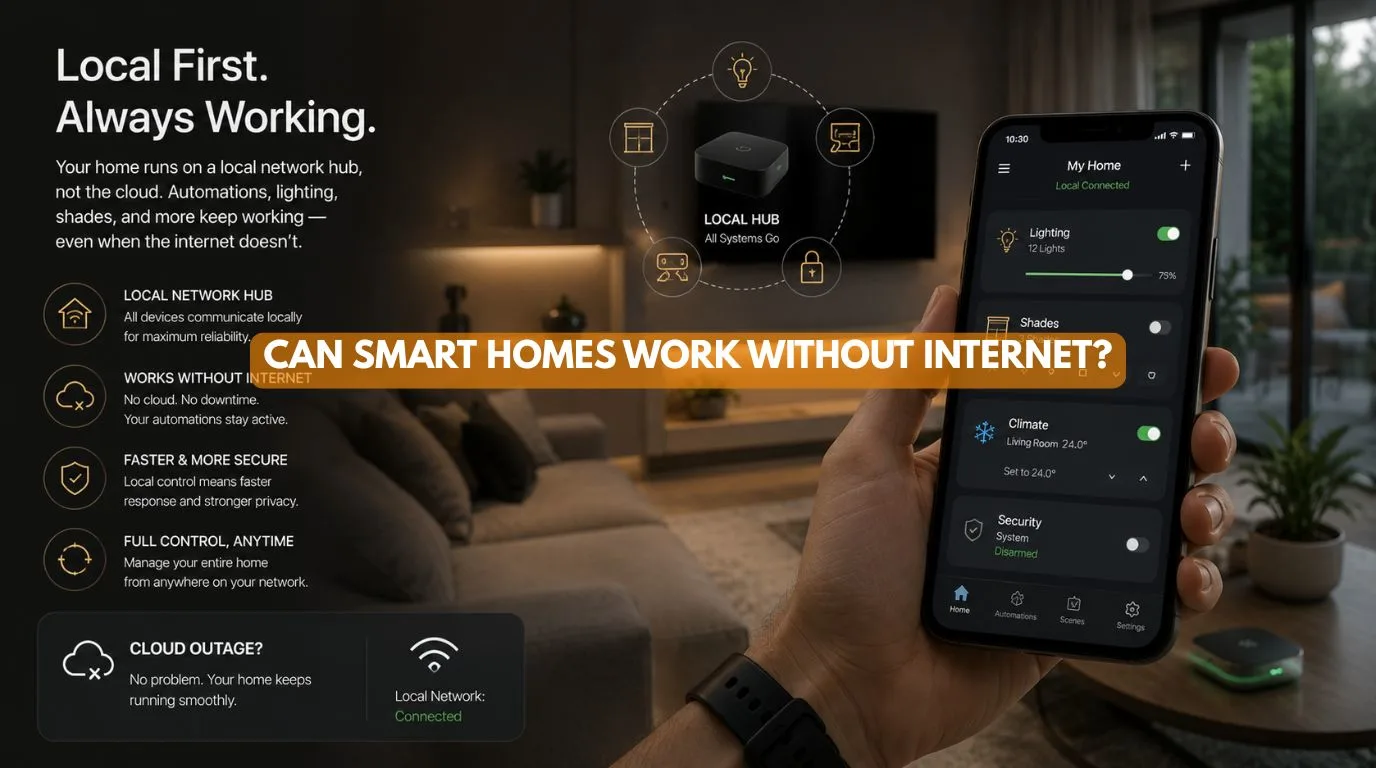
Summary
Yes, smart homes without internet can continue to operate, depending on how they are designed. Many smart home functions such as lighting, climate control, motorized curtains, and scheduled automations can run locally without an internet connection. However, cloud-based features like remote control, voice assistants, software updates, and certain notifications may stop working until internet service is restored. Professionally designed systems, especially KNX home automation, prioritize local control, making them more reliable during internet outages.
Quick Answer
Yes. Smart homes without internet can still perform many essential functions if they use local automation instead of relying entirely on cloud services. Lighting schedules, climate control, motorized curtains, and many automation routines can continue operating normally, while features such as remote access, voice assistants, and cloud notifications typically require an internet connection.
Can Smart Homes Work Without Internet?
One of the biggest misconceptions is that the moment the network goes down, smart homes without internet stop working. Fortunately, that’s not true.
A well-designed smart home doesn’t rely on the internet for every task. In fact, many of the most important functions continue working locally, even during an internet outage.
At Techtastic, we encourage homeowners to think beyond individual smart devices and focus on building a system that remains reliable under all conditions, including smart homes without internet and service outages
Understanding Smart Homes Without Internet
Many people ask: “What happens to the automation when the internet goes down? Well, the answer depends on how your smart home is built. Some devices rely heavily on cloud servers, while others communicate directly within your home.
A professionally designed automation system keeps critical functions operating locally whenever possible.
Features That Usually Continue Working Offline
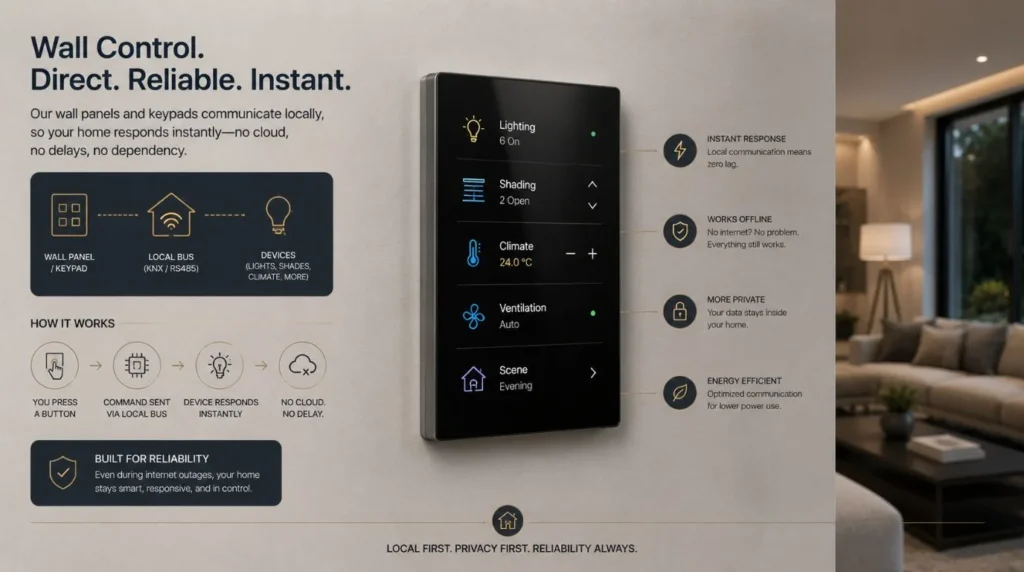
Most locally controlled smart homes without internet can continue operating:
Smart Lighting
Wall switches, lighting scenes, and scheduled lighting typically continue functioning.
Climate Control
Smart thermostats and HVAC schedules often continue operating based on local programming.
Motorized Curtains
Scheduled opening and closing routines usually remain active.
Occupancy Sensors
Motion-based lighting and occupancy automation continue working locally.
Timers and Scheduled Automation
Many scheduled routines remain stored inside the controller instead of the cloud.
KNX Automation
KNX devices communicate directly over a dedicated bus, allowing lighting, climate, shading, and other automation functions to continue even if internet access is lost.
Features That Usually Require Internet
Some functions depend on cloud connectivity.
These often include:
- Remote smartphone control from outside your home
- Voice assistants like Alexa or Google Assistant
- Cloud backups
- Software updates
- Push notifications
- Weather-based automation
- Some third-party integrations
Once internet service returns, these features typically resume automatically.
Local Control vs Cloud-Based Automation
The performance of smart homes without internet depends largely on whether they use local control or cloud-based automation.
Cloud-Based Smart Homes
Advantages:
- Easy setup
- Remote access
- Frequent feature updates
Limitations:
- Depend on internet availability
- May experience delays if cloud servers are unavailable
Local Smart Homes
Advantages:
- Continue working during internet outages
- Faster response times
- Greater privacy
- Higher reliability
- Reduced dependence on external servers
Many premium homes use local automation while adding cloud services only where they provide additional convenience.
Why KNX Works for Smart Homes Without Internet
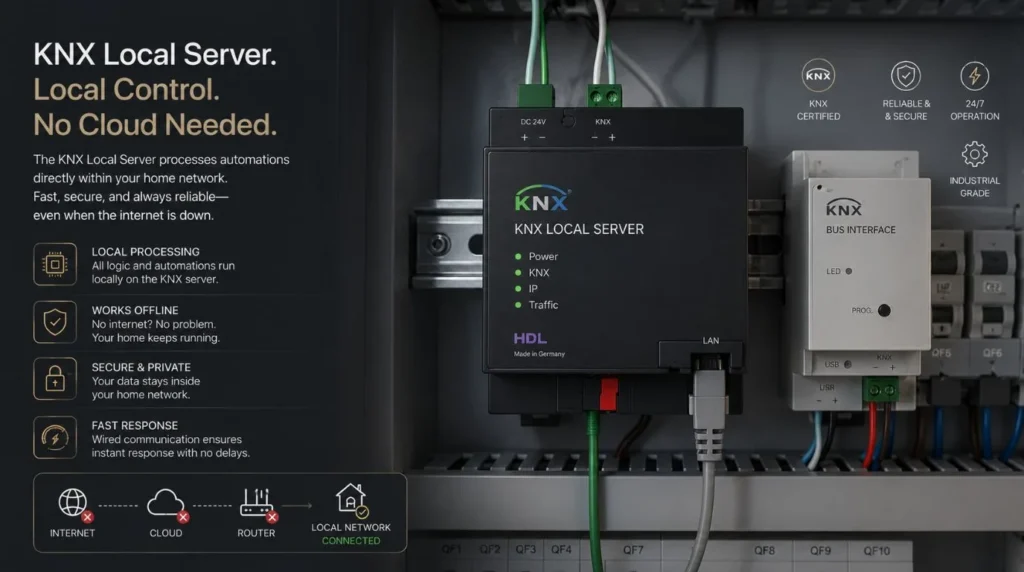
One of the biggest advantages of KNX home automation is its local architecture.
KNX devices communicate directly with each other through a dedicated communication bus.
This means:
- Lighting remains operational.
- Climate control continues automatically.
- Motorized curtains follow schedules.
- Occupancy sensors still trigger automation.
- Scenes continue functioning.
Internet access mainly enhances features such as remote monitoring and smartphone control rather than basic home operation, making smart homes without internet function smoothly.
Benefits of an Offline-Capable Smart Home
Smart homes without internet can continue to operate many essential functions if they are designed with offline capabilities.
Greater Reliability
Daily routines continue uninterrupted.
Improved Privacy
Local communication reduces dependence on cloud services.
Faster Performance
Commands execute immediately without waiting for internet communication.
Better Security
Critical home functions remain operational even during network interruptions.
Future Flexibility
A locally controlled system is often easier to expand without becoming dependent on changing cloud platforms.
Common Misconceptions About Smart Homes Without Internet
“Smart Homes Stop Working Without Wi-Fi”
Not necessarily. Many professionally designed systems continue functioning locally.
“Internet Controls Every Device”
Many devices communicate directly with a local controller instead.
“Only Expensive Systems Work Offline”
Even many consumer devices support local schedules and basic offline operation.
“Voice Control Is Required”
Physical switches, touch panels, sensors, and automation continue working without voice assistants.
“Offline Means Less Smart”
Local automation often provides faster and more reliable performance than cloud-dependent systems.
Why It Matters
An internet outage shouldn’t leave you unable to control your home.
Choosing a system that supports local automation provides:
- Greater reliability
- Consistent comfort
- Better security
- Increased privacy
- Long-term peace of mind
The smartest home is one that keeps working even when the internet doesn’t.
Our Perspective at Techtastic
At Techtastic, we believe a truly intelligent home should never depend entirely on an internet connection. That’s why we prioritize locally controlled automation wherever possible, ensuring essential functions such as lighting, climate control, and shading continue operating even during network outages. This approach makes smart homes without internet more reliable, resilient, and functional when connectivity is unavailable.
For premium homes, we often recommend KNX home automation because of its dependable local communication, long-term reliability, and ability to deliver seamless automation without relying on cloud services for everyday operation.
Collaboration Opportunities for Developers, Architects & Interior Designers
Reliable automation begins with thoughtful infrastructure.
At Techtastic, we collaborate with:
- Architects
- Interior designers
- Residential developers
- Luxury home builders
- MEP consultants
- Technology consultants
Offline-Capable Smart Homes
Design systems that continue operating during internet outages.
KNX Infrastructure
Implement dependable local automation for long-term reliability.
Smart Networking
Build resilient network architectures that support both local and remote control.
Lighting & Climate Integration
Coordinate essential systems for seamless everyday operation.
Premium Residential Projects
Deliver homes that combine convenience, privacy, and reliability.
Future-Ready Developments
Prepare properties for evolving technologies while minimizing dependence on cloud platforms.
Early planning ensures homeowners enjoy uninterrupted automation and a more resilient smart home.
Key Takeaways
- Smart homes without internet can still perform many essential automation tasks.
- Local control allows lighting, climate control, motorized curtains, and schedules to continue working during internet outages.
- Remote access, voice assistants, cloud backups, and software updates generally require an internet connection.
- KNX home automation is designed for reliable local operation with minimal dependence on cloud services.
- Offline-capable systems provide better privacy, faster response times, and greater reliability.
- Planning your automation architecture early helps create a more resilient smart home.
- The best smart homes balance local intelligence with cloud convenience.
Frequently Asked Questions
1. Can smart homes without internet work efficiently?
A. Yes. Many smart home systems continue operating locally, allowing lighting, climate control, scheduled automations, and other essential functions to work even if your internet connection is unavailable.
2. Will smart lights work if the internet goes down?
A. In many cases, yes. Smart lights connected through local controllers, hubs, or wired automation systems can still be controlled manually or through stored automation routines.
3. Can I still use my smartphone to control my home?
A. If you’re connected to your home’s local network, many systems allow local app control. Remote control from outside the home usually requires internet access.
4. Do voice assistants work without internet?
A. Most cloud-based voice assistants, such as Amazon Alexa and Google Assistant, require an internet connection to process voice commands.
5. Does KNX require internet?
A. No. KNX operates using local communication between devices, so lighting, climate control, motorized curtains, and other automations continue functioning without internet. Internet is mainly needed for remote access and cloud-based services.
6. What smart home features stop working offline?
A. Remote access, software updates, cloud backups, weather-based automations, and some third-party integrations typically pause until the internet connection is restored.
7. Is a locally controlled smart home more secure?
A. Generally, yes. Because more communication stays within the home, there is less dependence on external cloud services, which can improve privacy and reduce certain security risks.
8. Should I choose a smart home system with local control?
A. If reliability and long-term performance are priorities, a system that supports local automation is an excellent choice. It ensures your home’s core functions continue operating regardless of internet availability.
Conclusion
Yes, smart homes without internet can still deliver many of the conveniences homeowners expect. Lighting, climate control, motorized curtains, and scheduled automations can continue operating locally, while only cloud-based features such as remote access and voice assistants are temporarily unavailable. Choosing a system with strong local control ensures your home remains comfortable, reliable, and functional even during internet outages.
At Techtastic, we design automation systems that put reliability first. From intelligent lighting and climate control to fully integrated KNX home automation, we create future-ready smart homes that continue working seamlessly—whether you’re online or offline.
📞 Call/WhatsApp: 9769145145
📍 Our Operational Hubs: Navi Mumbai | Nashik | Lonavla | Sangli
Ready to take the next step? Explore our comprehensive breakdown on Smart Switches for Renters: Complete 2026 Installation Guide.