
Summary
Well-planned smart homes for older adults help them to live more safely, comfortably, and independently without making technology feel overwhelming. Voice control, automated lighting, smart security, fall-prevention features, climate control, and emergency notifications simplify daily routines while reducing physical effort. The best senior-friendly smart homes focus on reliability, ease of use, and automation that works quietly in the background.
Quick Answer
Yes. A professionally designed smart home installation can make everyday living easier for older adults by automating lighting, climate control, security, and daily routines. The most effective smart homes for older adults focus on simplicity, reliability, and automation that works quietly in the background. Voice assistants, occupancy-based lighting, video doorbells, emergency alerts, and easy-to-use controls help improve safety and independence while minimizing the need to interact with complicated technology.
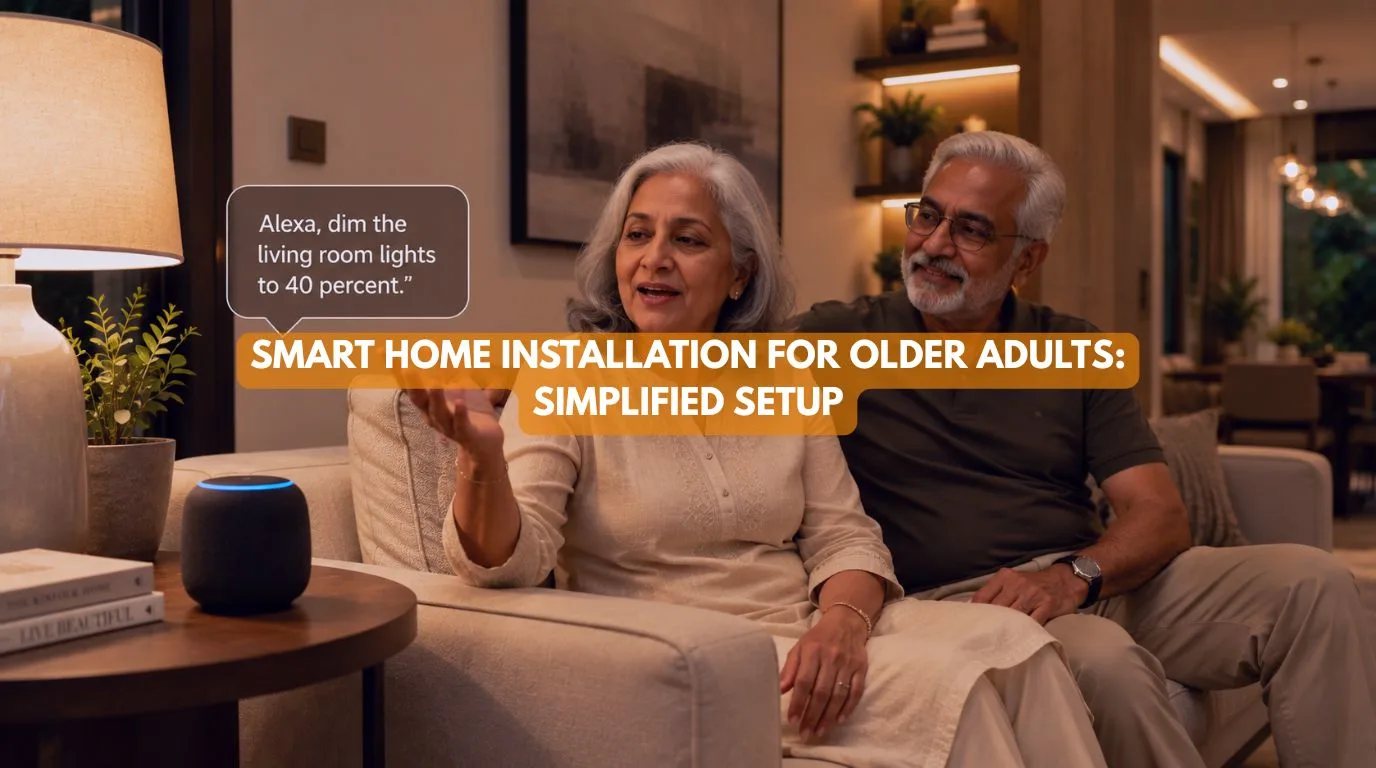
Smart Home Installation for Older Adults: Simplified Setup
Homes aren’t just about convenience. Smart homes for older adults are designed to remove everyday obstacles while making homes easier to manage and safer to live in.
The goal isn’t to fill a house with technology but to remove challenges that are faced every day. Instead of remembering to turn off lights, adjust the thermostat, or check who’s at the front door, automation quietly handles many of these tasks.
At Techtastic, we believe the best smart homes for older adults are the ones that feel simple and not complicated.
Why Smart Homes for Older Adults Make Everyday Living Easier
As we age, everyday activities can become more physically demanding. Smart homes for older adults help reduce the physical effort associated with many everyday household tasks.
Smart home automation can help by reducing:
- Unnecessary walking
- Manual switching
- Repetitive tasks
- Safety risks
- Daily stress
The result is a home that supports independence rather than replacing it.
Essential Features for Smart Homes for Older Adults
The most successful smart homes focus on features that improve safety, comfort, and independence.
Voice Control
Voice assistants allow homeowners to:
- Turn lights on and off
- Adjust the thermostat
- Lock doors
- Play music
- Make phone calls
- Set reminders
Voice control reduces the need to reach for switches or smartphones.
Automatic Lighting
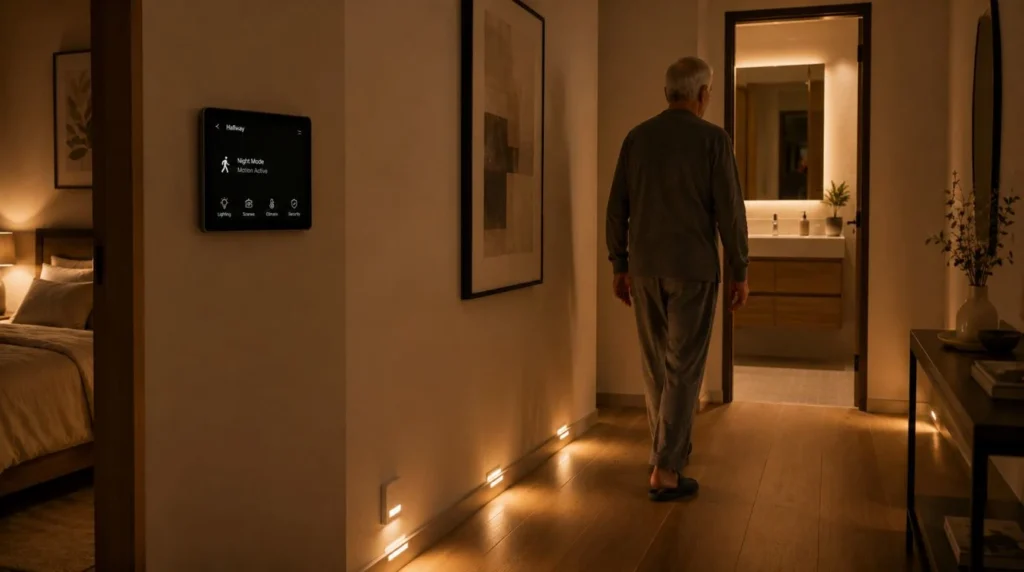
Smart lighting improves both convenience and safety. In the upgrade for smart homes for older adults, lighting automation is one of the most valuable safety features.
Lighting can automatically:
- Turn on when someone enters a room
- Illuminate hallways at night
- Dim during bedtime
- Turn off when rooms are empty
This helps reduce the risk of trips and falls
Smart Doorbells
Video doorbells allow residents to:
- See visitors
- Speak with them remotely
- Verify deliveries
- Avoid opening the door unnecessarily
This adds both convenience and security.
Smart Locks
Smart locks remove the need to search for keys.
Features include:
- Remote locking
- Scheduled access
- Temporary codes for caregivers
- Automatic locking
Smart Climate Control
Maintaining a comfortable temperature becomes effortless.
Smart thermostats can:
- Maintain preferred temperatures
- Adjust automatically
- Reduce unnecessary energy use
- Improve comfort throughout the day
Emergency Notifications
Smart homes can notify family members when:
- Motion patterns change unexpectedly
- Doors remain open
- Water leaks occur
- Smoke alarms activate
These capabilities make smart homes for older adults especially beneficial for families who want additional peace of mind without compromising independence.
Keeping the System Simple
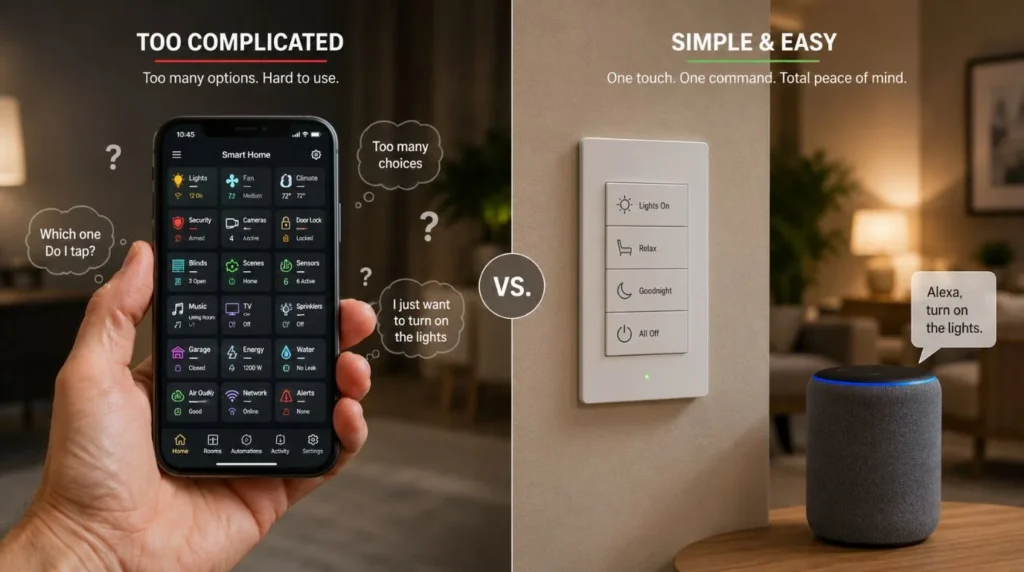
The best smart homes for older adults prioritize simplicity over complexity. One of the biggest mistakes is installing too much technology.
Instead:
- Use large, simple controls.
- Automate everyday routines.
- Minimize the number of mobile apps.
- Keep interfaces consistent.
- Prioritize reliability over novelty.
The smartest home is often the easiest one to use.
Everyday Automation Examples
Morning Routine
- Bedroom lights brighten gradually.
- Curtains open automatically.
- Comfortable temperature is maintained.
Evening Routine
- Outdoor lights switch on at sunset.
- Indoor lighting adjusts automatically.
- Doors lock if forgotten.
Night Routine
- Hallway lights activate with motion.
- Bedroom lighting dims gently.
- HVAC adjusts for sleeping comfort.
These routines reduce effort while improving safety.
Why KNX Is Ideal for Long-Term Accessibility
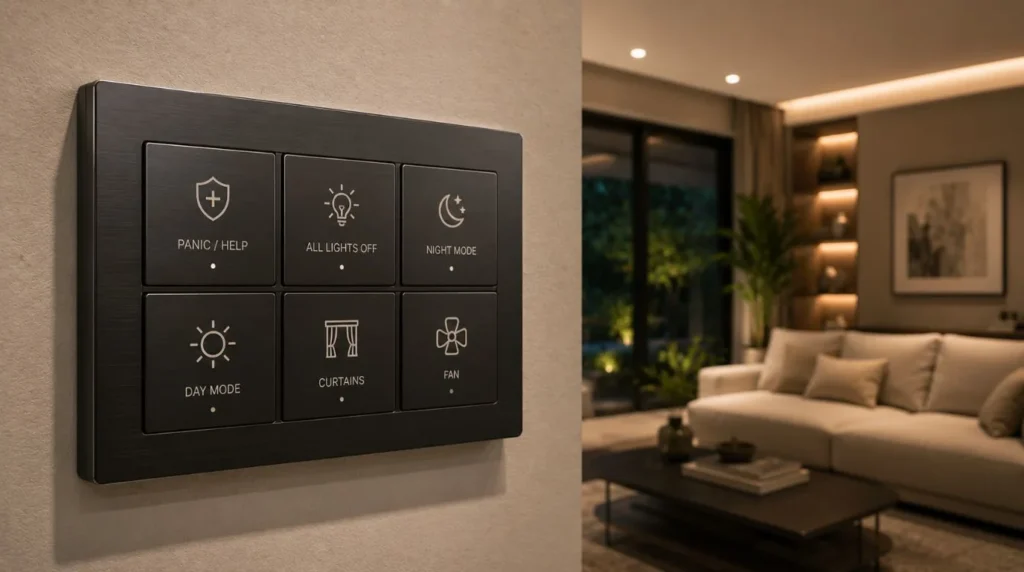
For homeowners planning to age in place and thinking of investing in smart homes for older adults, KNX home automation offers exceptional reliability.
KNX supports:
- Lighting
- Climate control
- Motorized curtains
- Security
- Emergency systems
- Energy management
Because it uses a stable wired infrastructure, KNX reduces dependence on Wi-Fi and provides dependable performance over many years.
As needs change, new features can be added without replacing the entire system.
Common Mistakes
Making the System Too Complicated
Simple automation is more effective than dozens of unnecessary features.
Depending Entirely on Smartphones
Wall controls and voice commands remain important.
Ignoring Accessibility
Choose interfaces that are easy to see, reach, and understand.
Forgetting Future Needs
Plan for additional automation that may become helpful later.
Choosing Closed Ecosystems
Open platforms provide greater flexibility for future upgrades.
Why It Matters
Thoughtfully designed smart homes for older adults help:
- Live independently for longer
- Improve daily comfort
- Reduce fall risks
- Simplify routine tasks
- Increase home security
- Support family caregivers
Technology should quietly support everyday living and not create new challenges.
Our Perspective at Techtastic
At Techtastic, we believe smart homes for older adults should adapt to people and not the other way around. For older adults, our focus is on creating intuitive environments where lighting, climate, security, and daily routines work automatically, allowing residents to enjoy greater independence with less effort.
For long-term accessibility, we often recommend KNX home automation because of its reliability, scalability, and ability to integrate multiple systems into one dependable platform. As homeowners’ needs evolve, the system can grow with them without requiring a complete redesign.
Collaboration Opportunities for Developers, Architects & Interior Designers
Accessible homes begin with thoughtful planning.
At Techtastic, we collaborate with:
- Architects
- Interior designers
- Residential developers
- Luxury home builders
- MEP consultants
- Accessibility consultants
Aging-in-Place Design
Create homes that support long-term independent living.
KNX Infrastructure
Install reliable automation systems that remain adaptable over time.
Accessible Lighting Design
Improve visibility with intelligent lighting and occupancy sensors.
Integrated Safety Systems
Coordinate lighting, security, emergency alerts, and climate control.
Premium Residential Projects
Deliver homes that combine comfort, accessibility, and modern technology.
Future-Ready Developments
Design residences that remain functional as homeowners’ mobility and lifestyle needs change.
Planning accessibility from the start creates safer, more comfortable homes for every stage of life.
Key Takeaways
- Smart homes for older adults help to live more safely and independently.
- Voice control, automated lighting, smart locks, and climate control simplify everyday tasks.
- Smart doorbells and emergency notifications improve security and peace of mind.
- The best smart homes for older adults prioritize simplicity, reliability, and ease of use.
- Planning for future accessibility reduces the need for major upgrades later.
- KNX home automation provides a dependable platform for long-term aging-in-place solutions.
- Automation should quietly enhance daily life rather than add complexity.
Frequently Asked Questions
1. Is a smart home suitable for older adults?
A. Yes. A thoughtfully designed smart home can improve safety, comfort, and independence by automating everyday tasks and reducing physical effort.
2. What are the best smart home features for seniors?
A. Voice-controlled assistants, automatic lighting, smart thermostats, smart locks, video doorbells, occupancy sensors, and emergency notifications are among the most beneficial features.
3. Can a smart home help older adults live independently?
A. Yes. Automation can simplify daily routines, improve home security, and reduce the need to manually control lighting, temperature, and other household systems.
4. Are smart homes difficult for seniors to use?
A. Not when designed correctly. The best senior-friendly systems rely on automation, voice control, and simple interfaces rather than requiring constant interaction with multiple apps.
5. Can family members monitor a smart home remotely?
A. Many smart home systems allow trusted family members or caregivers to receive important notifications, such as smoke alarms, water leaks, or unusual activity, while respecting the resident’s privacy.
6. Is KNX suitable for aging-in-place homes?
A. Yes. KNX is a reliable, scalable automation platform that integrates lighting, climate control, security, and other systems into one dependable solution, making it well suited for long-term accessibility.
7. Do smart homes require constant internet access?
A. Many core automation functions, especially in professionally designed systems like KNX, can continue operating locally even if the internet connection is temporarily unavailable.
8. Should older adults automate their entire home?
A. Not necessarily. Many homeowners begin with high-impact areas such as lighting, security, and climate control, then expand their system as their needs change.
Conclusion
Smart homes for older adults can make everyday life safer, simpler, and more comfortable while supporting independence and peace of mind. By automating lighting, climate control, security, and routine tasks, smart home technology reduces physical effort while supporting independence and peace of mind. The most effective systems focus on simplicity, reliability, and features that quietly work in the background.
At Techtastic, we design smart homes that grow with your lifestyle and future needs. Whether you’re creating a safer home for aging parents or planning an accessible, long-term living environment, our KNX home automation solutions deliver dependable, easy-to-use technology that enhances comfort, security, and independence.
📞 Call/WhatsApp: 9769145145
📍 Our Operational Hubs: Navi Mumbai | Nashik | Lonavla | Sangli
Want to ensure your system investment is fully protected? Head over to our deep dive on Smart Home Security System: Is It Worth It (2026)?