
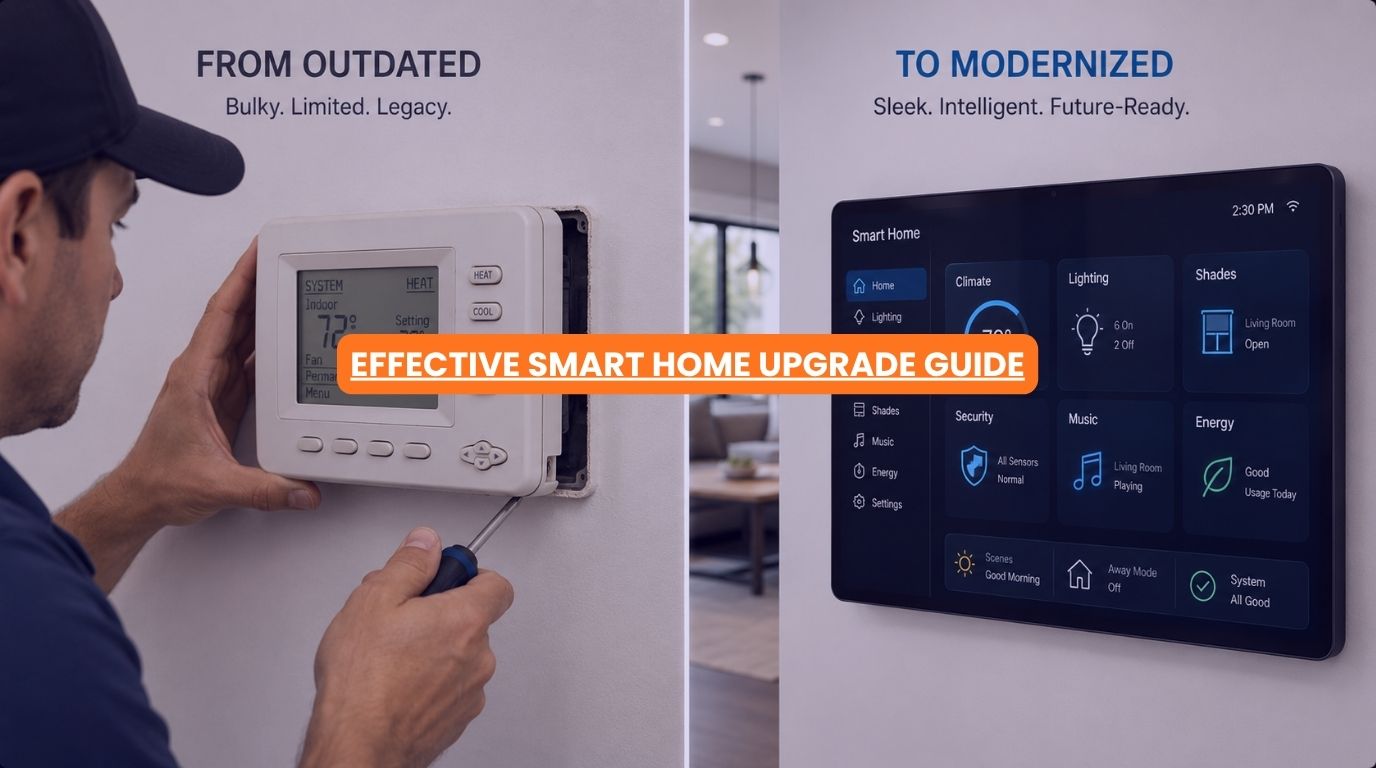
Many homeowners who invested in smart home technology years ago eventually reach a common crossroads: “Should I upgrade my existing smart home system—or start over?”
It’s a question we hear frequently at Techtastic.
Technology evolves quickly. New voice assistants, mobile apps, security features, automation platforms, and smart devices continue entering the market every year. As a result, homeowners often wonder whether their older automation system is becoming outdated and whether a smart home upgrade will require a significant investment.
The good news is that many smart homes can be modernized without completely replacing the entire system. In fact, one of the biggest misconceptions about home automation is that older systems automatically require full replacement. In many cases, strategic upgrades can deliver modern functionality while preserving much of the original investment.
Summary
Updating an older smart home system is often less expensive than homeowners expect. In many cases, existing infrastructure such as wiring, sensors, lighting controls, and automation platforms can be retained while upgrading control interfaces, networking, security features, and integration capabilities. The cost of a smart home upgrade depends on the age of the system, compatibility with newer technologies, automation goals, and whether homeowners choose partial modernization or complete replacement.
Quick Answer
Updating an older smart home system is often more affordable than replacing it entirely. Many existing automation systems can be modernized by upgrading networking infrastructure, control interfaces, software, security systems, and integration capabilities while keeping much of the underlying automation hardware. The overall smart home upgrade cost depends on system age, compatibility, and the scope of desired improvements.
Why Homeowners Upgrade Smart Home Systems
Most upgrades are driven by changing needs rather than hardware failure.
Common reasons for a smart home upgrade include:
- Improved mobile control
- Better security features
- Voice assistant integration
- Expanded automation capabilities
- Faster networking
- Device compatibility
- Modern user interfaces
Sometimes homeowners simply want their smart home to feel more current and easier to use.
Signs Your Smart Home May Need an Upgrade
Limited Smartphone Control
Older systems may offer:
- Outdated apps
- Poor remote access
- Limited functionality
Modern platforms often provide significantly improved user experiences.
Compatibility Issues
Homeowners may struggle to connect:
- New smart devices
- Security systems
- Entertainment systems
- Voice assistants
Compatibility limitations are a common reason for upgrades.
Slow or Unreliable Performance
Performance issues may result from:
- Aging networking equipment
- Legacy controllers
- Outdated software
Upgrades often improve reliability dramatically.
Security Concerns
Older systems may lack:
- Modern encryption
- Multi-factor authentication
- Advanced access controls
Security improvements are often among the most important upgrade drivers.
Expanding Automation Needs
Many homeowners originally automated only:
- Lighting
- Security
Later, they may want:
- Motorized curtains
- Climate control
- Energy management
- Entertainment integration
A smart home upgrade can support these new requirements.
Do You Need to Replace Everything?
Usually not. This is one of the most important things homeowners should understand.
Many smart home upgrades focus on:
What Can Often Be Retained
- Wiring infrastructure
- Sensors
- Lighting controls
- Switches
- Automation devices
- KNX installations
What Is Commonly Upgraded
- Controllers
- User interfaces
- Networking equipment
- Security integrations
- Mobile access platforms
Keeping existing infrastructure can significantly reduce costs.
Smart Home Upgrade vs Full Replacement
| Smart Home Upgrade | Full Replacement |
|---|---|
| Lower cost | Higher cost |
| Preserves infrastructure | New installation |
| Faster implementation | Longer project timeline |
| Less disruption | Greater disruption |
| Improves functionality | Complete redesign |
| Ideal for many homes | Needed in limited situations |
For most homeowners, upgrading provides the best balance of value and performance.
What Parts of a Smart Home Are Most Commonly Upgraded?
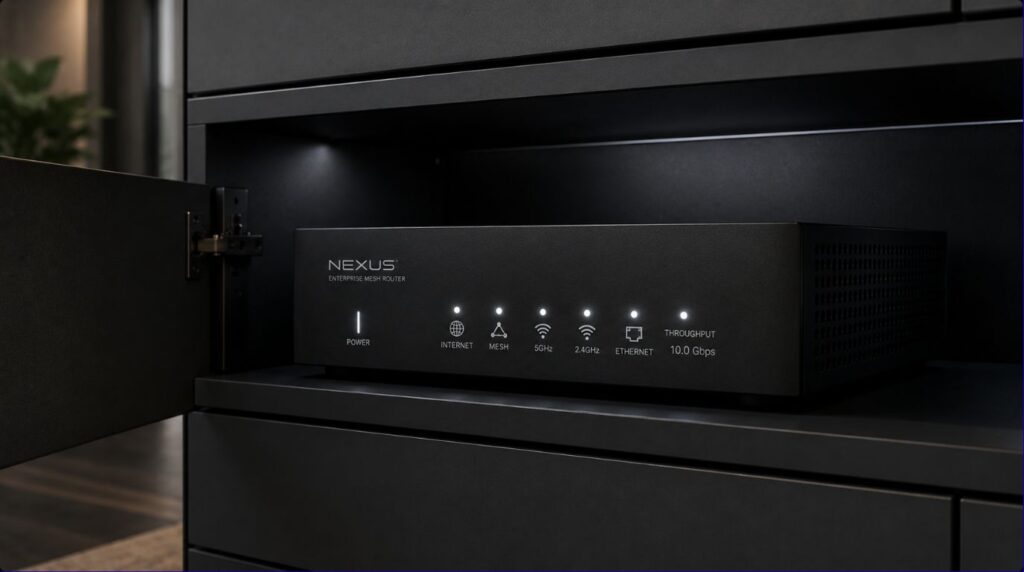
Networking Infrastructure
This is often the first recommendation.
A modern smart home upgrade may include:
- Enterprise-grade Wi-Fi
- Mesh networking
- Improved coverage
- Better reliability
A strong network improves the entire smart home experience.
Control Interfaces
Many homeowners upgrade:
- Touch panels
- Mobile apps
- Centralized dashboards
Modern interfaces often feel dramatically more intuitive.
Security Systems
Common smart home upgrades include:
- Smart cameras
- Video door phones
- Smart locks
- Access control systems
Security technology continues to evolve rapidly.
Voice Assistant Integration
Many older systems were installed before:
- Alexa
- Google Assistant
- Siri integration
Voice control is now a common smart home upgrade request.
Automation Logic
Homeowners often want:
- Better scenes
- Advanced scheduling
- Occupancy-based automation
- Energy management
Software improvements can significantly enhance usability.
Factors That Affect Smart Home Upgrade Costs
Age of Existing System
Older systems may require additional modernization.
Platform Compatibility
Some platforms support upgrades more easily than others.
Existing Infrastructure Quality
Strong infrastructure reduces future costs.
Scope of Modernization
Small updates cost less than complete transformations.
Future Expansion Plans
Future-proofing may influence upgrade decisions.
When Is a Full Replacement Necessary?
Although many systems can be upgraded, replacement may be appropriate when:
- The platform is no longer supported.
- Critical components have failed.
- Compatibility limitations are severe.
- The infrastructure is outdated.
- Major renovations are already planned.
Fortunately, this is less common than many homeowners assume.
Why KNX-Based Systems Often Age Well
One reason KNX remains popular is its long-term flexibility.
KNX installations often allow:
- Controller upgrades
- Interface modernization
- New integrations
- Expanded automation
While preserving much of the original infrastructure. This helps protect long-term investments.
Smart Home Upgrade Now or Wait?
Many homeowners delay upgrades because their system still functions.
However, upgrading proactively may provide:
- Better security
- Improved reliability
- Greater compatibility
- Enhanced user experiences
Waiting until failures occur can sometimes increase costs.
Why It Matters for Modern Homes
Today’s homeowners expect:
- Mobile control
- Voice control
- Smart security
- Remote access
- Reliable automation
Older systems may struggle to deliver these expectations without modernization.
A smart home upgrade helps bridge the gap between legacy technology and current lifestyle requirements.
Our Perspective at Techtastic
At Techtastic, we rarely recommend replacing a system without first evaluating upgrade opportunities.
In many projects, homeowners are surprised to discover how much of their existing investment can be retained.
We typically assess:
- Infrastructure quality
- Platform compatibility
- Security capabilities
- Networking performance
- Future expansion goals
Our objective is always to maximize value while minimizing unnecessary replacement costs. The smartest upgrade strategy is often the one that builds on what’s already working.
Collaboration Opportunities for Developers, Architects & Interior Designers
Modernization projects are becoming increasingly common.
At Techtastic, we collaborate with:
- Architects
- Interior designers
- Renovation specialists
- Luxury home builders
- Residential developers
- Hospitality consultants
Smart Home Modernization Planning
Upgrade existing properties efficiently.
Infrastructure Assessment
Identify opportunities to preserve existing investments.
Security & Automation Upgrades
Enhance functionality without major reconstruction.
Networking Improvements
Support modern connected living.
Luxury Residential Renovations
Deliver contemporary smart home experiences.
Hospitality & Commercial Retrofits
Implement scalable modernization strategies.
Early planning helps reduce costs and improve long-term results.
Key Takeaways
- Most older smart home systems can be upgraded rather than replaced.
- Existing wiring and infrastructure can often be retained.
- Networking and control interfaces are among the most common upgrades.
- Security modernization is a frequent upgrade priority.
- KNX systems often support long-term expansion and modernization.
- Upgrading is usually more cost-effective than full replacement.
Frequently Asked Questions
1. Is it expensive to update an old smart home system?
A: Not always. Many systems can be upgraded by modernizing controllers, interfaces, and networking while retaining existing infrastructure.
2. Can old home automation systems be upgraded?
A: Yes. Many smart home platforms support modernization and expansion.
3. Do I need to replace my entire smart home?
A: In most cases, no. Strategic upgrades are often sufficient.
4. What is the most common smart home upgrade?
A: Networking improvements, mobile control enhancements, and security upgrades are among the most common.
5. Can older KNX systems be modernized?
A: Yes. KNX systems are often designed for long-term scalability and upgrades.
6. How do I know if my smart home needs an upgrade?
A: Compatibility issues, outdated interfaces, security concerns, and performance problems are common indicators.
7. Is upgrading cheaper than replacing?
A: Usually. Retaining infrastructure significantly reduces costs.
8. Can I add new smart devices to an older automation system?
A: Often yes, depending on platform compatibility and system architecture.
Conclusion
So, is it expensive to update an old smart home system?
For most homeowners, the answer is no—at least not compared to replacing everything from scratch. Many smart homes already contain valuable infrastructure that can support modern features through targeted upgrades. By modernizing networking, interfaces, security systems, and automation capabilities, homeowners can often achieve a significantly improved experience while protecting their original investment.
At Techtastic, we help homeowners, architects, and developers evaluate, modernize, and future-proof existing smart home systems.
📞 Call/WhatsApp: 9769145145
📍 Our Operational Hubs: Navi Mumbai | Nashik | Lonavla | Sangli
Whether you’re looking to improve performance, add new functionality, or prepare your home for the next generation of automation, a thoughtful upgrade strategy can deliver exceptional value without starting over.
Ready to take the next step? Explore our comprehensive breakdown on Home Automation Cost Navi Mumbai: Easy Pricing Guide 2026 to see how it translates into real-world value for your property.