
Summary
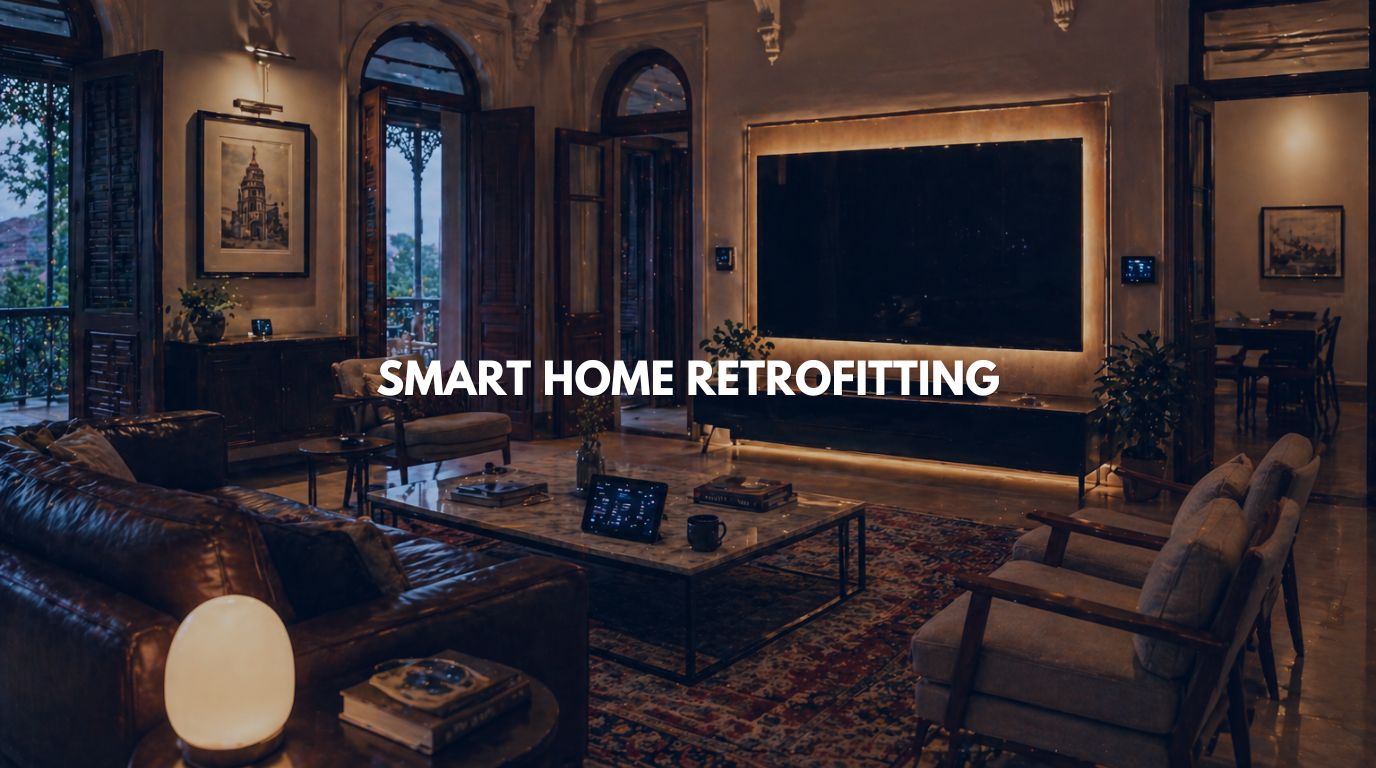
Many believe smart automation requires a new bungalow, but a smart home retrofit allows you to easily upgrade your current residence. Using “behind-the-switch” modules and wireless tech, you can automate lighting, curtains, and ACs without tearing down walls or moving furniture.
This guide shows you how to turn your existing space into a modern sanctuary through non-invasive upgrades.
Can You Automate an Old House? Retrofitting Smart Solutions Without Tearing Down Walls
When visiting clients in older homes across Delhi or Mumbai, I typically notice two things: beautiful architecture and genuine concern. Homeowners frequently ask if they can achieve smart home convenience without making structural alterations or damaging existing woodwork. The consensus among professionals is that this is entirely possible.
We have a common misconception that smart home technology is “hardwired” into the bones of a building during construction. While a wired backbone is the gold standard for new bungalows, we live in an era where wireless technology has matured. You can transform your 20-year-old house into an intelligent home without moving out or performing any demolition.
Here is how we approach “smart home retrofit”.
1. The Magic of “Behind-the-Switch” Modules
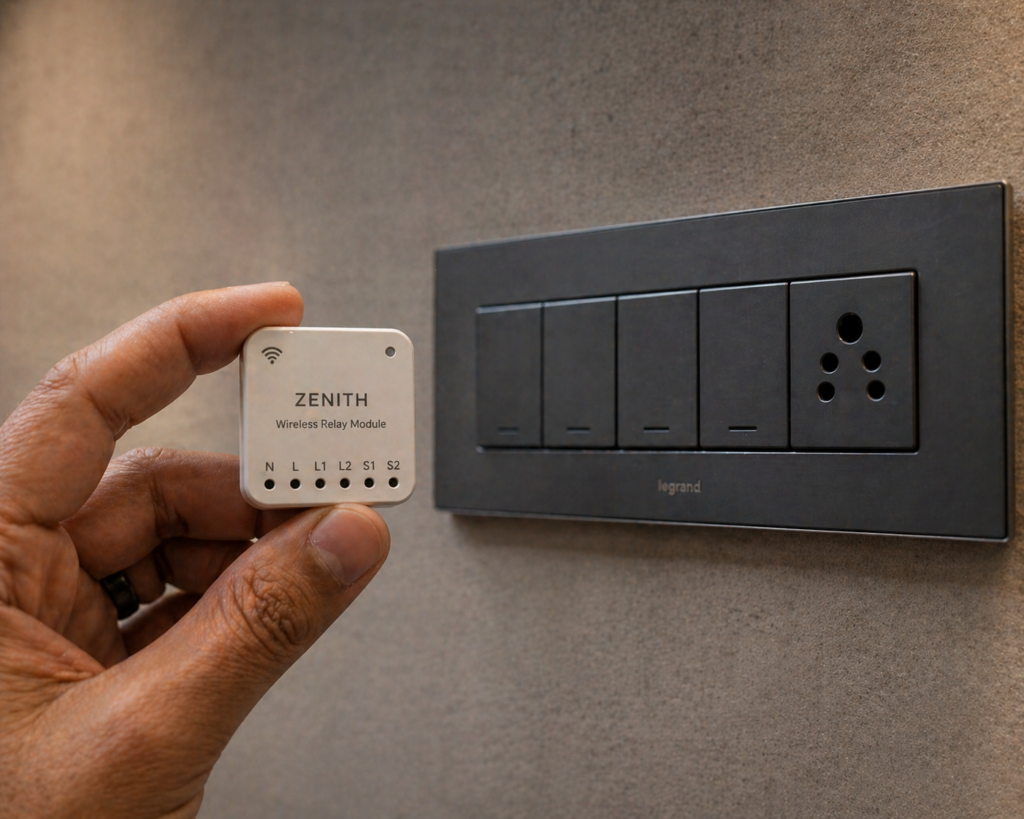
In an old house, your switchboards are likely part of the decor—perhaps they are classic modular plates or even older vintage styles. You do not need to replace existing parts.
The most clever way to retrofit lighting is using Micro-Module Controllers. These are tiny smart devices that sit inside the existing electrical junction box, right behind your current switches.
- The Result: Your physical switches remain fully functional, while you gain mobile control for dimming or “Welcome Scenes.”
- The Benefit: Our system uses your home’s existing wiring, eliminating the need for new cables.
2. Wireless Protocols: Moving Beyond Wi-Fi
The biggest mistake people make when retrofitting an old house is buying dozens of Wi-Fi-based smart bulbs. Older Indian homes have thick, load-bearing brick walls that act like a shield against Wi-Fi signals. If you crowd your router with 30 different bulbs, your internet will crawl, and your lights will stop responding.
For retrofitting, we use a Zigbee or Z-Wave Mesh Network. These devices don’t “talk” to your router; they talk to each other. Every smart switch module we install acts as a repeater, passing the signal along. This allows the connection to “hop” through thick walls and reach the furthest corner of your house with zero lag.
The backbone of a hybrid smart home system remains stable even in a legacy structure.
3. Motorizing Your Existing Drapes Using Smart Home Retrofit
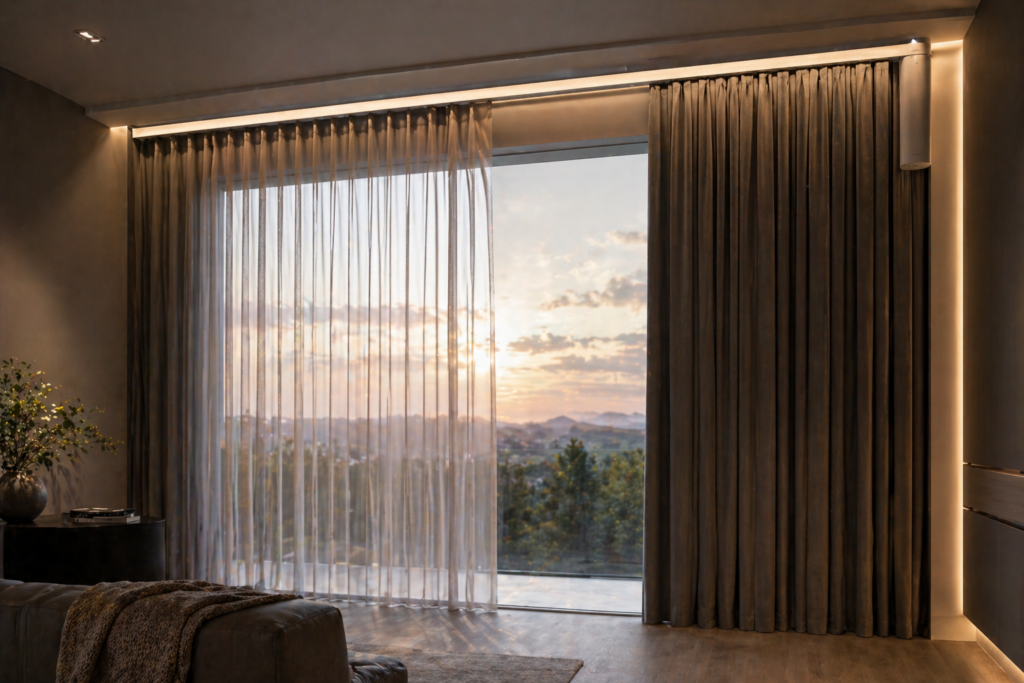
One of the hallmarks of a luxury home is motorized curtains. You might think that to get this, you’d need to rip out your curtain rods and start over.
In a retrofit, we use Retrofit Curtain Motors. Designers created these to mount directly onto your existing tracks or rods. For heavy curtains common in Indian homes, high-torque motors easily handle velvet or blackout drapes. These automated motors close your curtains during peak sunlight to keep rooms cool.
4. Retrofitting Your Climate Control
Most older homes use split ACs or window units that are controlled by IR (Infrared) remotes. Replacing three or four perfectly functional ACs just to get “smart” features is a waste of money.
Instead, we use Smart IR Blasters. These are small, pebble-sized devices that sit in the room and “mimic” your AC remote. These devices connect to your hub, letting you pre-cool your home or automatically switch the AC to “Eco Mode” at 2:00 AM. A 5-minute installation that brings your old appliances into the modern age.
5. Security Without the Drill
Modern wireless security avoids the need for extensive drilling or wiring. You can easily install battery-powered cameras and sensors using adhesive or a single screw.
These sensors detect if someone tampers with a window or leaves a door open. When combined with a local hub, they can trigger your (now smart) hallway lights to turn on instantly if they detect motion at night. A proactive “Invisible Shield” that respects the integrity of your home’s structure.
The Humanized Approach: Smart Home Retrofit is Emotional
Technology shouldn’t feel like an alien invasion in your home. An older house has character, memories, and a specific “feel.” My goal when designing a retrofit isn’t to change that feel, but to enhance it.
The small things that matter:
- Not having to get out of bed to check if the main gate is locked.
- Having the lights dim automatically when you settle in for a movie.
- Knowing that your home is looking after itself while you’re at work.
We aren’t replacing your home; we are just giving it a brain.
Final Thoughts on Smart Home Retrofit
Your home doesn’t need to be “new” to be “smart.” From heritage bungalows to older apartments, modern technology now adapts to your home.
A smart home retrofit is about respect—respect for your time, your budget, and the existing beauty of your home. By choosing wireless mesh and invisible modules, you get a modern smart home without the construction mess. Start your automation by fixing inconveniently located light switches.
Collaboration Opportunities for Builders and Architects
I work with developers, architects, and interior designers to enhance residential projects by integrating smart home retrofit during the planning and design stages. My team ensures that automation aligns seamlessly with your design layouts, electrical infrastructure, and interior concepts.
I invite you to partner with Techtastic to implement high-quality smart home devices for your upcoming projects in Nashik, Navi Mumbai, Sangli, and Lonavla.
Contact today at 9769145145 for a professional consultation to see how an expert smart home retrofit can elevate your design vision.
Technical FAQs on Smart Home Retrofit
Q: Will the integration of smart home retrofit increase electricity consumption?
A: Retrofitted homes often see a 10-15% energy drop because sensors and timers eliminate waste, like lights left on in empty rooms.
Q: Is a high-speed internet connection required for full system functionality?
A: You can avoid this by implementing a hybrid smart home system. While outside control requires internet, local features like motion sensors and switches work offline by communicating directly within your home.
Q: Is the smart home retrofit system portable in case of relocation?
A: Yes. Because you did not tear down walls, you can uninstall and move most modules, sensors, and IR blasters to your new residence.
Q: Are wireless signals considered safe for residential environments?
A: Yes. Zigbee and Z-Wave operate on low-frequency radio waves, much lower than your existing Wi-Fi or mobile phone. Manufacturers specifically design these for low-power, short-distance communication within the home.
Q: Is it possible to begin a smart home retrofit with a single room?
A: Absolutely. Retrofitting is modular. You can start by automating your living room lighting and curtains, and once you see how much it simplifies your life, you can expand to the bedrooms or the kitchen over time.