
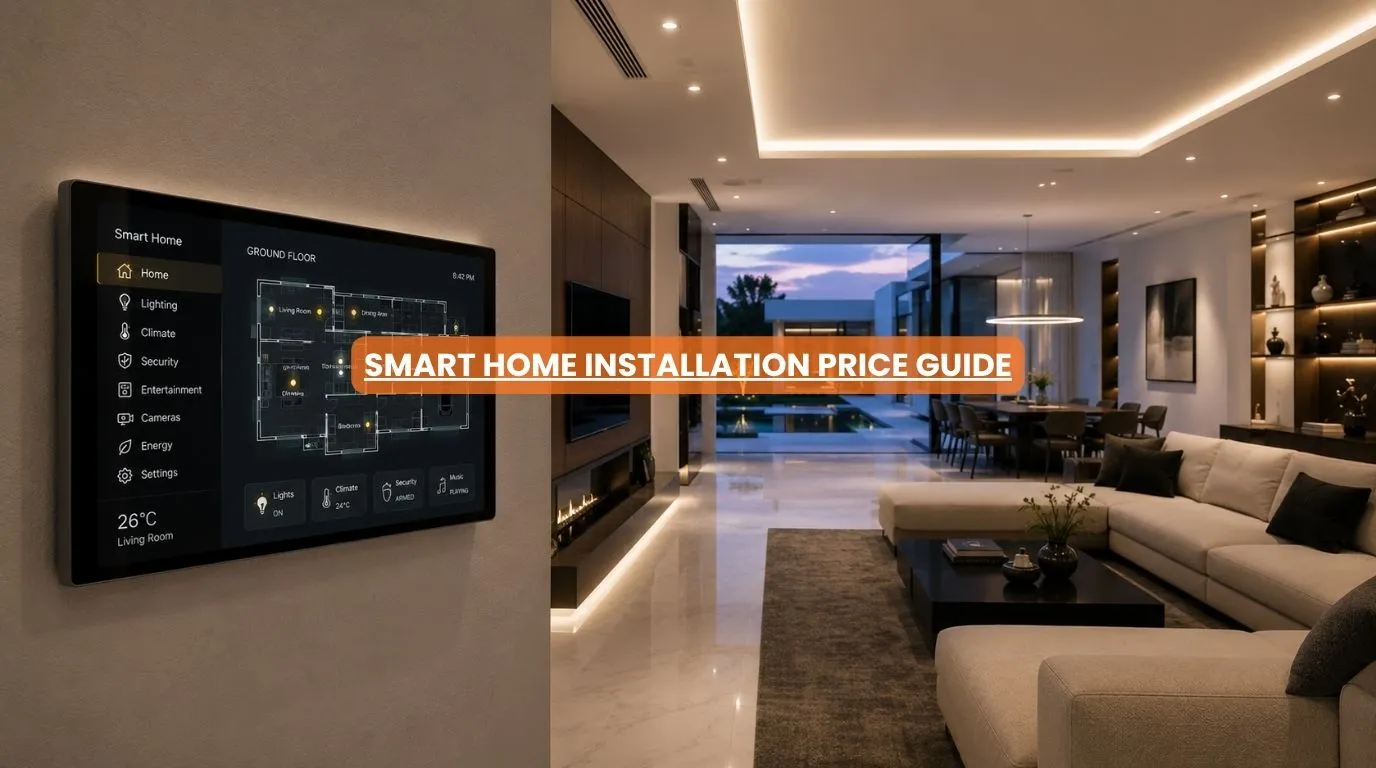
Summary
The smart home installation price depends on the home’s size, the automation platform, the number of connected systems, and whether the project is part of new construction or an existing home renovation. Basic smart home installations with Wi-Fi devices are generally more affordable, while professionally designed systems like KNX require a higher initial investment but provide greater reliability, scalability, security, and long-term value. The total cost is influenced by lighting, climate control, motorized curtains, security, networking, and integration requirements.
Quick Answer
The smart home installation price varies depending on your home’s size, the number of automated systems, wiring requirements, and the automation platform you choose. Entry-level smart home installation prices are typically lower because they automate only a few devices, while professionally installed systems such as KNX involve a higher smart home installation price due to their ability to integrate lighting, climate control, security, motorized curtains, entertainment, and energy management into one centralized platform. Rather than focusing only on the upfront smart home installation price, homeowners should also consider long-term reliability, future expansion, and the overall lifestyle benefits of a professionally designed system.
How Much Does Smart Home Installation Cost?
One of the first questions homeowners ask before investing in home automation is: “How is smart home installation price calculated?” It’s an understandable question.
Whether you’re building a new home, renovating an existing property, or simply upgrading a few rooms, you want to understand the investment before making a decision. At Techtastic, we’ve learned that there isn’t a one-size-fits-all answer. Every smart home is different because every homeowner has different priorities.
Some people only want:
- Smart lighting
Others want a fully integrated home that controls:
- Lighting
- Air conditioning
- Motorized curtains
- Security
- Home theatre
- Multi-room audio
- Energy management
The final cost depends on what you want your home to do and not on just the number of devices installed.
What Is Included in a Smart Home Installation?
A professional smart home installation involves much more than installing a few smart gadgets.
It often includes:
- System design
- Device selection
- Electrical planning
- Structured networking
- Smart switch installation
- Programming
- Mobile app setup
- Automation scenes
- Testing
- User training
- Future expansion planning
A professionally installed smart home functions as one connected ecosystem rather than a collection of individual devices.
What Affects Smart Home Installation Price?
Several factors influence the total investment.
1. Size of the Home
The larger the property, the more infrastructure is typically required.
Examples include:
- Apartments
- Duplex homes
- Villas
- Luxury residences
Larger homes generally require:
- More switches
- More sensors
- Additional controllers
- Better networking coverage
2. Number of Systems Being Automated
Some homeowners begin with:
- Lighting
Others choose to automate:
- Lighting
- Air conditioning
- Curtains
- Blinds
- Security
- Home theatre
- Audio
- Door locks
- Irrigation
Each additional system increases both functionality and project complexity.
3. Type of Automation Platform
Not all smart homes are built the same.
Wi-Fi Smart Home Systems
Suitable for:
- Individual rooms
- Apartments
- Smaller projects
KNX Home Automation
Ideal for:
- Premium homes
- Luxury villas
- Large residences
- Future-ready projects
Professional automation platforms generally offer greater scalability, reliability, and integration.
4. New Construction vs Existing Home
Installation is often more straightforward during construction.
New Homes
Advantages include:
- Hidden wiring
- Better infrastructure planning
- Easier integration
Existing Homes
Retrofit installations may require:
- Additional wiring
- Electrical upgrades
- Careful planning to minimize disruption
Planning early can reduce installation complexity and future costs. Getting a detailed quote from a qualified installer is the best way to ensure an accurate smart home installation price for your needs.
5. Networking Infrastructure
A smart home is only as reliable as its network.
Professional installations often include:
- Structured cabling
- Enterprise-grade Wi-Fi
- Network switches
- Access points
Reliable networking supports every connected device in the home.
Typical Smart Home Categories
Although every project is unique, most installations fall into three broad categories.
Entry-Level Smart Home
Typically includes:
- Smart lighting
- Voice assistants
- Mobile app control
- Basic automation
Ideal for:
- Apartments
- Small homes
- First-time smart home users
Mid-Level Smart Home
May include:
- Lighting automation
- Climate control
- Motorized curtains
- Smart security
- Entertainment integration
Ideal for:
- Family homes
- Premium apartments
- Renovation projects
Premium Smart Home
Often includes:
- KNX automation
- Whole-home lighting control
- Multi-room audio
- Home theatre
- Energy management
- Advanced security
- Centralized touch panels
Ideal for:
- Luxury homes
- Villas
- High-end residential projects
Where Does Most of the Budget Go?
The biggest investments are often not the visible devices. The smart home installation price also depends on the components used. Typical project components include:
| Component | Importance |
|---|---|
| Networking infrastructure | Very High |
| Smart lighting | Very High |
| Climate automation | High |
| Security systems | High |
| Motorized curtains | High |
| Home theatre & AV | Moderate |
| Touch panels | Moderate |
| Programming & integration | High |
A balanced system delivers better long-term value than investing heavily in one feature alone.
Can You Install a Smart Home in Phases?
Absolutely. Many homeowners choose a phased approach.
Phase 1
- Networking
- Smart lighting
Phase 2
- Motorized curtains
- Climate control
Phase 3
- Security
- Access control
- Video door phones
Phase 4
- Home theatre
- Multi-room audio
- Advanced automation
- Energy management
This approach spreads investment over time while ensuring future compatibility.
Wi-Fi Smart Homes vs KNX Home Automation
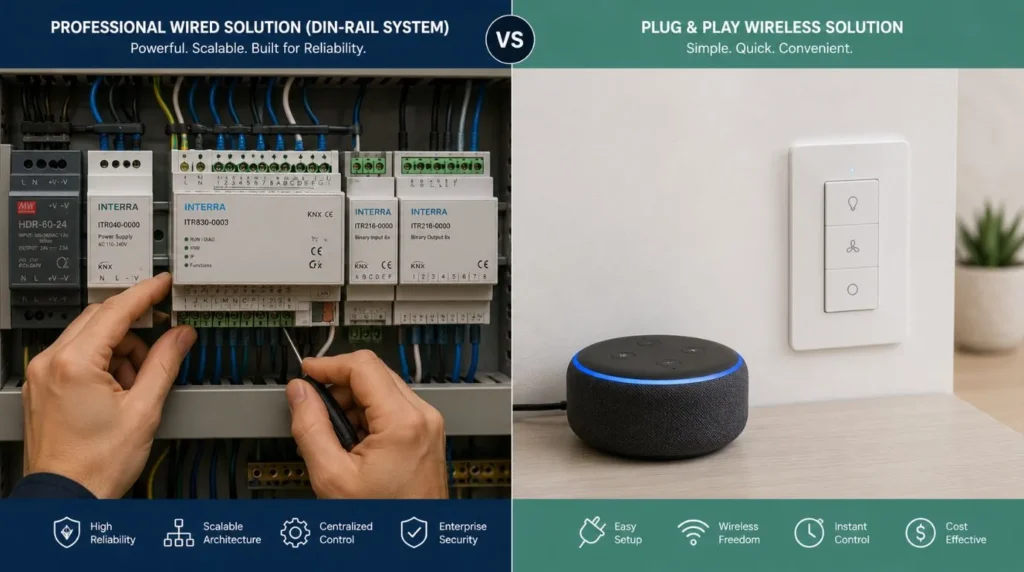
| Feature | Wi-Fi Smart Home | KNX Home Automation |
|---|---|---|
| Initial investment | Lower | Higher |
| Scalability | Moderate | Excellent |
| Reliability | Good | Excellent |
| Whole-home integration | Limited | Extensive |
| Future expansion | Moderate | Excellent |
| Long-term value | Good | Outstanding |
The right platform depends on your goals rather than on smart home installation prices.
Common Budgeting Mistakes
Buying Devices Before Planning
This often leads to compatibility issues.
Ignoring Infrastructure
Strong networking is essential.
Choosing Based Only on Price
The lowest-cost solution isn’t always the most reliable.
Not Planning for Expansion
Many homeowners eventually add more automation. Choosing scalable technology protects your investment.
Mixing Too Many Smart Home Brands
Multiple apps and disconnected ecosystems can reduce the overall user experience.
Is the Smart Home Installation Price Worth It?
In our experience, homeowners don’t invest in automation simply to own smart devices.
They invest for:
- Convenience
- Comfort
- Security
- Energy efficiency
- Lifestyle enhancement
- Future-ready living
The greatest value comes from creating a home that responds intelligently to everyday routines.
Why It Matters for Modern Homes
Modern homes are becoming increasingly connected.
Today’s buyers expect features such as:
- Intelligent lighting
- Climate automation
- Smart security
- Mobile control
- Energy-efficient systems
A professionally designed smart home not only improves everyday living but can also enhance the property’s long-term appeal.
Our Perspective at Techtastic
At Techtastic, we don’t begin with a budget, but we begin with your lifestyle.
We ask questions like:
- How do you use your home?
- Which rooms matter most?
- What routines could be simplified?
- How might your needs evolve over the next ten years?
From there, we design automation systems that integrate lighting, climate, motorized curtains, entertainment, networking, and security into one seamless experience. Our goal isn’t simply to install technology. It’s to create a home that feels intuitive, reliable, and enjoyable every single day.
Collaboration Opportunities for Developers, Architects & Interior Designers
The best smart homes begin with thoughtful planning.
At Techtastic, we collaborate with:
- Architects
- Interior designers
- Residential developers
- Luxury home builders
- Hospitality consultants
- Commercial project planners
Smart Infrastructure Planning
Prepare homes for long-term automation.
Lighting & Automation Design
Create elegant and efficient living environments.
KNX Home Automation
Deliver scalable, future-ready systems.
Structured Networking
Build reliable digital infrastructure.
Premium Residential Projects
Combine luxury design with intelligent technology.
Future-Ready Developments
Create homes prepared for evolving smart living.
Early collaboration helps minimize installation challenges, optimize system design, and ensure a more accurate smart home installation price while maximizing your long-term investment.
Key Takeaways
- Smart home installation price depends on the home’s size, automation goals, and chosen platform.
- Wi-Fi systems are suitable for smaller projects, while KNX excels in whole-home automation.
- Professional installation includes planning, programming, networking, and integration.
- Lighting, climate control, security, and motorized curtains provide the highest everyday value.
- Homeowners can implement automation in phases.
- Strong networking is essential for reliable smart home performance.
- Planning for future expansion protects your investment and improves long-term flexibility.
Frequently Asked Questions
1. How much is the smart installation price?
A. The cost depends on your home’s size, the number of automated systems, the installation complexity, and whether you choose a Wi-Fi or professional automation platform like KNX.
2. What affects smart home installation price?
A. Key factors include property size, automation features, networking infrastructure, wiring requirements, and the level of system integration.
3. Is a smart home installation price worth the investment?
A. For many homeowners, the convenience, security, comfort, and long-term flexibility make smart home automation a valuable investment.
4. Can I install a smart home in stages?
A. Yes. Many homeowners begin with lighting and networking before expanding to climate control, security, motorized curtains, and entertainment.
5. Is KNX more expensive than Wi-Fi automation?
A. KNX generally has a higher initial investment but offers greater reliability, scalability, and long-term value.
6. Does smart home installation increase property value?
A. Professionally designed automation systems can improve a property’s appeal and future readiness.
7. Can smart home systems reduce electricity bills?
A. Yes. Features such as intelligent lighting, climate control, occupancy sensing, and energy management can reduce unnecessary electricity consumption.
8. Should I hire a professional smart home installer?
A. Yes. Professional installation ensures proper planning, secure networking, seamless integration, and reliable long-term performance.
Conclusion
The smart home installation price depends on much more than the devices you choose. Your home’s size, automation goals, networking infrastructure, and long-term plans all play an important role in determining the overall investment. While entry-level smart home solutions are ideal for basic automation and come with a lower smart home installation price, professionally designed systems like KNX offer greater reliability, seamless integration, and the flexibility to grow with your needs, making them a worthwhile long-term investment.
At Techtastic, we help homeowners, architects, designers, and developers create intelligent living environments tailored to their lifestyles and budgets.
📞 Call/WhatsApp: 9769145145
📍 Our Operational Hubs: Navi Mumbai | Nashik | Lonavla | Sangli
Whether you’re automating a single room or building a fully connected luxury home, we design future-ready smart home systems that combine convenience, security, energy efficiency, and exceptional long-term value.
Maintaining clean system backups and secure cabling infrastructure is essential for long-term performance. If you are planning an upgrade or a new build, explore why hiring a professional for your smart home device installation saves time and energy costs down the line.