
Summary
Yes, smart home automation technology is highly popular and experiencing unprecedented growth, with the global market surpassing $164 billion in 2026. In India alone, the market is expanding at a staggering Compound Annual Growth Rate (CAGR) of over 16% to 29%, projected to clear $13.5 billion. Driven heavily by high-end residential real estate, developers and luxury homeowners are rapidly moving away from basic, standalone gadgets. Current demand is strictly focused on unified, hardwired infrastructures (like the global KNX standard) that prioritize offline security, enterprise-grade energy management, and long-term property valuation over temporary retail tech toys.
The Paradigm Shift: Moving Past the Gadget Phase Into Architectural Utility
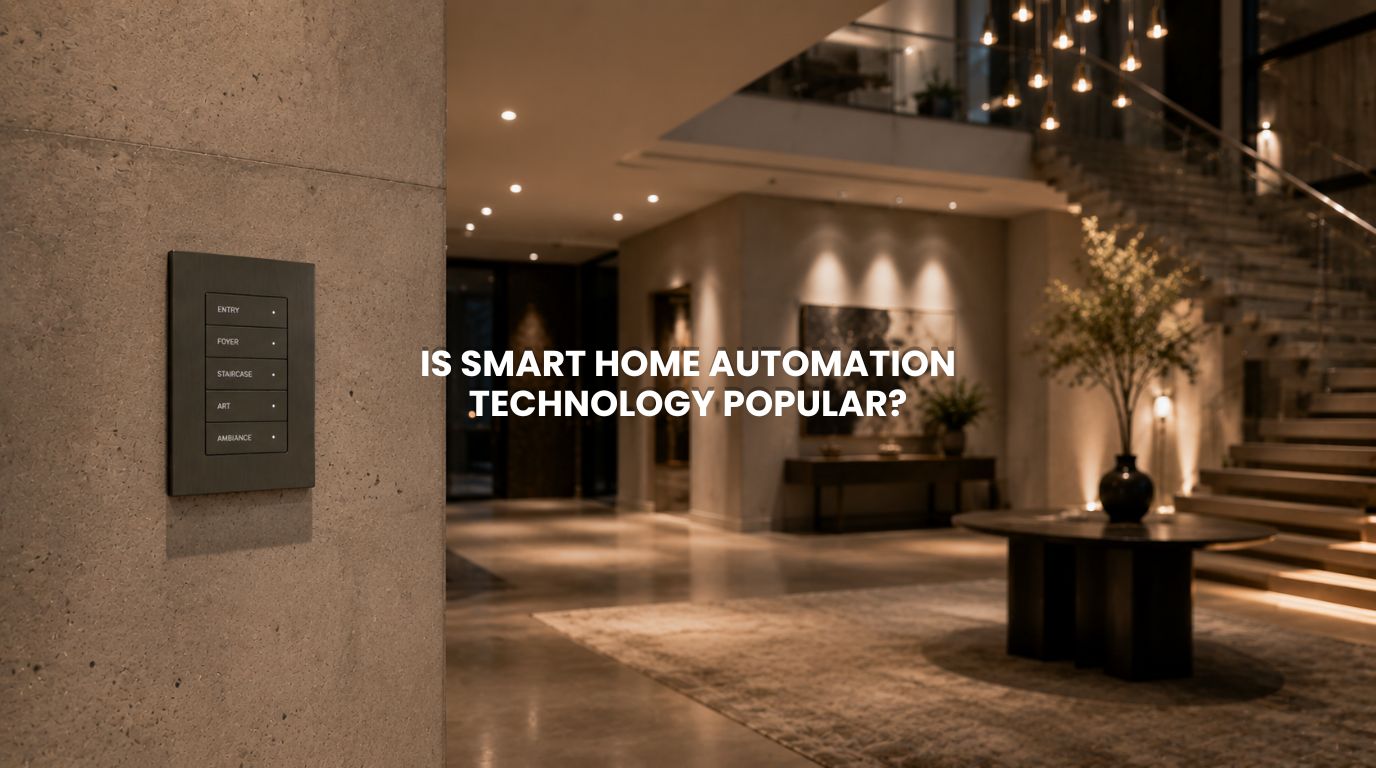
The smart home automation technology industry has officially outgrown the novelty phase. When I analyze current market dynamics across urban centers like Mumbai, Delhi NCR, and premium vacation hubs like Lonavla, a clear trend emerges: discerning homeowners no longer care about the superficial “cool factor” of making a retail smart bulb change colors via a phone app.
The market has matured significantly because the limitations of first-generation wireless smart products are fully exposed. Homes crowded with disconnected, uncoordinated Wi-Fi and Zigbee gadgets suffer from severe network congestion, device dropouts, and constant battery maintenance cycles.
Today’s affluent buyers treat automation as an essential, foundational building utility—exactly like premium concealed plumbing or localized climate ducting. Real estate developers are actively integrating structured communication backbones into the raw gray-structure phase of construction. The demand isn’t for more devices; it is for the complete removal of technological friction through robust, industrial-grade engineering.
What is Driving The Massive Surge in Smart Home Automation Technology Adoption?
The massive surge in smart home automation technology adoption is primarily driven by an urgent consumer demand for enhanced residential security, rising utility costs that require intelligent energy management, and the widespread real estate integration of unified communication protocols. Modern property owners view smart home automation technology as a tool to protect their capital, lower their operational overheads, and streamline their daily living environments.
The Priority Shift Toward Advanced Home Security
Safety and access control represent the single largest cash-flowing segment in the current market, accounting for over $1.75 billion in dedicated deployment. With the rise of modern gated communities and expansive private villas, families look beyond standard lock-and-key mechanics.
Demand has spiked for high-definition surveillance loops, AI-driven thermal perimeter sensing, and biometric entries. Homeowners want real-time, zero-latency system status alerts sent to their devices, transforming security from a reactive alarm into a proactive shield.
The Push for Decentralized Resource Management
With electrical tariffs climbing across major Tier-1 regions, automated resource optimization is no longer a luxury choice—it is a financial necessity. Consumers are actively seeking out advanced energy-monitoring tools and closed-loop lighting controls that deliver average utility cost optimizations of 15% to 30%.
By automating climate setbacks in empty rooms and harvesting ambient sunlight to continuously dim architectural LED drivers, intelligent properties systematically lower their carbon footprints while drastically slashing monthly power bills.
Which Demographics are Leading The Demand for Smart Home Automation Technology Integration?
Gen Z and Millennial property owners are leading the demand for smart home automation technology integration, with independent consumer data showing that over 93% to 96% of these younger demographics own or actively specify at least one smart device in their households. Furthermore, affluent families with children under 12 are nearly twice as likely to adopt integrated environmental smart home automation technology compared to childless households.
The Tech-Native Expectation of Younger Buyers
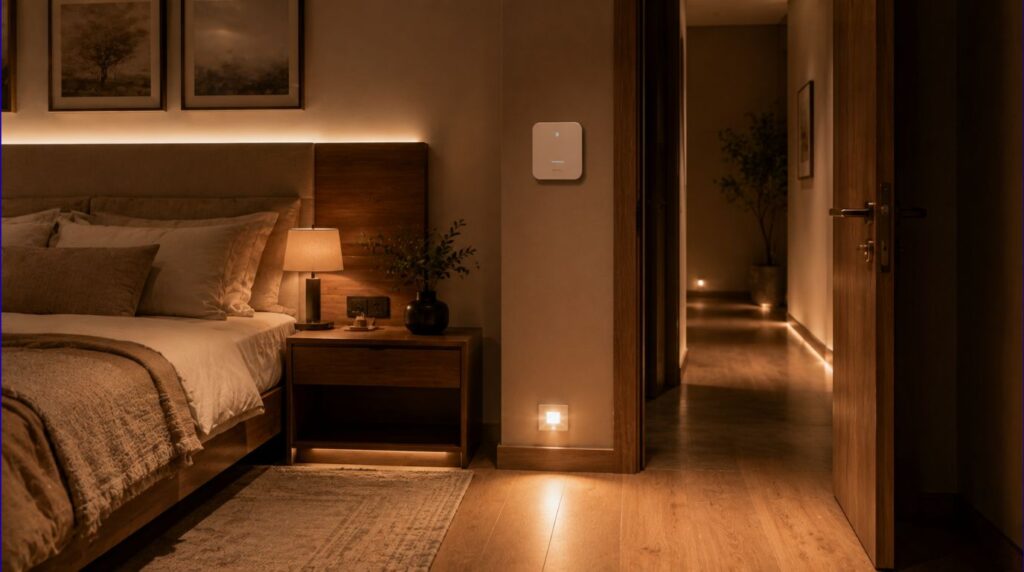
For millennial executives and Gen Z professionals purchasing premium real estate, a home that cannot be managed intuitively is an obsolete structure. These users expect a seamless multi-device experience where lighting, multi-room audio, climate, and motorized shading function as a singular, cohesive ecosystem. They avoid disjointed setups that require juggling ten different software apps, choosing instead unified control stations that blend cleanly into minimalist wall paneling.
The Rise of Aging-in-Place and Independent Senior Care
An emerging demographic driving significant technical demand is the expanding senior citizen population. Families are increasingly investing in “ambient sensing” and privacy-first automated infrastructure to support aging parents.
Rather than intrusive cameras, these systems use ultra-wideband radar technology and subtle motion paths to monitor wellness metrics, detect accidental slips, and automate soft floor lighting at night. This ensures complete independence for elders and absolute peace of mind for their caregivers.
Why are Hardwired Infrastructures Outpacing Wireless Systems in Luxury Real Estate?
Hardwired infrastructures are outpacing wireless systems in luxury real estate because premium homes built with thick brick masonry, dense reinforced concrete slabs, and metallic insulation layers create a hostile environment for airborne radio signals, resulting in data lag and dropped commands. Hardwired standards completely bypass this radio interference by routing all system communications through local, physical cables.
Eliminating the 3-to-5-Year Obsolescence Window
Consumer-grade wireless smart devices are treated by mass-market manufacturers as short-lifecycle electronics. When a retail brand alters its business model, updates an app protocol, or shuts down its proprietary regional cloud servers, your entire investment in those switches can turn into useless wall clutter overnight.
Luxury architects and MEP consultants avoid this liability by specifying open, hardwired international standards like KNX. Backed by hundreds of independent global manufacturers, a hardwired bus network eliminates single points of failure, operates entirely offline, and secures an industrial operational lifespan of over 30 years.
Enhancing Real Estate Asset Valuation
In today’s competitive property market, a home outfitted with temporary, piecemeal retail gadgets adds virtually zero tangible capital value during a resale appraisal. Prospective buyers view loose hubs and plug-in adaptors as temporary tech clutter that they will eventually have to tear out and replace.
Conversely, a certified, hardwired low-voltage bus cable system is classified as a permanent structural asset—a robust architectural utility that increases the overall mechanical worth and valuation of the estate.
Technical Architecture Mapping: Smart Home Automation Technology Evolution Matrix
| Market Evaluation Parameter | Retail Gadget Tier (Past Era) | Enterprise Hardwired Tier (Current 2026 Demand) |
| Global Market Valuation | Fragmented low-margin retail sales | Dominant $164B+ infrastructure asset class |
| Primary System Backbone | Airborne Radio Waves (Wi-Fi, Zigbee) | Shielded, Twisted Physical Green Bus Cable |
| Core Operating Architecture | Cloud-Dependent Central Master Hubs | 100% Decentralized Local Flash Memory |
| Signal Transmission Stability | High latency, prone to concrete shielding | Sub-10 millisecond pristine local execution |
| Long-Term System Lifespan | 3 to 5 Years (Rapid software aging) | 30+ Years (Industrial structural durability) |
| Impact on Property Valuation | Negligible / Viewed as temporary add-on | Tangible Capital Asset (Architectural Utility) |
Transitioning From Temporary Tech Trends to Unshakeable Real Estate Legacies
When we look closely at the modern data, the verdict is definitive: smart home automation technology is no longer a passing trend or an optional upgrade—it is a core pillar of modern residential engineering. However, the path to achieving true, high-performance luxury requires a sharp distinction between superficial retail gadgets and permanent structural utilities.
At Techtastic, we don’t build our reputation on temporary tech toys or volatile cloud-connected boxes. We design and install robust, hardwired building backbones that treat automation as an enduring architectural utility. By integrating low-voltage communication pathways directly into your property’s early construction phase, we protect your capital, optimize your building’s resources, and deliver absolute, unshakeable peace of mind for decades to come.
🤝 The Partnership Corner
- For Luxury Homeowners: We step directly into your initial drafting phase to design an offline-first, future-ready automation blueprint that eliminates system lag, battery hassles, and expensive structural reworks down the line.
- For Premium Architects & MEP Consultants: We coordinate seamlessly with your engineering teams during the raw brickwork stage, delivering precise panel schematics, conduit maps, and load calculations to keep your architectural designs flawless.
Let’s build a digital foundation engineered to endure for generations, integrating smart home automation technology.
📞 Call/WhatsApp: 9769145145
📍 Engineering Unshakeable Reliability Across: Navi Mumbai | Nashik | Lonavla | Sangli
Technical FAQs on Smart Home Automation Technology
Q: Is smart home automation technology truly growing in popularity within the Indian luxury real estate market?
A: Yes, smart home automation technology demand is expanding rapidly. Industry market data shows the Indian home automation sector growing at a robust compound annual growth rate (CAGR), projected to scale from a minor market into a multi-billion-dollar infrastructure asset class, with Tier-1 cities and premium vacation hubs leading the adoption curve.
Q: What is causing homeowners to switch from wireless smart gadgets to hardwired systems?
A: Homeowners are transitioning because consumer wireless setups face severe performance issues in premium estates. Thick reinforced concrete walls act as radio shields that cause signal lag and dropped commands. Hardwired installations (like the international KNX standard) eliminate airborne radio interference by routing local data through a shielded physical green bus cable.
Q: Do integrated smart home automation technology systems add tangible financial value to a property during resale?
A: Yes. While out-of-the-box wireless gadgets and plug-in modules add no real value and are often viewed as temporary clutter, a professionally integrated, open-protocol hardwired automation network is valued as a permanent mechanical asset. It functions as a core building utility that directly enhances the long-term capital valuation of the estate.