
Summary
Luxury homes these days blend style and smart tech in ways that just make life easier and a whole lot more impressive. Smart home automation in interior design isn’t just some futuristic gimmick; it actually makes your home better by tucking things like lighting, climate control, security, and entertainment right into the background. No more walls full of switches and gadgets, everything just works together, and the space stays open and uncluttered.
Think about walking into a room where the lights shift with the time of day, curtains glide open with a tap, and a home theater melts into the design instead of sticking out. It feels polished, but it’s also practical. That’s why more and more people are weaving smart automation in interior design into the fabric of modern luxury homes. In this guide, we’ll dive into exactly how these systems elevate design and why they’ve become such a must-have for high-end living.
The Evolution of Luxury Interior Design
Luxury interior design has evolved significantly in recent years. While aesthetics, materials, and spatial planning remain important, the evolution of smart home automation in interior design means modern luxury homes are now expected to include advanced technology that improves everyday living.
Homeowners today want interiors that offer convenience, comfort, and efficiency. Smart home automation in interior design enables designers to deliver these benefits without compromising visual elegance.
By integrating automation systems during the design phase, interior designers can create living spaces that feel modern, intelligent, and highly personalized.
Creating Clean and Minimalist Interiors
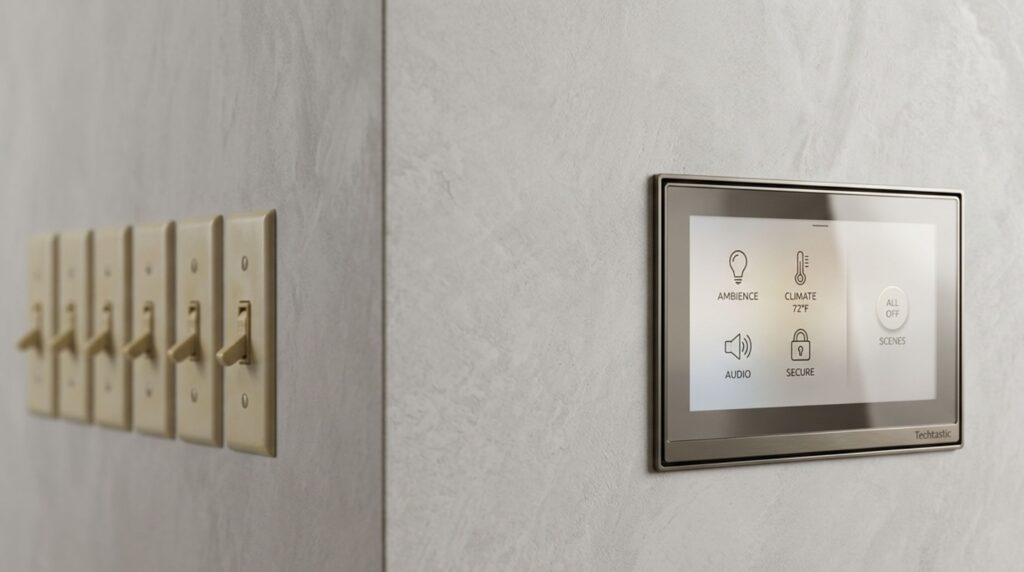
One of the biggest advantages of smart home automation in interior design is the ability to simplify wall layouts and reduce visual clutter.
Traditional homes often require multiple switches for lights, fans, curtains, and other systems. Automation allows these functions to be managed through centralized control panels or mobile devices.
This means designers can apply smart home automation in interior design to maintain clean wall surfaces with fewer switches while still providing complete control over the home’s systems.
Minimalist interiors become easier to achieve when technology is integrated into a single intelligent platform.
Smart Lighting for Dynamic Ambience
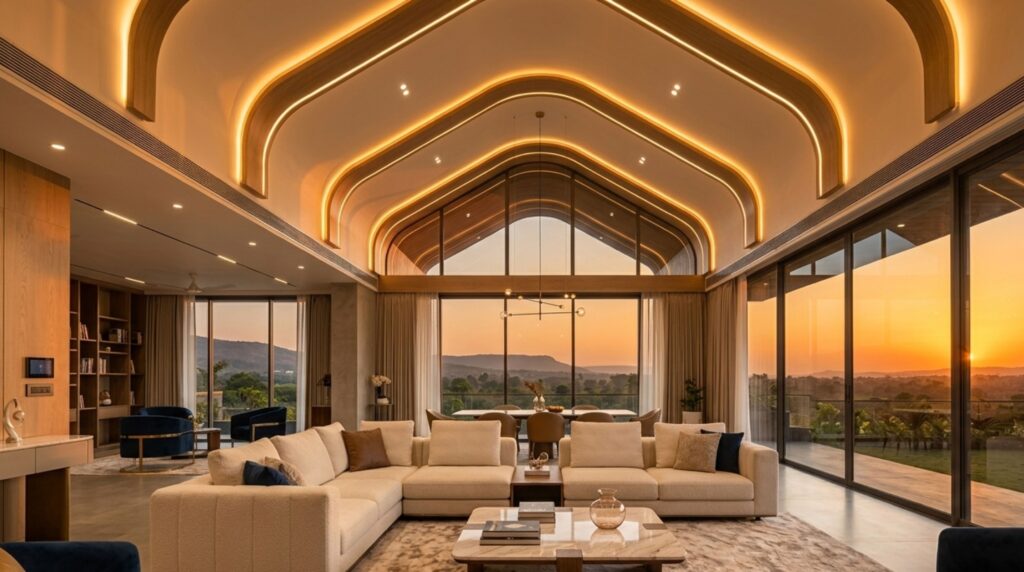
Lighting plays a critical role in interior design, influencing mood, depth, and visual appeal.
Smart lighting automation allows designers to create customized lighting scenes that adapt to different moments throughout the day.
Examples include:
- Soft ambient lighting for relaxation
- Bright task lighting for workspaces
- Warm lighting scenes for dining areas
- Accent lighting to highlight architectural elements
These lighting scenes can be activated instantly through touch panels or mobile applications, providing homeowners with both convenience and flexibility.
Automation also allows lighting to adjust automatically based on natural daylight conditions.
Motorized Curtains and Window Treatments
Window treatments are a key component of luxury interiors. Motorized curtains and blinds add both sophistication and functionality to residential spaces.
Automation allows curtains to open and close automatically based on time schedules or sunlight levels. This helps regulate natural lighting and maintain privacy.
Interior designers can integrate curtain automation with lighting systems so that indoor lighting adjusts automatically when curtains move.
The result is a perfectly balanced environment that enhances both comfort and visual harmony.
Seamless Climate Control Integration
Comfort is an essential element of luxury living. Smart climate control systems ensure that indoor temperatures remain comfortable throughout the day.
Automation allows heating and cooling systems to adjust automatically based on occupancy or time schedules.
For interior designers, this smart home automation in interior design reduces the need for multiple thermostats and wall controls. Climate systems can be managed through centralized automation panels, helping maintain a streamlined interior design.
Enhancing Entertainment Spaces
Luxury residences often include entertainment areas such as media rooms or private home theatres.
Automation transforms these spaces into immersive environments by controlling lighting, audio-visual systems, and curtains through a single command.
For example, activating movie mode can automatically dim the lights, close the curtains, and start the home theatre system.
This level of integration enhances both the functionality and the overall experience of entertainment spaces.
Integrating Security with Interior Design
Security systems are becoming an integral part of modern luxury homes.
Smart automation allows security features such as video door phones, smart locks, and surveillance systems to be integrated seamlessly into interior layouts.
Designers can coordinate device placement to ensure that security technology remains discreet while still providing effective protection.
Automation also allows homeowners to monitor their homes remotely through mobile devices.
Centralized Control for Simplified Living
One of the defining features of smart home automation in interior design is centralized control.
Instead of managing separate systems, homeowners can control lighting, climate, security, and entertainment through a single platform.
Control options may include:
- Wall-mounted touch panels
- Smartphone applications
- Voice control systems
For designers, centralized control significantly reduces the number of switches and controllers required throughout the home.
This contributes to cleaner interior layouts and a more refined aesthetic.
Collaboration Between Designers and Automation Experts
The best smart homes are created through collaboration between interior designers and automation specialists.
Automation experts help ensure that wiring infrastructure, device placement, and system compatibility are planned correctly.
By working together early in the project, designers and automation professionals can create interiors where technology enhances the design rather than interfering with it.
This collaboration ensures that luxury homes deliver both style and intelligent functionality.
The Future of Luxury Interior Design
Smart home automation in interior design is rapidly becoming a defining feature of luxury residential living.
Homes that combine elegant interiors with intelligent technology offer a superior living experience. Automation enhances convenience, energy efficiency, security, and entertainment while supporting modern design aesthetics.
Interior designers who understand automation systems can create spaces that feel sophisticated, efficient, and future-ready.
As technology continues to evolve, automation will play an even greater role in shaping the next generation of luxury interiors.
Upgrade Luxury Interiors with Smart Home Automation
Modern luxury residences require intelligent automation systems that enhance comfort, security, and energy efficiency. Smart home automation in interior design allows homeowners to control lighting, climate systems, security, and entertainment through a single integrated platform.
Techtastic Technologies designs and installs advanced systems of smart home automation in interior design, powered by KNX technology for premium residential interiors.
Contact Techtastic today at 9769145145 to explore smart home automation solutions for luxury homes and modern residential projects.
Collaboration Opportunities for Builders and Architects
Developers, architects, and interior designers can significantly enhance residential projects by integrating smart home automation in interior design during the planning and design stages.
Techtastic collaborates with industry professionals to ensure automation technology integrates seamlessly with architectural layouts, electrical infrastructure, and interior design concepts.
Partner with Techtastic to implement smart home automation solutions for your upcoming residential projects.
If you found this helpful, you might also be interested in our blogs about things every interior designer should know about home automation here.