
Summary
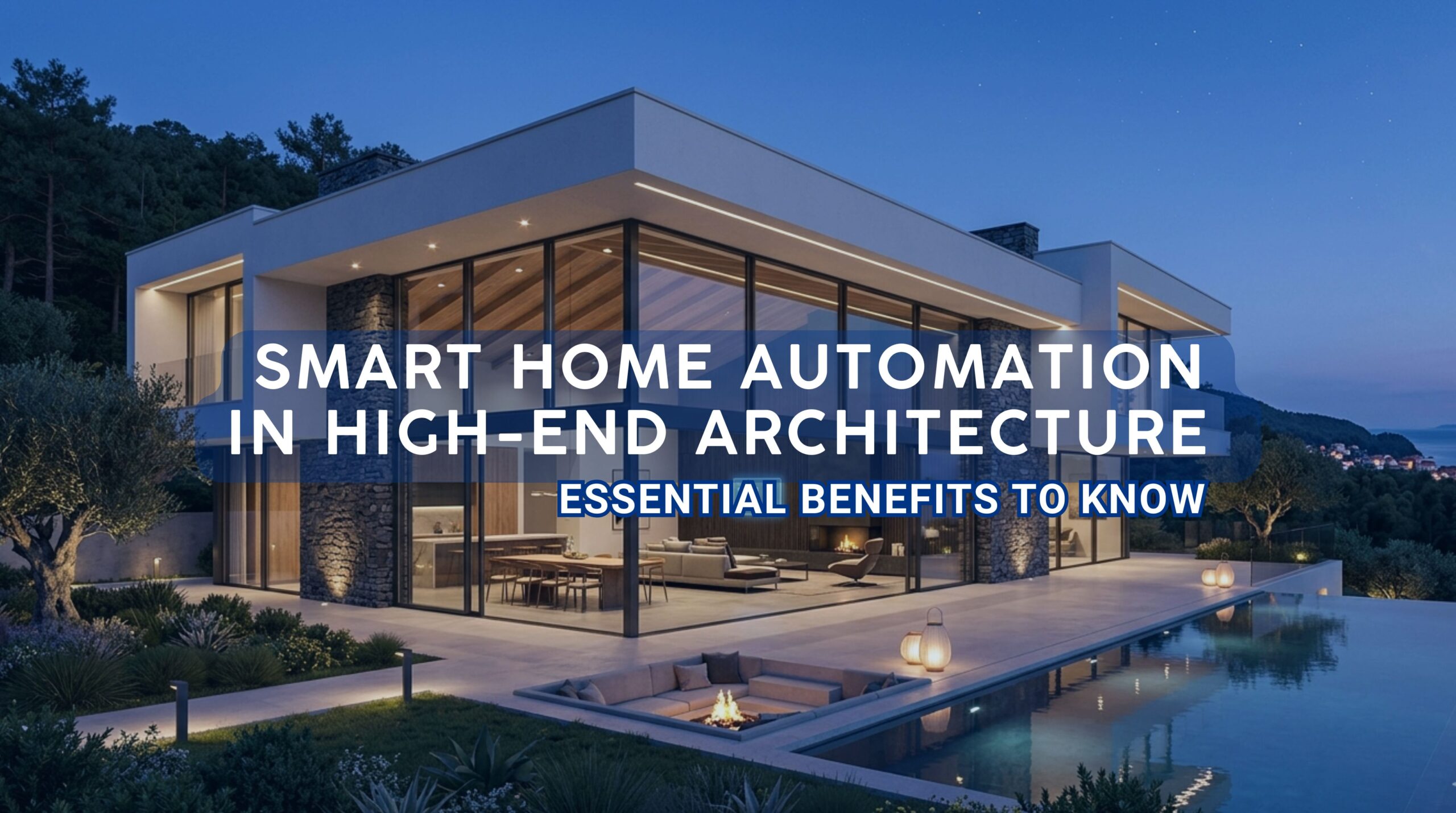
High-end architecture isn’t just about looks anymore. Now, it’s about weaving smart technology into the very bones of a home, making life more comfortable, efficient, and secure. These days, people who invest in luxury homes want more than beautiful spaces. They expect to control lights, climate, security, and entertainment with a tap or a voice command, without sacrificing style.
Smart Home automation in high-end architecture helps design spaces that work effortlessly. Think about it: automated lighting that shifts with the time of day, motorized curtains gliding open in the morning, security systems that you barely notice but always rely on. When architects plan for these features from the start, they build homes that aren’t just impressive today, they’re ready for whatever tech comes next. Smart systems aren’t extras anymore; the integration of smart home automation in high-end architecture is at the heart of luxury design. In this blog, let’s look at why home automation has become a must-have in high-end architecture, and what it really means for the way we live.
The Evolution of High-End Residential Architecture
Luxury architecture has always focused on design excellence, premium materials, and spacious layouts. However, modern homeowners now expect more than just beautiful spaces.
Technology has become a critical part of high-end living. Today, smart home automation in high-end architecture allows residents to control multiple systems throughout the home through a single interface.
Architects designing luxury residences are increasingly incorporating automation systems to ensure homes deliver both aesthetic elegance and intelligent functionality.
Growing Demand for Smart Living
Homebuyers in the luxury segment are becoming more technology-conscious. They want homes that provide convenience, comfort, and advanced security.
Smart homes allow residents to manage lighting, temperature, security systems, and entertainment systems through mobile applications or centralized touch panels.
This level of control improves everyday living while also enhancing the value of the property.
Architects who integrate automation into residential projects can create homes that align with modern lifestyle expectations.
Seamless Integration with Architectural Design
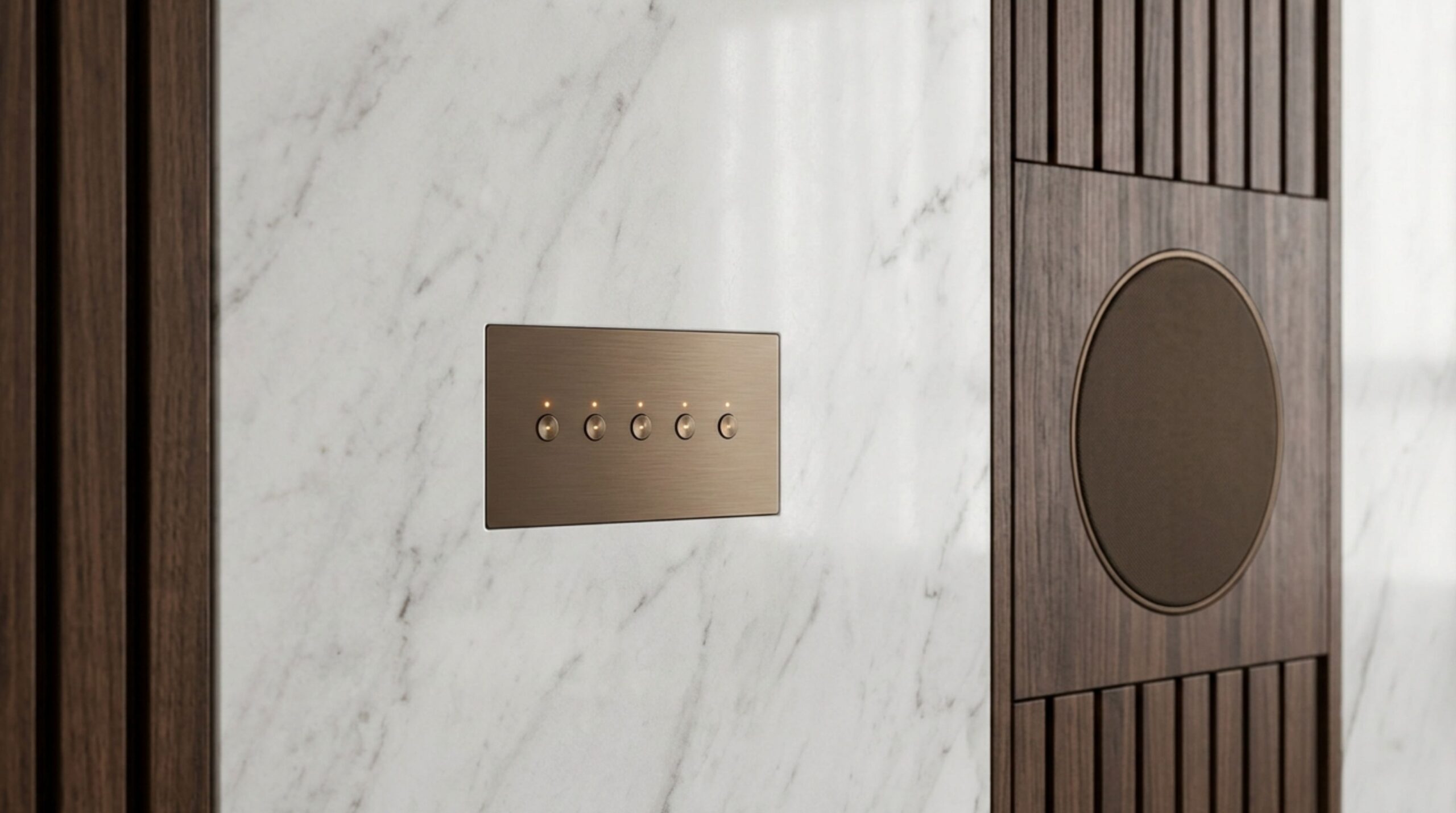
One of the main reasons smart home automation in high-end architecture is gaining popularity is its ability to integrate seamlessly with design.
Traditional homes often require multiple switches, control panels, and visible devices throughout the interior. Smart automation reduces this clutter by allowing multiple systems to be controlled through a single interface.
This allows architects to maintain clean walls, minimalist interiors, and balanced design layouts.
Automation becomes an invisible layer of intelligence within the home.
Intelligent Lighting Design
Lighting is a fundamental element of architectural design. Smart lighting automation allows architects to enhance both the functionality and atmosphere of residential spaces.
Automated lighting systems can create multiple lighting scenes tailored for different activities such as relaxation, dining, entertaining, or working.
Sensors and scheduling systems allow lights to adjust automatically based on occupancy or natural daylight conditions.
This level of control helps homeowners create comfortable environments while improving energy efficiency.
Energy Efficiency and Sustainability
Sustainability is becoming an important focus in modern architecture. Smart home automation in high-end architecture helps improve energy efficiency by optimizing how electrical systems operate.
Automation can regulate lighting usage, control heating and cooling systems, and adjust curtain positions to reduce heat gain from sunlight.
These automated adjustments reduce unnecessary energy consumption while maintaining comfortable living conditions.
For architects working on eco-conscious designs, automation technology plays a key role in achieving sustainability goals.
Enhanced Security Systems
Security is a major priority for luxury homeowners. Platforms for smart home automation in high-end architecture allow security systems to be integrated directly into the home’s infrastructure.
Modern smart homes may include:
- Video door phones
- Smart door locks
- CCTV surveillance systems
- Motion sensors and alarm systems
These systems can be monitored and controlled remotely through mobile applications, allowing homeowners to stay connected to their property even when they are away.
Architects can design homes where security technology integrates seamlessly with the overall layout.
Smart Entertainment and Lifestyle Integration
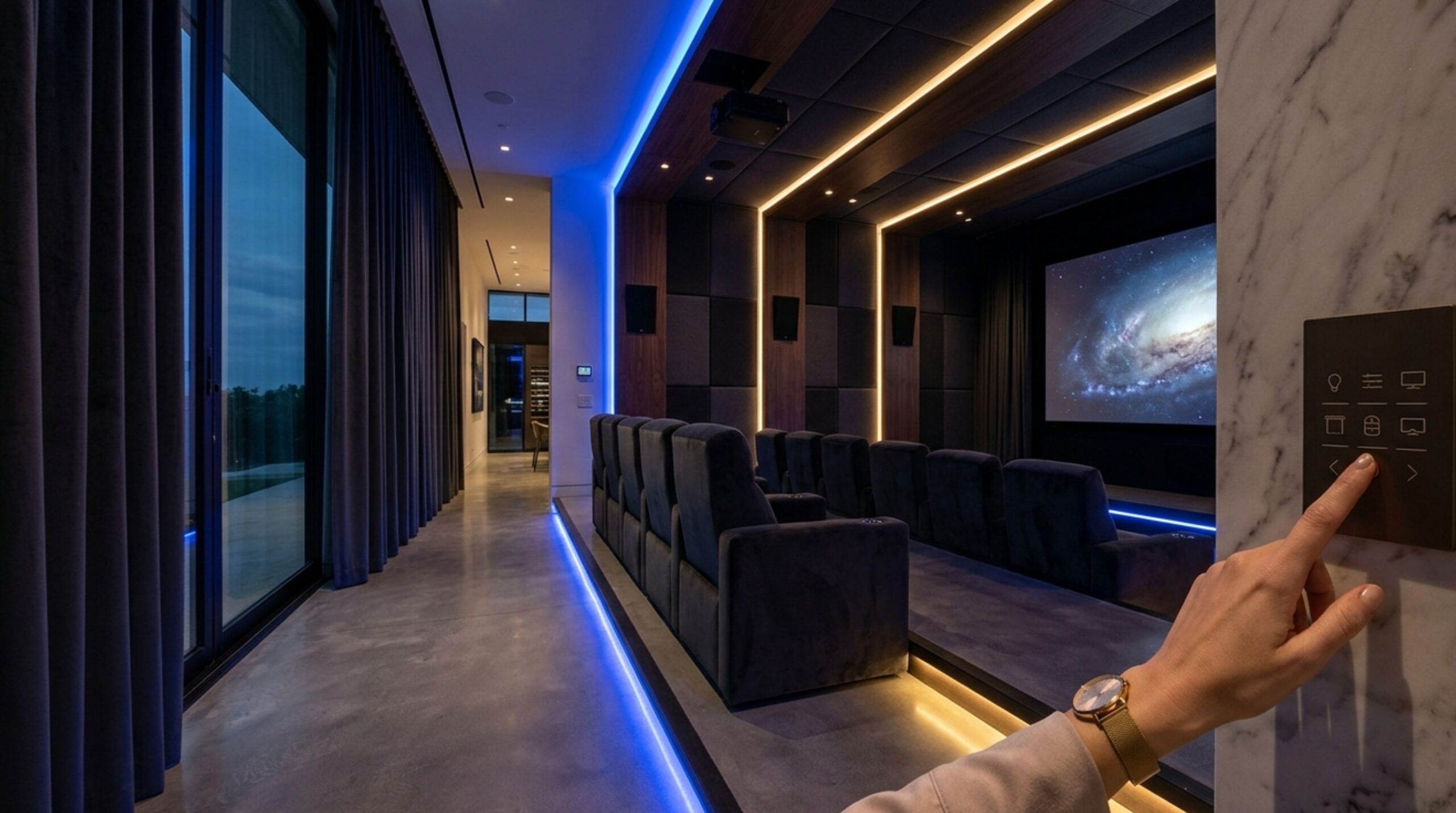
Luxury homes increasingly include dedicated entertainment areas such as home theatres and media rooms.
Smart home Automation in high-end architecture allows these spaces to provide immersive experiences with minimal effort from homeowners.
With a single command, lighting can dim, curtains can close, and audiovisual systems can activate to create the perfect entertainment environment.
Automation ensures that technology enhances the lifestyle experience without interfering with the architectural design.
Centralized Control for Simplicity
One of the biggest advantages of smart home automation in high-end architecture is centralized control.
Instead of managing separate switches and remotes, homeowners can control various systems through a unified platform.
Control options typically include:
- Wall-mounted touch panels
- Mobile applications
- Voice-activated systems
For architects, centralized control reduces the need for multiple visible controls, helping maintain clean and sophisticated interiors.
Future-Proofing Luxury Homes
High-end homes are long-term investments. As technology evolves, homeowners may want to upgrade or expand their automation systems.
By integrating smart home automation in high-end architecture during construction, architects can ensure that homes remain adaptable to future technologies.
Structured wiring systems allow new devices and features to be added without major structural changes.
Future-ready homes are increasingly attractive to luxury buyers who want properties that remain technologically relevant.
Collaboration Between Architects and Automation Experts
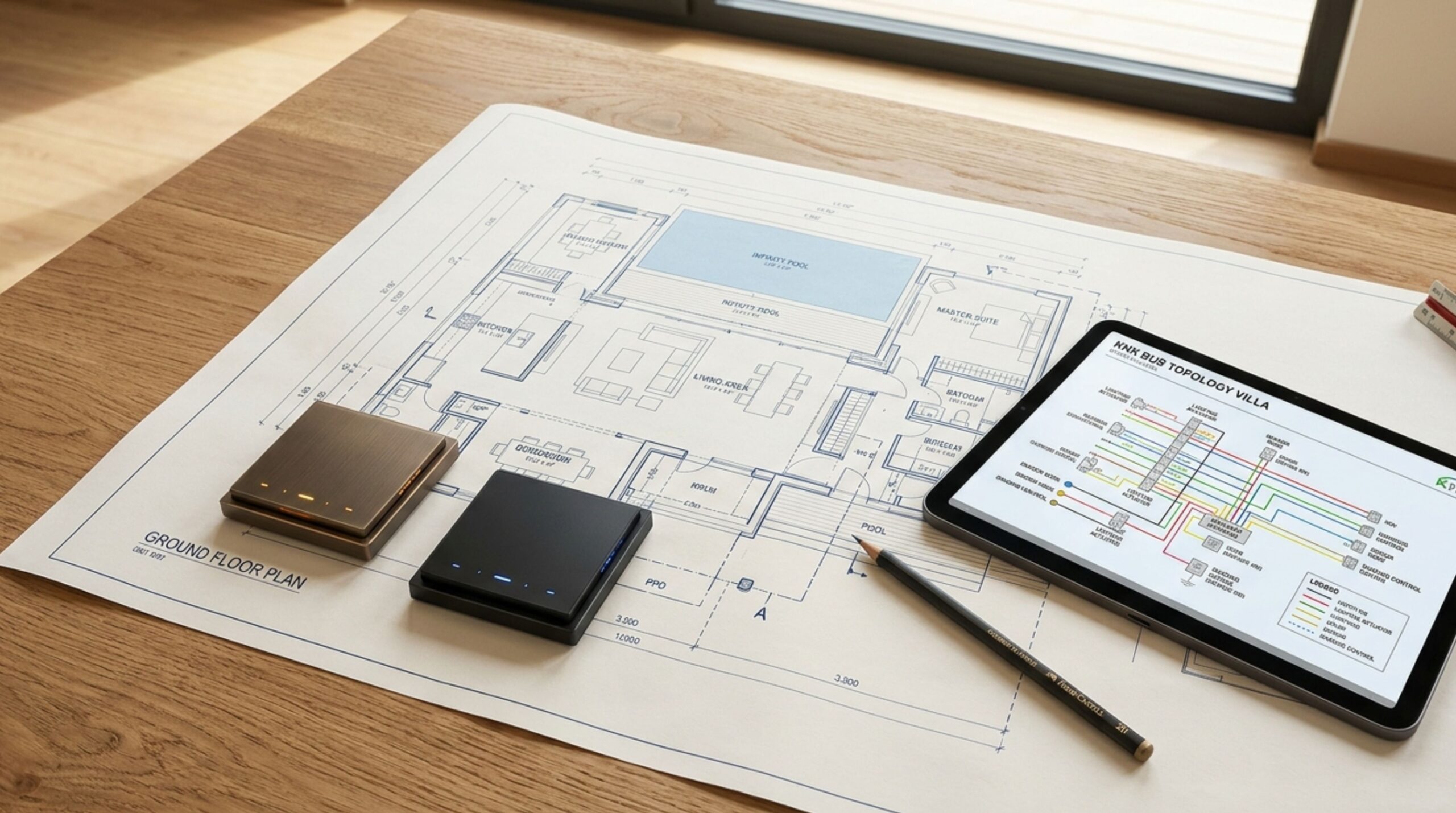
Successful automation integration requires collaboration between architects and technology specialists.
Automation experts help design the wiring infrastructure, select appropriate control systems, and ensure compatibility between different devices.
By working together from the early stages of a project, architects and automation professionals can create homes where technology complements architectural design.
This collaboration ensures smooth installation and long-term system reliability.
Final Thoughts
Home automation is rapidly becoming a defining feature of high-end architecture. Modern luxury homes must offer more than elegant design. They must also provide intelligent systems that improve convenience, efficiency, and security.
By integrating automation technologies such as smart lighting, climate control, security systems, and centralized control platforms, architects can create homes that deliver exceptional living experiences.
As technology continues to evolve, smart home automation in high-end architecture will play an even greater role in shaping the future of luxury residential architecture.
Upgrade Homes with Smart Home Automation in High-End Architecture
Modern luxury homes require intelligent automation systems that enhance comfort, convenience, and security. Integrating smart home automation in high-end architecture allows homeowners to control lighting, climate systems, security, and entertainment through a single intelligent platform.
Techtastic Technologies designs and installs advanced smart home automation systems powered by KNX technology for premium residential projects.
Contact Techtastic today at 9769145145 to explore smart home automation solutions for luxury homes and modern architectural developments.
Collaboration Opportunities for Builders and Architects
Developers, architects, and interior designers can significantly enhance residential projects by integrating smart automation systems during the planning and design stages.
Techtastic collaborates with industry professionals to ensure automation technology integrates seamlessly with architectural layouts, electrical infrastructure, and interior design concepts.
Partner with Techtastic to implement smart home automation solutions for your upcoming residential projects.
Still exploring your options? See how we handle smart home automation features for modern architecture here.