Summary
Yes, you can often mix different smart home brands in one system, but compatibility depends on the communication protocols, ecosystem, and automation platform being used. Technologies such as Matter, Zigbee, Z-Wave, and professional systems like KNX make integration easier, while mixing incompatible products can create reliability issues and require multiple apps. The best approach is to choose a primary ecosystem and add compatible devices that integrate smoothly, ensuring your smart home remains reliable, secure, and easy to expand.
Quick Answer
Yes, different smart home brands can often work together, but not all devices are compatible. Before buying new products, check whether they support the same ecosystem or communication standard, such as Matter, Zigbee, Z-Wave, or KNX. Building your smart home around a primary platform while adding compatible devices is the easiest way to create a reliable and future-ready system.
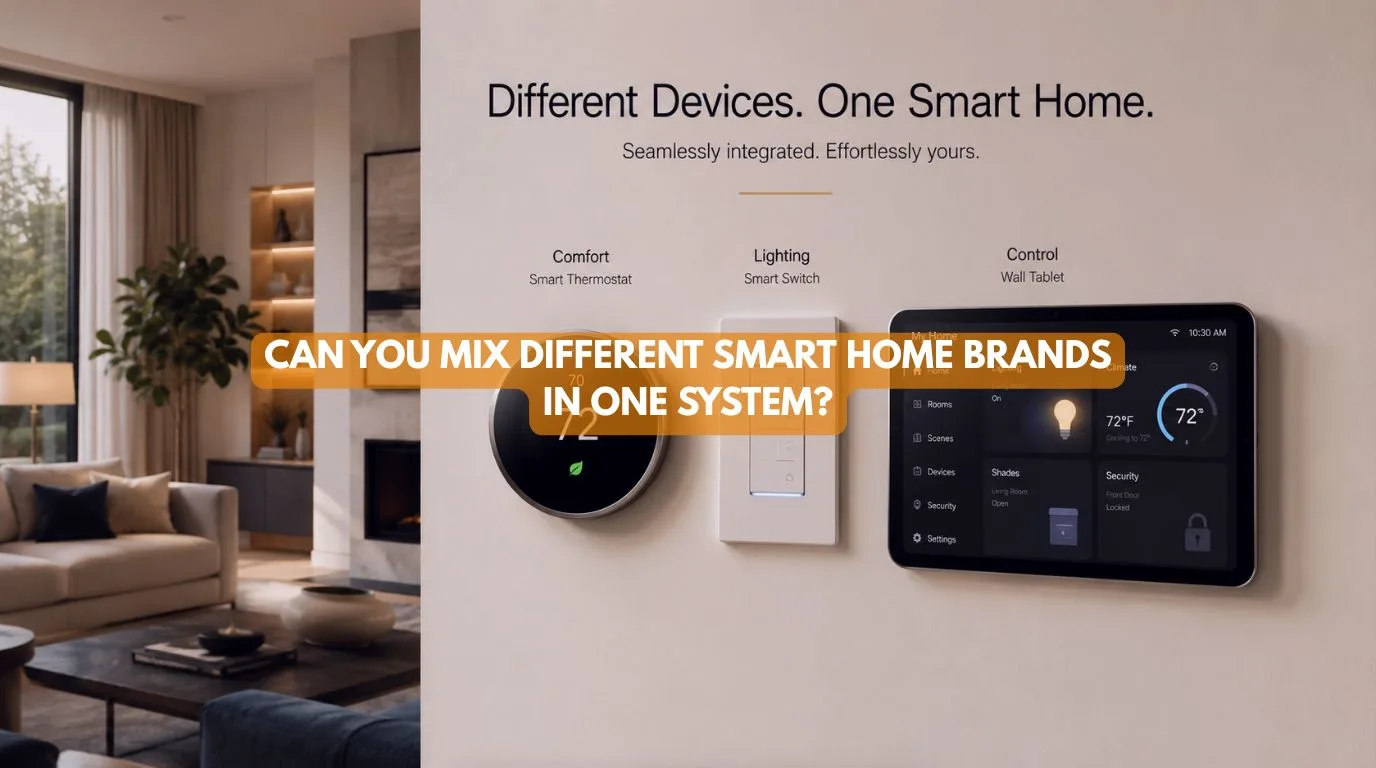
Can You Mix Different Smart Home Brands in One System?
One of the biggest questions homeowners ask is: “Do all my smart devices have to be from the same brand?” Fortunately, the answer is no.
Today’s smart home technology is far more flexible than it was just a few years ago. However, that doesn’t mean every device works seamlessly with every other device.
At Techtastic, we often help homeowners integrate products from multiple manufacturers into a single, easy-to-manage smart home. The key is understanding compatibility before making a purchase.
Why People Mix Smart Home Brands
There are many reasons homeowners combine products from different manufacturers.
For example:
- One company offers better smart lighting.
- Another provides excellent security cameras.
- A third specializes in motorized curtains.
- Existing smart devices don’t need replacing.
- New technology becomes available over time.
A well-designed smart home should allow you to add the best products without rebuilding your entire system.
When Mixing Smart Home Brands Works Well
Mixing smart home brands is usually successful when devices support common standards or integrate through the same automation platform.
Examples include:
- Matter-compatible devices
- Zigbee products
- Z-Wave devices
- Apple HomeKit integrations
- Google Home integrations
- Amazon Alexa integrations
- Professional KNX systems
Using shared standards makes communication much more reliable.
Popular Smart Home Standards
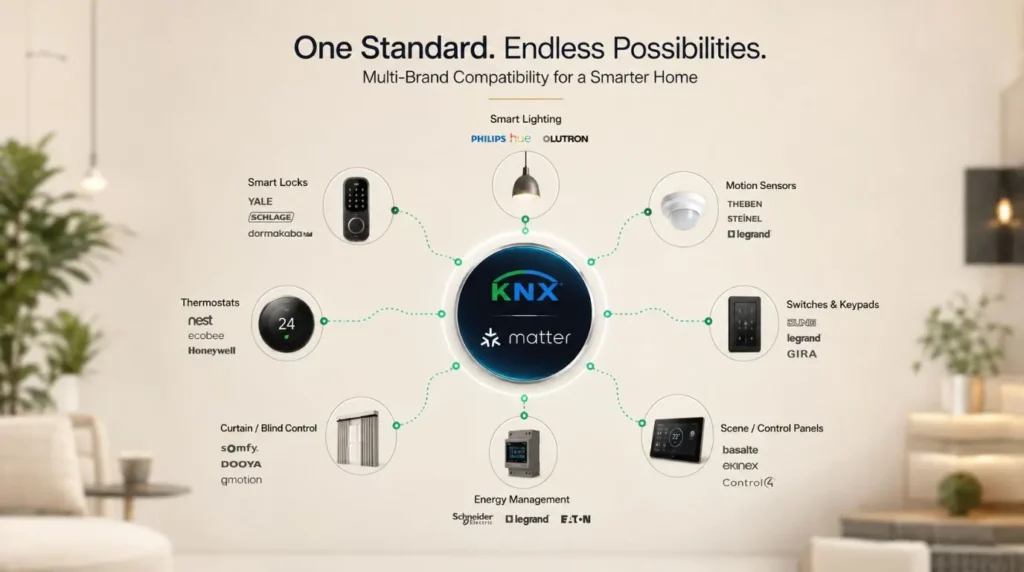
Matter
Matter is designed to improve compatibility between many leading smart home brands.
Benefits include:
- Easier setup
- Better interoperability
- More manufacturer support
- Improved long-term compatibility
Zigbee
A low-power wireless protocol used by many smart sensors, lighting products, and switches.
Ideal for:
- Smart lighting
- Motion sensors
- Door sensors
Z-Wave
Another widely used wireless protocol known for reliable communication and extensive device compatibility.
Often used for:
- Smart locks
- Security devices
- Lighting control
KNX Home Automation
For premium residential projects, KNX home automation offers one of the most flexible integration platforms available.
KNX supports the integration of:
- Smart lighting
- Climate control
- Motorized curtains
- HVAC
- Security
- Audio-visual systems
- Energy management
Because KNX is an open international standard supported by hundreds of manufacturers, homeowners are not tied to a single brand.
Challenges of Mixing Different Smart Home Brands
While mixing brands is possible, there are some challenges.
Multiple Apps
Some devices require their own dedicated mobile apps.
Limited Automation
Not every product can trigger automation with another manufacturer’s device.
Different Communication Protocols
Wi-Fi, Zigbee, Z-Wave, Bluetooth, and proprietary systems don’t always communicate directly.
Inconsistent User Experience
Using several apps and interfaces can make your smart home feel more complicated than necessary.
Firmware Updates
Different brands release updates independently, which can occasionally affect compatibility.
How to Successfully Mix Smart Home Brands
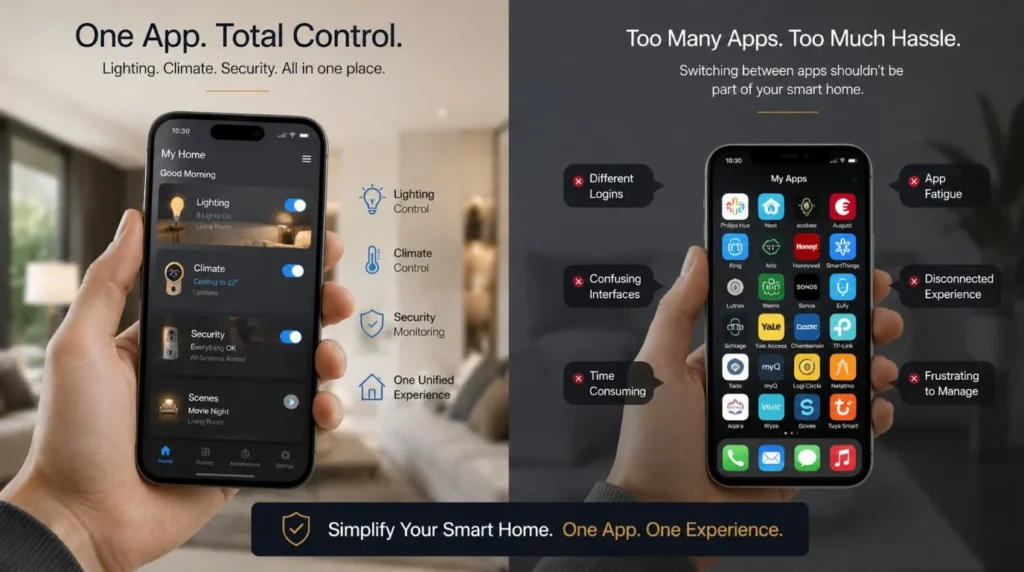
Choose One Primary Ecosystem
Build your system around platforms such as:
Check Compatibility Before Buying
Always verify that new products support your existing ecosystem.
Avoid Random Purchases
Don’t buy devices solely because they’re on sale. Consider long-term compatibility.
Plan for Future Expansion
Choose products that allow additional devices to be added later without replacing existing equipment.
Work with an Experienced Installer
Professional planning helps prevent compatibility problems before installation begins.
DIY vs Professionally Integrated Smart Homes
| DIY Mixed Devices | Professionally Integrated System |
|---|---|
| Multiple mobile apps | Centralized control |
| Limited automation | Seamless device integration |
| Manual troubleshooting | Professional programming and support |
| Compatibility depends on user research | Carefully planned compatibility |
| Difficult future expansion | Scalable long-term design |
Why KNX Offers More Flexibility
Unlike many consumer ecosystems, KNX home automation is built around an open international standard rather than a single manufacturer.
Benefits include:
- Hundreds of compatible manufacturers
- Long product lifecycles
- Reliable local communication
- Easier upgrades
- Greater flexibility when selecting devices
This reduces the risk of being locked into one brand while making future upgrades much simpler.
Common Mistakes to Avoid
Buying Without Checking Compatibility
Not every smart device supports every ecosystem.
Mixing Too Many Platforms
Using several independent ecosystems often creates unnecessary complexity.
Ignoring Network Requirements
Even compatible devices need a reliable network to perform consistently.
Focusing Only on Features
Compatibility and long-term support are just as important as product features.
Planning Only for Today’s Needs
Choose products that can grow with your smart home over time.
Why It Matters
A well-integrated smart home offers:
- Simpler control
- Better reliability
- Easier automation
- Greater flexibility
- Lower long-term costs
The goal isn’t to own devices from the same manufacturer—it’s to build a system where everything works together seamlessly.
Our Perspective at Techtastic
At Techtastic, we believe homeowners should have the freedom to choose the technologies that best suit their needs and not be locked into a single brand. That’s why we focus on designing smart home systems around compatibility, scalability, and long-term reliability.
Whether you’re integrating Matter-enabled products into an existing setup or building a fully customized KNX home automation system with devices from multiple manufacturers, we ensure everything works together as one seamless experience.
Collaboration Opportunities for Developers, Architects & Interior Designers
Interoperability begins with smart planning. At Techtastic, we collaborate with:
- Architects
- Interior designers
- Residential developers
- Luxury home builders
- MEP consultants
- Technology consultants
Smart Home Planning
Design systems that support multiple compatible technologies.
KNX Infrastructure
Create open, future-ready automation platforms.
Integrated Lighting & Climate Control
Ensure devices communicate seamlessly across systems.
Structured Networking
Build reliable infrastructure for connected homes.
Premium Residential Projects
Deliver elegant, scalable automation experiences.
Future-Ready Developments
Prepare properties for evolving smart home standards and technologies.
Early planning minimizes compatibility issues and gives homeowners greater flexibility as new devices become available.
Key Takeaways
- Different smart home brands can often work together when they support common standards or ecosystems.
- Matter, Zigbee, Z-Wave, and KNX improve compatibility across manufacturers.
- Choose one primary ecosystem to simplify control and automation.
- Always verify compatibility before purchasing new devices.
- Avoid mixing too many independent platforms or mobile apps.
- Professional planning helps create a more reliable and scalable smart home.
- Open standards like KNX provide long-term flexibility without locking you into a single manufacturer.
Frequently Asked Questions
1. Can different smart home brands work together?
A. Yes. Many devices from different manufacturers can work together if they support common ecosystems or communication standards such as Matter, Zigbee, Z-Wave, Apple HomeKit, Google Home, Amazon Alexa, or KNX.
2. Is it better to buy everything from one brand?
A. Not necessarily. Choosing compatible products from different smart home brands often allows you to select the best solution for each part of your smart home while maintaining centralized control.
3. What is Matter?
A. Matter is an open smart home standard designed to improve compatibility between devices from different manufacturers, making setup and integration simpler.
4. Can KNX work with multiple brands?
A. Yes. KNX is an open international standard supported by hundreds of manufacturers, allowing devices from different smart home brands to operate together within a single automation system.
5. Will I need multiple apps if I mix smart home brands?
A. Sometimes. However, if your devices integrate through a common ecosystem or professional automation platform, you can often control them from a single interface.
6. Can I add new brands later?
A. Yes. A well-planned smart home is designed to expand over time, provided new devices are compatible with your chosen ecosystem or automation platform.
7. Is professional installation helpful when mixing brands?
A. Absolutely. A professional installer can verify compatibility, configure integrations, and ensure all devices work together reliably.
8. What’s the biggest mistake when mixing smart home brands?
A. Buying devices without checking compatibility. This can lead to multiple apps, unreliable automation, and unnecessary replacement costs.
Conclusion
Mixing different smart home brands is not only possible, but it’s also often the best way to build a system that fits your lifestyle and budget. The key is choosing compatible technologies, planning around a primary ecosystem, and thinking about future expansion before adding new devices.
At Techtastic, we design smart home solutions that combine the best technologies without sacrificing reliability or simplicity. Whether you’re integrating Matter-enabled products or building a fully customized KNX home automation system, we help create a connected home where every device works together seamlessly.
📞 Call/WhatsApp: 9769145145
📍 Our Operational Hubs: Navi Mumbai | Nashik | Lonavla | Sangli
Ready to take the next step? Explore our comprehensive breakdown on Common Smart Home Mistakes to Avoid.