
Summary
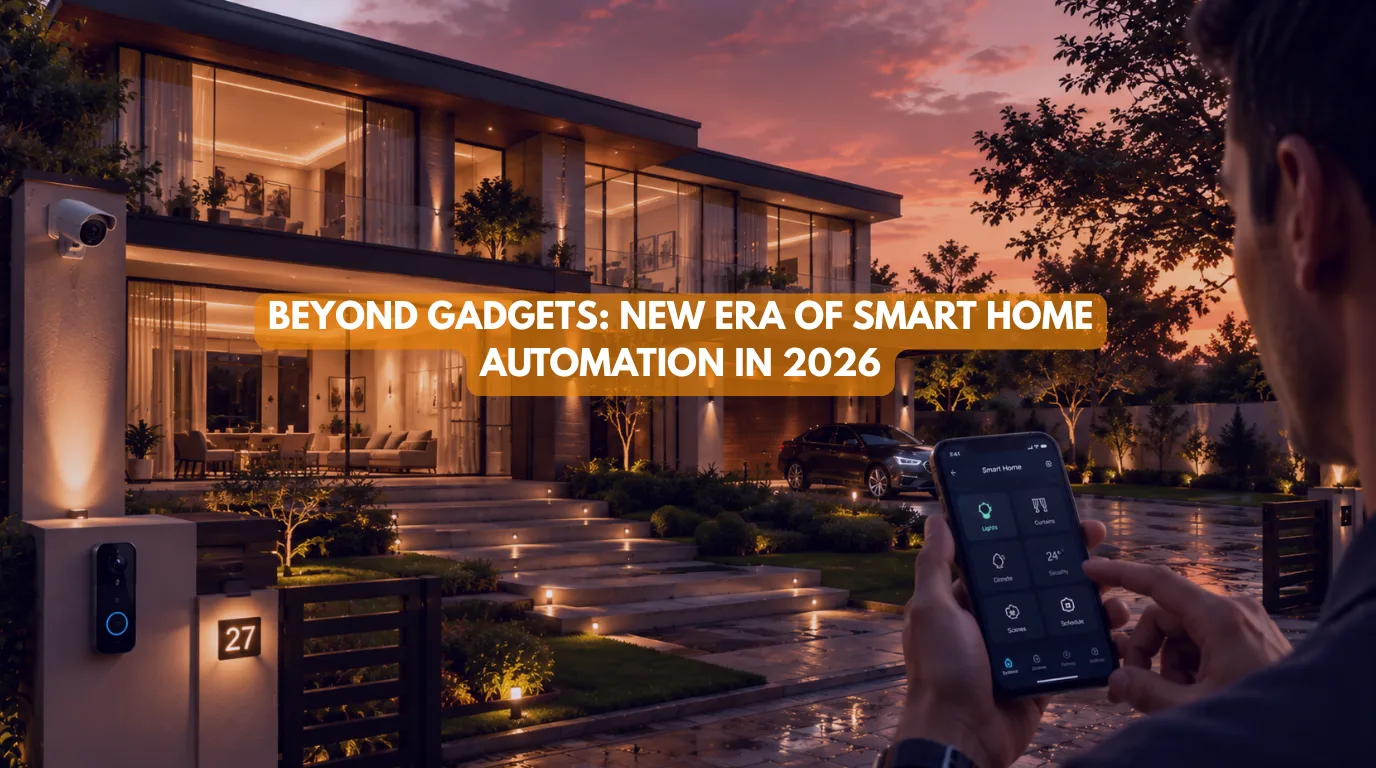
Smart Home Automation in 2026 is no longer about controlling lights with your phone or showing off the latest gadgets. Today’s intelligent homes use AI, automation, and connected devices to improve comfort, security, energy efficiency, and overall well-being. Whether you’re upgrading a single room or building a luxury villa, modern smart home automation creates a home that quietly works in the background, adjusting lighting, climate, security, and appliances based on your daily routine. The best systems are modular, privacy-focused, and designed to grow with your needs without requiring expensive renovations.
Quick Answer
Smart Home Automation in 2026 focuses on creating homes that automatically improve comfort, safety, wellness, and energy efficiency rather than simply adding smart gadgets. Modern systems use AI, local automation, and connected devices to manage lighting, climate, security, and appliances while reducing energy consumption and simplifying everyday life.
Why Smart Home Automation Is Becoming a Lifestyle Instead of a Luxury
For many years, smart homes were seen as something futuristic or reserved for luxury properties. Most people associated home automation with colorful smart bulbs, voice assistants, or expensive gadgets that looked impressive but offered little practical value.
That perception has changed dramatically.
Today, smart home automation is designed around solving everyday problems. Instead of asking, “What gadget should I buy?”, homeowners are asking, “How can my home become more comfortable, secure, and energy efficient?”
At Techtastic, we’ve seen this transformation firsthand. Modern homeowners no longer want complicated technology that requires constant attention. They want intelligent systems that work quietly in the background, adapting to their routines without adding complexity to their lives.
Whether it’s automatically adjusting room temperatures before bedtime, turning lights on as you arrive home, or detecting unusual activity while you’re away, today’s smart homes are built around convenience, wellness, and peace of mind.
The biggest difference in 2026 is that automation has become human-centric. Instead of people adapting to technology, technology adapts to people.
Smart Home Automation Is No Longer About Buying More Gadgets
One of the biggest misconceptions about smart homes is that you need dozens of expensive devices to experience automation.
In reality, the opposite is true.
The most successful smart homes are carefully planned ecosystems where each device works together to improve daily living.
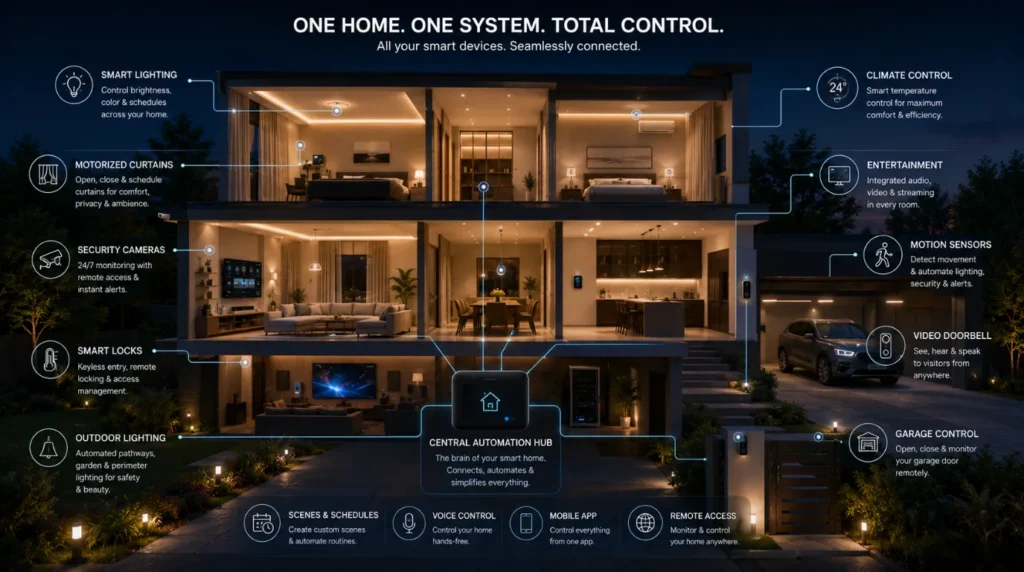
Rather than purchasing isolated gadgets that operate independently, homeowners are investing in systems where lighting, climate control, security, entertainment, and motorized curtains communicate with one another automatically.
For example, a single “Good Night” scene can:
- Turn off every light.
- Lock all doors.
- Close motorized curtains.
- Adjust the air conditioner.
- Arm the security system.
- Switch off unnecessary appliances.
Instead of controlling six different devices manually, one intelligent automation handles everything in seconds. This shift from individual products to connected experiences defines smart home automation in 2026.
The Rise of Modular Smart Homes
One of the most exciting developments in recent years is modular automation.
Previously, homeowners believed that installing automation required major renovations, new wiring, and weeks of construction work.
That is no longer the case.
Today’s retrofit technologies allow homeowners to automate existing homes without replacing designer switchboards or breaking walls.
Start Small, Expand Anytime
A modular approach means you don’t have to automate your entire home on day one.
Many homeowners begin with:
- Living room lighting
- Master bedroom automation
- Smart air conditioning
- Video doorbell
- Smart door lock
Once they experience the convenience, they gradually expand automation into additional rooms.
This phased approach makes Smart Home Automation more affordable while allowing homeowners to invest at their own pace.
Preserve Your Existing Interiors
Modern retrofit modules fit discreetly behind existing switches.
This means you can retain:
- Premium switch plates
- Luxury interior finishes
- Existing electrical layout
- Architectural aesthetics
while gaining complete smart control from your smartphone, touch panels, or voice assistant.
Instead of changing the appearance of your home, automation enhances how it functions.
Wellness Is Becoming the Heart of Smart Home Automation
One of the biggest trends in 2026 is the growing focus on wellness.
Home automation is no longer just about convenience; it actively supports healthier living.
Circadian Lighting
Our bodies naturally respond to changing daylight throughout the day. Modern smart lighting automatically adjusts colour temperature and brightness to match these natural rhythms.
Better Focus During the Day
Bright white lighting during working hours helps improve concentration, productivity, and alertness, making home offices more comfortable for remote work.
Relaxed Evenings
As sunset approaches, lighting gradually becomes warmer and softer, encouraging natural melatonin production and helping prepare the body for sleep.
Gentle Night Navigation
Motion sensors can activate low-level pathway lighting during the night, allowing family members to move safely without disturbing everyone else or fully waking their bodies.
Rather than simply turning lights on and off, Smart Home Automation now contributes to better sleep, improved mood, and healthier daily routines.
Intelligent Climate Control Learns Your Lifestyle
Traditional air conditioning systems rely on manual settings that rarely match changing weather conditions or personal comfort.
Modern Smart Home Automation changes this completely.
Instead of maintaining one fixed temperature all night, intelligent climate systems gradually adjust cooling based on occupancy, room conditions, and time of day.
For example:
- Bedrooms cool quickly before bedtime.
- Temperatures slowly increase during deep sleep.
- Cooling automatically reduces when rooms become unoccupied.
- Air conditioners switch off when windows are opened.
- Humidity levels are continuously monitored.
This intelligent approach not only improves comfort but can also significantly reduce unnecessary energy consumption throughout the year.
For homeowners looking to lower electricity bills without sacrificing comfort, intelligent climate automation has become one of the most valuable investments available.
Privacy, Security, and Local Control Are Defining Modern Smart Homes
As homes become smarter, homeowners are becoming equally conscious about privacy.
A few years ago, almost every smart device relied heavily on cloud servers. Even a simple command to switch on a light often travelled through the internet before returning to your home.
Today’s Smart Home Automation takes a different approach.
Local Processing Delivers Faster Performance
Modern automation platforms process most commands within the home itself.
This means:
- Lights respond almost instantly.
- Automation scenes execute without noticeable delays.
- Devices continue communicating even if the internet connection becomes unstable.
- Everyday automation remains dependable throughout the day.
For homeowners, this creates a smoother and far more reliable experience.
Better Privacy Protection
Local automation also improves privacy.
Instead of sending every device interaction to remote servers, many professional automation platforms keep important data within your home network.
This can include:
- Camera recordings
- Occupancy data
- Automation routines
- Device activity
- User preferences
Keeping sensitive information locally provides homeowners with greater confidence while reducing dependence on external cloud services.
Smart Security Is Becoming Proactive Instead of Reactive
Traditional security systems simply record events after they happen.
Modern Smart Home Automation aims to prevent problems before they occur. AI-powered security devices can now identify different types of activity and trigger appropriate responses automatically.
Instead of sending notifications for every movement, intelligent systems distinguish between:
- Family members
- Visitors
- Delivery personnel
- Pets
- Suspicious activity
This dramatically reduces unnecessary alerts while helping homeowners focus on events that genuinely require attention.
Intelligent Deterrence
Rather than waiting for someone to review camera footage, automation can immediately respond by:
- Switching on exterior lighting.
- Playing a warning message.
- Recording high-quality video.
- Sending instant mobile notifications.
- Locking selected access points.
- Activating additional surveillance cameras.
The goal is no longer to document incidents but to discourage them from happening in the first place.
Smart Home Automation Works Better When Everything Is Connected
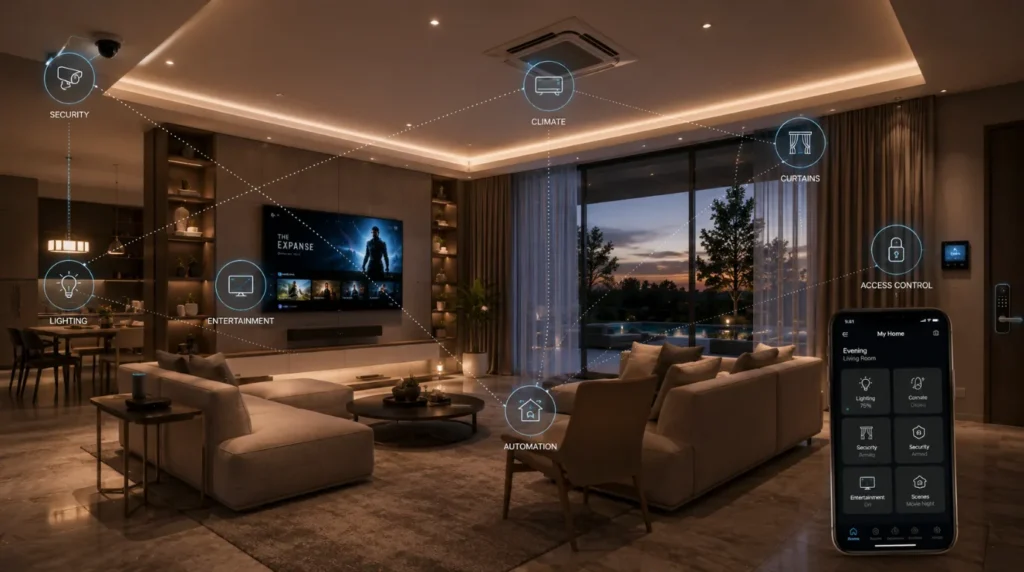
The real power of automation comes from integration. Instead of operating as separate devices, lighting, climate control, entertainment, curtains, and security systems communicate continuously with one another.
Imagine arriving home after work.
Your automation system can automatically:
- Unlock the entrance.
- Switch on pathway lighting.
- Adjust room temperature.
- Open motorized curtains.
- Play your favourite music.
- Disable security alarms.
Everything happens without pressing multiple buttons or opening different mobile applications.
Likewise, leaving home can activate a single scene that:
- Turns off unnecessary lights.
- Switches off appliances.
- Closes curtains.
- Arms the security system.
- Locks every door.
- Optimises air conditioning.
The experience feels effortless because every device works together as one intelligent ecosystem.
Benefits of Smart Home Automation in 2026
Improves Everyday Comfort
Automation removes repetitive daily tasks by allowing your home to adjust lighting, temperature, curtains, and appliances automatically. This creates a more relaxing environment while reducing the need for constant manual control.
Reduces Energy Consumption
Smart scheduling, occupancy sensors, and intelligent climate management help minimise unnecessary electricity usage without affecting comfort. Over time, this can contribute to noticeable savings on monthly utility bills.
Enhances Home Security
Integrated cameras, smart locks, motion sensors, and intelligent notifications provide continuous awareness of your property while allowing you to respond quickly from anywhere.
Supports Health and Wellness
Features such as circadian lighting, improved indoor climate management, and automated ventilation contribute to healthier living spaces that support better sleep, productivity, and overall well-being.
Grows With Your Lifestyle
Professional Smart Home Automation systems are designed to expand over time. New rooms, devices, and technologies can be added without replacing your existing infrastructure.
Simplifies Daily Living
Instead of managing individual devices, automation combines multiple actions into one intelligent routine, making your home easier and more enjoyable to live in.
Where Smart Home Automation Makes the Biggest Difference
Luxury Villas
Large homes benefit from centralised control of lighting, climate, security, entertainment, irrigation, and motorised curtains through one integrated system.
Apartments
Apartments can easily incorporate smart lighting, retrofit switches, smart locks, video doorbells, and air conditioning control without major renovation work.
Holiday Homes
Remote monitoring allows homeowners to check cameras, adjust settings, and receive alerts while travelling or managing multiple properties.
Home Offices
Automation improves productivity through intelligent lighting, comfortable room temperatures, and scheduled routines that support focused work.
Families With Children
Parents gain greater peace of mind through connected cameras, access notifications, indoor monitoring, and automated nighttime lighting.
Senior Living
Automation can simplify everyday tasks while providing additional safety through motion monitoring, emergency alerts, and easier control of household devices.
What Influences the Cost of Smart Home Automation?
Every home is different, which means the cost of Smart Home Automation depends on your goals rather than simply the number of devices installed.
Factors that influence investment include:
- Size of the property.
- Number of automated rooms.
- Lighting control requirements.
- Climate automation.
- Motorised curtains.
- Smart security integration.
- Structured networking.
- Audio-video systems.
- Professional programming.
- Future expansion planning.
Rather than focusing only on the upfront investment, homeowners should also consider long-term energy savings, convenience, property value, and system reliability.
Best Practices for Planning Smart Home Automation
Start With Your Lifestyle
Design automation around how you actually live rather than around the latest gadgets. Prioritise routines that simplify your daily life and solve real problems.
Choose Scalable Platforms
Select systems that support future upgrades so additional rooms, devices, or technologies can be integrated without replacing your existing setup.
Invest in Reliable Networking
A dependable network forms the backbone of every smart home. Strong connectivity ensures all devices communicate efficiently and consistently.
Prioritise Local Automation
Whenever possible, choose solutions that continue operating even if the internet connection becomes unavailable. Local control improves both reliability and privacy.
Work With Experienced Professionals
Proper planning, installation, and programming help ensure every component works together seamlessly while reducing future maintenance and compatibility issues.
Smart Home Automation: Retrofit vs New Construction
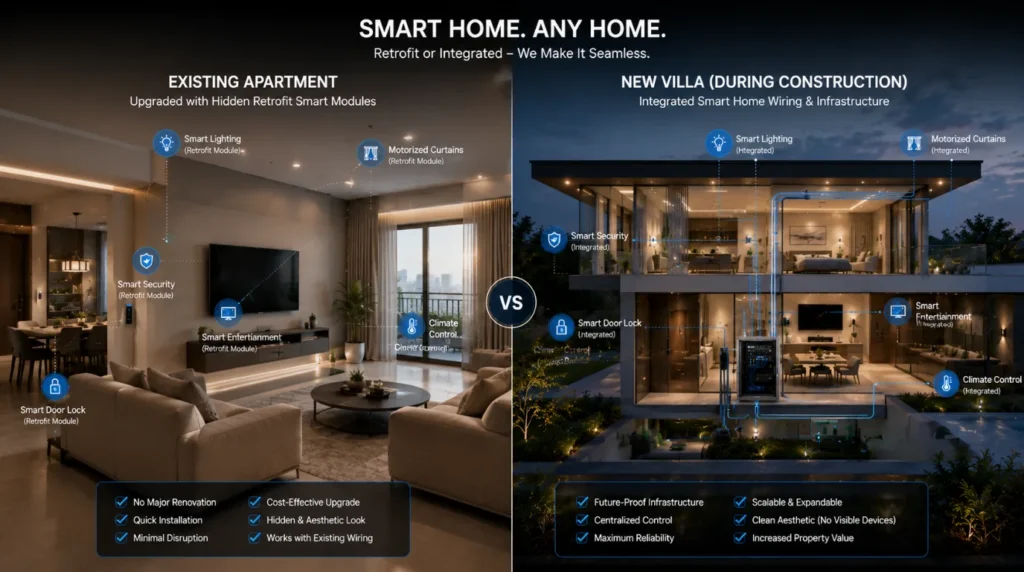
| Feature | Retrofit Automation | New Construction Automation |
|---|---|---|
| Installation | Existing homes | During construction |
| Wall Modifications | Minimal | Integrated from the start |
| Expansion | Highly flexible | Unlimited planning opportunities |
| Installation Time | Usually faster | Planned alongside construction |
| Initial Investment | Lower | Higher but comprehensive |
| Best For | Existing homes and apartments | Villas and premium residences |
Common Mistakes to Avoid When Planning Smart Home Automation
Focusing on Gadgets Instead of Outcomes
Many homeowners begin by purchasing individual smart devices without a clear automation strategy. Instead, start by identifying the problems you want to solve, whether it’s reducing electricity bills, improving security, or making everyday routines more convenient. The technology should support your lifestyle, not the other way around.
Automating Everything at Once
A fully automated home doesn’t have to be built overnight. Trying to automate every room at once can increase costs and complexity. A phased approach allows you to start with the areas that provide the greatest value and expand the system as your needs evolve.
Ignoring Future Expansion
Your home and lifestyle will naturally change over time. Choosing an automation platform that supports additional devices, rooms, and technologies ensures your investment remains relevant for years without requiring major upgrades.
Depending Only on Smartphones
While mobile apps provide excellent convenience, they shouldn’t be the only way to control your home. Smart switches, touch panels, voice assistants, and scheduled automations ensure your home remains easy to use for every family member and guest.
Choosing Incompatible Devices
Buying products from different ecosystems without considering compatibility often leads to disconnected experiences. Selecting a professionally planned platform allows lighting, climate, security, entertainment, and other systems to communicate seamlessly.
Overlooking Privacy and Cybersecurity
Smart homes handle valuable information about your daily routines and connected devices. Choosing platforms with local control, encrypted communication, regular software updates, and secure networking helps protect your privacy while improving overall system reliability.
Why It Matters for Modern Homes
Modern homes are expected to do more than simply provide shelter. They should improve comfort, reduce energy consumption, simplify daily routines, and create a safer environment for everyone living inside.
Smart Home Automation makes this possible by bringing multiple technologies together into one intelligent ecosystem.
Instead of adjusting lights, air conditioning, curtains, and security systems individually, homeowners can enjoy a home that responds automatically to their routines.
Whether you’re working from home, travelling frequently, caring for elderly parents, or raising young children, automation helps your home become more responsive, efficient, and enjoyable.
As technology continues to evolve, smart homes are becoming less about innovation for its own sake and more about creating better everyday experiences.
Our Perspective at Techtastic
At Techtastic, we believe Smart Home Automation should simplify life and not complicate it.
The best automation is often the least noticeable. It quietly adjusts lighting, maintains comfortable temperatures, strengthens security, and saves energy without requiring constant interaction.
Rather than recommending the latest gadgets, we focus on understanding how each homeowner lives. Every family has different routines, priorities, and expectations, which is why every automation solution should be thoughtfully designed around those needs.
Whether you’re upgrading an existing apartment with retrofit automation or building a luxury villa with a fully integrated KNX system, our goal is to deliver solutions that are reliable, scalable, and built to serve you for many years to come.
Collaboration Opportunities for Developers, Architects & Interior Designers
The most successful Smart Home Automation projects begin long before homeowners move in.
At Techtastic, we work closely with architects, interior designers, builders, developers, and MEP consultants to integrate automation into the earliest stages of planning and construction.
Intelligent Electrical Planning
Design automation-ready electrical infrastructure that supports future technologies without costly modifications.
Seamless Interior Integration
Incorporate smart switches, touch panels, motorised curtains, and automation devices without compromising interior aesthetics.
Structured Networking
Develop a reliable communication backbone that supports lighting, security, entertainment, and connected home technologies.
Future-Ready Residential Projects
Prepare new homes for evolving automation platforms, ensuring homeowners can expand their systems as technology advances.
Luxury Living Experiences
Deliver premium residences that combine intelligent lighting, climate control, security, audio-video, and wellness features into one seamless ecosystem.
Key Takeaways
- Smart home automation in its new era focuses on improving everyday living rather than adding more gadgets.
- Modular automation allows homeowners to upgrade one room at a time without major renovations.
- Intelligent lighting and climate control contribute to better comfort, wellness, and energy efficiency.
- Local automation improves reliability, speed, and data privacy.
- Connected ecosystems deliver a smoother experience than standalone smart devices.
- Professional planning ensures automation remains scalable and future-ready.
- Smart homes are becoming an essential feature of modern residential living rather than a luxury.
Frequently Asked Questions
1. Can I still use my physical switches?
A. Absolutely. Retrofit modules allow physical switches to maintain their original functionality. The “smart” features are an addition, not a replacement. This feature accommodates guests or elderly family members who prefer using traditional buttons.
2. How can a “Mesh” network help?
A. Older smart devices used Wi-Fi, which would get crowded and slow down. The Thread creates a “mesh” network. Each device (like a smart plug) acts as a signal booster for the next one. This makes the connection rock-solid and keeps your main Wi-Fi fast for your phones and laptops.
3. What about my data privacy with AI cameras?
A. The best systems today use Edge AI. This means the “thinking” happens inside the camera or your home hub, not on a corporate server. Your face-recognition data and video logs stay on your local storage (SD card or local drive).
4. How long does installation take?
A. A professional team typically completes the installation of retrofit modules in a standard 3BHK within one day. Since you don’t need to break walls or paint, the work doesn’t disrupt your life.
5. Can I automate my existing home without renovating?
A. Yes. Modern retrofit solutions allow many existing homes to be upgraded without breaking walls or replacing existing switchboards, making automation practical for apartments and completed homes.
6. Is Smart Home Automation only for luxury homes?
A. No. Automation has become increasingly flexible and scalable. Homeowners can begin with a single room or a few devices and gradually expand their system over time.
7. What happens if my internet connection goes down?
A. Professionally designed systems with local control continue operating even when the internet is unavailable. Remote access features may be temporarily affected, but core automations remain functional.
8. Can I expand my automation system later?
A. Absolutely. A well-designed automation platform allows you to add new rooms, devices, and technologies as your family’s needs change without replacing the existing system.
Conclusion
Smart Home Automation in 2026 has evolved far beyond controlling lights with a smartphone or adding a few connected gadgets to your home. Today’s intelligent homes focus on creating better living experiences by improving comfort, enhancing security, supporting wellness, reducing energy consumption, and simplifying everyday routines.
The future belongs to homes that quietly work in the background, anticipating your needs rather than waiting for instructions. Whether you’re upgrading an existing apartment, renovating your family home, or building a luxury villa, investing in a thoughtfully planned automation system creates long-term value that extends well beyond convenience.
At Techtastic, we design Smart Home Automation solutions that combine intelligent technology with practical everyday living. From retrofit upgrades to fully integrated KNX systems, we help homeowners build smarter, safer, and more future-ready homes.
📞 Call/WhatsApp: 9769145145
📍 Our Operational Hubs: Navi Mumbai | Nashik | Lonavla | Sangli
Looking to get more value from your smart home? Read our guide on What Smart Home Features Actually Save You Money in 2026?