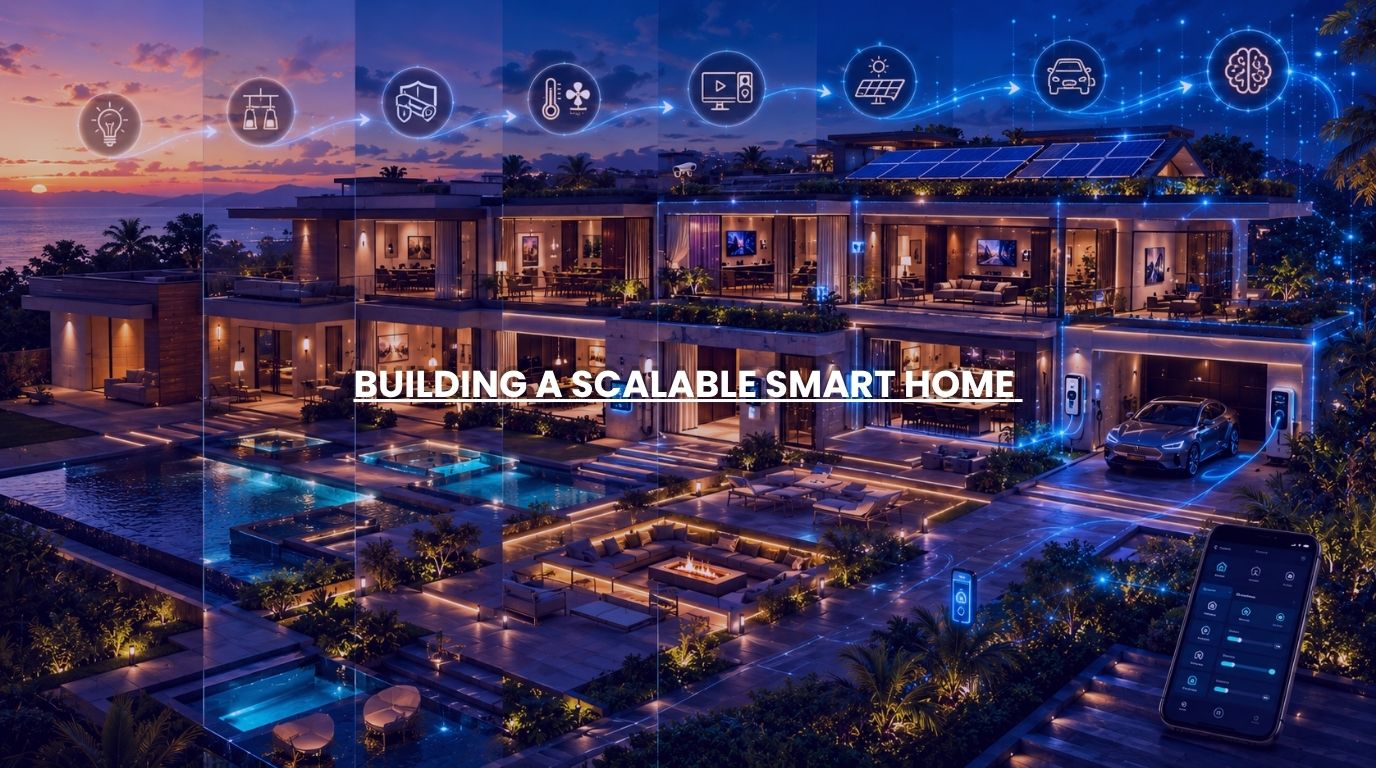
One of the biggest misconceptions about smart home automation is that you need to automate everything at once.
At Techtastic, we frequently meet homeowners who are excited about smart home technology but hesitate because they assume it requires a significant upfront investment. The reality is quite different. Modern smart home systems are designed to be scalable, allowing homeowners to start with a few essential features and expand gradually over time.
Whether you’re building a new home, renovating an existing property, or simply exploring automation for the first time, a scalable smart home approach enables you to enjoy the benefits of automation today while keeping the door open for future enhancements.
The key is choosing the right foundation from the beginning.
Summary
Smart home scalability refers to the ability to start with a basic home automation setup and expand it over time without replacing existing infrastructure. A scalable smart home system allows homeowners to add features such as smart lighting, security, climate control, home theatre integration, energy management, and voice control as their needs evolve. Open platforms like KNX and professionally designed automation systems are ideal because they support future growth while protecting the homeowner’s initial investment.
Quick Answer
A scalable smart home system allows you to begin with essential automation features such as lighting control, smart security, or climate management and expand gradually over time. Instead of investing in a fully automated home from day one, homeowners can add new technologies as their lifestyle, budget, and requirements change. Choosing a future-ready automation platform ensures that new devices and systems can be integrated seamlessly without costly upgrades or complete replacements.
What Does Smart Home Scalability Mean?
Smart home scalability refers to the ability of an automation system to grow alongside your needs.
Rather than installing every smart technology at once, homeowners can begin with a core automation infrastructure and expand functionality as desired.
A scalable smart home might start with:
- Smart lighting control
- Basic security monitoring
- Smart switches
- Mobile app control
Over time, additional features can be added to this scalable smart home, including:
- Advanced surveillance systems
- Smart door locks
- Motorized curtains
- Climate control
- Home theatre automation
- Energy management systems
- Voice assistants
- Multi-room audio
- EV charging integration
The foundation remains the same while the capabilities continue to evolve.
Why Scalability Matters in Smart Home Automation?
Technology evolves rapidly. A system that works perfectly today should still be capable of supporting future innovations.
Scalable smart home systems provide:
- Long-term flexibility
- Lower initial investment
- Reduced upgrade costs
- Better technology adoption
- Higher property value
- Future compatibility
Most importantly, a scalable smart home prevents homeowners from having to replace entire systems whenever they want additional functionality.
Common Misconceptions About Scalable Smart Home Systems
“I Need a Huge Budget to Start”
This is one of the most common myths.
Many homeowners begin with just a few smart features and expand gradually over several years.
“I Must Automate the Entire House Immediately”
Not true.
Many successful smart homes are built in phases.
A phased approach often results in better planning and more thoughtful technology decisions.
“Future Upgrades Will Be Difficult”
If the system is designed correctly from the beginning, future expansion is straightforward.
This is why selecting the right automation platform is so important.
How to Build a Scalable Smart Home?
Phase 1: Build the Right Foundation
The most important stage is infrastructure planning.
At Techtastic, we recommend focusing on:
- Structured cabling
- Reliable networking
- Automation-ready electrical design
- Future device provisions
- Scalable control architecture
This foundation supports future expansion without major modifications.
Phase 2: Start with High-Impact Features
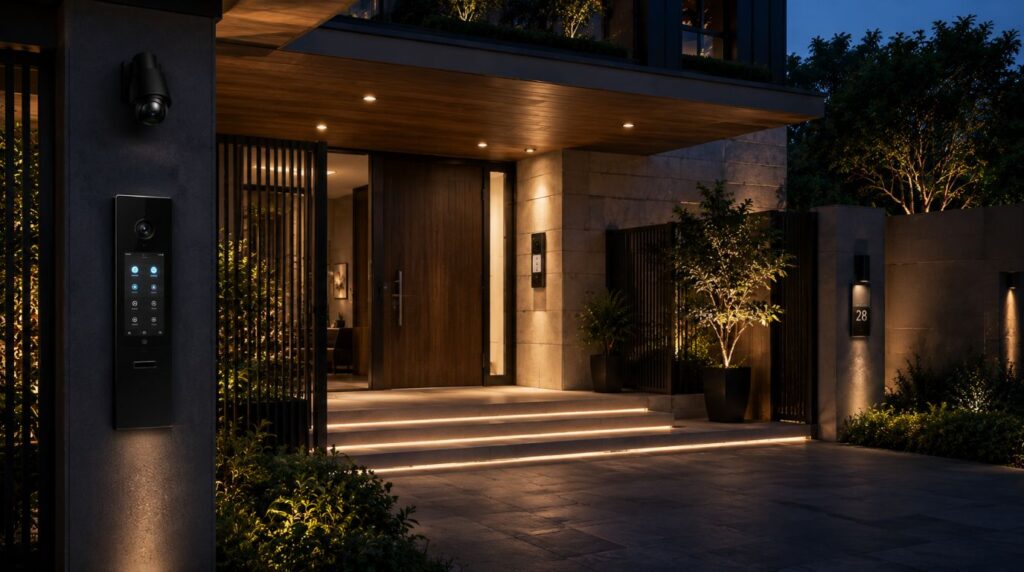
Many homeowners begin with technologies that provide immediate value.
Popular starting points include:
Smart Lighting Control
Control lights through switches, mobile apps, schedules, and automation scenarios.
Smart Security
Integrate cameras, alarms, and notifications for improved safety.
Smart Door Locks
Enable convenient and secure access management.
Voice Control
Provide simple interaction through voice assistants.
These features offer a strong introduction to smart living.
Phase 3: Expand Comfort & Convenience
As homeowners become familiar with automation, additional capabilities can be introduced. Examples include:
- Motorized curtains
- Climate control
- Scene-based automation
- Occupancy sensing
- Smart irrigation systems
- Energy monitoring
These additions enhance everyday comfort and efficiency.
Phase 4: Advanced Smart Living
A mature & scalable smart home ecosystem may include:
- Home theatre automation
- Multi-room audio
- Integrated security systems
- Whole-home energy management
- Solar integration
- Electric vehicle charging automation
- AI-driven automation scenarios
By this stage, the home operates as a fully connected environment.
Open Systems vs Closed Systems: Which Is Better for Scalability?
One of the most important decisions homeowners make is selecting the right platform.
| Open Automation Systems | Closed Ecosystems |
|---|---|
| Easier future expansion | Limited expansion options |
| Multi-brand compatibility | Brand-dependent |
| Greater flexibility | Restricted device choices |
| Long-term investment protection | Potential obsolescence |
| Better integration possibilities | Limited interoperability |
At Techtastic, we typically recommend open and future-ready automation platforms because they provide greater long-term value and flexibility.
Real-Life Smart Home Expansion Journey
Consider a homeowner building a new villa.
Year 1
Installed:
- Smart lighting
- Security cameras
- App control
Year 2
Added:
- Smart door locks
- Video door phone
- Voice control
Year 3
Expanded with:
- Motorized curtains
- Climate automation
- Home theatre control
Year 5
Integrated:
- Solar energy monitoring
- EV charger automation
- Whole-home energy management
The homeowner never replaced the original system. They simply expanded it.
This is the power of scalability.
Benefits of a Scalable Smart Home – Starting Small and Expanding Later
Lower Initial Costs
Homeowners can prioritize essential features without overwhelming their budget.
Better Technology Decisions
Living with automation helps homeowners understand what features they truly value.
Reduced Upgrade Risks
Future investments are based on real-world experience rather than assumptions.
Future-Proof Infrastructure
The home remains ready for emerging technologies.
Higher Return on Investment
Technology investments can be aligned with lifestyle changes and property upgrades.
Common Mistakes to Avoid
Choosing Cheap Consumer Devices Without a Plan
Many standalone smart gadgets cannot integrate effectively into larger systems.
Ignoring Infrastructure Planning
Poor planning often results in expensive retrofits later.
Selecting Proprietary Ecosystems
Closed systems can limit future flexibility and device choices.
Focusing Only on Current Needs
Smart homes should be designed for how you will live in the future, not just today.
What Does a Scalable Smart Home Cost?
The answer depends entirely on the starting scope.
Some homeowners begin with:
- Smart lighting
- Security cameras
- Mobile app control
Others begin with a more comprehensive setup.
The advantage of scalability is that costs can be spread across multiple phases rather than concentrated into a single large investment.
This makes smart home adoption more accessible while maintaining long-term flexibility.
Why Scalability Matters for Modern Homes?
Homeowners today expect technology to evolve alongside their lifestyles. A scalable smart home enables:
- Continuous improvement
- Technology flexibility
- Increased property value
- Better user experiences
- Long-term investment protection
As new technologies emerge, scalable homes can adopt them more easily than homes built around rigid systems.
This flexibility is becoming increasingly valuable in modern residential design.
Our Perspective at Techtastic
At Techtastic, we believe the best smart home is not necessarily the most automated home. It’s the home that is designed intelligently from the beginning.
We often advise homeowners to invest first in:
- Strong infrastructure
- Reliable networking
- Flexible automation platforms
- Future-ready planning
From there, automation can grow naturally based on budget, lifestyle, and evolving requirements. We’ve seen many homeowners begin with lighting and security before eventually creating fully integrated smart environments over several years.
The secret is building the right foundation first.
Collaboration Opportunities for Developers, Architects & Interior Designers
The most successful smart homes are planned before construction begins. We actively collaborate with:
- Architects
- Interior designers
- Real estate developers
- Luxury home builders
- Hospitality consultants
Smart-Ready Infrastructure Design
Create homes prepared for future automation expansion.
Structured Networking Planning
Ensure reliable connectivity throughout the property.
Lighting & Automation Integration
Design spaces where aesthetics and technology work together.
Security & Access Control Planning
Future-proof properties with scalable security infrastructure.
Home Theatre & Entertainment Planning
Enable seamless future integration of AV technologies.
Luxury Residential Developments
Differentiate projects through intelligent, scalable technology ecosystems.
By involving Techtastic early in the design process, project teams can create smarter, more adaptable, and future-ready properties.
Key Takeaways on Scalable Smart Home Systems
- Smart home automation does not need to happen all at once.
- Scalable systems allow homeowners to start small and expand over time.
- Infrastructure planning is critical for future growth.
- Open automation platforms provide greater flexibility and longevity.
- Phased implementation reduces costs and improves decision-making.
- Future-ready homes offer stronger long-term value.
Frequently Asked Questions
1. What is a scalable smart home system?
A: A scalable smart home system allows homeowners to add new automation features over time without replacing existing infrastructure.
2. Can I start with just smart lighting?
A: Yes. Smart lighting is one of the most common entry points for homeowners beginning their automation journey.
3. Is it cheaper to build a smart home in phases?
A: In many cases, yes. A phased approach allows homeowners to spread costs while prioritizing the features they need most.
4. What is the best platform for a scalable smart home system?
A: Open automation platforms such as KNX are widely regarded as excellent choices for long-term scalability.
5. Can I add security systems later?
A: Absolutely. Cameras, access control systems, alarms, and other security technologies can often be integrated during later phases.
6. Will future technologies work with my smart home?
A: If your system is built on a future-ready platform and planned properly, it is far more likely to support emerging technologies.
7. Is scalability important for luxury homes?
A: Yes. Luxury homeowners often expand automation capabilities over time as new technologies and lifestyle requirements emerge.
8. Can scalability increase property value?
A: A well-designed smart home infrastructure can enhance market appeal and potentially increase property value.
Conclusion
Smart home automation doesn’t have to be an all-or-nothing decision. By choosing a scalable approach, homeowners can enjoy the benefits of automation today while maintaining the flexibility to expand in the future.
At Techtastic, we help homeowners design automation ecosystems that grow alongside their needs, ensuring every investment contributes to a smarter, safer, and more connected living experience.
📞 Call/WhatsApp: 9769145145
📍 Our Operational Hubs: Navi Mumbai | Nashik | Lonavla | Sangli
Whether you’re just starting your smart home journey or planning a large-scale development, building with scalability in mind is one of the smartest decisions you can make.