
Summary
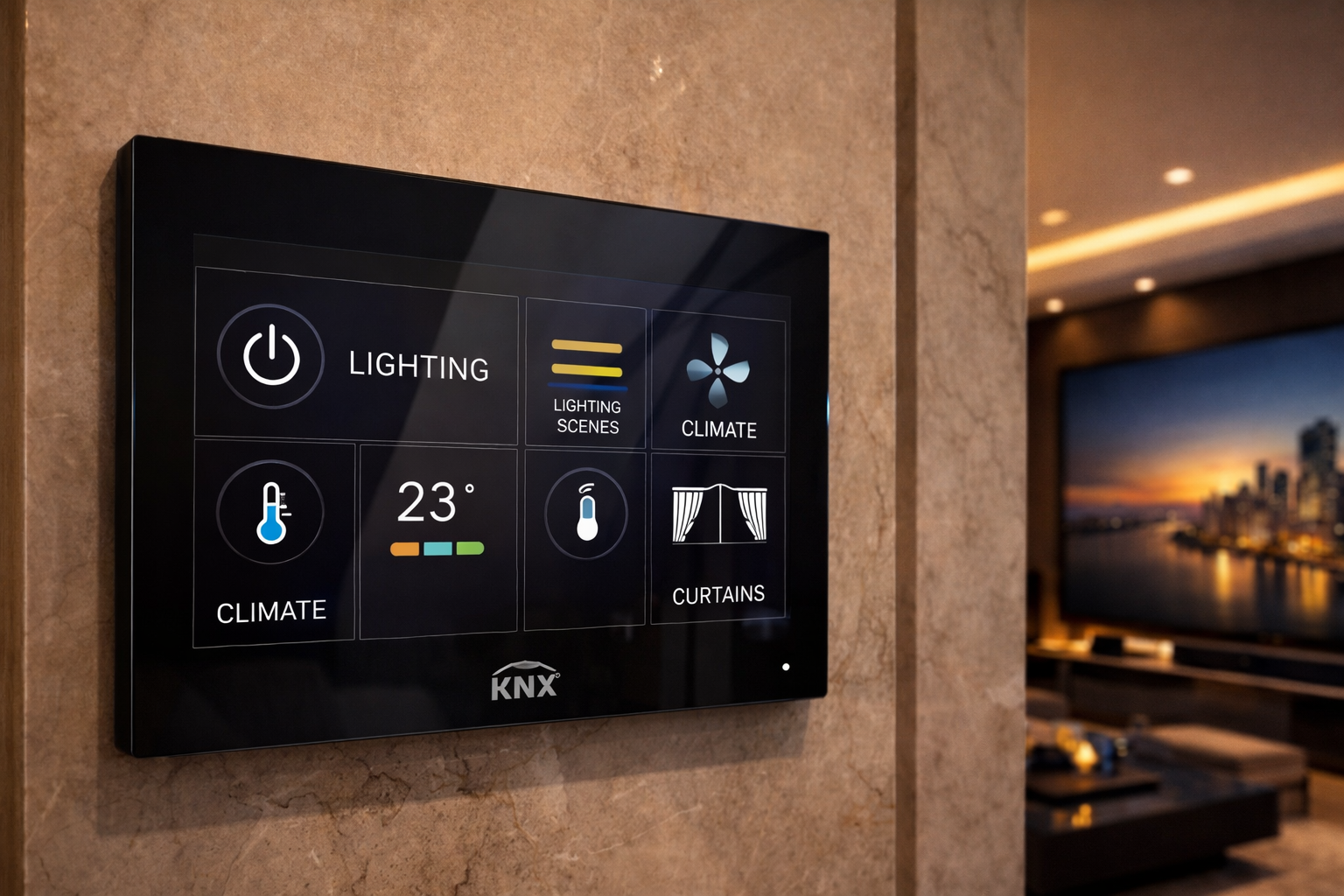
KNX automation for modern smart homes isn’t just a nice-to-have anymore; it’s become central to how people design and build modern homes. Homeowners now expect smart spaces that make life easier, so architects are weaving advanced automation into high-end residential projects right from the start.
When it comes to large or luxury homes, KNX wired automation stands out as a top choice. KNX brings together reliability, the ability to grow with your needs, and smooth integration across everything: lighting, climate, security, and even entertainment. Architects love that KNX is flexible enough to keep up with changing tech and client demands, making homes ready for whatever comes next. In this blog, we’ll look at why so many architects trust KNX automation and how it takes smart homes to the next level, both in function and value.
The Growing Role of Automation in Modern Architecture
Architecture is evolving beyond structural design and aesthetics. Today, modern homes are expected to be intelligent, efficient, and responsive to the lifestyle of their occupants.
Smart home automation allows multiple systems, such as lighting, climate control, security, and entertainment, to be controlled through a single platform. This level of integration enhances convenience while improving energy efficiency and security.
For architects designing luxury residences, automation is becoming an essential component of creating future-ready smart homes. One of the most reliable solutions for this purpose is KNX automation for modern smart homes, which provides stable and scalable building automation.
What Is KNX Automation?
KNX automation for modern smart homes is a globally recognized standard for wired building automation. It allows different devices and systems within a home to communicate with each other through a structured and reliable network.
A KNX system can control multiple aspects of a home, including:
- Lighting automation
- Climate and temperature control
- Curtain and blind automation
- Security and access systems
- Audiovisual systems
- Energy management
Because KNX operates through a wired infrastructure, it offers consistent performance and long-term reliability. This makes KNX automation for modern smart homes especially suitable for luxury residential projects where stability and performance are critical.
Why Architects Prefer KNX for Smart Home Projects
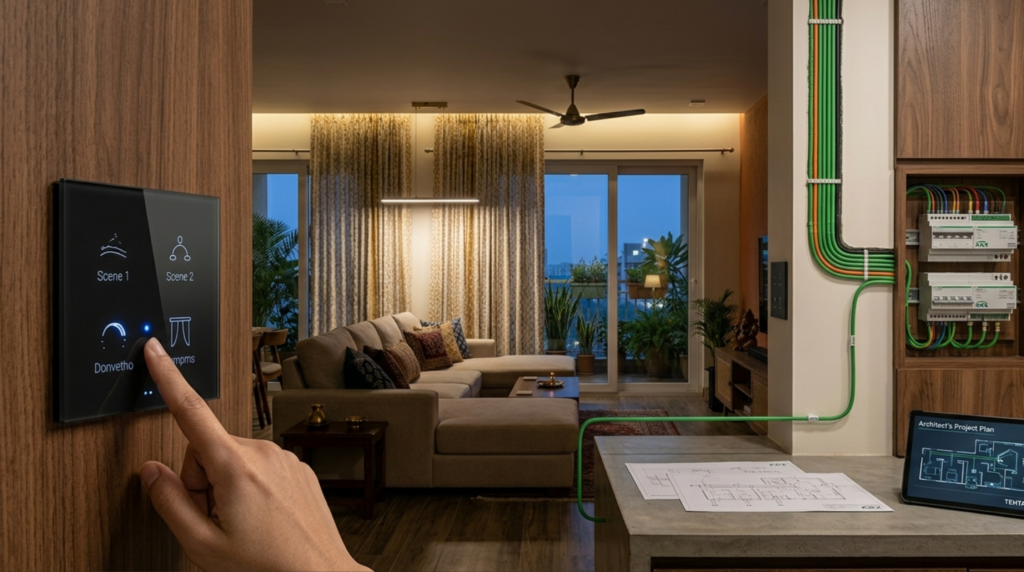
- Reliable Wired Infrastructure: One of the primary reasons architects choose KNX automation for modern smart homes is the stability provided by wired infrastructure. Unlike purely wireless systems, KNX provides stable communication between devices without connectivity interruptions. This reliability is especially important in large luxury homes where multiple systems operate simultaneously.
- Flexibility in Design Integration: Architects often need automation systems that can adapt to complex architectural layouts. KNX automation for modern smart homes offers the flexibility needed to integrate technology seamlessly within these designs. Automation components can be discreetly integrated into walls, panels, and control interfaces without affecting the overall aesthetic of the home.
- Scalability for Future Expansion: Modern homes are constantly evolving with new technologies. KNX automation systems are highly scalable, which means additional devices and features can be added in the future without replacing the entire system. This makes KNX an ideal solution for architects designing homes that need to remain technologically relevant for many years.
- Seamless Integration with Multiple Systems: Another major advantage of KNX automation for modern smart homes is its ability to integrate multiple building systems into a single platform. Architects can design homes where residents control lighting, temperature, security, and entertainment from a single interface. This reduces complexity for homeowners and improves the overall user experience.
- Energy Efficient Building Design: Energy efficiency is becoming an important consideration in residential architecture. KNX automation allows intelligent energy management through automated lighting, climate control, and sensor-based systems. For example, lighting can automatically turn off when rooms are not occupied, and climate systems can adjust temperatures based on usage patterns.
These features help architects design homes that support sustainable and energy-efficient living.
KNX Automation for Modern Smart Homes
Luxury homes often include multiple spaces such as large living areas, entertainment rooms, outdoor areas, and private home theatres. Managing these spaces efficiently requires a powerful automation system.
KNX automation for modern smart homes enables features such as:
- Intelligent lighting scenes for different moods
- Automated curtains and blinds
- Integrated security monitoring
- Centralized home control panels
- Smart entertainment systems
These features allow homeowners to enjoy a seamless smart living experience across the entire property.
The Importance of Planning Automation During the Design Stage
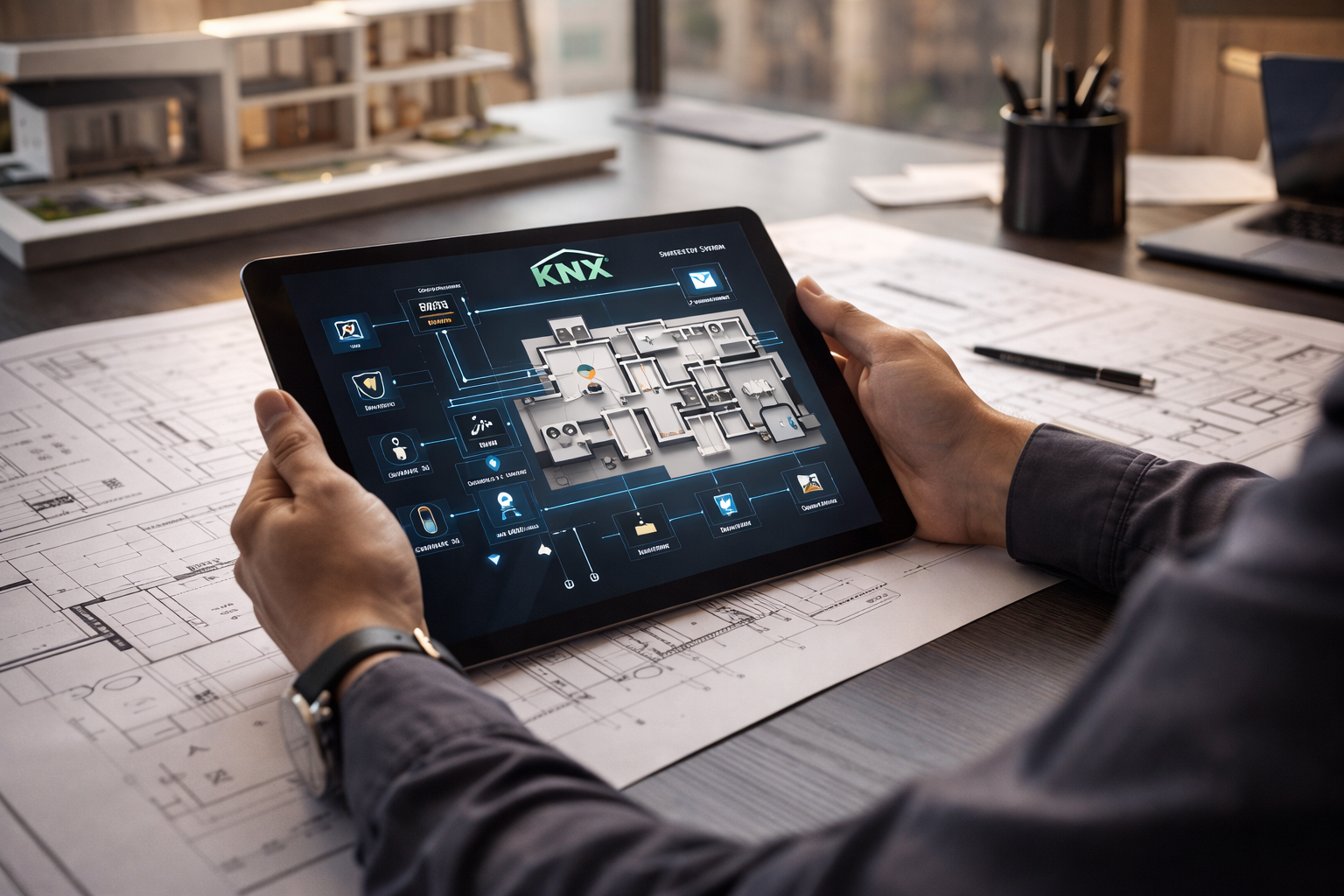
For architects, the most effective time to integrate KNX automation for modern smart homes is during the early design phase. This ensures that wiring infrastructure, device placements, and system integration are aligned with the architectural layout.
Early planning helps avoid costly modifications later and ensures that automation systems work seamlessly within the overall design.
Collaboration between architects and automation specialists is essential to achieve the best results.
How Automation Enhances Architectural Value
When automation is integrated properly, it enhances both the functionality and value of a residential project.
Properties designed with KNX automation for modern smart homes offer several advantages:
- Greater convenience for homeowners
- Improved energy efficiency
- Advanced security features
- Long-term technological reliability
These benefits make properties more attractive to buyers and increase the overall value of the project.
Final Thoughts
As modern homes become more technologically advanced, architects are increasingly incorporating smart automation into their designs. KNX automation provides the reliability, flexibility, and scalability required for large and luxury residential projects.
By integrating KNX systems during the design stage, architects can create intelligent homes that offer seamless control, energy efficiency, and long-term performance.
Smart automation is no longer an optional feature. It is becoming a key element of future-ready residential architecture.
Upgrade Modern Homes with Advanced KNX Automation
Modern smart homes require reliable automation systems that integrate lighting, climate control, security, and entertainment into a single intelligent platform. Implementing KNX wired automation during the design stage ensures stable performance, scalability, and seamless integration across the entire home.
Techtastic Technologies designs and installs advanced smart home automation systems powered by KNX technology for luxury residential projects.
Call us at 9769145145 to explore KNX smart home automation solutions for modern residential developments.
Collaboration Opportunities for Builders and Architects
Architects, builders, and interior designers can significantly enhance modern residential projects by integrating smart home automation during the design and planning stages.
Techtastic collaborates with industry professionals to ensure automation technology integrates seamlessly with architectural layouts, electrical planning, and interior design concepts.
Partner with Techtastic to implement KNX smart home automation solutions for your upcoming residential projects.