
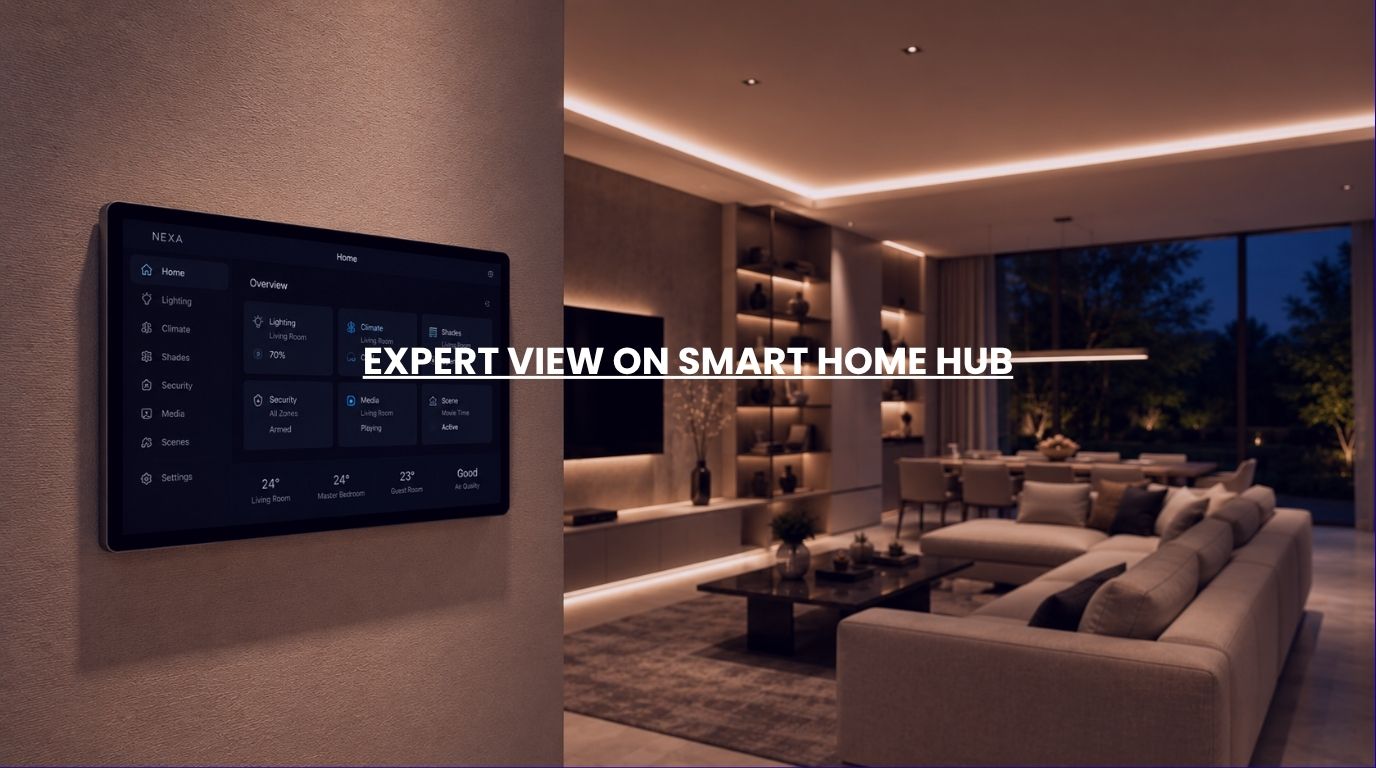
As homeowners explore smart home technology, one question frequently arises: “Do I really need a smart home hub?”
It’s an important question because a smart home hub is often marketed as the central brain of a connected home. At the same time, many modern smart devices claim they can operate independently through Wi-Fi and mobile apps, making homeowners wonder whether a dedicated hub is still necessary.
At Techtastic, we regularly help homeowners, architects, and developers navigate this decision. The answer isn’t always straightforward because it depends on the size of the home, the number of connected devices, the desired level of automation, and long-term expansion plans.
For some homeowners, a hub can dramatically improve reliability, integration, and user experience. For others, a simpler setup may be sufficient.
Let’s explore what smart home hubs actually do and whether your home truly needs one.
Summary
A smart home hub acts as a central controller that allows different smart devices, systems, and protocols to communicate with each other. While some homeowners can operate smart devices without a hub, larger or more advanced smart homes often benefit from centralized control, improved automation, greater reliability, and easier device management. For scalable smart home environments involving lighting, security, climate control, entertainment systems, and automation scenes, a smart home hub or centralized automation controller often provides significant advantages.
Quick Answer
You may not need a smart home hub if you only use a few standalone smart devices such as smart bulbs or smart plugs. However, if you want multiple systems—including lighting, security, climate control, motorized curtains, entertainment, and access control—to work together seamlessly, a smart home hub or centralized automation controller can significantly improve reliability, automation capabilities, and overall user experience. The larger and more integrated the smart home becomes, the more valuable centralized control becomes.
What Is a Smart Home Hub?
A smart home hub is a central device or controller that connects and manages multiple smart home technologies.
Instead of every device operating independently, the hub allows them to communicate and work together as part of a unified ecosystem.
A hub may manage:
- Smart lighting
- Security systems
- Smart locks
- Motorized curtains
- Climate control
- Sensors
- Audio systems
- Home theatres
- Energy management devices
The goal is to simplify automation and create a more intelligent living experience.
Why Were Smart Home Hubs Created?
Many smart devices use different communication protocols.
Examples include:
- Wi-Fi
- Zigbee
- Z-Wave
- Bluetooth
- KNX
- Matter
- Thread
Without a centralized controller, devices from different manufacturers may struggle to interact effectively.
A smart home hub helps bridge these technologies, enabling coordinated automation and centralized management.
Can You Have a Smart Home Without a Hub?
Yes.
Many homeowners begin with standalone devices such as:
- Smart bulbs
- Smart plugs
- Smart speakers
- Smart thermostats
- Video doorbells
These products often connect directly to Wi-Fi and can be controlled through individual apps.
For smaller installations, this may be perfectly adequate.
However, as the number of devices grows, managing multiple apps and ecosystems can become increasingly complicated.
Signs You Probably Don’t Need a Smart Home Hub
A hub may not be necessary if:
- You only use a handful of smart devices.
- Devices are from the same ecosystem.
- You don’t require advanced automation.
- You primarily use voice control.
- You have limited plans for future expansion.
In these situations, simplicity may outweigh the benefits of centralized control.
Signs You Should Consider a Smart Home Hub
As smart homes become more sophisticated, the value of a hub increases significantly.
You should consider a centralized controller if you want:
- Whole-home automation
- Multiple integrated systems
- Advanced automation scenarios
- Greater reliability
- Centralized management
- Future scalability
This is particularly true for luxury residences and larger properties.
Benefits of Using a Smart Home Hub
Centralized Control
One of the biggest advantages is simplicity.
Instead of switching between multiple apps, homeowners can manage their entire smart home from a single interface.
This improves usability and reduces complexity.
Better Device Integration
Many devices work well independently.
However, the real power of automation comes from devices working together.
For example:
When you leave home:
- The lights turn off.
- Doors lock.
- Security systems arm.
- HVAC settings adjust.
- Curtains close.
A centralized controller makes these interactions possible.
Advanced Automation
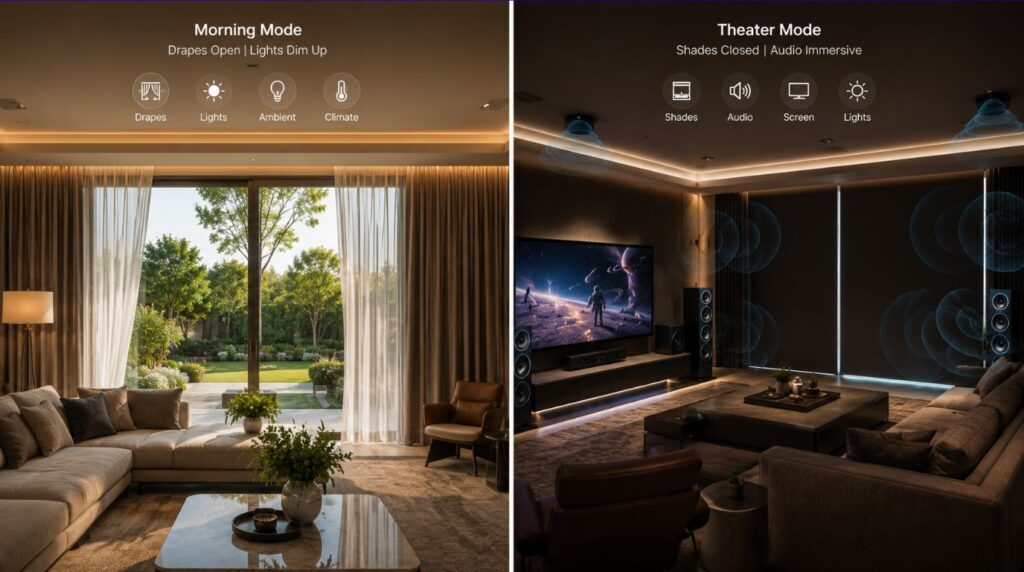
Smart home hubs enable more sophisticated automation scenarios.
Examples include:
Good Morning Scene
- Curtains open.
- Lights brighten gradually.
- Temperature adjusts.
- Music begins playing.
Movie Night Scene
- Curtains close.
- Lights dim.
- Home theatre activates.
- Audio settings are optimized.
These experiences go far beyond simple device control.
Improved Reliability
Cloud-dependent smart devices can sometimes experience delays or outages.
Many centralized systems support local processing, allowing automations to continue operating even when internet connectivity is interrupted.
This is especially important for security and critical functions.
Future Scalability
Most homeowners expand their smart home systems over time.
A hub makes it easier to add:
- Additional rooms
- New technologies
- Advanced automation features
- Future smart devices
Scalability protects your investment and supports long-term growth.
Smart Home Hub vs No Hub
| Feature | Without Hub | With Hub |
|---|---|---|
| Device control | Individual apps | Centralized |
| Automation complexity | Basic | Advanced |
| Device integration | Limited | Extensive |
| Future expansion | Moderate | Excellent |
| Reliability | Device dependent | Often higher |
| User experience | Fragmented | Unified |
For homeowners seeking a truly connected experience, centralized control often delivers greater value.
Common Smart Home Hub Use Cases
Smart Lighting Automation
Coordinate lighting schedules, scenes, occupancy sensing, and energy-saving routines.
Integrated Security Systems
Connect:
- CCTV
- Smart locks
- Motion sensors
- Video door phones
- Alarm systems
into one security ecosystem.
Climate Control Automation
Automatically adjust temperature based on occupancy, schedules, weather conditions, or energy-saving goals.
Whole-Home Entertainment
Synchronize:
- Home theatres
- Multi-room audio
- Smart displays
- Voice assistants
For a seamless entertainment experience.
Common Misconceptions About Smart Home Hubs
“A Hub Makes Everything More Complicated”
A properly designed system actually simplifies everyday interactions.
The goal is fewer apps and less manual control.
“Only Large Homes Need Hubs”
While larger homes benefit greatly, even mid-sized homes can benefit from centralized automation and integration.
“Wi-Fi Devices Have Eliminated the Need for Hubs”
Wi-Fi devices are convenient, but they do not always provide the integration, scalability, and reliability that centralized systems offer.
“Hubs Are Only for Tech Enthusiasts”
Modern automation systems are designed to be intuitive and user-friendly.
Most homeowners interact with simple controls while the hub operates behind the scenes.
What About Professional Home Automation Systems?
Many premium smart homes use centralized automation controllers rather than consumer-grade hubs.
These systems provide:
- Greater reliability
- Enhanced security
- Better scalability
- Professional integration
- Advanced automation capabilities
Examples include systems that integrate:
- Lighting
- HVAC
- Security
- Access control
- Entertainment
- Motorized shading
into one cohesive platform.
For luxury homes, this approach often delivers the best long-term experience.
Why It Matters for Modern Homes
Homeowners increasingly expect their homes to be:
- Intelligent
- Convenient
- Secure
- Energy efficient
- Easy to manage
As the number of connected devices grows, centralized control becomes increasingly valuable.
A well-designed smart home hub or automation controller helps create a seamless experience where technology works together rather than operating in isolation.
Our Perspective at Techtastic
At Techtastic, we don’t believe every home requires a dedicated smart home hub.
For homeowners with a few smart devices, standalone solutions may be perfectly sufficient.
However, once a project includes:
- Smart lighting
- Security systems
- Motorized curtains
- Climate control
- Home theatres
- Access control
We typically recommend centralized automation.
We’ve consistently found that homeowners enjoy better reliability, easier control, and more meaningful automation when systems are designed to work together from the outset.
The most successful smart homes are not necessarily the ones with the most technology—they’re the ones where technology feels effortless.
Collaboration Opportunities for Developers, Architects & Interior Designers
The decision to use centralized automation is most effective when made during the planning phase.
At Techtastic, we collaborate with:
- Architects
- Interior designers
- Luxury home builders
- Real estate developers
- Hospitality consultants
- Commercial project planners
Smart Infrastructure Planning
Design homes prepared for future automation expansion.
Integrated Lighting & Control Design
Create cohesive user experiences across the property.
Structured Networking Solutions
Support reliable performance for connected devices.
Security & Access Control Planning
Enable seamless integration between security and automation.
Entertainment & AV Design
Create immersive connected experiences.
Luxury Residential & Hospitality Projects
Develop future-ready spaces that balance technology and aesthetics.
Early planning ensures smoother integration and greater long-term flexibility.
Key Takeaways
- Not every smart home requires a dedicated hub.
- Small smart home setups can often operate effectively without one.
- Larger and more advanced smart homes benefit significantly from centralized control.
- Smart home hubs improve integration, automation, reliability, and scalability.
- Professional automation systems often function as the central brain of a connected home.
- Planning for future growth is one of the biggest reasons to choose centralized automation.
Frequently Asked Questions
What does a smart home hub do?
A smart home hub acts as a central controller that allows multiple smart devices and systems to communicate and work together.
Do I need a smart home hub for smart lights?
Not always. Many smart lights can operate independently, but a hub may improve automation and integration.
Can a smart home work without a hub?
Yes. Many standalone smart devices function without a dedicated hub, especially in smaller installations.
Is a smart home hub worth it?
For larger smart homes with multiple connected systems, a hub often provides better control, reliability, and automation.
What’s the difference between a smart home hub and a home automation controller?
A home automation controller typically offers more advanced integration, customization, and scalability than basic consumer hubs.
Do smart home hubs improve security?
They can improve security by enabling better integration between smart locks, surveillance systems, alarms, and access control technologies.
Are hubs becoming obsolete because of Matter?
Matter simplifies device compatibility, but centralized control remains valuable for advanced automation and system management.
Should I install a hub when building a new home?
If you’re planning extensive automation, security, entertainment, or energy management systems, incorporating centralized control during construction is often beneficial.
Conclusion
So, do you really need a smart home hub?
For simple smart home setups, the answer may be no. But as homes become more connected and automation requirements become more sophisticated, centralized control becomes increasingly valuable.
At Techtastic, we help homeowners, architects, and developers design smart home ecosystems that balance simplicity, reliability, scalability, and future readiness.
📞 Call/WhatsApp: 9769145145
📍 Our Operational Hubs: Navi Mumbai | Nashik | Lonavla | Sangli
Whether you’re starting with a few smart devices or planning a fully integrated smart residence, understanding the role of centralized control can help you make smarter technology decisions for years to come.