
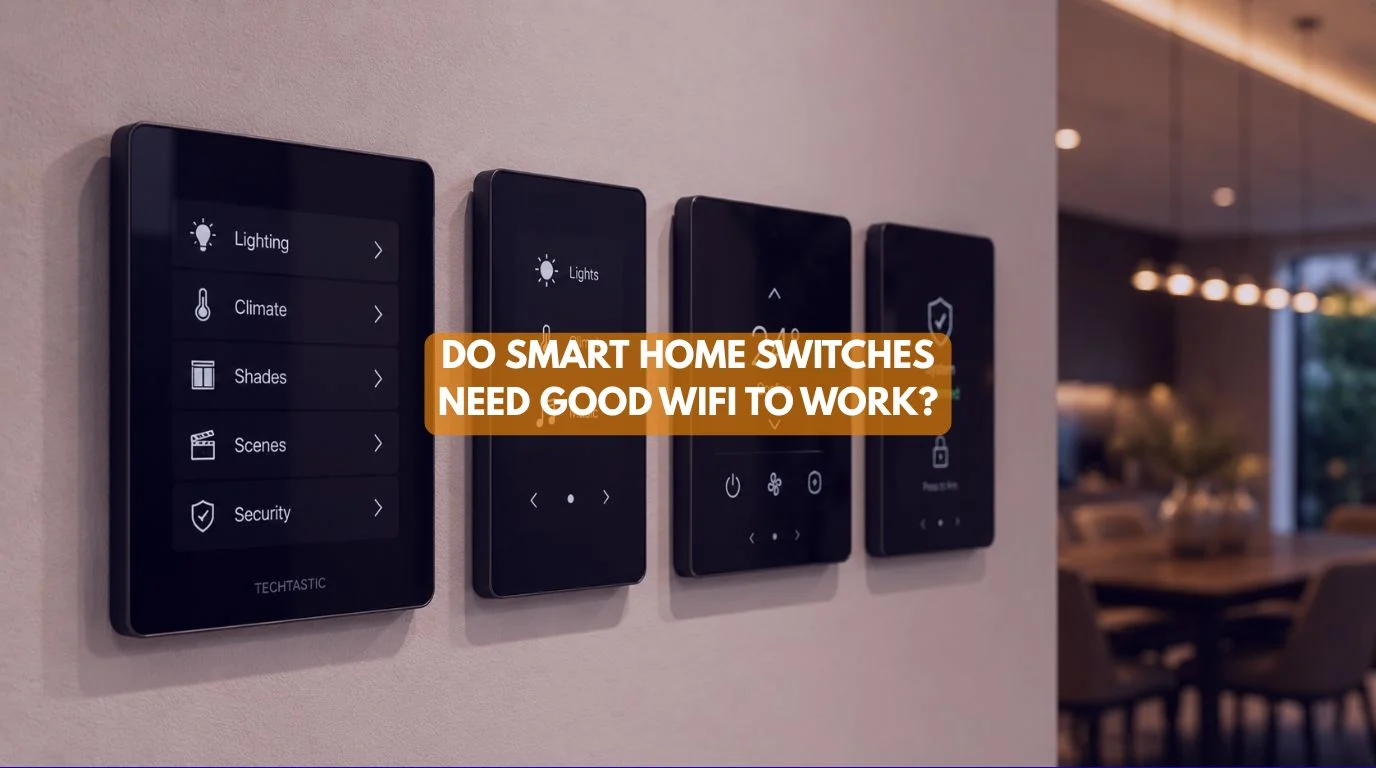
Summary
Whether smart home switches need good WiFi depends on the type of smart switch you install. Most Wi-Fi smart home switches require a stable wireless connection for mobile app control, voice assistants, and remote access, but they usually continue working as regular wall switches even if the internet is unavailable. Professional automation systems such as KNX operate on a dedicated wired communication network, allowing lighting automation and local control to continue even without WiFi or internet access. Choosing the right technology depends on your home’s size, automation goals, and desired level of reliability.
Quick Answer
A good WiFi network improves the performance of most smart home switches, especially if you use smartphone apps or voice assistants like Alexa or Google Assistant. However, many smart home switches continue to function as normal wall switches even if your WiFi or internet connection is temporarily unavailable. If you want maximum reliability with minimal dependence on wireless networking, professionally installed systems such as KNX provide local control through a dedicated automation network.
One of the biggest myths about smart homes is that everything stops working when the WiFi goes down. Fortunately, that’s not true. Many homeowners worry that installing smart home switches means they’ll lose control of their lights whenever:
- The internet disconnects
- The router restarts
- The WiFi signal becomes weak
- Their ISP has an outage
In reality, the answer depends on which type of smart switch you choose.
At Techtastic, we explain that WiFi is important—but it’s only one part of a reliable smart home. Let’s look at how different smart home switches work.
Do Smart Home Switches Need Good WiFi to Work?
The short answer is: Yes—for some features. No—for others.
WiFi is primarily used for:
- Mobile app control
- Voice assistants
- Remote access
- Cloud-based automation
- Software updates
Basic lighting control often works independently of your internet connection.
What Happens If WiFi Stops Working?
For most quality Wi-Fi smart home switches:
Manual Wall Switch
✅ Continues working normally.
Smartphone App
❌ Remote control may be unavailable until WiFi returns.
Voice Assistants
❌ Alexa, Google Assistant, and Siri may stop responding if they depend on cloud services.
Lighting
✅ Your lights still turn on and off using the physical switch.
Most homeowners can continue using their lights without interruption.
Why Good WiFi Still Matters
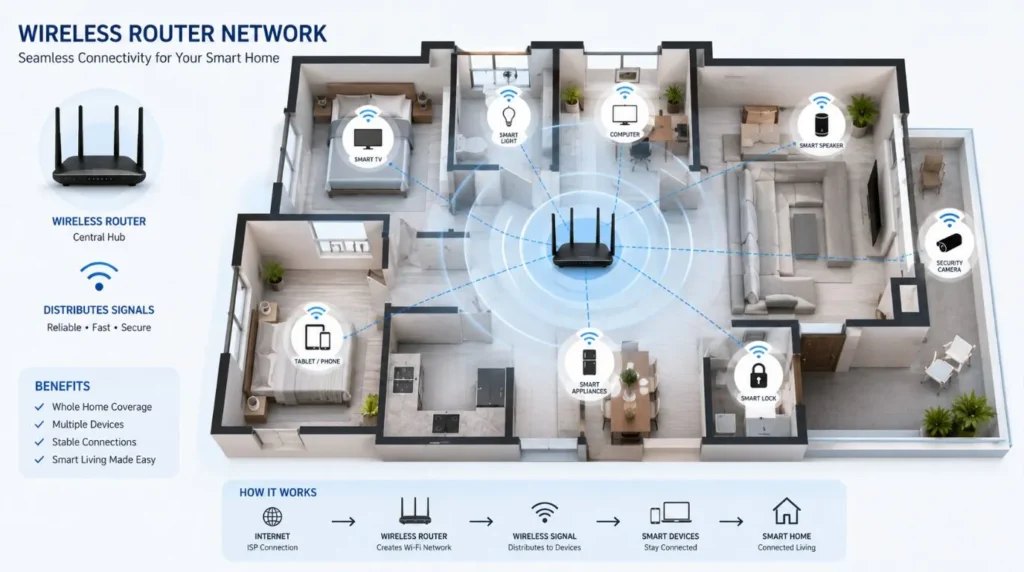
Although the lights still work manually, a strong WiFi network improves the smart experience.
Reliable WiFi provides:
- Faster app response
- Stable device connections
- Better voice assistant performance
- Reliable automation updates
- Smooth remote access
Poor WiFi often causes delayed responses rather than complete failure.
Signs Your WiFi Needs Improvement
Your network may need upgrading if you notice:
- Slow app control
- Devices frequently show “offline”
- Delayed voice commands
- Cameras buffering
- Missed automation routines
In many cases, the issue isn’t the smart switch—it’s the network.
WiFi Smart Switches vs KNX Smart Switches
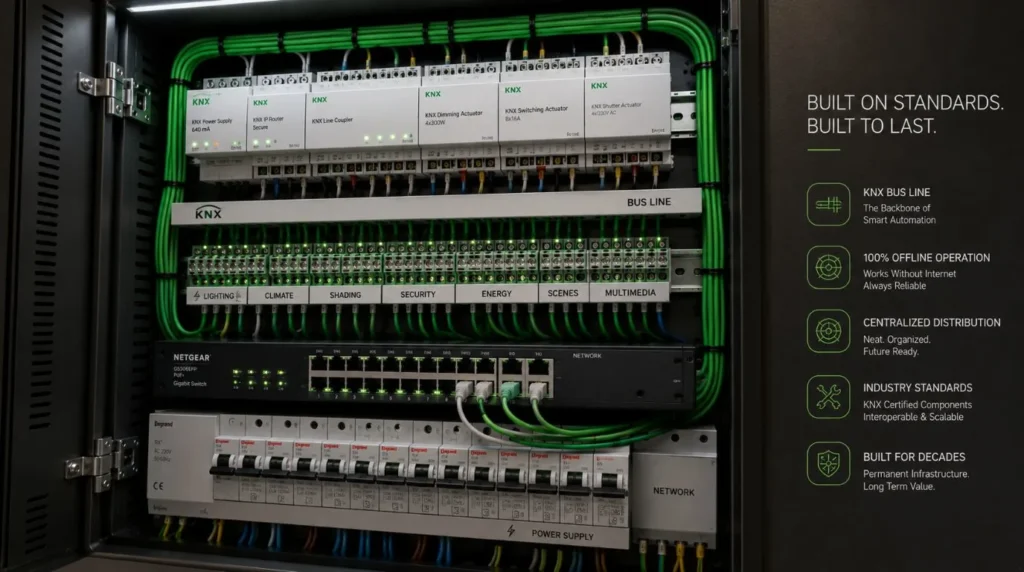
This is where professional automation differs significantly.
Wi-Fi Smart Home Switches
Depend on:
- Wireless network
- Router
- Often cloud connectivity
Best for:
- Apartments
- Small homes
- DIY installations
KNX Smart Home Switches
KNX uses a dedicated automation bus instead of relying on WiFi.
Benefits include:
- Local communication
- Exceptional reliability
- Faster response
- Internet-independent automation
- Long-term stability
Even if your internet goes down, your lighting automation continues operating locally.
Do You Need Fast Internet?
Not necessarily. Smart home switches use very little bandwidth.
What’s more important is:
- Stable WiFi coverage
- Reliable router
- Strong signal throughout the home
- Proper network configuration
Consistency matters more than internet speed.
How to Improve Smart Switch Performance
If you’re using Wi-Fi smart home switches:
Upgrade Your Router
Modern routers provide better coverage and stability.
Use Mesh WiFi
Ideal for:
- Larger homes
- Multi-floor houses
- Villas
Mesh systems reduce dead zones.
Position the Router Correctly
Avoid placing routers:
- Inside cabinets
- Behind televisions
- Near large metal objects
Better placement improves signal quality.
Separate Smart Devices
If possible, dedicate a network for smart home devices to improve performance and reduce congestion.
Keep Firmware Updated
Regular updates improve:
- Security
- Stability
- Compatibility
Can Smart Home Switches Work Without Internet?
Yes. Many smart home switches continue functioning locally. You’ll usually lose:
- Remote access
- Cloud automation
- Voice assistant integration
But you’ll still be able to operate the lights manually. Professional systems like KNX retain even more functionality because automation is processed locally rather than in the cloud.
Common Myths
“Smart Switches Stop Working Without WiFi”
False. Most continue functioning as regular wall switches.
“You Need High-Speed Internet”
Not necessarily. Stable connectivity is more important than very fast speeds.
“Every Smart Home Depends on the Cloud”
Not true. Professional automation systems like KNX operate locally.
“Weak WiFi Means I Need New Smart Switches”
Often, upgrading the router or improving network coverage solves the problem.
Why It Matters
Lighting is one of the most frequently used systems in any home.
Choosing the right smart switch—and supporting it with a reliable network—ensures:
- Better convenience
- Faster response
- Reliable automation
- Improved long-term performance
A well-designed smart home should continue working even when your internet doesn’t.
Our Perspective at Techtastic
At Techtastic, we believe reliability should always come before convenience. That’s why we don’t just recommend smart home switches—we also evaluate the home’s networking infrastructure to ensure every device performs consistently.
For apartments and smaller homes, quality Wi-Fi smart home switches paired with a reliable router deliver excellent results. For homeowners building premium residences or planning complete home automation, we often recommend KNX because it provides dependable local operation without relying on WiFi for core automation. Even if your internet connection is temporarily unavailable, your lighting, scenes, and automation continue working as expected.
A smart home should make life easier—not create new frustrations.
Collaboration Opportunities for Developers, Architects & Interior Designers
Reliable smart lighting begins with thoughtful planning.
At Techtastic, we collaborate with:
- Architects
- Interior designers
- Residential developers
- Luxury home builders
- MEP consultants
- Commercial project planners
Smart Home Network Planning
Design robust networking alongside automation.
KNX Infrastructure
Create dependable local automation systems.
Smart Lighting Design
Ensure reliable lighting control in every room.
Structured Networking
Reduce WiFi dead zones and improve device performance.
Premium Residential Projects
Deliver integrated, future-ready homes.
Future-Ready Developments
Build properties designed for evolving smart technologies.
Planning both networking and automation together creates a more stable and enjoyable smart home experience.
Key Takeaways
- Most smart switches benefit from good WiFi, but don’t rely on it for basic manual operation.
- Stable WiFi improves app control, voice assistants, and remote access.
- Manual lighting control usually continues even during internet outages.
- Wi-Fi smart switches are ideal for apartments and smaller homes.
- KNX uses a dedicated automation network, allowing local control even without internet access.
- Reliable networking is just as important as choosing quality smart switches.
- Professional planning helps create a smart home that’s dependable today and ready for future expansion.
Frequently Asked Questions
1. Do smart switches need WiFi to work?
A: For app control, voice assistants, and remote access, yes. However, many smart switches continue working as standard wall switches even without WiFi.
2. Will my lights stop working if the internet goes down?
A: No. In most cases, you can still turn your lights on and off manually using the wall switch.
3. Do smart switches need high-speed internet?
A: No. They use very little bandwidth. A stable and reliable WiFi connection is more important than fast internet speeds.
4. Why do smart switches show as offline?
A: Common reasons include weak WiFi signals, router issues, power interruptions, or network configuration problems, rather than faults with the switch itself.
5. Is mesh WiFi good for smart homes?
A: Yes. Mesh WiFi systems improve coverage, reduce dead zones, and provide more reliable connectivity for smart devices throughout the home.
6. Does KNX require WiFi?
A: No. KNX uses a dedicated wired communication network for automation, allowing lighting and other systems to continue operating locally without depending on WiFi or internet access.
7. Can I control smart switches remotely?
A: Yes, as long as your smart switch supports remote access and your home’s internet connection is active.
8. Should I hire a professional for smart home networking?
A: If you’re planning whole-home automation, professional network planning helps improve reliability, reduce connectivity issues, and ensure your smart home performs consistently.
Conclusion
A reliable WiFi network certainly enhances the experience of using smart switches, but it isn’t the only factor that determines how well your smart home performs. While strong wireless connectivity improves mobile app control, voice assistants, and remote access, most quality smart switches continue functioning as normal wall switches even if the internet is temporarily unavailable. For homeowners seeking the highest level of reliability, professionally designed systems like KNX offer local automation that continues working independently of WiFi.
At Techtastic, we take a holistic approach to smart home design by considering both automation and networking together.
📞 Call/WhatsApp: 9769145145
📍 Our Operational Hubs: Navi Mumbai | Nashik | Lonavla | Sangli
Whether you’re installing Wi-Fi smart switches in an apartment or building a fully integrated KNX home, we ensure your lighting system is dependable, responsive, and designed to perform seamlessly—so your smart home works the way it should, every day.
Wondering how to manage all these requirements? Read our expert guide on Smart Switches for Small Spaces: Ultimate 2026 Guide to discover the best way to automate your system’s infrastructure.