
Summary
Choosing the right home automation installer is one of the most important decisions when investing in home automation. A qualified installer should provide consultation, system design, professional installation, programming, networking, testing, homeowner training, and ongoing support. Rather than focusing only on price, homeowners should evaluate experience, technology expertise, project portfolio, certifications, after-sales service, and the ability to design scalable automation systems. A trusted home automation installer ensures your smart home remains reliable, secure, and easy to expand.
Quick Answer
The best home automation installer is one who understands your lifestyle, designs a system around your needs, and provides long-term support after installation. Look for experience, verified projects, expertise with professional platforms like KNX, strong networking knowledge, transparent pricing, and reliable after-sales service. Choosing the right installer ensures your smart home performs smoothly today and remains ready for future upgrades.
How to Choose a Smart Home Installer in Your Area?
Installing a smart home isn’t just about choosing the right products; it’s about choosing the right people. Even the best smart devices can deliver a poor experience if they’re installed without proper planning or integration. That’s why selecting the right home automation installer is one of the most important decisions you’ll make during your home automation journey.
At Techtastic, we’ve seen many homeowners spend more money fixing poorly designed systems than they would have spent hiring an experienced installer from the beginning.
Here’s what you should look for before making your decision.
Why Your Home Automation Installer Matters
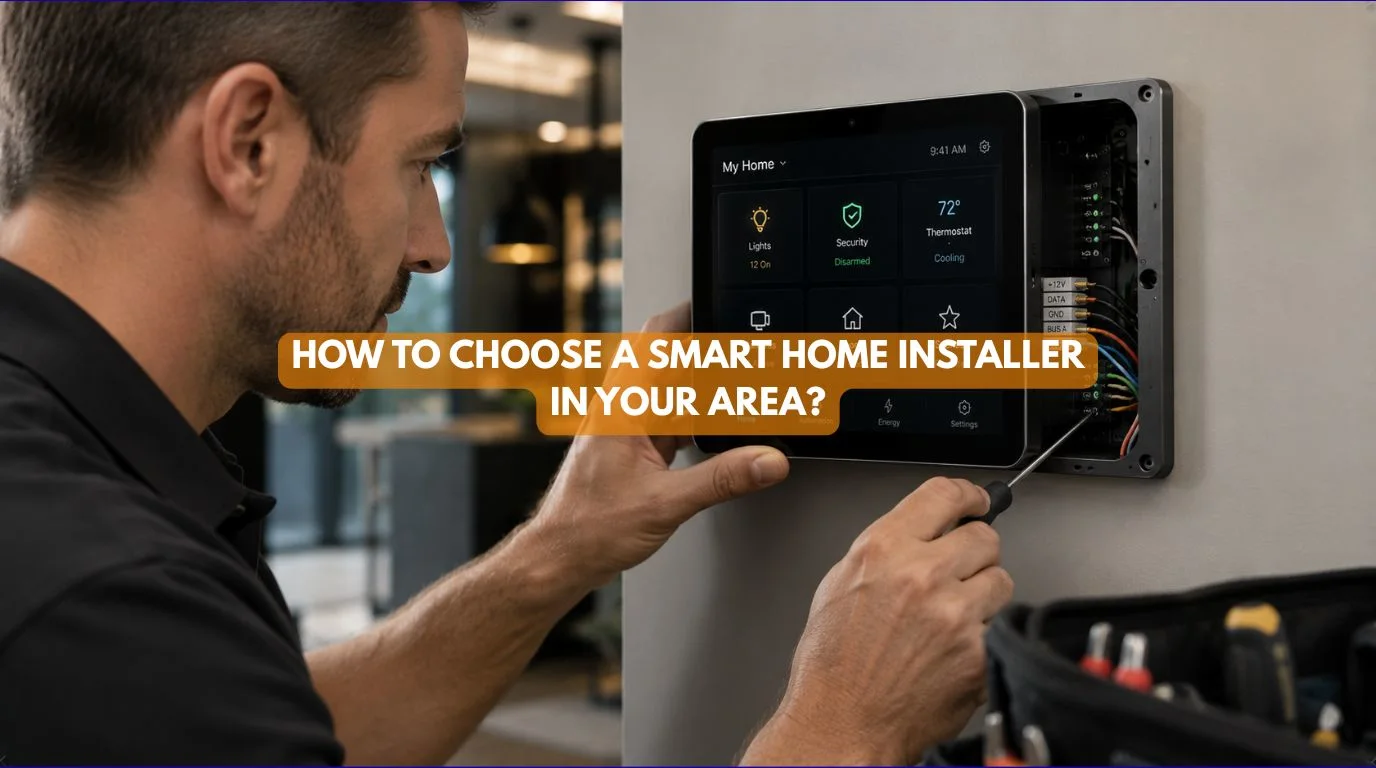
A professional installer doesn’t simply mount devices. They design a complete automation system that works reliably for years. A good home automation installer helps with:
- System planning
- Product recommendations
- Network design
- Professional installation
- Automation programming
- User training
- Long-term support
You’re investing in expertise and not just installation.
1. Look for Experience
Choose a home automation installer with proven experience in residential smart home projects.
Ask questions like:
- How long have you been installing smart homes?
- Can you show completed projects?
- Have you worked on homes similar to mine?
- Do you specialize in apartments, villas, or luxury homes?
Experience often translates into fewer installation mistakes and better long-term performance.
2. Review Their Portfolio
A reliable installer should be able to demonstrate previous work.
Look for projects featuring:
- Smart lighting
- Smart security
- Motorized curtains
- Home theatres
- Climate control
- Complete home automation
Real-world projects provide confidence in the installer’s capabilities.
3. Evaluate Their Consultation Process
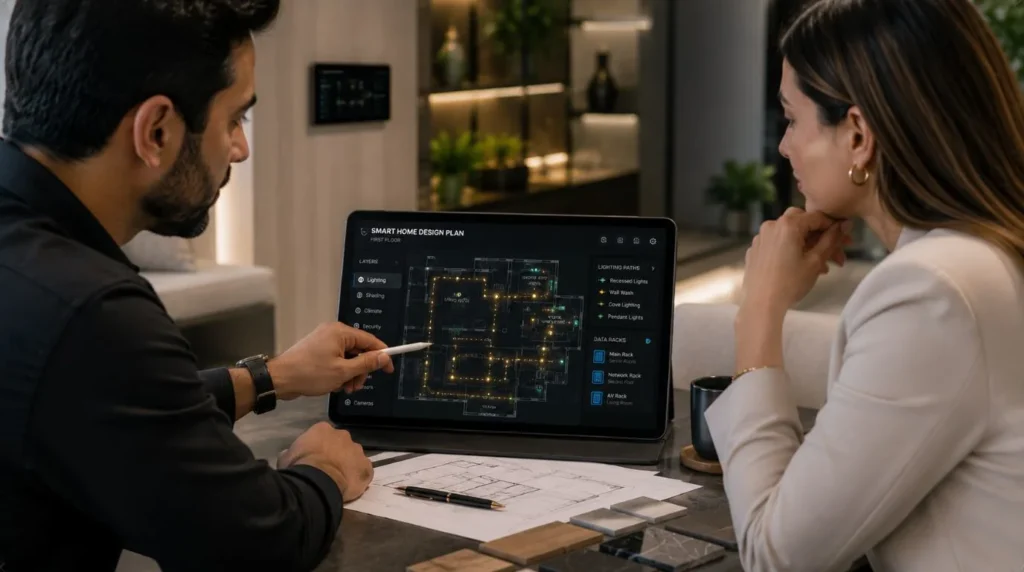
Be cautious if an installer recommends products before understanding your requirements.
A professional consultation should include:
- Lifestyle assessment
- Home walkthrough
- Budget discussion
- Future expansion planning
- Automation priorities
Good automation begins with listening—not selling.
4. Check Their Technology Expertise
Your installer should understand multiple automation platforms instead of recommending only one brand.
Look for experience with:
- Wi-Fi automation
- Matter-compatible devices
- Zigbee
- Z-Wave
- KNX home automation
This allows them to recommend the most suitable solution for your home rather than the one they’re most familiar with.
5. Don’t Ignore Networking Knowledge
A surprising number of smart home problems are actually network problems.
A professional home automation installer should also understand:
- Wi-Fi design
- Mesh networking
- Structured cabling
- Router placement
- Network security
Reliable networking creates reliable automation.
6. Ask About After-Sales Support
Your relationship with the installer shouldn’t end after installation.
Ask whether they provide:
- Software updates
- Remote support
- Troubleshooting
- Annual maintenance
- System upgrades
- Warranty assistance
Ongoing support is often just as valuable as the installation itself.
7. Look for Scalable Solutions
A good installer designs for the future.
Even if you’re only installing smart lighting today, your system should be ready for:
- Smart security
- Motorized curtains
- Energy monitoring
- Home theatre
- EV charger integration
- Solar energy automation
Planning saves time and money later.
8. Read Reviews and Ask for References
Before making your final decision:
- Read customer reviews.
- Ask for testimonials.
- Request references.
- View completed installations if possible.
Satisfied clients are often the strongest indicator of quality workmanship.
9. Compare Value & Not Just Price
The cheapest quote isn’t always the best investment.
A higher-quality installer often provides:
- Better planning
- Higher reliability
- Cleaner installation
- Professional programming
- Stronger long-term support
Focus on total value rather than the lowest upfront cost.
DIY vs Professional Installer
| DIY Setup | Professional Home Automation Installer |
|---|---|
| Basic device installation | Complete system design |
| Individual devices | Integrated ecosystem |
| Self-managed troubleshooting | Ongoing professional support |
| Limited scalability | Future-ready planning |
| Basic networking | Professional network optimization |
| Suitable for small projects | Ideal for whole-home automation |
For integrated smart homes, professional installation generally provides better long-term results.
Why KNX Experience Matters
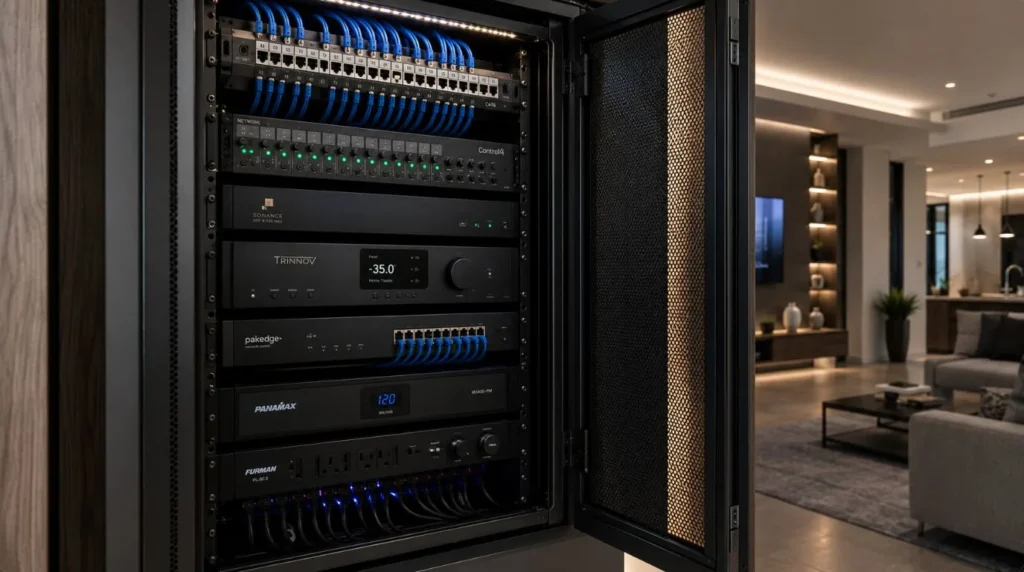
If you’re planning a premium smart home, choose an installer experienced with KNX home automation.
KNX enables seamless integration of:
- Smart lighting
- Climate control
- Security
- Motorized curtains
- Audio-visual systems
- Energy management
Because KNX is designed for long-term reliability and scalability, installer expertise is especially important for successful implementation.
Common Mistakes When Choosing an Installer
Choosing Based Only on Price
Lower costs may mean compromises in design, support, or installation quality.
Ignoring Networking Expertise
Poor network planning is one of the leading causes of smart home reliability issues.
Buying Products Before Hiring an Installer
Professional planning often leads to better product selection and integration.
Choosing a Company That Only Installs One Brand
The best installer recommends the right solution and not just their preferred products.
Forgetting Future Expansion
A scalable design makes future upgrades easier and more affordable.
Why It Matters
A smart home should make life simpler and not more complicated.
The right installer helps ensure:
- Reliable automation
- Better user experience
- Cleaner installation
- Easier upgrades
- Long-term peace of mind
Your home automation installer is just as important as the technology you choose.
Our Perspective at Techtastic
At Techtastic, we believe every successful smart home begins with understanding the people who live in it. That’s why we focus on consultation, thoughtful system design, and long-term support rather than simply installing devices.
Whether we’re creating a Wi-Fi-based smart home for an apartment or a fully integrated KNX home automation system for a luxury residence, our goal is always the same: deliver reliable, intuitive automation that’s built around your lifestyle and ready to grow with your future needs.
Collaboration Opportunities for Developers, Architects & Interior Designers
The best smart homes are created through early collaboration.
At Techtastic, we partner with:
- Architects
- Interior designers
- Residential developers
- Luxury home builders
- MEP consultants
- Commercial project planners
Smart Home Planning
Integrate automation into the design phase.
KNX Infrastructure
Build scalable, future-ready systems.
Smart Lighting Design
Create elegant and intuitive lighting experiences.
Structured Networking
Ensure dependable connectivity throughout the property.
Premium Residential Projects
Deliver seamless, integrated automation.
Future-Ready Developments
Prepare homes for evolving technologies and homeowner expectations.
Early planning leads to cleaner installations, better coordination, and more reliable long-term performance.
Key Takeaways
- Choose a home automation installer based on expertise, not just price.
- Look for experience, completed projects, and strong customer reviews.
- Ensure the installer understands networking as well as automation.
- Ask about after-sales support, maintenance, and future upgrades.
- Select a home automation installer experienced with platforms like KNX for premium automation projects.
- Plan for future expansion, even if you’re starting with a few smart devices.
- A professionally designed system delivers greater reliability, security, and long-term value.
Frequently Asked Questions
1. How do I choose the right home automation installer?
A: Look for experience, verified projects, technology expertise, networking knowledge, transparent pricing, and strong after-sales support. A good home automation installer should begin with consultation and system design rather than immediately recommending products.
2. Should I hire a professional home automation installer?
A: Yes. Professional installers ensure proper planning, integration, programming, and long-term reliability, especially for whole-home automation systems.
3. What questions should I ask before hiring an installer?
A: Ask about previous projects, supported technologies, warranties, maintenance services, networking expertise, and how the system can be expanded in the future.
4. Is KNX experience important?
A: If you’re planning a premium smart home or new construction project, yes. KNX requires professional design and programming, making installer experience essential.
5. How much does professional smart home installation cost?
A: Costs vary depending on your home’s size, the level of automation, and the systems being installed. A professional consultation is the best way to receive an accurate estimate.
6. Can a smart home be upgraded later?
A: Absolutely. A well-designed system should allow additional lighting, security, climate control, entertainment, and energy management features to be added over time.
7. What should be included in a professional installation?
A: A complete installation should include consultation, system design, installation, programming, testing, homeowner training, and ongoing support.
8. Why is networking important for smart homes?
A: Many smart home issues stem from poor network design rather than faulty devices. An experienced installer ensures your Wi-Fi or structured network can reliably support all connected systems.
Conclusion
Choosing the right home automation installer is one of the most important steps toward building a reliable, future-ready home. An experienced installer will do more than fit devices; they’ll design a complete automation system that’s tailored to your lifestyle, integrates seamlessly, and continues to perform as your needs evolve.
At Techtastic, we combine expert consultation, professional installation, and ongoing support to deliver smart home solutions that are simple to use, dependable, and built to last.
📞 Call/WhatsApp: 9769145145
📍 Our Operational Hubs: Navi Mumbai | Nashik | Lonavla | Sangli
Whether you’re starting with smart lighting or planning a fully integrated KNX home automation system, we help you create a connected home that’s designed for today and ready for tomorrow.
Looking for the best way to start? Check out our practical guide on Smart Home Automation Installation: Complete Timeline 2026.