
Summary
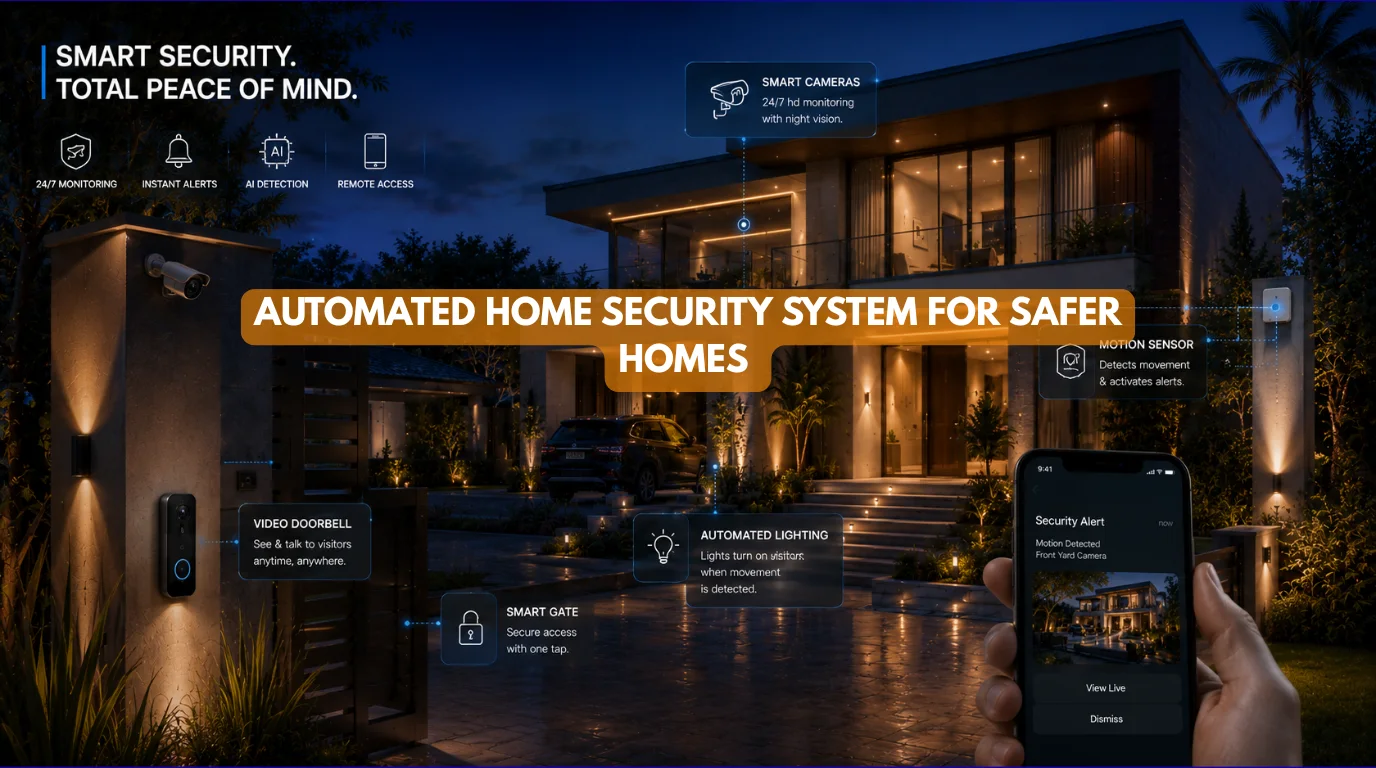
An automated home security system goes far beyond cameras and mobile alerts. Instead of simply notifying you after something happens, it detects potential threats, makes intelligent decisions, and automatically responds to protect your home. Using sensors, smart lighting, motorized shutters, AI, and professional automation platforms like KNX, modern security systems work together to prevent incidents before they escalate. Whether you’re building a new home or upgrading an existing one, an automated home security system delivers greater safety, privacy, reliability, and peace of mind.
Quick Answer
An automated home security system protects your home by automatically detecting threats and responding without waiting for human intervention. Unlike traditional security systems that only send notifications, automated systems can activate lights, secure entry points, trigger alarms, and coordinate multiple devices instantly to improve safety and reduce response time.
Why Traditional Home Security Is No Longer Enough
For years, homeowners believed that installing a few security cameras and a smart doorbell was enough to protect their property.
While these devices certainly improve visibility, they don’t necessarily improve security.
Most modern security products simply notify you when something happens. They depend on you noticing the alert, opening an app, reviewing footage, and deciding what to do next.
Imagine receiving a motion notification while you’re attending a meeting, travelling overseas, or sleeping. By the time you check the footage, the event has already happened.
At Techtastic, we believe true security should never depend entirely on human reaction. An automated home security system is designed to think, respond, and protect your home automatically even before you reach for your phone.
Instead of acting like a digital witness, your home becomes an active participant in keeping your family safe.
What Is an Automated Home Security System?
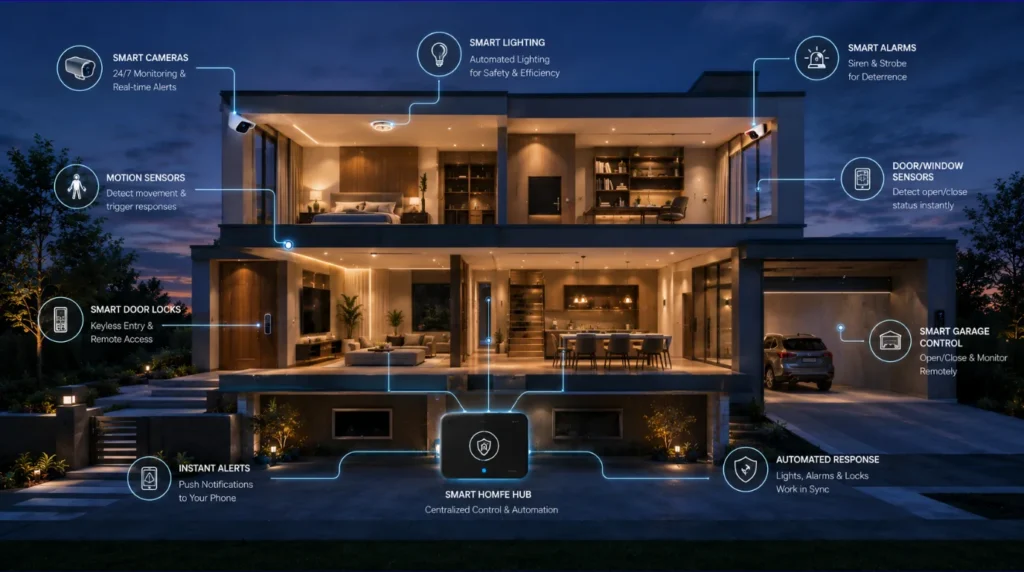
An automated home security system is an intelligent network of connected devices that work together to detect, analyse, and respond to security events automatically.
Instead of operating independently, cameras, motion sensors, smart locks, lighting, alarms, and motorized shutters communicate through a central automation platform.
When unusual activity is detected, the system doesn’t simply record it.
It immediately performs the appropriate actions based on pre-programmed security logic.
For example, if someone attempts to enter your property late at night, the system can:
- Turn on exterior lighting.
- Lock selected access points.
- Activate security cameras.
- Trigger warning sounds.
- Notify homeowners instantly.
- Continue monitoring the situation until it is resolved.
This coordinated response happens automatically without requiring anyone to manually control individual devices.
Reactive Security vs Automated Security
One of the biggest differences between traditional security systems and automated home security systems is how they respond to threats.
Traditional Security Reacts After the Event
Most consumer security products are designed to observe.
When motion is detected, they:
- Record video.
- Send a notification.
- Wait for the homeowner.
While this provides useful evidence, it often does little to prevent the incident itself.
The responsibility still rests with the homeowner.
Automated Security Responds Immediately
A professionally designed automated home security system continuously evaluates information from multiple devices before deciding how to respond.
Instead of waiting for instructions, it can automatically:
- Illuminate dark outdoor areas.
- Activate perimeter alarms.
- Lock smart doors.
- Close motorized shutters.
- Record multiple camera angles.
- Alert family members.
- Trigger emergency automation scenes.
By reducing response time, automation helps discourage intruders before situations become more serious.
The Intelligence Behind an Automated Home Security System
Every intelligent security system requires a central controller that acts as the brain of the home.
This controller receives information from connected devices, evaluates the situation, and determines the most appropriate response.
Professional automation platforms such as KNX provide this intelligence through reliable local communication rather than depending entirely on internet-based services. Because decisions happen inside your home, automation remains fast, dependable, and responsive.
Even if internet connectivity becomes unstable, essential security functions continue operating. This local intelligence is one of the biggest reasons professionally designed systems outperform standalone smart gadgets.
Smart Sensors Are More Powerful Than Cameras Alone
Security cameras are excellent for monitoring activity, but they are only one part of a complete automated home security system.
Modern security relies on multiple intelligent sensors working together.
These include:
- Motion sensors
- Door contact sensors
- Window sensors
- Glass break detectors
- Vibration sensors
- Smoke detectors
- Water leak sensors
- Occupancy sensors
Instead of relying on one device, automation combines information from several sensors before deciding how to respond.
This creates a smarter, more reliable security system while reducing unnecessary alerts.
How an Automated Home Security System Responds During an Emergency
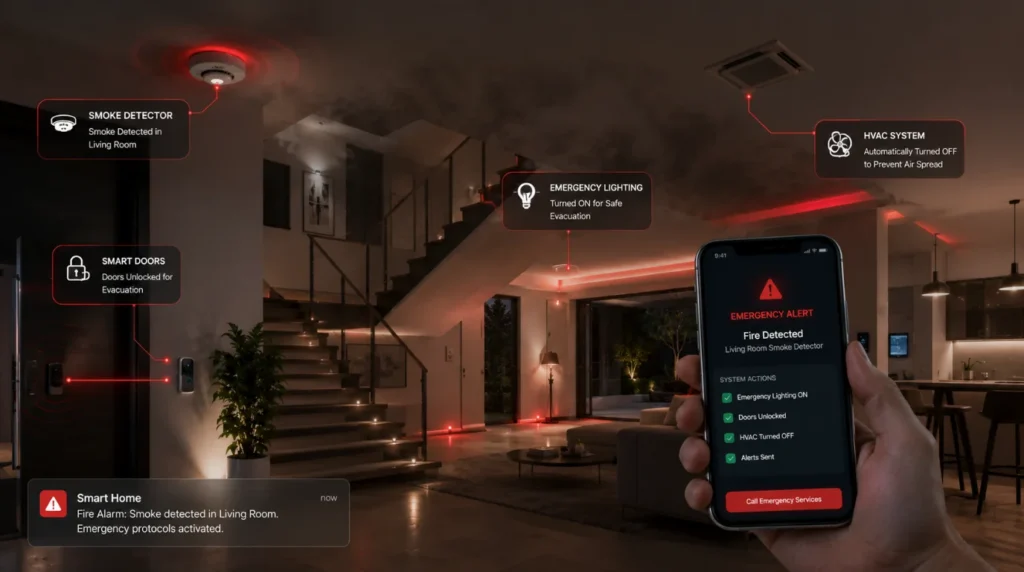
One of the biggest advantages of an automated home security system is that it doesn’t wait for someone to take action. The moment a potential threat is detected, multiple devices work together automatically to protect your home and family.
Instead of relying on a single alarm or camera, every connected device contributes to a coordinated response.
Immediate Visual Deterrence
The first few seconds are often the most important during a security event.
An automated system can instantly switch on outdoor floodlights, pathway lighting, and entrance lights to expose suspicious activity. Well-lit surroundings not only improve camera footage but also discourage intruders who prefer to remain unnoticed.
Intelligent Indoor Responses
Indoor lighting can also play a role in protecting your home.
Depending on the situation, the system can:
- Turn on lights throughout the house.
- Flash selected lights to attract attention.
- Illuminate escape routes.
- Activate pre-programmed emergency scenes.
These actions help occupants remain aware of the situation while making the property appear active.
Smart Access Control
Modern smart locks can become part of your emergency response.
Depending on the security logic you’ve chosen, the system can:
- Lock selected entry doors.
- Secure internal rooms.
- Prevent unauthorised access.
- Allow safe exits during emergencies.
This coordinated approach provides greater protection than standalone door locks.
Fire and Safety Automation
Security is not limited to protecting against intruders.
If smoke or fire is detected, automation can immediately:
- Turn on emergency pathway lighting.
- Open motorized curtains.
- Unlock designated exit doors.
- Send emergency notifications.
- Shut down air conditioning to help reduce smoke circulation.
By combining safety systems with home automation, occupants receive faster assistance during critical situations.
Benefits of an Automated Home Security System
Responds Automatically to Threats
Unlike traditional security systems that only send notifications, automated systems immediately activate predefined responses such as lighting, alarms, access control, and surveillance. This helps reduce response time and improves overall protection.
Improves Family Safety
By coordinating cameras, sensors, smart locks, and emergency lighting, an automated home security system creates a safer environment for children, elderly family members, and everyone living in the home.
Reduces False Alarms
Professional automation platforms use information from multiple sensors instead of relying on a single trigger. This intelligent approach helps distinguish genuine security events from harmless everyday activity.
Provides Greater Peace of Mind
Whether you’re at work, travelling, or asleep, knowing your home can respond automatically to unexpected situations allows you to worry less about your property’s safety.
Protects More Than Against Intruders
Modern automated home security systems also monitor smoke, water leaks, gas leaks, and other household hazards, helping minimise damage before small issues become major problems.
Increases Property Value
Homes equipped with professionally installed automation and integrated security are increasingly attractive to buyers looking for modern, future-ready living spaces.
Automated Home Security: DIY vs Professional Systems
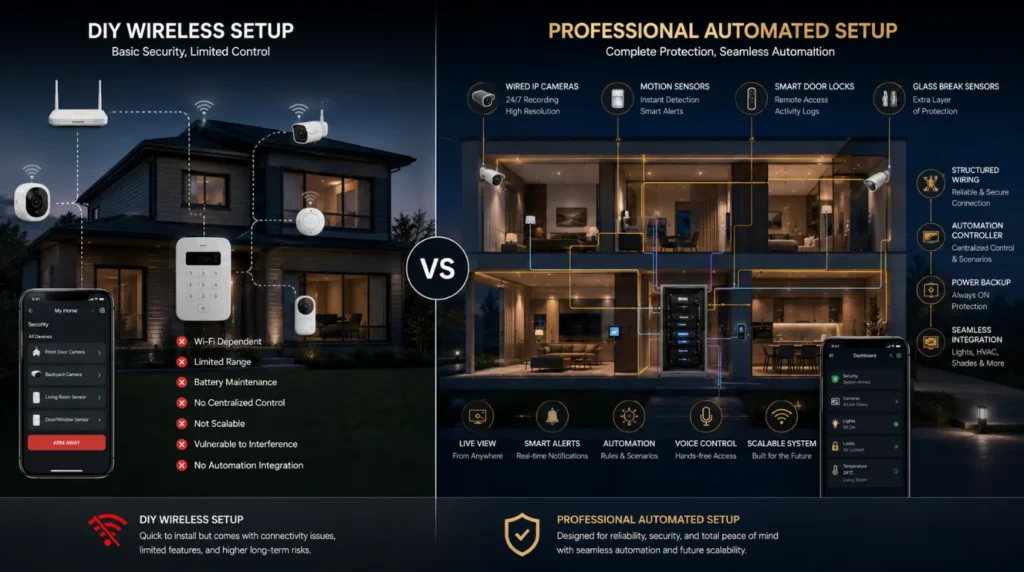
| Feature | DIY Smart Security | Professional Automated Security |
|---|---|---|
| Response | Mobile notifications | Automatic responses |
| Reliability | Internet dependent | Local control available |
| Installation | Self-installation | Professionally designed |
| Automation | Limited | Advanced logic and scenes |
| Expansion | Moderate | Highly scalable |
| Privacy | Mostly cloud-based | Local processing options |
| Best For | Small upgrades | Premium homes and villas |
What Affects the Cost of an Automated Home Security System?
The investment required depends on the level of automation rather than simply the number of security devices installed.
Factors include:
- Property size.
- Number of cameras.
- Smart door locks.
- Motion and contact sensors.
- Smart lighting integration.
- Motorized shutters or curtains.
- Professional automation platform.
- Structured networking.
- Installation and programming.
- Future expansion requirements.
A professionally planned system may involve a higher initial investment, but it often provides greater reliability, lower maintenance, and better long-term value.
Common Mistakes Homeowners Make
Relying Only on Security Cameras
Cameras provide valuable evidence, but they don’t prevent incidents on their own. Combining cameras with sensors, lighting, smart locks, and automation creates a much stronger security strategy.
Choosing Security Based Only on Price
Selecting the cheapest devices often leads to poor reliability, limited compatibility, and frequent upgrades. Focus on long-term performance rather than initial cost alone.
Ignoring Internet and Network Quality
Even the most advanced automation system depends on reliable communication between devices. A well-designed network is essential for consistent performance.
Forgetting Emergency Scenarios
Many homeowners plan only for break-ins. Comprehensive automated home security should also include smoke detection, water leak monitoring, gas detection, and emergency lighting.
Mixing Incompatible Products
Using products from multiple ecosystems without proper integration often creates a fragmented experience. Choosing one professionally planned platform ensures every device works together effectively.
Why It Matters
Homeowners today expect more than just cameras and alarms. They want homes that can actively protect their families, respond to emergencies, and continue operating reliably even when they’re away.
An automated home security system makes this possible by combining intelligent devices into one connected ecosystem.
Instead of relying on manual intervention, your home can recognise unusual activity, make decisions, and respond within seconds. Whether it’s turning on lights to discourage an intruder, locking selected entry points, or guiding your family to safety during a fire, automation adds another layer of protection that traditional security simply cannot provide.
As homes become smarter, homeowners are no longer looking for more gadgets but for smarter responses. That’s why automated security is quickly becoming an essential part of modern residential living.
Our Perspective at Techtastic
At Techtastic, we believe home security should give you confidence and not constant notifications.
Too many homeowners spend their time checking camera alerts that turn out to be passing vehicles, neighbourhood pets, or moving tree branches. While notifications have their place, true security begins when your home can respond intelligently without waiting for you.
That’s why we design automated home security systems that combine smart sensors, lighting, access control, motorized curtains, and reliable automation into one intelligent platform.
Whether you’re upgrading an existing apartment or building a luxury villa, our goal is simple: create a security system that quietly protects your family every day while remaining easy to use, dependable, and ready for the future.
Collaboration Opportunities for Developers, Architects & Interior Designers
The best automated home security systems are planned during the design stage—not added as an afterthought.
At Techtastic, we work alongside architects, interior designers, builders, developers, and MEP consultants to create homes where security is seamlessly integrated into the overall design.
Plan Security From Day One
Designing security infrastructure early allows sensors, cameras, wiring, and automation devices to be positioned discreetly without affecting the home’s architecture or interiors.
Integrate Security With Home Automation
Lighting, smart locks, motorized curtains, climate control, and surveillance systems perform far better when they’re designed as one connected ecosystem instead of separate technologies.
Build a Reliable Automation Backbone
Professional platforms such as KNX provide the stability, scalability, and reliability required for premium residential projects while supporting future upgrades as homeowner needs evolve.
Enhance Luxury Residential Projects
Modern buyers increasingly expect intelligent security as part of a premium home. Automated security adds value while improving convenience, privacy, and everyday living.
Future-Proof Residential Developments
Planning automation infrastructure during construction makes it easier to integrate emerging technologies without expensive renovations later.
Key Takeaways
- An automated home security system does more than send alerts; it responds automatically to potential threats.
- Local automation provides greater reliability, faster response times, and improved privacy compared to cloud-only systems.
- Smart sensors, lighting, locks, and cameras work together to create a proactive security ecosystem.
- Intelligent automation helps reduce false alarms while improving family safety.
- Professional planning ensures better integration, scalability, and long-term performance.
- Modern automated security protects against both intrusions and household emergencies such as fire and water leaks.
- Investing in integrated security improves everyday peace of mind while increasing the value of your home.
Frequently Asked Questions
1. Can I turn my existing DIY cameras into a real automated home security system?
A. To an extent, yes, by using a local hub that supports “Logic Rules.” For 100% reliability, professional systems use wired sensors. This is because smart intruders can sometimes “jam” wireless signals, but they can’t mess with a physical wire.
2. Does an automated home security system work during a power cut?
A. Yes, provided you have a Battery Backup (UPS) for the central controller and sensors. Professional wired systems like KNX use low voltage. They can run for hours on a small backup battery, which keeps the sensors and the central “brain” working during a power cut.
3. Won’t I get a lot of false alarms with “automated” reactions?
A. This is not an issue if you use “Double Knock” logic. The alarm only goes off if two different sensors detect activity at the same time. This prevents false alarms.
4. Is local control harder to use than a mobile app?
A. In fact, the process is quite simple. While you still have an app for remote checks, the system’s “intelligence” means you don’t have to constantly manage it. It learns your daily routines and knows when you are home and when you aren’t.
5. What is an automated home security system?
A. An automated home security system is a connected network of cameras, sensors, smart locks, lighting, and automation that detects potential threats and responds automatically without waiting for manual intervention.
6. How is an automated home security system different from a traditional security system?
A. Traditional security systems mainly record events and send alerts. Automated systems go a step further by automatically activating lights, locking doors, triggering alarms, and coordinating multiple devices to protect your home in real time.
7. Is an automated home security system suitable for apartments?
A. Yes. Apartments can benefit from smart locks, video doorbells, motion sensors, connected lighting, and automation that improves both convenience and security without requiring extensive structural changes.
8. Is professional installation better than DIY security systems?
A. For homeowners looking for long-term reliability, seamless integration, and future expansion, professional installation offers significant advantages. Proper planning ensures every device works together as one intelligent security system rather than as separate products.
9. Can I install an automated home security system in an existing home?
A. Absolutely. Retrofit solutions make it possible to upgrade many existing homes without major renovations, allowing homeowners to add automation gradually.
10. Can automated security integrate with lighting and motorized curtains?
A. Yes. One of the biggest advantages of an automated home security system is its ability to coordinate lighting, smart locks, motorized curtains, alarms, and cameras to create intelligent security responses.
Conclusion
The future of home security isn’t about installing more cameras but about creating a home that can think, respond, and protect itself.
An automated home security system transforms traditional security by combining intelligent sensors, smart lighting, access control, cameras, and automation into one connected ecosystem. Instead of simply notifying you after something happens, your home takes immediate action to reduce risks, protect your family, and improve your peace of mind.
Whether you’re planning a new luxury villa or upgrading an existing home, investing in a professionally designed automated home security system ensures your property is prepared for both today’s challenges and tomorrow’s technologies.
At Techtastic, we design intelligent security solutions that are reliable, scalable, and built around the way you live. From retrofit automation to fully integrated KNX systems, we help homeowners create safer, smarter, and more future-ready homes.
📞 Call/WhatsApp: 9769145145
📍 Our Operational Hubs: Navi Mumbai | Nashik | Lonavla | Sangli
Want a seamless smart home without sticking to one brand? Explore our guide on How to Mix Different Smart Home Brands: 5 Expert Tips.