
Summary
Not all smart switches require a constant internet connection to function. While many smart switches rely on WiFi for remote control and app connectivity, others communicate using technologies such as Zigbee, Z-Wave, Bluetooth, or professional automation systems like KNX. Even if the internet goes down, many smart switches continue to operate locally through physical buttons or local automation networks, depending on the technology used.
Quick Answer
No, smart switches do not always need an active internet connection to work. Many consumer smart switches use WiFi for app control and voice assistants, but the physical switch usually continues to operate even without internet access. Professional systems like KNX lighting control work over a dedicated automation network and continue operating normally without WiFi, making them more reliable for whole-home automation. Choosing between WiFi smart switches and KNX lighting control depends on your home’s needs and plans. WiFi smart switches work well for basic automation, while KNX is designed for fully integrated smart homes.
Do Smart Light Switches Need WiFi to Work?
One of the biggest misconceptions about smart homes is that everything depends on WiFi.
Many homeowners worry:
- “Will my lights stop working if the internet goes down?”
- “Do I need strong WiFi in every room?”
- “Are smart switches useless without an internet connection?”
At Techtastic, we hear these questions regularly. The good news is that the answer depends on the type of smart switch you choose. Some systems rely heavily on WiFi. Others barely use it at all.
Understanding how WiFi smart switches compare with other technologies can help you choose a lighting system that’s more reliable, scalable, and better suited to your home.
Do Smart Light Switches Always Require WiFi?
The simple answer is: Not always.
Some smart switches communicate over WiFi, while others use dedicated automation technologies or local communication protocols.
In most cases, the wall switch itself will still turn the lights on and off even if your internet connection is unavailable. The biggest difference is how you want to control your lighting.
Types of Smart Light Switches
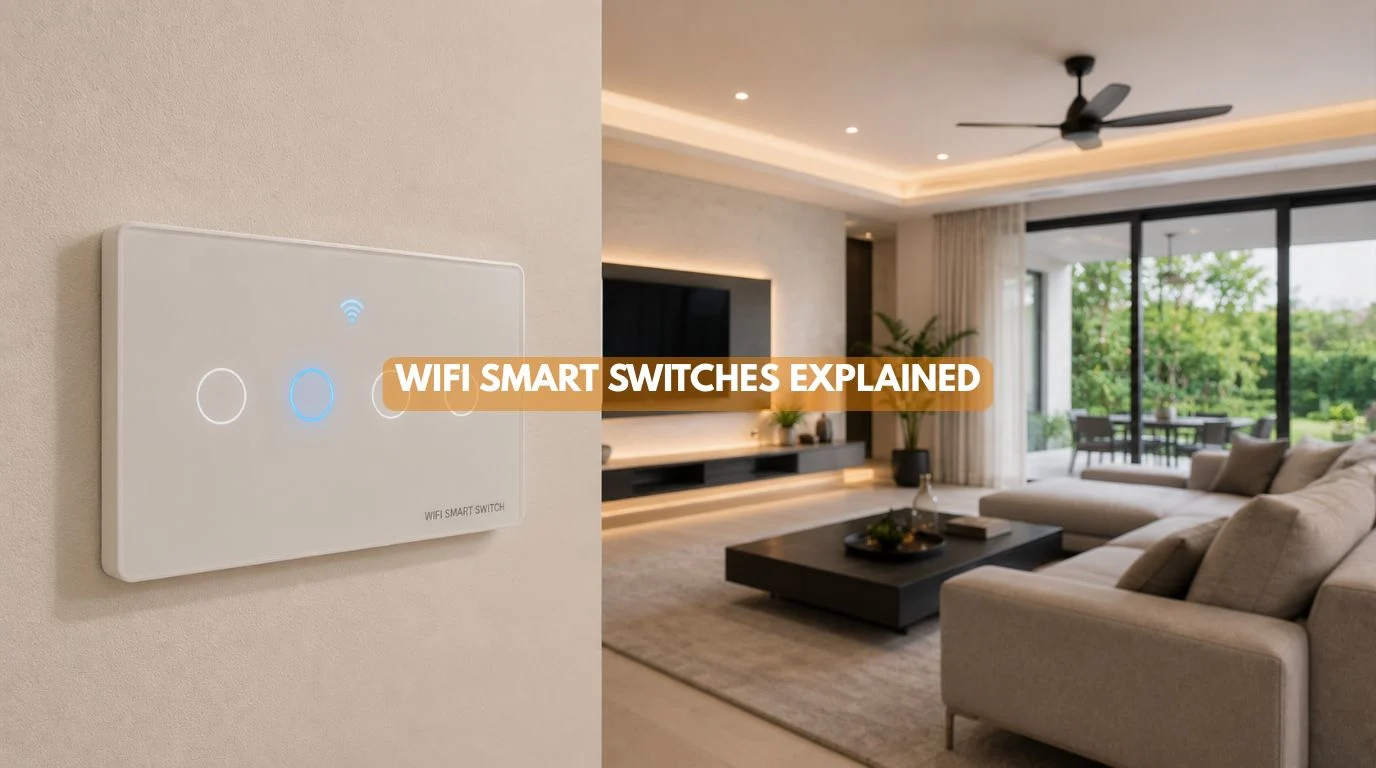
1. WiFi Smart Switches
These connect directly to your home’s wireless network.
Advantages include:
- Easy installation
- Smartphone control
- Voice assistant compatibility
- No separate hub required
Ideal for:
- Apartments
- Small homes
- Individual room upgrades
2. Zigbee Smart Switches
Zigbee switches communicate through a dedicated smart home hub.
Benefits include:
- Lower power consumption
- Faster communication
- More reliable automation
- Better scalability
These are common in larger smart home installations.
3. Z-Wave Smart Switches
Z-Wave also uses a dedicated wireless mesh network.
Advantages include:
- Stable communication
- Long-range coverage
- Reduced WiFi congestion
Suitable for homes with multiple smart devices.
4. KNX Lighting Control
KNX is a professional wired automation system.
Unlike WiFi devices, KNX communicates over its own dedicated automation network.
Benefits include:
- No dependence on WiFi
- Exceptional reliability
- Local operation
- Long-term scalability
- Enterprise-grade performance
This is why KNX is widely used in luxury homes, hotels, offices, and commercial buildings.
What Happens If the Internet Goes Down?
This depends on your smart lighting system.
WiFi Smart Switches
Usually:
- The physical switch continues working
- Mobile app remote access may stop
- Voice assistants may stop responding
Basic lighting control is generally unaffected.
Zigbee & Z-Wave Systems
If the local hub remains operational:
- Automation continues
- Scheduled lighting continues
- Local app control often works
Only cloud-based features may become unavailable.
KNX Lighting Systems
Even without:
- WiFi
- Internet
- Cloud services
KNX continues operating normally.
Lighting scenes, schedules, sensors, and switches continue functioning because everything operates locally. This is one of KNX’s biggest advantages.
Do Smart Switches Need WiFi for Voice Control?
Usually, yes.
Voice assistants such as:
- Amazon Alexa
- Google Assistant
- Apple Siri
Typically requires an internet connection to process voice commands. However, once the internet is restored, voice control resumes automatically.
Can You Control Smart Switches from Your Phone Without WiFi?
It depends.
Bluetooth Systems
Operate locally while you’re nearby.
Local Smart Home Networks
Some hubs allow smartphone control even without internet access while you’re connected to your home network.
KNX Systems
Many KNX installations allow local app control through the home’s internal network.
Remote access generally requires internet connectivity.
WiFi Smart Switches vs KNX Lighting Control
| Feature | WiFi Smart Switch | KNX Lighting Control |
|---|---|---|
| Requires WiFi for communication | Yes | No |
| Local operation | Limited | Yes |
| Works without internet | Physical switch only | Yes |
| Voice control | Internet required | Internet required for voice services |
| Scalability | Moderate | Excellent |
| Best for | Small projects | Whole-home automation |
For homeowners planning a complete smart home, KNX offers greater reliability and long-term flexibility.
Benefits of Smart Switches
Regardless of communication technology, smart switches provide:
- Smartphone control
- Scheduled lighting
- Energy efficiency
- Lighting scenes
- Occupancy automation
- Voice control
- Remote access
- Improved convenience
The best system depends on how you plan to use your home.
Common Misconceptions
“No WiFi Means No Lights”
False. Most smart switches still function as normal wall switches.
“Every Smart Home Needs Fast Internet”
Not necessarily. Professional systems like KNX operate locally.
“WiFi Is Always the Best Option”
WiFi smart switches work well for small projects, but dedicated automation platforms often provide greater reliability.
“Smart Homes Stop Working During Internet Outages”
Only certain cloud-based features are affected, while the core automation often continues.
Which Smart Switch Is Right for You?
Choose WiFi smart switches if you:
- Want a simple upgrade
- Live in an apartment
- Need a smartphone control
- Have a limited budget
Choose KNX lighting control if you:
- Are building a new home
- Want whole-home automation
- Prioritize long-term reliability
- Plan to integrate lighting, climate, curtains, and security
The right choice depends on your home, budget, and automation goals. WiFi smart switches are ideal for simple, affordable upgrades, while KNX lighting control offers a scalable and reliable solution for complete home automation and long-term performance.
Why It Matters for Modern Homes
Reliable lighting is one of the most important parts of any smart home.
Understanding how different smart switches communicate helps homeowners choose solutions that match their expectations for:
- Convenience
- Reliability
- Security
- Future expansion
The best smart lighting system, whether wifi smart switches or KNX light control, is one that continues working even when your internet doesn’t.
Our Perspective at Techtastic
At Techtastic, we help homeowners choose technology based on reliability and not just features.
For smaller projects, WiFi smart switches offer an affordable and convenient entry into home automation. For larger homes and long-term projects, we typically recommend professional platforms like KNX because they provide dependable local operation, seamless integration, and the flexibility to grow as your smart home evolves.
Our focus is always on creating systems that continue working quietly in the background, regardless of internet conditions.
Collaboration Opportunities for Developers, Architects & Interior Designers
Lighting infrastructure should be planned alongside the home’s overall technology strategy.
At Techtastic, we collaborate with:
- Architects
- Interior designers
- Residential developers
- Luxury home builders
- Hospitality consultants
- Commercial project planners
Smart Lighting Design
Create intuitive lighting experiences.
KNX Infrastructure Planning
Design reliable automation networks.
Structured Networking
Support connected living.
Luxury Residential Projects
Deliver premium lighting control.
Future-Ready Developments
Build homes prepared for expanding automation needs.
Energy-Efficient Design
Combine lighting automation with sustainability goals.
Early planning delivers cleaner installations, greater reliability, and better long-term performance.
Key Takeaways
- Smart light switches do not always require WiFi.
- WiFi smart switches use your wireless network for app and voice control.
- Zigbee and Z-Wave switches communicate through dedicated smart home hubs.
- KNX lighting systems operate independently of WiFi for core functionality.
- Most WiFi smart switches continue working manually during internet outages.
- Professional automation platforms provide greater reliability and scalability.
- Choosing the right communication technology is just as important as choosing the switch itself.
Frequently Asked Questions
1. Do smart light switches need WiFi to work?
A. No. Some use WiFi, while others communicate using Zigbee, Z-Wave, Bluetooth, or KNX. Most still function as regular light switches without internet access.
2. Will my smart lights stop working if WiFi goes down?
A. Usually not. The physical switch continues to work, although app-based remote control and voice assistants may be temporarily unavailable.
3. Can KNX light switches work without WiFi?
A. Yes. KNX uses a dedicated automation network and continues operating locally without WiFi or internet.
4. Do smart switches need the internet?
A. Only certain features, such as remote access and cloud-based voice assistants, require an internet connection.
5. Which smart switch is the most reliable?
A. For whole-home automation, professionally installed systems like KNX are generally considered among the most reliable because they operate locally and don’t depend on WiFi for everyday functions.
6. Can I control smart switches from my phone without WiFi?
A. Some systems allow local app control through Bluetooth or a home network. Remote control from outside the home generally requires internet access.
7. Are WiFi smart switches good for apartments?
A. Yes. They’re easy to install, affordable, and ideal for smaller smart home projects.
8. Should I choose WiFi or KNX lighting control?
A. WiFi is suitable for basic automation, while KNX is the better choice for homeowners seeking a reliable, scalable, and fully integrated smart home.
Conclusion
The answer to “Do smart light switches need WiFi?” is no, not all of them. While WiFi smart switches rely on your wireless network for app control and voice assistants, many advanced systems continue operating locally even when the internet is unavailable. Professional platforms like KNX take this a step further by using a dedicated automation network, ensuring your lighting remains reliable regardless of WiFi connectivity.
At Techtastic, we help homeowners choose smart lighting solutions & WiFi smart switches that fit their home’s size, lifestyle, and long-term goals.
📞 Call/WhatsApp: 9769145145
📍 Our Operational Hubs: Navi Mumbai | Nashik | Lonavla | Sangli
Whether you’re upgrading a single room with WiFi smart switches or planning a fully integrated KNX lighting system, we design automation that delivers convenience, reliability, and future-ready performance.
Looking for the best features to start with? Check out our practical guide on 5 Easy Ways to Install Smart Switches in a Rental Apartment to plan a system that everyone can use effortlessly.