Summary
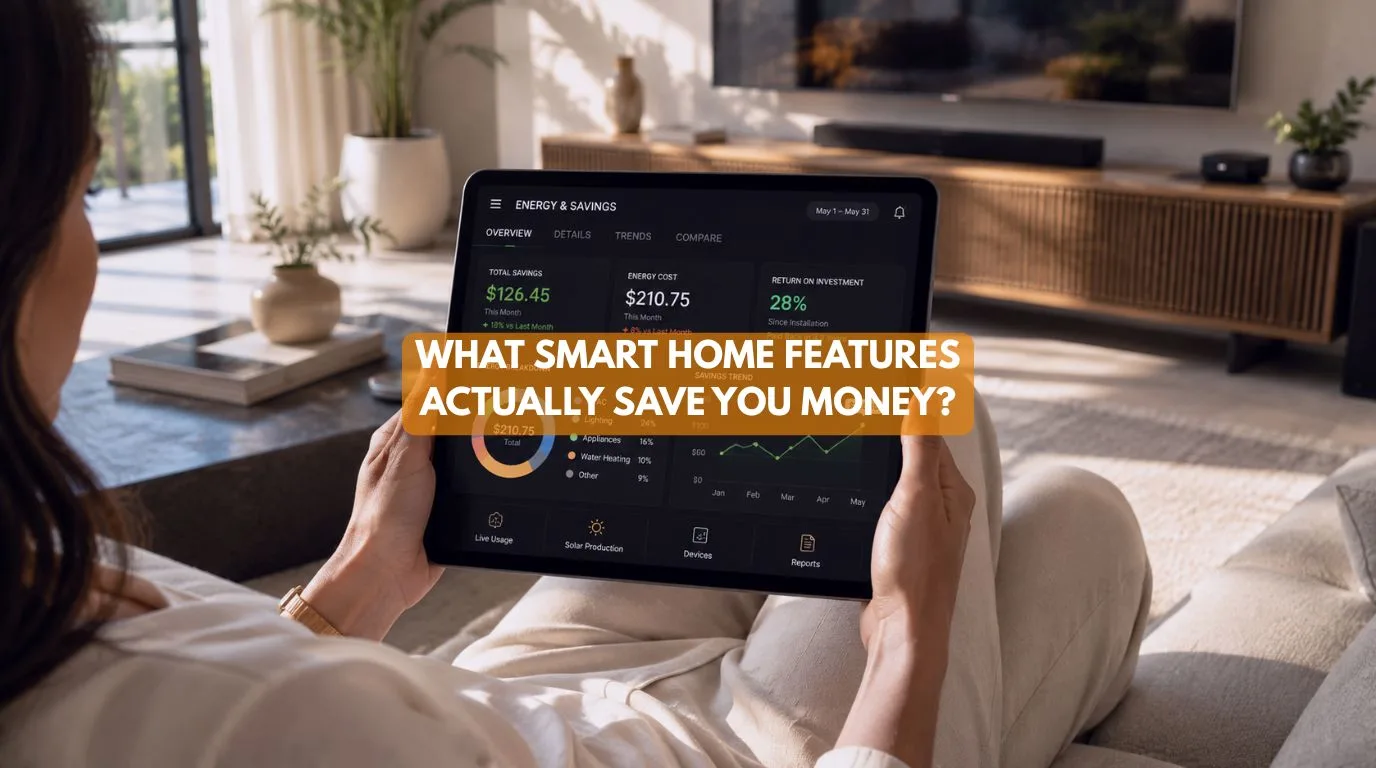
Not all smart home features save money. The highest return on investment comes from automation that reduces unnecessary energy consumption, extends equipment lifespan, and improves operational efficiency. Smart home features such as smart thermostats, occupancy-based lighting, motorized curtains, energy monitoring, and intelligent HVAC control consistently deliver measurable savings over time. The greatest financial benefits come when these technologies work together as one integrated smart home system.
Quick Answer
The smart home features that save the most money are those that automate energy-intensive systems. Smart thermostats, occupancy sensors, smart lighting, motorized curtains, home energy monitoring, and intelligent HVAC control reduce electricity consumption by ensuring devices operate only when needed. Over time, these smart home features can lower utility bills, reduce equipment wear, and increase your home’s long-term value.
Many people think a smart home is simply about controlling lights with a phone.
In reality, smart home features aren’t always the flashiest. They’re the ones working quietly in the background every day to reduce waste, improve efficiency, and lower operating costs.
At Techtastic, we encourage homeowners to look beyond convenience and focus on smart home features that deliver lasting financial value.
1. Smart Thermostats
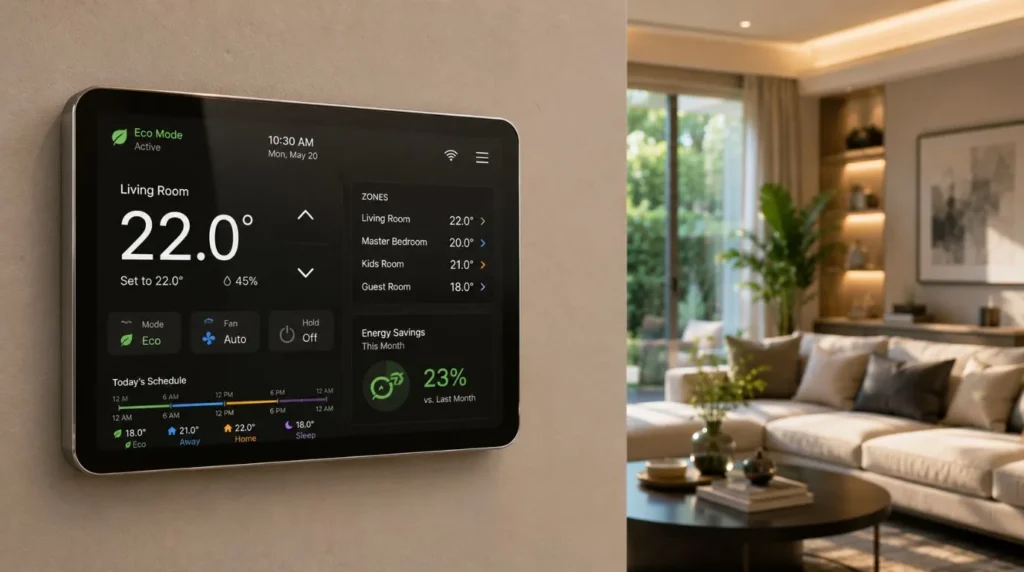
Heating and cooling usually consume the largest portion of a home’s energy.
Smart thermostats save money by:
- Learning daily routines
- Automatically adjusting temperatures
- Switching to eco mode when no one is home
- Preventing unnecessary heating and cooling
This often provides the highest return on investment among smart home upgrades.
2. Smart Lighting
Lighting automation reduces electricity use through:
- Occupancy detection
- Scheduled operation
- Automatic shutoff
- Daylight-based dimming
Combined with LED lighting, these features significantly reduce unnecessary energy consumption.
3. Occupancy Sensors
Instead of relying on someone remembering to turn things off, occupancy sensors automate:
- Lights
- Bathroom exhaust fans
- Hallways
- Utility rooms
- Storage areas
Small daily savings add up over the lifetime of the home.
4. Home Energy Monitoring
Many homeowners don’t know where most of their electricity is being used.
Energy monitoring systems provide insights into:
- Appliance consumption
- Daily energy trends
- Peak usage periods
- Opportunities to improve efficiency
Understanding consumption often leads to better long-term savings.
5. Motorized Curtains & Blinds
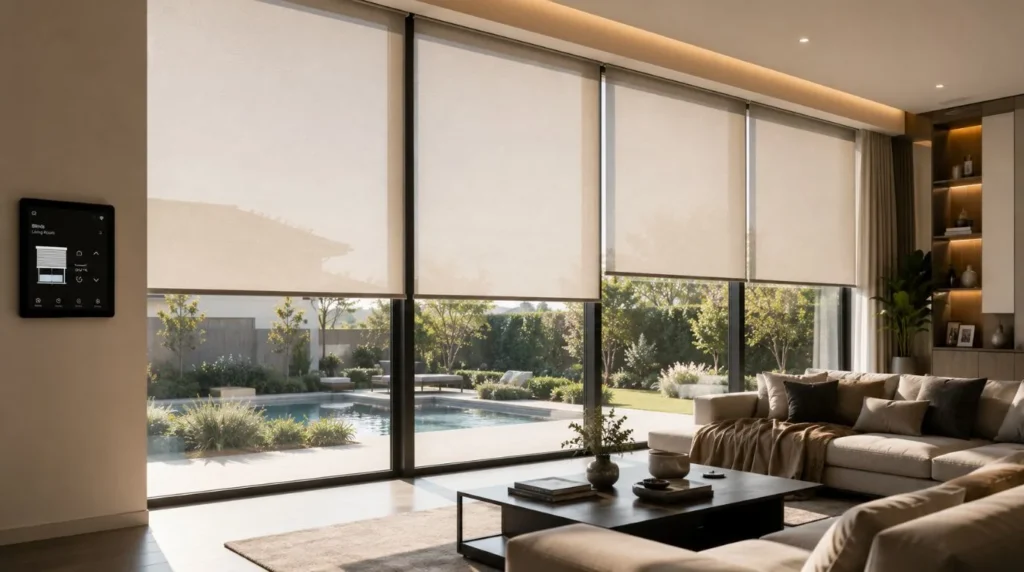
Automated shading helps regulate indoor temperatures.
Benefits include:
- Blocking afternoon heat
- Maximizing natural daylight
- Improving insulation
- Reducing HVAC workload
This contributes to lower heating and cooling costs throughout the year.
6. Smart HVAC Zoning
Rather than conditioning the entire house, zoning allows individual rooms or floors to be controlled independently.
Advantages include:
- Reduced energy waste
- Better comfort
- Personalized temperatures
- Lower operating costs in larger homes
7. Smart Plugs
Smart plugs eliminate unnecessary standby power by automatically switching off devices such as:
- Televisions
- Gaming consoles
- Coffee makers
- Chargers
- Decorative lighting
While individual savings are modest, they accumulate over time.
Smart Home Features That Save Money Indirectly
Some smart home features don’t directly reduce electricity bills but still create long-term financial value. These include:
Smart Leak Detection
Detects water leaks early and helps prevent expensive property damage.
Smart Security Systems
May reduce the risk of theft and can qualify for insurance discounts with some providers.
Predictive Maintenance Alerts
Notifies homeowners of unusual equipment behavior before small issues become costly repairs.
Remote Monitoring
Allows homeowners to check and manage their property while away, reducing unnecessary energy use and improving peace of mind.
Why Integration Creates Bigger Savings
The biggest savings come when smart home features work together.
Morning Routine
- Curtains open naturally.
- Lights adjust to daylight.
- HVAC prepares comfortable temperatures.
Leaving Home
- Lights turn off.
- HVAC switches to eco mode.
- Smart plugs disconnect selected devices.
- Security system arms automatically.
Evening
- Outdoor lighting follows sunset.
- Curtains close for insulation.
- Indoor temperatures adjust for comfort.
Automation eliminates waste without requiring homeowners to think about it.
Why KNX Maximizes Efficiency
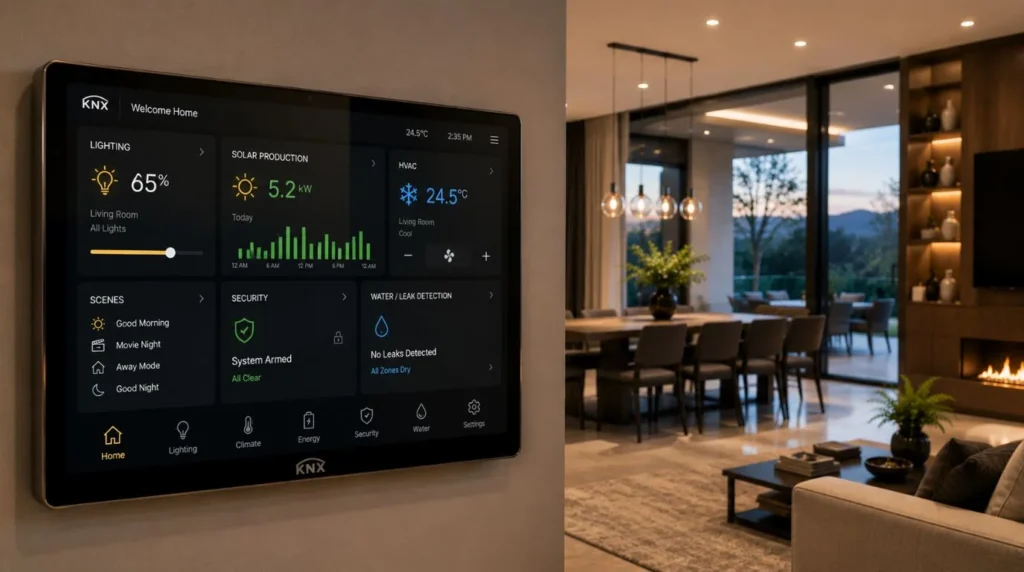
For premium homes, KNX home automation allows multiple systems to communicate through one reliable platform.
KNX integrates:
- Lighting
- HVAC
- Motorized curtains
- Energy monitoring
- Occupancy sensors
- Smart switches
- Security systems
Instead of each feature operating independently, the entire home responds intelligently to occupancy, schedules, weather, and user preferences, maximizing efficiency and long-term savings.
Common Mistakes
Buying Smart Gadgets Instead of Planning
Individual devices rarely deliver the same savings as an integrated automation strategy.
Ignoring HVAC
Heating and cooling typically provide the largest opportunity for reducing energy costs.
Not Monitoring Energy Usage
You can’t improve what you don’t measure.
Over-Automating Low-Impact Areas
Prioritize systems that consume the most energy before automating smaller loads.
Choosing Closed Ecosystems
Open, scalable platforms make future upgrades easier and often provide better long-term value.
Why It Matters
Choosing the right smart home features helps homeowners:
- Reduce electricity bills
- Improve comfort
- Extend equipment lifespan
- Increase property value
- Reduce environmental impact
- Future-proof their home
A smart home should create measurable value, not just add technology.
Our Perspective at Techtastic
At Techtastic, we believe the best smart home investments are the ones homeowners notice less over time because they work automatically in the background. Rather than filling a home with disconnected gadgets, we focus on automation that improves comfort while reducing unnecessary energy consumption and operating costs.
For larger homes and luxury residences, we often recommend KNX home automation because it allows lighting, climate control, shading, and energy monitoring to function as one intelligent ecosystem. This integrated approach delivers greater efficiency, better reliability, and stronger long-term value than standalone smart devices.
Collaboration Opportunities for Developers, Architects & Interior Designers
The most cost-effective smart homes begin during the design phase.
At Techtastic, we collaborate with:
- Architects
- Interior designers
- Residential developers
- Luxury home builders
- MEP consultants
- Sustainability consultants
Energy-Efficient Home Design
Incorporate automation strategies that reduce long-term operating costs.
KNX Infrastructure
Build scalable automation systems that maximize efficiency and future flexibility.
Lighting & Daylight Planning
Design spaces that combine natural light with intelligent lighting control.
Climate Control Integration
Coordinate HVAC, occupancy, and shading for optimal comfort and energy performance.
Premium Residential Projects
Deliver luxury homes that combine technology, sustainability, and measurable savings.
Future-Ready Developments
Prepare homes for renewable energy integration, battery storage, and evolving smart home technologies.
Planning smart home features from the beginning helps homeowners achieve better comfort, lower operating costs, and greater long-term return on investment.
Key Takeaways
- Smart home features save money when they automate high-energy systems rather than simply adding convenience.
- Smart thermostats typically provide the greatest energy savings by optimizing heating and cooling.
- Smart lighting, occupancy sensors, motorized curtains, and energy monitoring reduce unnecessary electricity consumption.
- Smart leak detection and security systems can prevent costly repairs and may lower insurance-related expenses.
- Integrated automation delivers greater savings than isolated smart devices.
- KNX home automation coordinates multiple systems to maximize efficiency and long-term value.
- Careful planning is the key to achieving meaningful financial returns from smart home technology.
Frequently Asked Questions
1. Which smart home features save the most money?
A. A smart thermostat usually provides the greatest savings because heating and cooling account for the largest share of household energy consumption.
2. Do smart lights reduce electricity bills?
A. Yes. Smart lighting lowers electricity usage by automatically switching lights off, dimming when appropriate, and responding to occupancy or daylight.
3. Is home energy monitoring worth it?
A. Yes. Energy monitoring helps identify inefficient appliances and provides insights that allow homeowners to reduce unnecessary electricity consumption.
4. Can motorized curtains really save energy?
A. Yes. By controlling sunlight and indoor temperatures, motorized curtains reduce the workload on heating and cooling systems throughout the year.
5. Are smart security systems a financial investment?
A. While they don’t directly reduce electricity bills, smart security systems help protect property and may qualify for insurance discounts depending on the insurer and policy.
6. Does KNX improve energy efficiency?
A. Yes. KNX integrates lighting, HVAC, occupancy sensors, shading, and energy monitoring into one coordinated platform, enabling more efficient operation across the home.
7. Should I automate everything at once?
A. Not necessarily. Many homeowners begin with high-impact areas such as climate control and lighting, then expand their system as their needs and budget evolve.
8. Is a smart home worth the investment?
A. For many homeowners, yes. A thoughtfully designed smart home improves comfort, convenience, energy efficiency, and long-term property value while reducing ongoing operating costs.
Conclusion
The smart home features that deliver the greatest financial value are those that reduce energy waste and optimize the systems you use every day. Smart thermostats, intelligent lighting, occupancy sensors, motorized curtains, and energy monitoring work together to lower utility bills, improve comfort, and extend the lifespan of household equipment. When integrated into a single automation platform, these smart home features provide benefits that continue well beyond the initial installation.
At Techtastic, we design smart homes that prioritize long-term value over short-term novelty. Whether you’re beginning with a few high-impact upgrades or investing in a fully integrated KNX home automation system, our solutions are built to improve efficiency, simplify daily living, and deliver lasting returns on your investment.
📞 Call/WhatsApp: 9769145145
📍 Our Operational Hubs: Navi Mumbai | Nashik | Lonavla | Sangli
Wondering how to manage all these requirements? Read our expert guide on Does a Smart Home Increase Home Value in 2026?