
Summary
The most effective smart home energy monitoring systems combine multiple energy-saving devices rather than relying on a single product. Smart thermostats, occupancy sensors, smart lighting, smart plugs, motorized curtains, and smart home energy monitoring work together to reduce unnecessary electricity consumption. When integrated into a smart home automation system, these technologies improve comfort while lowering energy bills without requiring constant manual adjustments.
Quick Answer
The smart devices that typically save the most energy are smart thermostats, smart lighting, occupancy sensors, smart plugs, motorized curtains, and smart home energy monitoring systems. Together, they automatically reduce unnecessary energy usage by turning off unused devices, optimizing heating and cooling, adjusting lighting based on occupancy, and providing insights into where electricity is being consumed.
What Smart Devices Save the Most Energy at Home?
Energy costs continue to rise, making homeowners more aware of how much electricity their homes consume. The good news is that reducing energy waste doesn’t always require replacing major appliances.
Often, it’s about using the energy you already consume more efficiently. That’s where smart home energy monitoring and automation make a real difference. Instead of relying on memory to switch off lights or adjust the thermostat, your home can make those decisions automatically.
At Techtastic, we believe the smartest home isn’t the one with the most devices; it’s the one that uses energy intelligently.
1. Smart Thermostats
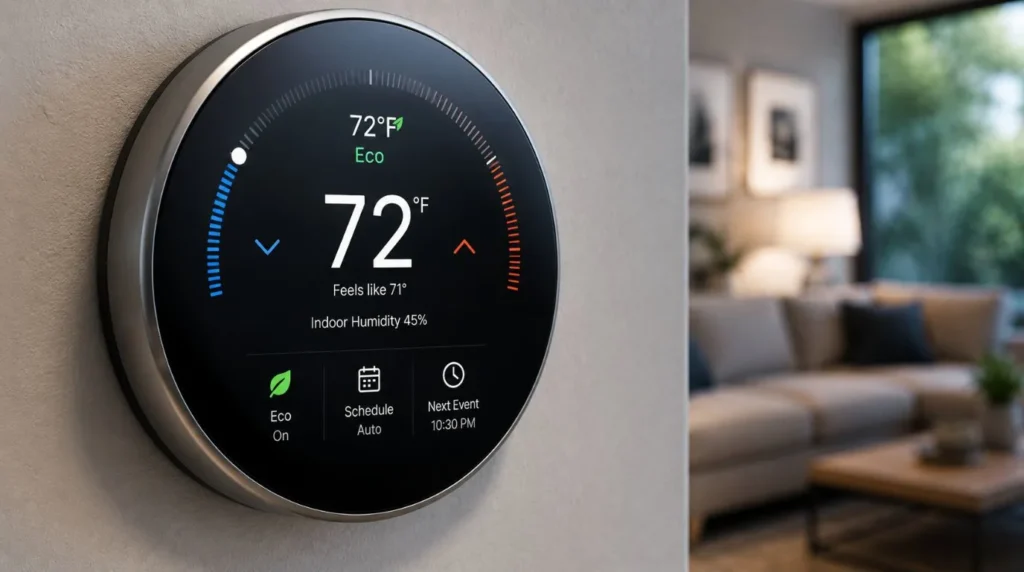
Heating and cooling usually account for the largest share of household energy consumption. A smart thermostat helps by:
- Learning your daily routine
- Automatically adjusting temperatures
- Switching to eco mode when nobody is home
- Preventing unnecessary heating or cooling
For many households, this is one of the most impactful smart home energy monitoring upgrades.
2. Smart Lighting
Lighting is used every day, making it an ideal area for automation. Smart lighting can:
- Turn off automatically when rooms are empty
- Follow sunrise and sunset schedules
- Adjust brightness based on natural daylight
- Create energy-efficient lighting scenes
LED smart bulbs combined with automation provide even greater savings.
3. Occupancy & Motion Sensors
One of the simplest ways to reduce electricity waste is ensuring devices only operate when needed. Occupancy sensors can automatically control:
- Lights
- Bathroom exhaust fans
- Hallway lighting
- Closets
- Utility rooms
No one has to remember to switch them off.
4. Smart Plugs
Many electronic devices continue drawing power even when they appear to be turned off. Smart plugs help eliminate this “standby” or “phantom” power consumption. They can automatically switch off:
- TVs
- Gaming consoles
- Chargers
- Coffee machines
- Fans
- Decorative lighting
Scheduling these devices can reduce unnecessary energy use.
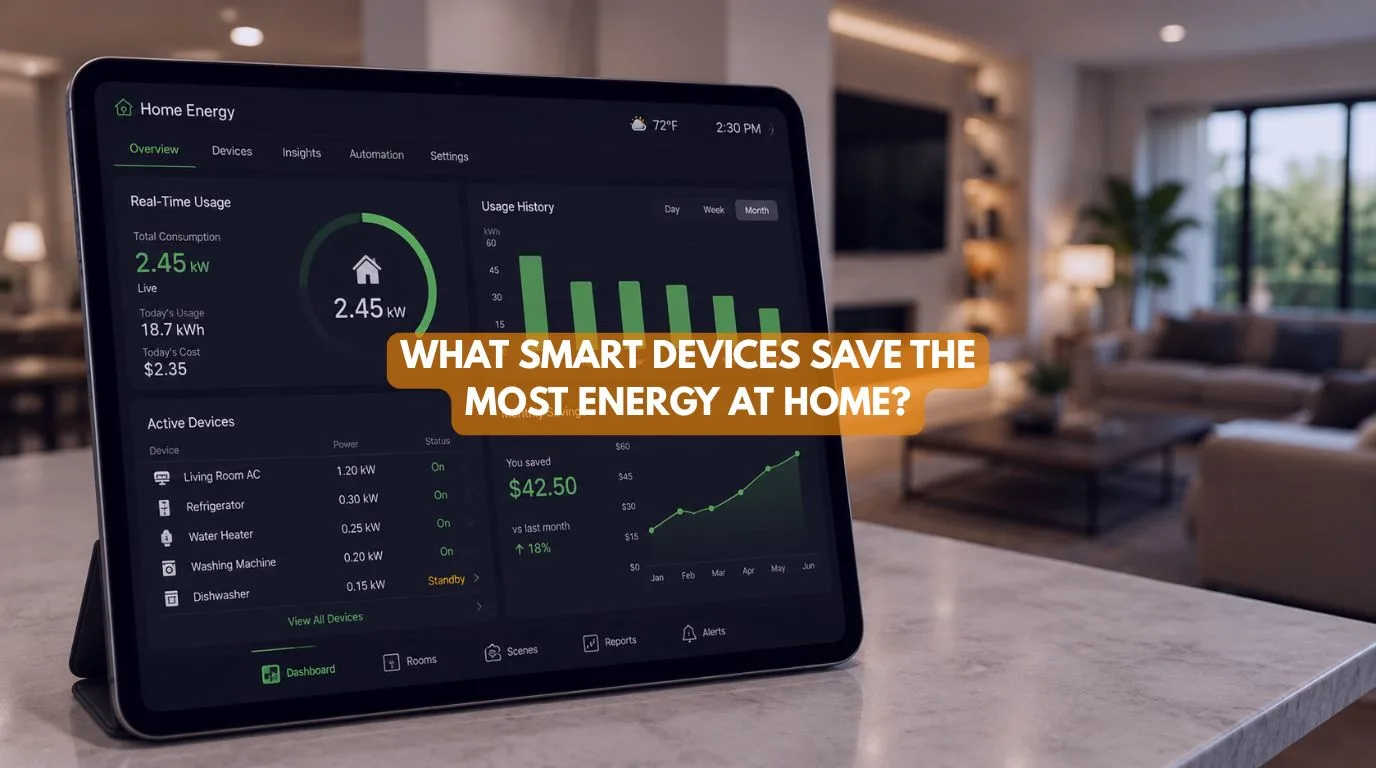
5. Smart Home Energy Monitoring Systems
One of the biggest challenges in reducing electricity bills is identifying where energy is being used. A smart home energy monitoring system provides insights into:
- Daily electricity consumption
- Peak usage times
- High-energy appliances
- Historical trends
- Opportunities to improve efficiency
With this information, homeowners can make smarter decisions about energy usage.
6. Motorized Curtains & Blinds
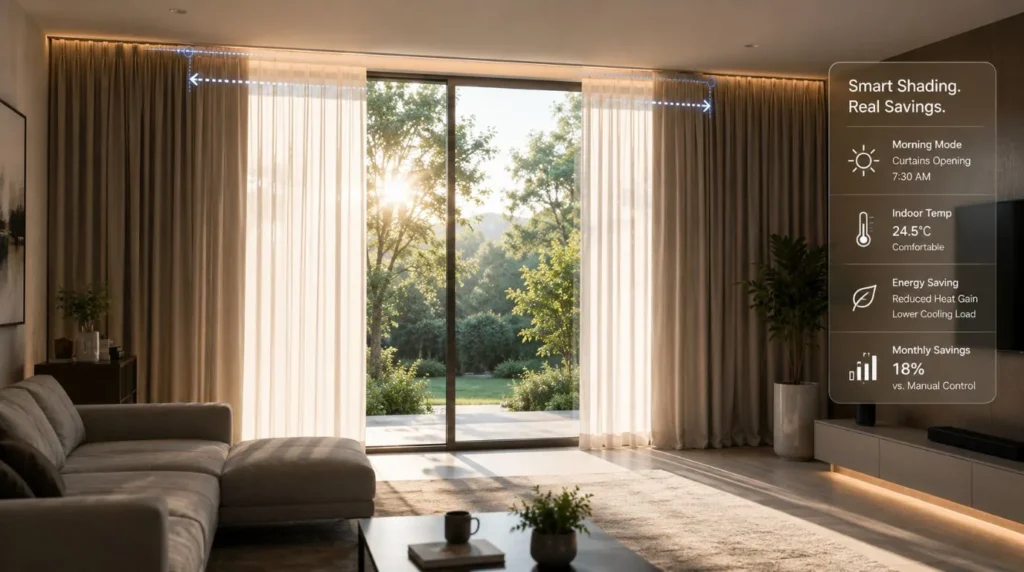
Natural light and insulation play a significant role in home energy efficiency. Motorized curtains can:
- Open during cooler mornings to use daylight
- Close during hot afternoons to reduce heat gain
- Help retain warmth during winter evenings
Reducing the workload on heating and cooling systems often leads to noticeable energy savings.
7. Smart HVAC Zoning
Instead of heating or cooling the entire home, smart zoning allows different areas to be controlled independently. Benefits include:
- Reduced energy waste
- Improved comfort
- Personalized temperature settings
- Better efficiency in larger homes
Why Automation Saves More Than Individual Devices
Buying smart devices alone doesn’t guarantee lower electricity bills. The real savings come from automation. For example:
Leaving Home Routine
- Lights turn off
- HVAC switches to eco mode
- Smart plugs disconnect selected devices
- Curtains close automatically
Night Routine
- Unused lights switch off
- Temperature adjusts for sleeping
- Entertainment devices power down
- Outdoor lighting follows schedules
Automation ensures energy-saving actions happen consistently every day.
Why KNX Is Ideal for Energy Management
For homeowners seeking long-term efficiency, KNX home automation provides comprehensive energy management.
KNX can coordinate:
- Lighting
- HVAC
- Motorized curtains
- Occupancy sensors
- Smart home energy monitoring
- Smart switches
- Renewable energy systems
Instead of individual devices operating independently, the entire home works together to optimize energy usage.
Common Energy-Saving Mistakes
Buying Devices Without Automation
Automation delivers greater savings than manual control.
Ignoring Heating & Cooling
HVAC usually offers the greatest opportunity for reducing energy consumption.
Forgetting Standby Power
Many electronics consume electricity even when not actively in use.
Poor Lighting Schedules
Lights should respond to occupancy and natural daylight.
Not Monitoring Energy Usage
You can’t improve what you don’t measure.
Why It Matters
Reducing household energy consumption provides:
- Lower electricity bills
- Greater sustainability
- Improved comfort
- Longer equipment lifespan
- Reduced environmental impact
Smart home energy monitoring systems don’t just use technology, but they use it efficiently.
Our Perspective at Techtastic
At Techtastic, we believe energy efficiency should be built into the way a home operates, not left to chance. Rather than relying on homeowners to manually adjust lighting, temperature, or appliances throughout the day, we design automation that responds intelligently to occupancy, schedules, and environmental conditions.
For larger and premium homes, we often recommend KNX home automation because it allows lighting, HVAC, shading, and smart home energy monitoring to work together as one integrated system. This coordinated approach not only improves comfort but also delivers meaningful long-term energy savings.
Collaboration Opportunities for Developers, Architects & Interior Designers
Energy-efficient homes begin with thoughtful planning.
At Techtastic, we collaborate with:
- Architects
- Interior designers
- Residential developers
- Luxury home builders
- MEP consultants
- Sustainability consultants
Smart Energy Planning
Design homes that minimize unnecessary energy consumption.
KNX Infrastructure
Build intelligent automation that optimizes lighting, HVAC, and shading.
Daylight & Lighting Design
Reduce electricity usage while enhancing occupant comfort.
Climate Control Integration
Coordinate HVAC with occupancy and weather conditions.
Premium Residential Projects
Deliver homes that combine luxury with long-term efficiency.
Future-Ready Developments
Prepare properties for renewable energy integration and evolving smart technologies.
Planning energy management from the beginning results in lower operating costs and more sustainable living.
Key Takeaways
- Smart home energy monitoring helps identify where electricity is being used and where savings are possible.
- Smart thermostats often provide the greatest energy savings by optimizing heating and cooling.
- Smart lighting, occupancy sensors, and smart plugs reduce unnecessary electricity consumption.
- Motorized curtains help improve heating and cooling efficiency.
- Automation routines deliver greater savings than manually controlling devices.
- KNX home automation integrates multiple systems for comprehensive energy management.
- Monitoring, automation, and thoughtful planning work together to create a more energy-efficient home.
Frequently Asked Questions
1. Which smart device saves the most energy?
A: A smart thermostat typically provides the largest energy savings because heating and cooling are often the biggest contributors to household electricity consumption.
2. Do smart lights reduce electricity bills?
A: Yes. Smart lighting reduces energy usage by turning lights off automatically, dimming when appropriate, and following schedules based on occupancy or daylight.
3. Are smart plugs worth it?
A: Yes. Smart plugs help eliminate standby power consumption by automatically switching off electronics when they are not needed.
4. What is smart home energy monitoring?
A: It is a system that tracks electricity usage throughout your home, helping identify high-consumption appliances, monitor trends, and improve overall energy efficiency.
5. Can smart homes really lower electricity bills?
A: Yes. When smart devices are combined with automation, many households see reduced energy waste and lower utility costs over time.
6. How do motorized curtains save energy?
A: They help regulate indoor temperatures by controlling sunlight and heat gain, reducing the workload on heating and cooling systems.
7. Does KNX support energy management?
A: Yes. KNX integrates lighting, HVAC, occupancy sensors, shading, and smart home energy monitoring into one coordinated system, making it highly effective for managing household energy consumption.
8. Should I start with one device or a complete system?
A: Most homeowners benefit from starting with high-impact devices such as a smart thermostat or lighting system and gradually expanding into a fully integrated smart home energy monitoring system.
Conclusion
The biggest energy savings come from combining smart home energy monitoring with intelligent automation rather than relying on individual devices alone. Smart thermostats, lighting, occupancy sensors, smart plugs, motorized curtains, and energy monitoring systems work together to reduce unnecessary electricity use while improving comfort and convenience. The result is a home that automatically uses energy more efficiently every day.
At Techtastic, we design smart homes that balance luxury, sustainability, and long-term performance. Whether you’re starting with a few energy-saving devices or investing in a fully integrated KNX home automation system, we create intelligent solutions that help reduce energy costs while making your home more comfortable and future-ready.
📞 Call/WhatsApp: 9769145145
📍 Our Operational Hubs: Navi Mumbai | Nashik | Lonavla | Sangli
Ready to take the next step? Explore our comprehensive breakdown on How to Mix Different Smart Home Brands: 5 Expert Tips.