
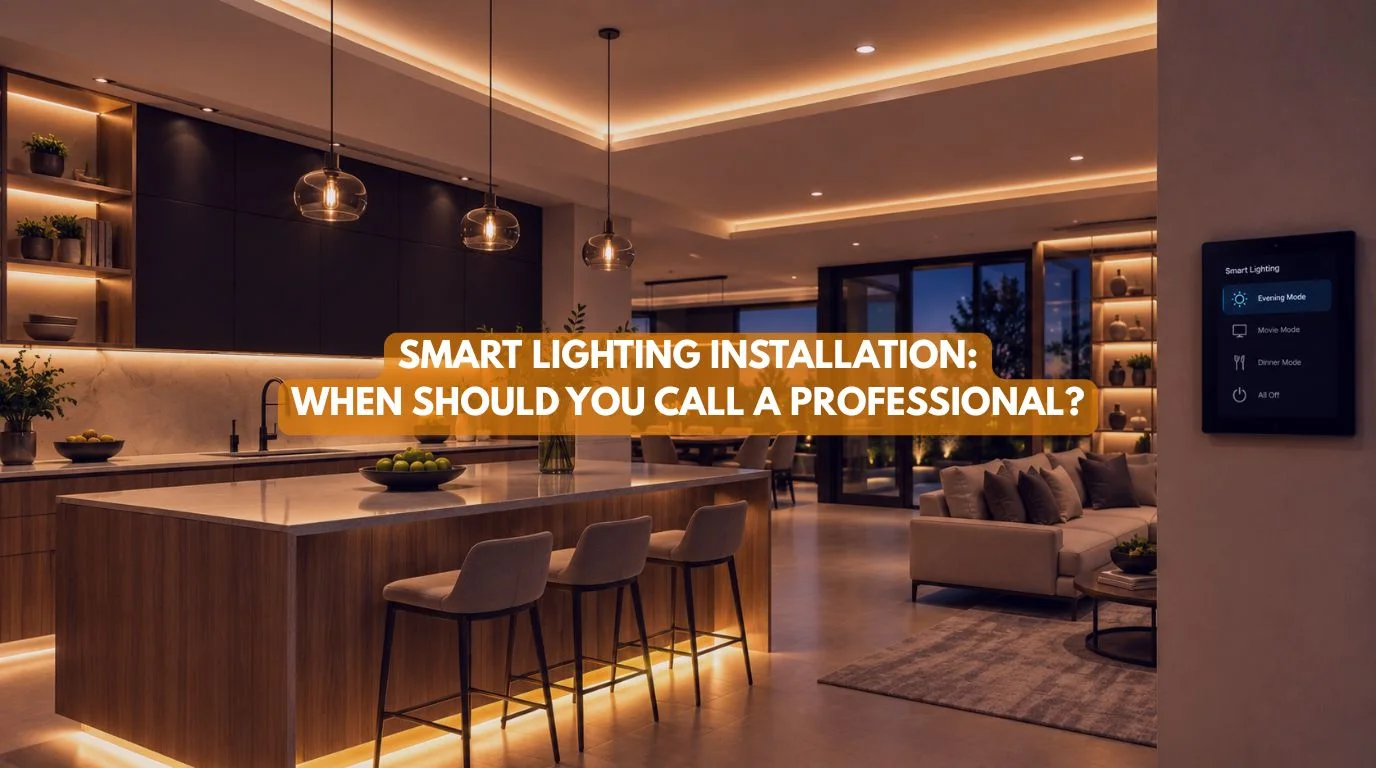
Summary
Smart lighting installation can range from replacing a single smart bulb to designing a fully integrated lighting automation system. While many wireless smart bulbs and plug-and-play devices are suitable for DIY installation, projects involving smart switches, multiple lighting circuits, dimmers, structured wiring, or whole-home automation benefit from professional installation. An experienced installer ensures proper wiring, reliable networking, seamless automation, and future scalability, especially when using professional platforms like KNX.
Quick Answer
If you’re installing a few smart bulbs or plug-in lights, you can usually do it yourself. However, if your project involves smart lighting installation with wired smart switches, dimmers, multiple rooms, automation scenes, or integrated home automation, hiring a professional is the better choice. Professional installation improves safety, reliability, aesthetics, and long-term performance while preparing your home for future expansion.
When Should You Call a Professional for Smart Lighting Installation?
Smart lighting is often the first step homeowners take into home automation. It’s easy to see why. With the touch of a button or even automatically, you can:
- Control every light in your home
- Create personalized lighting scenes
- Save energy
- Improve security
- Enhance comfort
But once you’ve decided to upgrade your lighting, another question quickly follows: “Should I install it myself or hire a professional?” The answer depends on the type of smart lighting you’re installing.
At Techtastic, we’ve found that while simple upgrades are ideal for DIY enthusiasts, professionally designed lighting systems deliver a much better experience for whole-home automation.
When DIY Smart Lighting Installation Makes Sense
Many beginner-friendly products are designed for simple installation. DIY is usually suitable for:
Smart Bulbs
Replace your existing bulbs without changing the wiring.
Smart Plugs
Control lamps and decorative lighting.
Portable Smart Lamps
Perfect for renters and temporary setups.
Voice Assistant Integration
Connect smart lights with Alexa, Google Assistant, or Apple HomeKit.
These projects typically require little more than following the manufacturer’s setup instructions.
When You Should Call a Professional
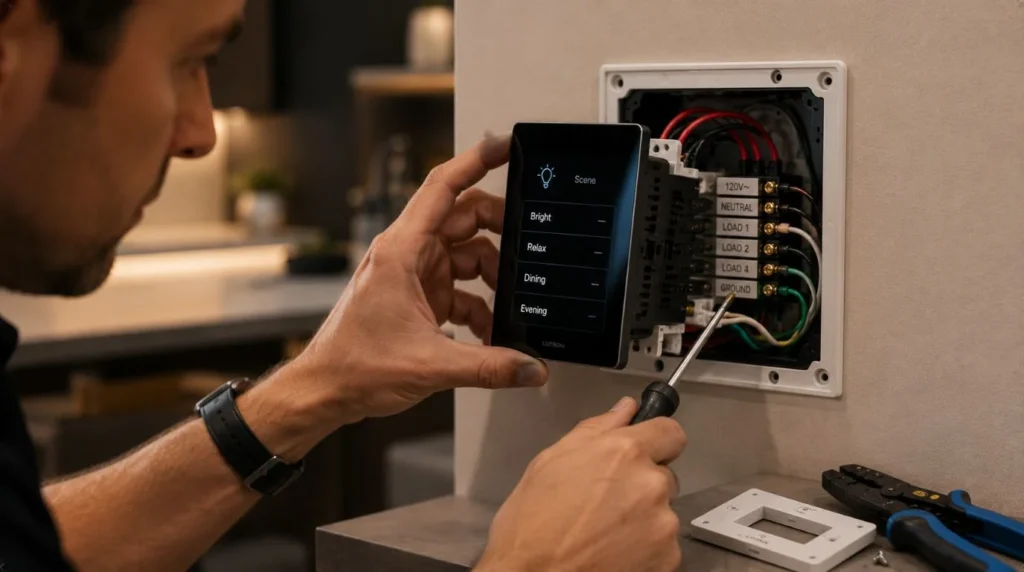
Professional smart lighting installation becomes worthwhile when your lighting system is more than a few connected devices. You should consider hiring an expert if you’re installing:
Smart Switches
Replacing existing wall switches involves working with electrical wiring and should be done safely.
Multiple Lighting Circuits
Coordinating several rooms requires careful planning and programming.
Dimmers
Smart dimmers must be compatible with your lighting fixtures and electrical setup.
Whole-Home Automation
Integrated lighting scenes across multiple rooms are best designed professionally.
New Construction or Renovation
This is the ideal time to install structured wiring or KNX infrastructure before walls are finished.
How Much Does Smart Lighting Installation Cost?
The cost of smart lighting installation depends on the size of your property, the type of lighting controls you choose, and the level of automation you want. Installing a few smart bulbs is relatively inexpensive, while a professionally designed lighting control system involving smart switches, dimmers, sensors, and centralized automation requires greater planning and installation expertise.
Some of the factors that influence the overall investment include:
- Number of rooms and lighting circuits
- Smart bulbs versus smart switches
- Wired or wireless lighting systems
- Motion sensors and occupancy detection
- Lighting scene programming
- Voice assistant integration
- KNX or other professional automation platforms
- Electrical upgrades and structured wiring
Although DIY installations may appear more affordable initially, professionally installed lighting systems often provide better long-term value through improved reliability, easier maintenance, enhanced energy efficiency, and greater flexibility for future expansion.
At Techtastic, we recommend selecting a lighting solution based on your lifestyle, architectural design, and future automation goals rather than focusing only on the initial installation cost.
Benefits of Professional Smart Lighting Installation
Safer Electrical Work
Professional installers ensure switches, dimmers, and lighting circuits are installed according to electrical standards.
Better Lighting Design
Professionals don’t just install lights; they design experiences.
They consider:
- Brightness
- Room usage
- Lighting zones
- Natural daylight
- User convenience
Cleaner Installation
A professional smart lighting installation provides:
- Proper cable management
- Neat switch placement
- Consistent aesthetics
- Reliable hardware installation
Advanced Automation
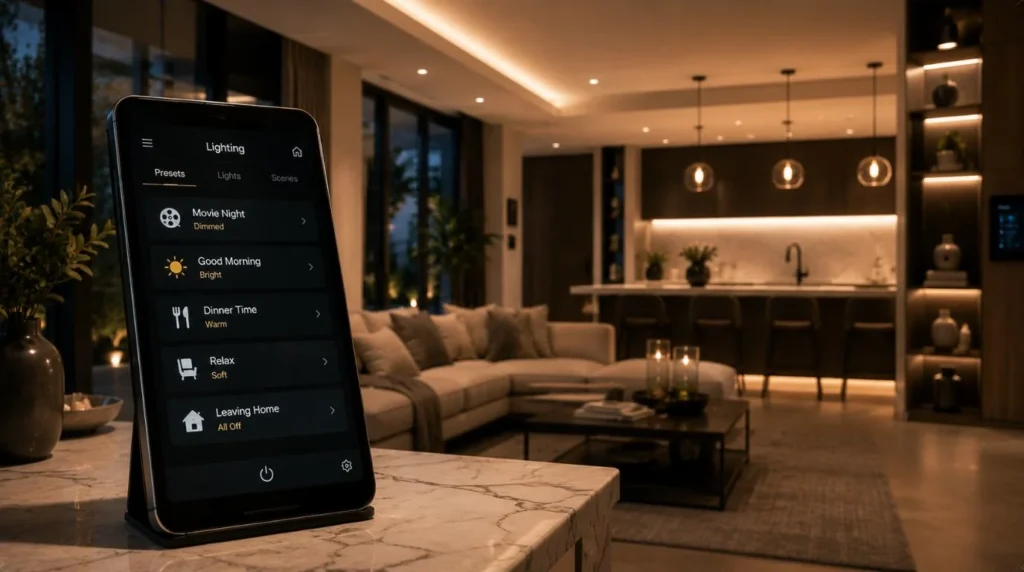
Professionally programmed lighting can create scenes such as:
Good Morning
Lights brighten gradually.
Movie Night
Lights dim automatically.
Leaving Home
All lights switch off with one command.
Night Mode
Pathway lighting activates automatically when motion is detected.
Future Expansion
A professionally designed system makes it easier to add:
- Security
- Motorized curtains
- Climate control
- Home theatre
- Energy management
Without redesigning the entire system.
Smart Lighting Installation: DIY vs Professional
| DIY Installation | Professional Installation |
|---|---|
| Smart bulbs | Complete lighting automation |
| Basic setup | Lighting design & planning |
| Individual devices | Integrated smart home system |
| Suitable for one room | Whole-home lighting control |
| Limited scalability | Future-ready infrastructure |
| Self-support | Ongoing professional support |
Why KNX Is Different
For premium homes, KNX lighting control provides a professional approach to smart lighting installation.
Unlike many Wi-Fi systems, KNX offers:
- Local operation
- Reliable performance
- Whole-home lighting control
- Long product lifespan
- Easy integration with security, HVAC, and motorized curtains
Because KNX requires system programming and electrical planning, professional installation is essential.
Common DIY Mistakes
Installing Incompatible Devices
Not all smart bulbs, switches, and dimmers work together.
Ignoring Electrical Requirements
Some smart switches require neutral wiring or specific electrical configurations.
Poor Wi-Fi Coverage
Weak networking often causes delayed lighting responses.
Mixing Multiple Brands
Using several ecosystems makes automation more complicated.
Planning Only for Today
Many homeowners later wish they’d designed their lighting for future expansion.
Why It Matters
Lighting influences almost every part of your daily routine. A professionally installed smart lighting system can improve:
- Comfort
- Convenience
- Security
- Energy efficiency
- Property appeal
Good lighting isn’t just functional, but it’s an experience.
Our Perspective at Techtastic
At Techtastic, we believe smart lighting should feel effortless.
Rather than simply installing switches or bulbs, we design lighting systems that complement your lifestyle, architecture, and future automation plans. Whether you’re upgrading a single room or creating a fully automated luxury residence, our goal is to ensure every light responds intelligently, operates reliably, and integrates seamlessly with the rest of your home.
For homeowners planning long-term automation, we often recommend KNX lighting control, providing dependable local operation, elegant scene control, and easy expansion as your home evolves.
Collaboration Opportunities for Developers, Architects & Interior Designers
The best lighting systems begin during the design phase.
At Techtastic, we collaborate with:
- Architects
- Interior designers
- Residential developers
- Luxury home builders
- MEP consultants
- Commercial project planners
Smart Lighting Planning
Design lighting around how people live.
KNX Lighting Infrastructure
Create reliable, scalable lighting automation.
Architectural Lighting Design
Blend technology with beautiful interiors.
Structured Networking
Support dependable lighting control throughout the property.
Premium Residential Projects
Deliver elegant, future-ready lighting experiences.
Future-Ready Developments
Prepare homes for evolving automation technologies.
Early planning results in cleaner installations, better lighting performance, and more flexible future upgrades.
Key Takeaways
- DIY smart lighting installation is suitable for smart bulbs and simple plug-and-play lighting.
- Professional smart lighting installation is recommended for smart switches, dimmers, and whole-home automation.
- Proper lighting design improves comfort, aesthetics, and energy efficiency.
- Integrated lighting scenes provide greater convenience than standalone smart bulbs.
- KNX offers highly reliable lighting automation for premium homes.
- Planning for future expansion saves time and money later.
- Professional installation ensures safer wiring, cleaner finishes, and long-term reliability.
Frequently Asked Questions
1. Do I need a professional for smart lighting installation?
A: Not always. Smart bulbs and plug-in devices are often suitable for DIY smart lighting installation. However, wired smart switches, dimmers, and integrated lighting systems should generally be installed by a qualified professional.
2. Can I install smart light switches myself?
A: If electrical work is involved, professional installation is recommended to ensure safety, compliance, and proper operation.
3. What’s the difference between smart bulbs and smart switches?
A: Smart bulbs control individual light fixtures, while smart switches control entire lighting circuits and maintain normal wall switch functionality.
4. Is professional installation worth it?
A: Yes. Professional installation provides better system design, reliable wiring, advanced automation, and easier future expansion.
5. Can smart lighting integrate with other smart home devices?
A: Absolutely. Smart lighting can work with security systems, climate control, motorized curtains, entertainment systems, and voice assistants.
6. Does smart lighting require Wi-Fi?
A: Many consumer systems use Wi-Fi, while professional solutions like KNX use a dedicated communication network for greater reliability and local operation.
7. Can I expand my smart lighting system later?
A: Yes. A well-designed lighting system can easily grow to include additional rooms, scenes, and integrated smart home features.
8. Is KNX suitable for lighting automation?
A: Yes. KNX is one of the most reliable and scalable solutions for whole-home lighting control, particularly in premium residential projects.
Conclusion
A successful smart lighting installation is about more than replacing bulbs or switches; it’s about creating a lighting system that enhances the way you live. While DIY solutions are ideal for simple upgrades, professionally installed smart lighting offers better safety, seamless automation, cleaner integration, and the flexibility to grow with your home.
At Techtastic, we design smart lighting solutions that combine beautiful lighting experiences with reliable automation.
📞 Call/WhatsApp: 9769145145
📍 Our Operational Hubs: Navi Mumbai | Nashik | Lonavla | Sangli
Whether you’re installing smart switches in a single room or building a fully integrated KNX lighting control system, we create future-ready solutions that make your home more comfortable, efficient, and enjoyable every day.
Want to ensure your system investment is fully protected? Head over to our deep dive on Do Smart Light Switches Work After a Power Outage (2026)?