
Summary
A smart home security solution combines connected devices such as smart cameras, door locks, motion sensors, alarms, video doorbells, and lighting automation into one intelligent system that protects your home. Unlike traditional security systems, smart home security allows homeowners to monitor, control, and automate security features remotely while integrating them with lighting, climate control, and other smart home technologies. Professionally designed systems provide greater reliability, better integration, and improved long-term scalability.
Quick Answer
A smart home security solution uses connected devices to monitor, protect, and automate your home’s security. It can include smart cameras, smart locks, motion sensors, alarms, video doorbells, and automated lighting that work together to deter intruders and keep homeowners informed in real time. Whether you’re upgrading a small apartment or building a luxury home, smart security improves convenience, safety, and peace of mind.
Home security has evolved far beyond traditional locks and alarm systems.
Today’s homeowners want more than just protection; they want complete visibility and control over their property, whether they’re at home or halfway around the world. That’s exactly what a smart home security solution delivers.
Instead of relying on standalone devices, modern security systems connect cameras, smart locks, lighting, sensors, and automation into one intelligent ecosystem that actively helps protect your home.
At Techtastic, we believe the best security system isn’t simply one that records incidents but one that helps prevent them.
Here’s everything you need to know before investing in a smart home security solution.
What is a Smart Home Security System?
Smart home security combines connected devices that work together to monitor and protect your property.
These systems allow homeowners to:
- Monitor their home remotely
- Receive instant alerts
- Control access
- Automate security routines
- View live camera feeds
- Respond quickly to unusual activity
Unlike traditional alarm systems, smart security is interactive, connected, and customizable.
Essential Components of a Smart Home Security Solution
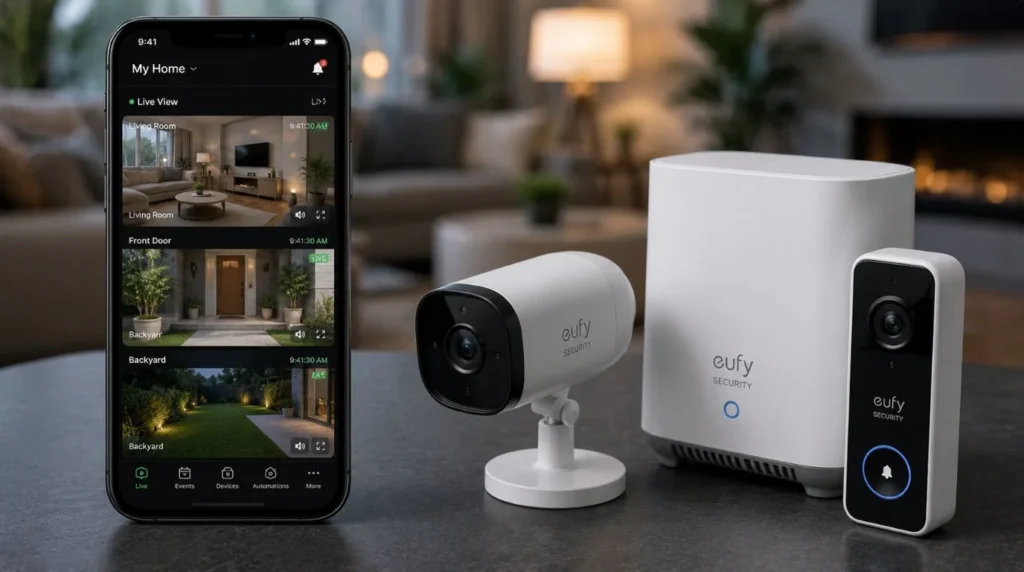
Smart Security Cameras
Indoor and outdoor cameras provide:
- Live video monitoring
- Motion detection
- Night vision
- Mobile notifications
- Recorded footage
Strategic camera placement helps eliminate blind spots around your property.
Video Doorbells
A smart video doorbell lets you:
- See visitors in real time
- Speak to delivery personnel remotely
- Monitor package deliveries
- Receive motion alerts
It’s one of the most popular entry-level smart security upgrades.
Smart Door Locks
Smart locks provide:
- Keyless entry
- Temporary guest access
- Remote locking and unlocking
- Activity logs
- Enhanced convenience
They also integrate well with other smart home routines.
Motion Sensors
Motion sensors detect unexpected movement and can automatically trigger:
- Security cameras
- Alarms
- Outdoor lighting
- Mobile notifications
Door and Window Sensors
These sensors notify you when:
- A door opens
- A window is left open
- An unexpected entry occurs
They’re simple but highly effective security devices.
Smart Alarm Systems
Modern alarms can:
- Trigger sirens
- Send smartphone alerts
- Notify multiple family members
- Integrate with cameras and lighting
This creates faster awareness during potential security events.
How Smart Home Security Solution Works Together
The real advantage comes from automation.
For example:
Someone Rings the Doorbell
- Camera records
- A mobile notification appears
- Indoor touch panel displays live video
Motion Detected at Night
- Outdoor lights turn on
- Cameras begin recording
- Alarm is prepared for activation
- Notification is sent instantly
Leaving Home
One tap can:
- Lock doors
- Arm security
- Switch off the lights
- Close motorized curtains
- Adjust the climate control
This connected experience improves both convenience and protection.
How Much Does a Smart Home Security Solution Cost?
The cost of a smart home security solution depends on the size of your property, the number of devices you need, and the level of automation you want. A basic setup with a smart video doorbell and a few indoor cameras is more affordable than a professionally designed system that integrates surveillance, smart locks, lighting, alarms, and centralized home automation.
Some of the key factors that influence the overall investment include:
- Number of entry points to secure
- Indoor and outdoor security cameras
- Smart locks and access control
- Motion, door, and window sensors
- Alarm systems
- Smart lighting integration
- Structured networking and Wi-Fi coverage
- KNX or other professional automation platforms
- Installation, programming, and homeowner training
While it can be tempting to compare systems based only on price, homeowners should also consider long-term reliability, ease of use, future scalability, and after-sales support. A professionally planned security system often delivers greater value by reducing maintenance issues and making future upgrades much easier.
At Techtastic, we recommend designing a security solution around your property’s layout and your family’s lifestyle rather than selecting devices individually.
Smart Home Security Solution vs Traditional Security
| Traditional Security | Smart Home Security Solution |
|---|---|
| Alarm only | Complete connected ecosystem |
| Limited remote access | Full mobile control |
| Separate devices | Integrated automation |
| Basic notifications | Real-time alerts |
| Manual operation | Automated security routines |
| Fixed functionality | Easily expandable |
Smart home security goes beyond monitoring by actively responding to events.
Is a Smart Home Security Solution Worth It?
For most homeowners, yes.
Benefits include:
- Better home protection
- Remote monitoring
- Greater peace of mind
- Faster emergency awareness
- Increased convenience
- Enhanced property appeal
It also integrates naturally with modern smart home automation.
The Role of KNX in Smart Home Security
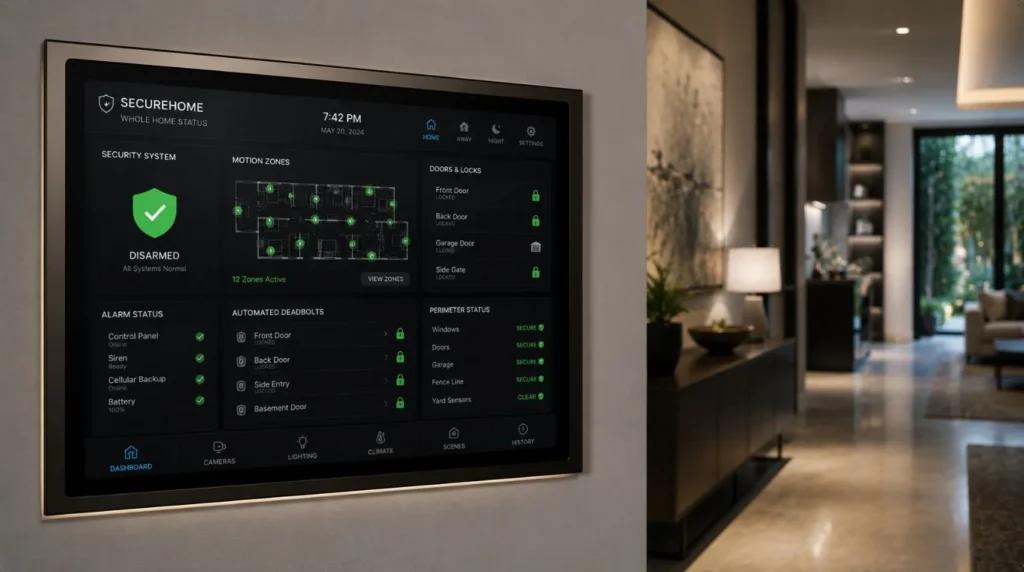
For premium homes, KNX home automation creates a highly integrated security solution.
KNX allows:
- Cameras
- Motion sensors
- Smart lighting
- Door locks
- Alarm systems
- Motorized curtains
- Climate control
To communicate through one reliable automation platform.
Because KNX operates locally, core automation continues working even if internet connectivity is interrupted.
Common Smart Home Security Mistakes
Installing Too Few Cameras
Cover all key entry points rather than just the front door.
Ignoring Network Quality
Reliable Wi-Fi or structured networking is essential for connected security devices.
Using Multiple Apps
A single integrated ecosystem is easier to manage than several disconnected platforms.
Forgetting Lighting
Lighting automation is one of the most effective security deterrents.
Not Planning for Future Expansion
Choose a system that can grow with your home’s changing needs.
Why It Matters
A smart home security solution isn’t just about protecting your property.
It’s about helping you feel confident, whether you’re:
- Sleeping
- At work
- On vacation
- Traveling with family
A well-designed system quietly monitors your home, alerts you to important events, and automates responses that improve both safety and convenience.
Our Perspective at Techtastic
At Techtastic, we believe security should be intelligent, proactive, and easy to use.
Rather than installing individual cameras or alarms, we design integrated security systems where lighting, surveillance, access control, automation, and networking work together seamlessly. Whether it’s a compact apartment or a luxury villa, our goal is to create a security solution that protects your home while fitting naturally into your everyday routine.
For homeowners seeking long-term reliability and complete integration, we often recommend KNX home automation, allowing security to become part of a fully connected smart home rather than a standalone system.
Collaboration Opportunities for Developers, Architects & Interior Designers
The best security systems begin during the design stage.
At Techtastic, we collaborate with:
- Architects
- Interior designers
- Residential developers
- Luxury home builders
- MEP consultants
- Commercial project planners
Smart Security Planning
Integrate security from the earliest project stages.
KNX Infrastructure
Build reliable, future-ready automation systems.
Smart Lighting Integration
Improve safety through intelligent lighting design.
Structured Networking
Support dependable camera and device communication.
Premium Residential Projects
Create elegant, discreet security solutions.
Future-Ready Developments
Design homes prepared for evolving security technologies. Planning security early creates cleaner installations, better coverage, and more reliable long-term performance.
Key Takeaways
- Smart home security solution combines cameras, locks, sensors, alarms, and automation into one connected ecosystem.
- Integrated systems provide greater protection than standalone security devices.
- Smart lighting, motion sensors, and automation help prevent incidents rather than simply recording them.
- Reliable networking is essential for consistent performance.
- KNX provides professional-grade security integration for premium homes.
- Choose scalable systems that support future expansion.
- Professional planning ensures better coverage, reliability, and ease of use.
Frequently Asked Questions
1. What is a smart home security solution?
A: A smart home security solution is a connected system of cameras, smart locks, sensors, alarms, and automation that helps monitor and protect your property while allowing remote control through mobile apps or smart home platforms.
2. Is smart home security worth it?
A: Yes. It improves safety, provides real-time alerts, enables remote monitoring, and integrates with other smart home features such as lighting and climate control.
3. What devices are included in a smart home security solution system?
A: A typical system includes smart security cameras, video doorbells, smart locks, motion sensors, door and window sensors, alarms, and automated lighting.
4. Can I monitor my home when I’m away?
A: Yes. A smart home security solution allows live video viewing, notifications, and remote control through a smartphone app.
5. Does smart home security require Wi-Fi?
A: Most consumer systems rely on Wi-Fi for remote access and app control. Professional systems like KNX can continue operating locally for core automation functions.
6. Can smart home security work with lighting?
A: Yes. Motion detection can automatically trigger indoor or outdoor lighting, improving visibility and deterring potential intruders.
7. Is professional installation recommended?
A: For integrated security systems, professional installation ensures optimal camera placement, reliable networking, proper configuration, and easier future expansion.
8. Can I expand my smart home security system later?
A: Absolutely. A professionally designed system allows additional cameras, sensors, smart locks, and automation features to be added as your home’s needs evolve.
Conclusion
A well-designed smart home security solution does much more than monitor your property; it creates a connected environment that helps protect your home, family, and everyday lifestyle. By combining smart cameras, locks, alarms, sensors, lighting, and automation into one intelligent ecosystem, homeowners gain greater security, convenience, and peace of mind.
At Techtastic, we design smart security solutions that are reliable, scalable, and tailored to your home.
📞 Call/WhatsApp: 9769145145
📍 Our Operational Hubs: Navi Mumbai | Nashik | Lonavla | Sangli
Whether you’re installing a few connected security devices or building a fully integrated KNX home automation system, we create solutions that keep your home protected today while remaining ready for the future.
Ready to take the next step? Explore our comprehensive breakdown on Smart Home Security System: Is It Worth (2026)?