
Summary
A full smart home installation includes much more than installing smart devices. Professional projects typically begin with consultation and system design, followed by network planning, lighting automation, climate control, security integration, smart switches, motorized curtains, entertainment systems, programming, testing, homeowner training, and ongoing support. The exact features depend on the home’s size and budget, but the goal is always to create one connected, reliable ecosystem rather than multiple disconnected devices.
Quick Answer
A full smart home installation usually includes consultation, system design, smart lighting, smart switches, security systems, climate control, motorized curtains, networking, automation programming, testing, and homeowner training. Premium installations may also include KNX automation, home theatre integration, energy monitoring, and centralized touch panels. Rather than installing individual products, professional installers create one integrated system that’s easy to use, reliable, and ready for future expansion.
Many homeowners think a full smart home installation simply means installing a few smart switches or connecting devices to Wi-Fi. In reality, a professionally designed smart home is much more comprehensive. It’s about creating a home where lighting, security, climate, entertainment, and everyday routines work together effortlessly.
At Techtastic, we see every smart home as a complete ecosystem—not just a collection of gadgets. Here’s what a full smart home installation typically includes.
1. Consultation & Lifestyle Planning
Every successful project starts with understanding how you live.
A professional installer will discuss:
- Your family’s daily routines
- Home layout
- Budget
- Current electrical infrastructure
- Future expansion plans
- Preferred smart home ecosystem
This ensures the system is designed around your lifestyle rather than around individual products.
2. Smart Home Design & System Planning
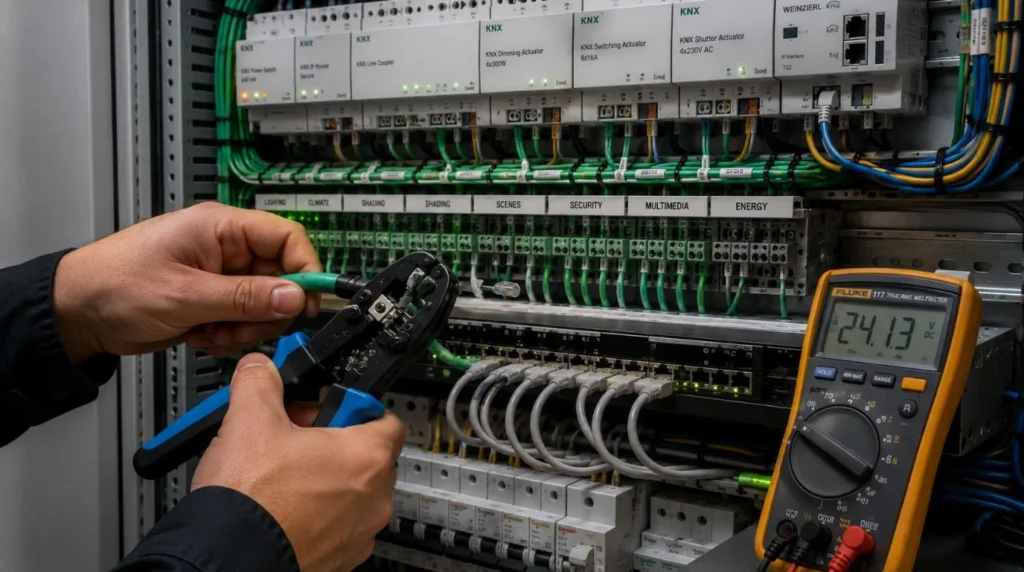
Once your requirements are understood, the installer creates a detailed plan.
This includes:
- Lighting layouts
- Device locations
- Switch placement
- Security coverage
- Network design
- Automation scenarios
- Future upgrade pathways
Planning early prevents compatibility issues and unnecessary expenses later.
3. Smart Lighting
Lighting is usually the foundation of every smart home.
Typical features include:
- Scene lighting
- Scheduled lighting
- Motion-controlled lighting
- Dimming
- Voice control
- Remote access
Lighting automation enhances comfort while improving energy efficiency.
4. Smart Switch Installation
Instead of replacing every light bulb, smart switches provide centralized lighting control.
Benefits include:
- Normal wall switch operation
- Whole-room control
- Automation support
- Better long-term reliability
- Easier future expansion
5. Smart Security System
A complete installation often integrates:
- CCTV cameras
- Smart doorbells
- Video door phones
- Motion sensors
- Door and window sensors
- Smart alarms
- Smart door locks
Rather than operating separately, these systems work together through one platform.
6. Climate Control Automation
Your installer can automate:
- Air conditioning
- Heating
- Ventilation
- Ceiling fans
Automation keeps your home comfortable while reducing unnecessary energy consumption.
7. Motorized Curtains & Blinds
Automated window treatments improve:
- Privacy
- Comfort
- Natural lighting
- Energy efficiency
Curtains can open and close automatically based on schedules, sunrise, sunset, or lighting scenes.
8. Home Entertainment Integration
Many smart homes also include:
- Home theatre control
- Multi-room audio
- Smart televisions
- Projectors
- Universal remote control
One touch can activate an entire entertainment experience.
9. Home Networking
A smart home is only as reliable as its network.
Professional installation typically includes:
- Wi-Fi planning
- Mesh networking
- Structured cabling
- Router optimization
- Network security
Reliable connectivity ensures every smart device performs consistently.
10. Automation Programming
This is where the real intelligence is added. Common automation scenes include:
Good Morning
- Curtains open
- Lights brighten gradually
- AC adjusts
- Music starts
Leaving Home
- The lights switch off
- Doors lock
- Security arms
- AC switches to energy-saving mode
Movie Night
- Lights dim
- Curtains close
- Home theatre activities
Automation transforms individual devices into one seamless experience.
11. Centralized Control
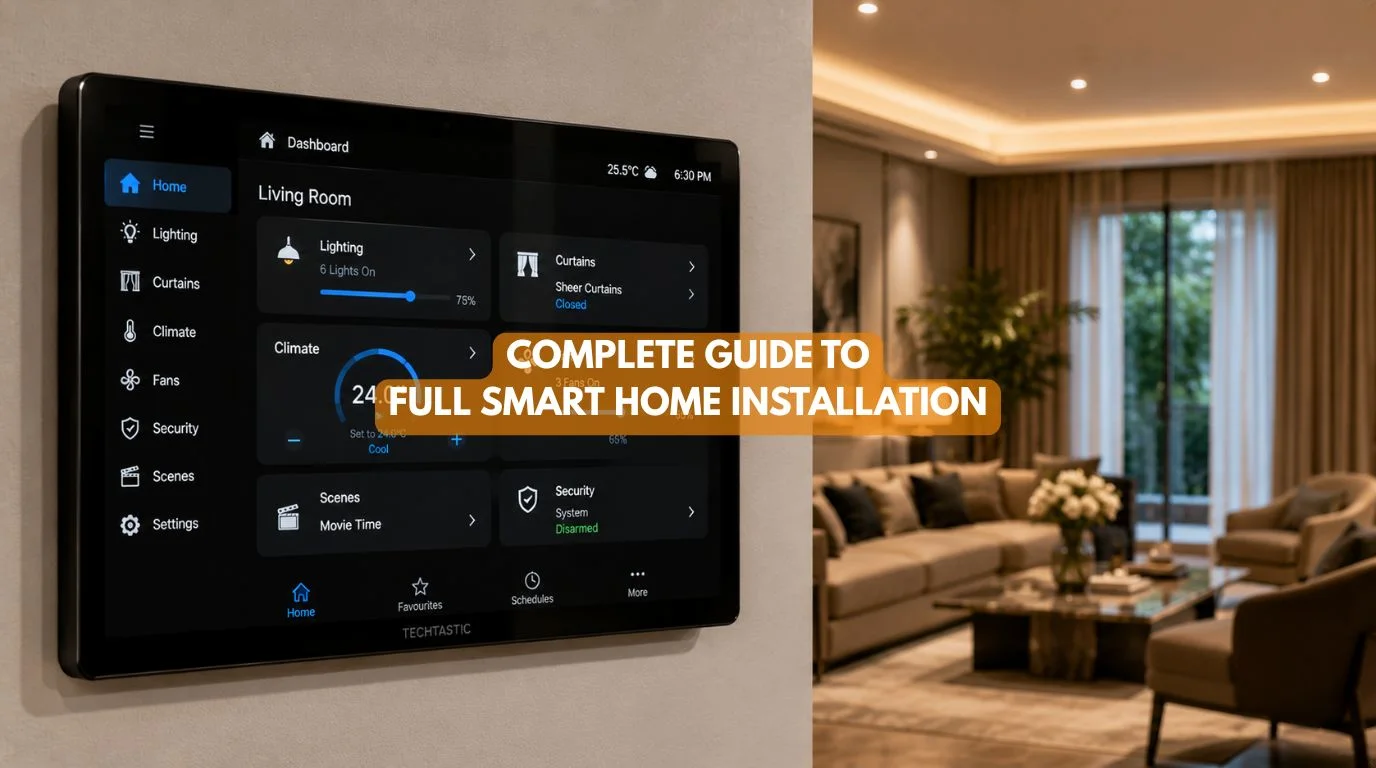
Most professionally installed systems include multiple control options:
- Mobile apps
- Voice assistants
- Wall-mounted touch panels
- Smart switches
- Tablets
- Remote controls
This gives every family member an easy way to interact with the home.
12. Energy Monitoring
Many homeowners now include:
- Electricity monitoring
- Appliance tracking
- Energy usage reports
- Smart scheduling
This helps identify opportunities to reduce electricity costs.
13. Testing & Commissioning
Before handover, the installer thoroughly tests:
- Lighting
- Security
- Voice commands
- Automation routines
- Mobile app control
- Internet connectivity
- Backup functionality
Every device should operate reliably before the project is completed.
14. Homeowner Training
A professional installation always includes guidance on:
- Using the mobile app
- Voice control
- Automation scenes
- Manual overrides
- Basic troubleshooting
Technology should feel intuitive from the very first day.
15. Ongoing Support & Maintenance
Reliable installers continue supporting the system through:
- Software updates
- Maintenance
- Remote diagnostics
- Troubleshooting
- Future upgrades
A smart home should improve over time—not become outdated.
What Does a Full Smart Home Installation Look Like?
| System | Typically Included |
| Planning | Consultation & system design |
| Lighting | Smart switches, dimming, scenes |
| Security | Cameras, locks, alarms, sensors |
| Climate | AC & heating automation |
| Window Treatments | Motorized curtains & blinds |
| Entertainment | Home theatre & multi-room audio |
| Networking | Wi-Fi & structured cabling |
| Automation | Personalized scenes & routines |
| Control | Apps, touch panels, voice assistants |
| Support | Training, updates & maintenance |
Wi-Fi Smart Home vs KNX Installation
Wi-Fi Smart Home
Best for:
- Apartments
- Existing homes
- Budget-conscious homeowners
Advantages:
- Faster installation
- Lower upfront investment
- Easy expansion
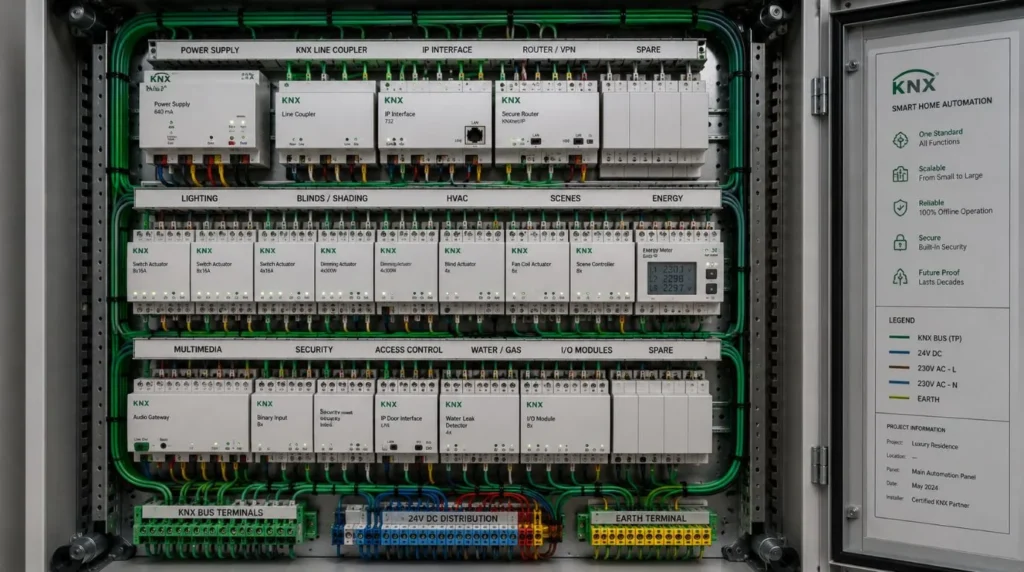
KNX Smart Home
Ideal for:
- New construction
- Luxury homes
- Premium villas
- Large residential projects
Benefits include:
- Dedicated automation network
- Local operation
- Exceptional reliability
- Long lifespan
- Seamless integration
- Easy scalability
A complete KNX installation often includes lighting, climate, security, entertainment, motorized curtains, energy management, and centralized control through one professional platform.
Common Misconceptions
“A Smart Home Is Just Smart Lights”
Lighting is only one part of a complete automation system.
“Everything Runs on Wi-Fi”
Professional systems like KNX use dedicated automation networks for greater reliability.
“I Need Every Device Immediately”
Many homeowners build their smart home in phases while keeping future expansion in mind.
“Installation Ends When Devices Are Mounted”
Programming, testing, training, and support are equally important.
Why It Matters
A professionally installed smart home is designed to simplify everyday life. Instead of managing separate apps and disconnected devices, homeowners enjoy one intelligent system that responds naturally to their routines.
The result is:
- Greater convenience
- Better security
- Improved energy efficiency
- Long-term reliability
- Higher property appeal
Our Perspective at Techtastic
At Techtastic, we believe a full smart home installation should feel invisible once it’s complete.
Our goal isn’t to fill your home with technology—it’s to create a connected environment where lighting, security, entertainment, climate, and automation work together effortlessly. Every project begins with careful planning and ends with a system that’s simple to use, easy to expand, and dependable for years to come.
Whether you’re upgrading an apartment with smart lighting or building a luxury villa powered by KNX automation, we design every installation around one principle: technology should adapt to your lifestyle—not the other way around.
Collaboration Opportunities for Developers, Architects & Interior Designers
The best smart homes are planned before construction is complete. At Techtastic, we collaborate with:
- Architects
- Interior designers
- Residential developers
- Luxury home builders
- MEP consultants
- Commercial project planners
Smart Home Master Planning
Integrate automation into the architectural design.
KNX Infrastructure
Create scalable, future-ready automation systems.
Smart Lighting Design
Blend lighting with architecture and interior aesthetics.
Structured Networking
Build reliable digital infrastructure from day one.
Premium Residential Projects
Deliver elegant, integrated smart living experiences.
Future-Ready Developments
Prepare homes for evolving technologies and homeowner expectations. Early collaboration reduces installation complexity, lowers future upgrade costs, and creates smarter homes from the foundation upward.
Key Takeaways
- A full smart home installation includes planning, design, installation, programming, testing, training, and ongoing support.
- Smart lighting, security, climate control, motorized curtains, and networking form the foundation of most modern smart homes.
- Automation scenes connect multiple systems into one seamless experience.
- Professional installations focus on integration rather than individual gadgets.
- Wi-Fi systems are ideal for many retrofit projects, while KNX is better suited to premium and large-scale automation.
- Reliable networking is essential for consistent smart home performance.
- The best smart homes are scalable, intuitive, and designed around the homeowner’s lifestyle.
Frequently Asked Questions
1. What is included in a full smart home installation?
A: A full smart home installation typically includes consultation, system design, smart lighting, smart switches, security systems, climate control, motorized curtains, networking, automation programming, testing, homeowner training, and ongoing support.
2. How long does a full smart home installation take?
A: Smaller projects may be completed in a day or two, while full smart home installation for larger properties can take several days or be installed in phases during construction.
3. Does every smart home include KNX?
A: No. Many homes use Wi-Fi-based automation, while KNX is commonly chosen for premium residences, new builds, and projects requiring highly reliable, integrated automation.
4. Can I install a smart home in an existing house?
A: Yes. Most existing homes can be upgraded with wireless smart devices, smart switches, security systems, and automation without major structural changes.
5. Do I need professional installation?
A: For simple devices, DIY installation may be sufficient. However, integrated lighting, security, climate control, and whole-home automation benefit greatly from professional planning and installation.
6. Can I expand my smart home later?
A: Absolutely. A professionally designed system should allow additional rooms, devices, and automation features to be added as your needs evolve.
7. Does a smart home require constant internet access?
A: Not always. Many systems continue functioning locally for basic automation, and platforms like KNX are specifically designed to operate independently of internet connectivity for core functions.
8. What is the most important part of a full smart home installation?
A: Proper planning is the foundation of a successful full smart home installation. A well-designed system ensures compatibility, reliability, ease of use, and flexibility for future upgrades.
Conclusion
A full smart home installation is about much more than connecting devices—it’s about creating a home where lighting, security, climate control, entertainment, and automation work together seamlessly. With the right planning and professional installation, your home becomes more convenient, energy-efficient, secure, and ready for future upgrades.
At Techtastic, we design smart home solutions that are tailored to your lifestyle, whether you’re upgrading an existing home or building a new one.
📞 Call/WhatsApp: 9769145145
📍 Our Operational Hubs: Navi Mumbai | Nashik | Lonavla | Sangli
From smart lighting and motorized curtains to fully integrated KNX home automation, we create reliable, scalable systems that make everyday living simpler, smarter, and more comfortable.
Ready to take the next step? Explore our comprehensive breakdown on Smart Home Automation Installation: Complete Timeline 2026.