
Summary
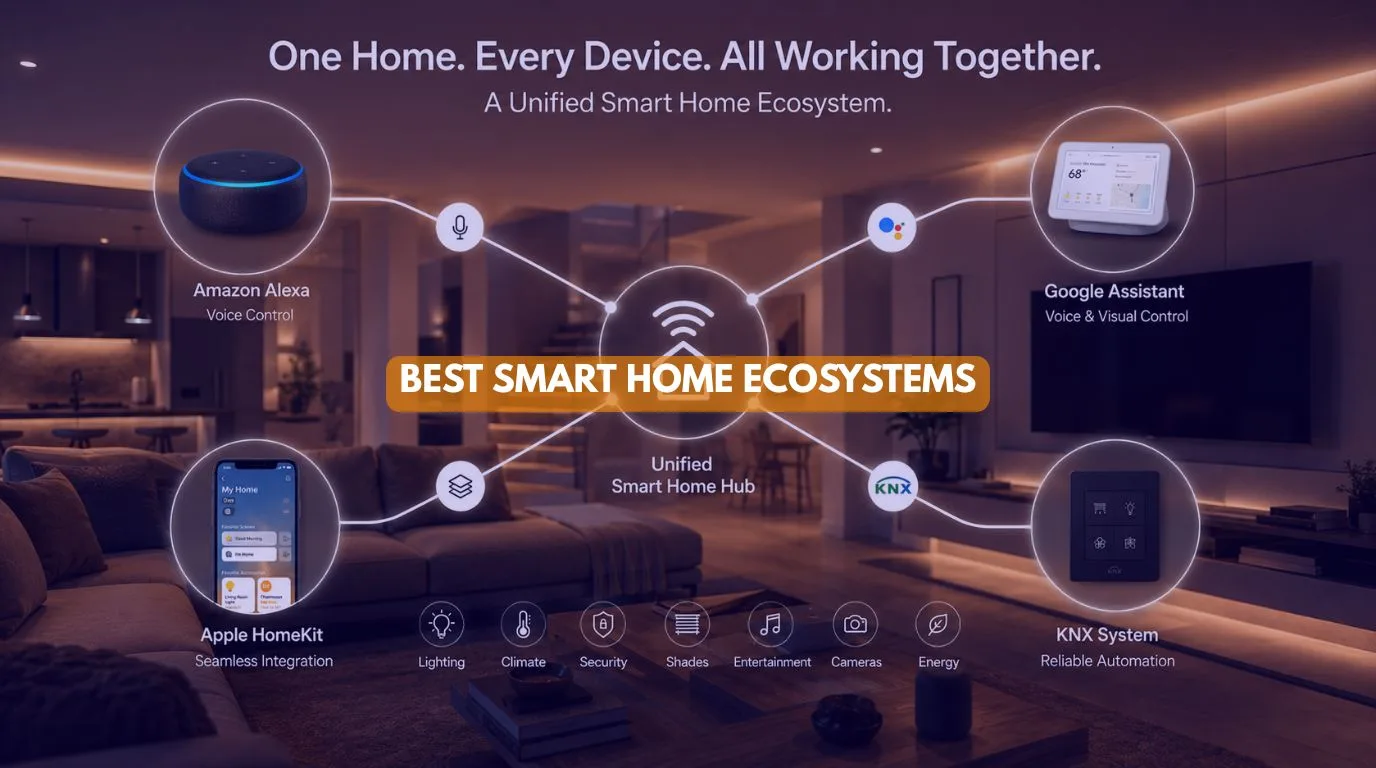
A smart home ecosystem is the platform that allows your smart devices to communicate and work together. Consumer ecosystems like Amazon Alexa, Google Home, and Apple HomeKit focus on convenience, voice control, and easy DIY installation, while professional systems such as KNX provide dedicated automation, local operation, higher reliability, and long-term scalability. Choosing the right ecosystem depends on your home’s size, budget, technical requirements, and future expansion plans.
Quick Answer
A smart home ecosystem is the central platform that connects your smart devices. If you’re automating a few lights and speakers, ecosystems like Amazon Alexa, Google Home, or Apple HomeKit are excellent choices. If you’re building a new home or planning complete automation for lighting, climate control, security, entertainment, and motorized curtains, professional systems like KNX provide greater reliability, flexibility, and long-term value.
What’s the Difference Between Smart Home Ecosystems?
One of the biggest mistakes homeowners make is buying smart devices before choosing a smart home ecosystem. At first, everything seems compatible.
But after adding more devices, many people discover they need:
- Multiple mobile apps
- Different voice assistants
- Separate automation routines
- Several user accounts
Instead of creating a smart home, they create unnecessary complexity.
At Techtastic, we always recommend choosing the right ecosystem before buying your first smart device. Doing so makes your home easier to manage today and much easier to expand tomorrow.
What Is a Smart Home Ecosystem?
A smart home ecosystem is the platform that allows different smart devices to communicate with one another. Instead of operating independently, your devices work together through one connected system.
For example, when you say, “Good Night,” your ecosystem can automatically:
- Turn off the lights
- Lock the doors
- Close motorized curtains
- Adjust the air conditioning
- Arm the security system
Everything works together through one platform.
The Most Popular Smart Home Ecosystems
Amazon Alexa
Alexa is one of the most widely supported smart home ecosystems.
Best for:
- Beginners
- Apartments
- DIY installations
Advantages:
- Huge device compatibility
- Excellent voice control
- Easy automation routines
- Affordable entry point
Potential limitations:
- Cloud-dependent for many features
- Better suited to consumer devices than professional automation
Google Home
Google Home offers a clean interface and excellent integration with Google services.
Best for:
- Android users
- Smart displays
- Voice control
Advantages:
- Natural voice recognition
- Easy device setup
- Strong AI capabilities
Potential limitations:
- Some advanced automation features require compatible products.
Apple HomeKit
HomeKit focuses on privacy and simplicity.
Best for:
- Apple users
- iPhone households
- Privacy-conscious homeowners
Advantages:
- Strong security
- Simple interface
- Excellent Apple integration
Potential limitations:
- Smaller compatible device ecosystem compared to Alexa.
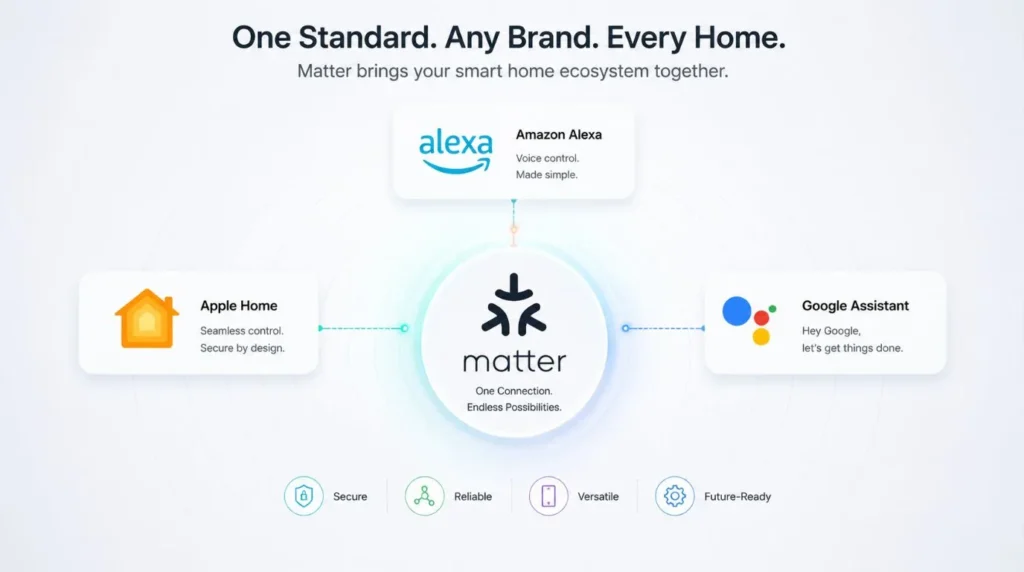
Matter
Matter isn’t a voice assistant. It’s a communication standard. Its purpose is to allow devices from different manufacturers to work together more easily.
Benefits include:
- Better compatibility
- Easier setup
- Reduced brand lock-in
- Greater future flexibility
Matter is becoming an important part of the future smart home landscape.
KNX Home Automation
KNX is very different from consumer ecosystems.
It’s a professional automation standard used worldwide in:
- Luxury homes
- Villas
- Hotels
- Commercial buildings
- Smart offices
Advantages include:
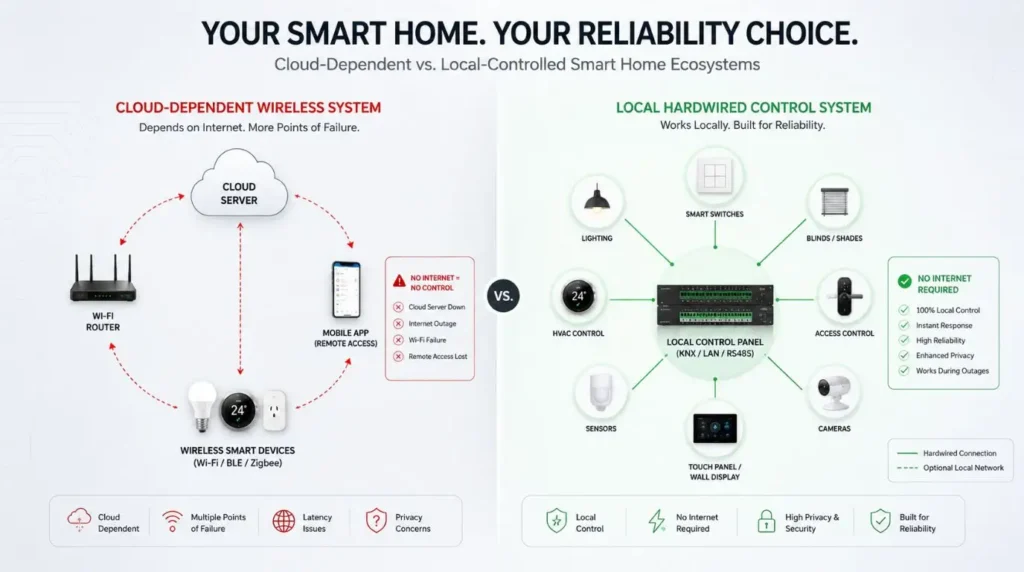
- Local operation
- Exceptional reliability
- Whole-home automation
- Long product life
- Scalability
- Manufacturer independence
Rather than controlling individual gadgets, KNX manages the entire building.
Consumer Ecosystems vs Professional Automation
| Feature | Alexa / Google / HomeKit | KNX |
|---|---|---|
| Best for | DIY smart homes | Whole-home automation |
| Installation | DIY | Professional |
| Lighting | Good | Excellent |
| Climate control | Good | Excellent |
| Motorized curtains | Limited integration | Fully integrated |
| Security | Good | Advanced integration |
| Internet dependency | Often cloud-based | Local operation |
| Scalability | Moderate | Outstanding |
| Reliability | Good | Excellent |
Both approaches have their place depending on your home’s needs.
Can Different Ecosystems Work Together?
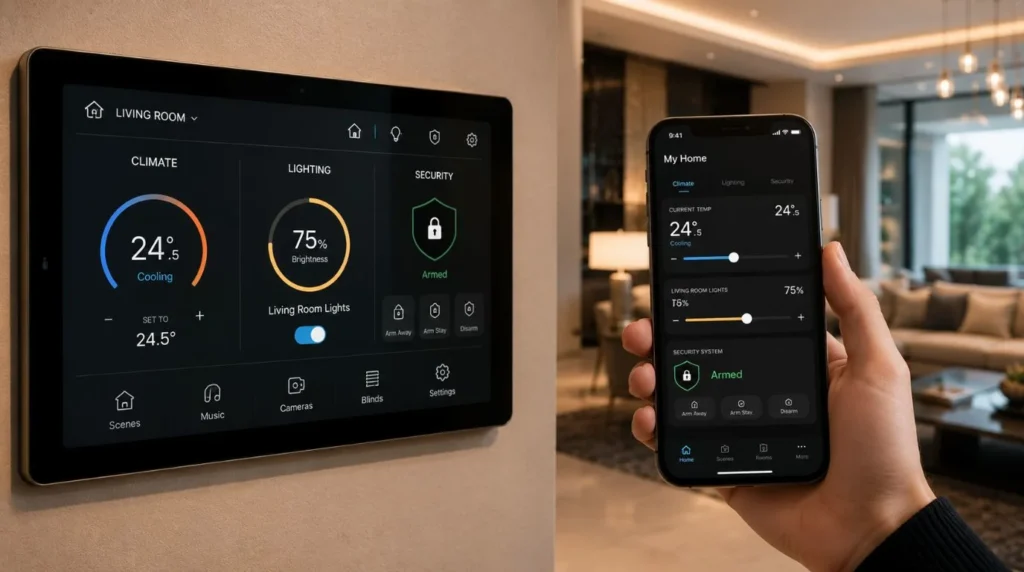
Yes, in many cases. For example:
A KNX home can also support:
- Amazon Alexa
- Google Assistant
- Apple HomeKit
This gives homeowners:
- Professional automation
- Voice control
- Mobile apps
- Future flexibility
The best systems often combine the strengths of multiple technologies.
Which Ecosystem Is Best for You?
Choose Alexa if you:
- Want an affordable smart home.
- Enjoy voice control.
- Prefer DIY installation.
Choose Google Home if you:
- Use Android devices.
- Want strong voice recognition.
- Already rely on Google services.
Choose Apple HomeKit if you:
- Use Apple products exclusively.
- Prioritize privacy.
- Prefer a simple ecosystem.
Choose KNX if you:
- Are building a new home.
- Want whole-home automation.
- Need long-term reliability.
- Plan to automate lighting, climate, security, entertainment, and curtains.
Common Mistakes Homeowners Make
Buying Random Devices
Compatibility becomes difficult later.
Mixing Too Many Brands
Multiple apps reduce convenience.
Choosing Only Based on Price
Long-term value is often more important than the initial purchase cost.
Ignoring Future Expansion
Your ecosystem should grow with your home.
Forgetting Professional Planning
Good planning prevents expensive upgrades later.
Why It Matters
Your smart home ecosystem determines:
- How your devices communicate
- How reliable is your automation
- How easy is your home to control
- How simple future upgrades become
Choosing the right ecosystem at the beginning saves both time and money in the future.
Our Perspective at Techtastic
At Techtastic, we don’t believe there’s one “best” smart home ecosystem for everyone. The right choice depends on your home, your lifestyle, and your long-term goals.
For apartments and smaller homes, consumer ecosystems like Alexa, Google Home, or Apple HomeKit often provide an excellent starting point. For larger homes, luxury residences, and new construction projects, we typically recommend KNX because it offers exceptional reliability, local operation, and seamless integration across lighting, climate control, security, motorized curtains, entertainment, and energy management.
Many of the best smart homes combine professional automation with familiar voice assistants, giving homeowners the reliability of KNX and the convenience of Alexa, Google Assistant, or Siri.
Collaboration Opportunities for Developers, Architects & Interior Designers
Choosing the right ecosystem starts during the planning stage.
At Techtastic, we collaborate with:
- Architects
- Interior designers
- Residential developers
- Luxury home builders
- Hospitality consultants
- Commercial project planners
Smart Home Master Planning
Select the right ecosystem before construction.
KNX Infrastructure Design
Build scalable automation systems.
Smart Lighting Integration
Create intuitive lighting experiences.
Structured Networking
Support reliable communication across all devices.
Premium Residential Projects
Deliver elegant, connected living spaces.
Future-Ready Developments
Prepare homes for evolving automation technologies.
Early ecosystem planning results in cleaner installations, better interoperability, and lower long-term ownership costs.
Key Takeaways
- A smart home ecosystem is the platform that connects and manages your smart devices.
- Alexa, Google Home, and Apple HomeKit are excellent for DIY and smaller smart homes.
- Matter improves compatibility between devices from different manufacturers.
- KNX is ideal for professional, whole-home automation projects.
- Many professional smart homes combine KNX with voice assistants for the best user experience.
- Choosing one ecosystem early simplifies future expansion and reduces compatibility issues.
- Planning your ecosystem before buying devices saves time, money, and frustration.
Frequently Asked Questions
1. What is a smart home ecosystem?
A: A smart home ecosystem is the platform that allows your smart devices, such as lights, locks, cameras, thermostats, and speakers, to communicate and work together through a unified system.
2. Which smart home ecosystem is best?
A: The best ecosystem depends on your needs. Alexa, Google Home, and Apple HomeKit are ideal for consumer smart homes, while KNX is better suited for professionally integrated whole-home automation.
3. Can Alexa and Google Home work together?
A: While they can control some of the same compatible devices, they are separate ecosystems. Most homeowners choose one primary voice assistant for a simpler experience.
4. What is Matter?
A: Matter is an open smart home standard that improves compatibility between devices from different manufacturers, making it easier to build and expand a connected home.
5. Is KNX compatible with Alexa or Google Assistant?
A: Yes. A professionally designed KNX system can be integrated with Alexa, Google Assistant, and Apple HomeKit, allowing homeowners to enjoy both advanced automation and voice control.
6. Should I choose one smart home ecosystem before buying devices?
A: Yes. Choosing an ecosystem first helps ensure device compatibility, simplifies management, and makes future expansion much easier.
7. Is KNX only for luxury homes?
A: While KNX is common in luxury homes and commercial buildings, it’s also an excellent choice for homeowners who want a reliable, scalable, and long-lasting automation system.
8. Can I change ecosystems later?
A: It’s possible, but switching ecosystems may require replacing incompatible devices or reconfiguring your automation. Planning is usually the more cost-effective approach.
Conclusion
Choosing the right smart home ecosystem is one of the most important decisions you’ll make when building a connected home. Whether you prefer the simplicity of Amazon Alexa, the seamless integration of Google Home or Apple HomeKit, the growing compatibility of Matter, or the professional reliability of KNX, your ecosystem will shape how your devices communicate, how easily your home can expand, and how enjoyable the overall experience will be.
At Techtastic, we help homeowners select ecosystems that match their lifestyle today while preparing them for tomorrow’s technology.
📞 Call/WhatsApp: 9769145145
📍 Our Operational Hubs: Navi Mumbai | Nashik | Lonavla | Sangli
From simple voice-controlled lighting to fully integrated KNX automation, we design smart home solutions that are reliable, scalable, and built to evolve, ensuring every device works together as one intelligent system.
Looking for the best features to start with? Check out our practical guide on What Smart Home Essentials Should I Install First in 2026 to plan a system effortlessly.