
Summary
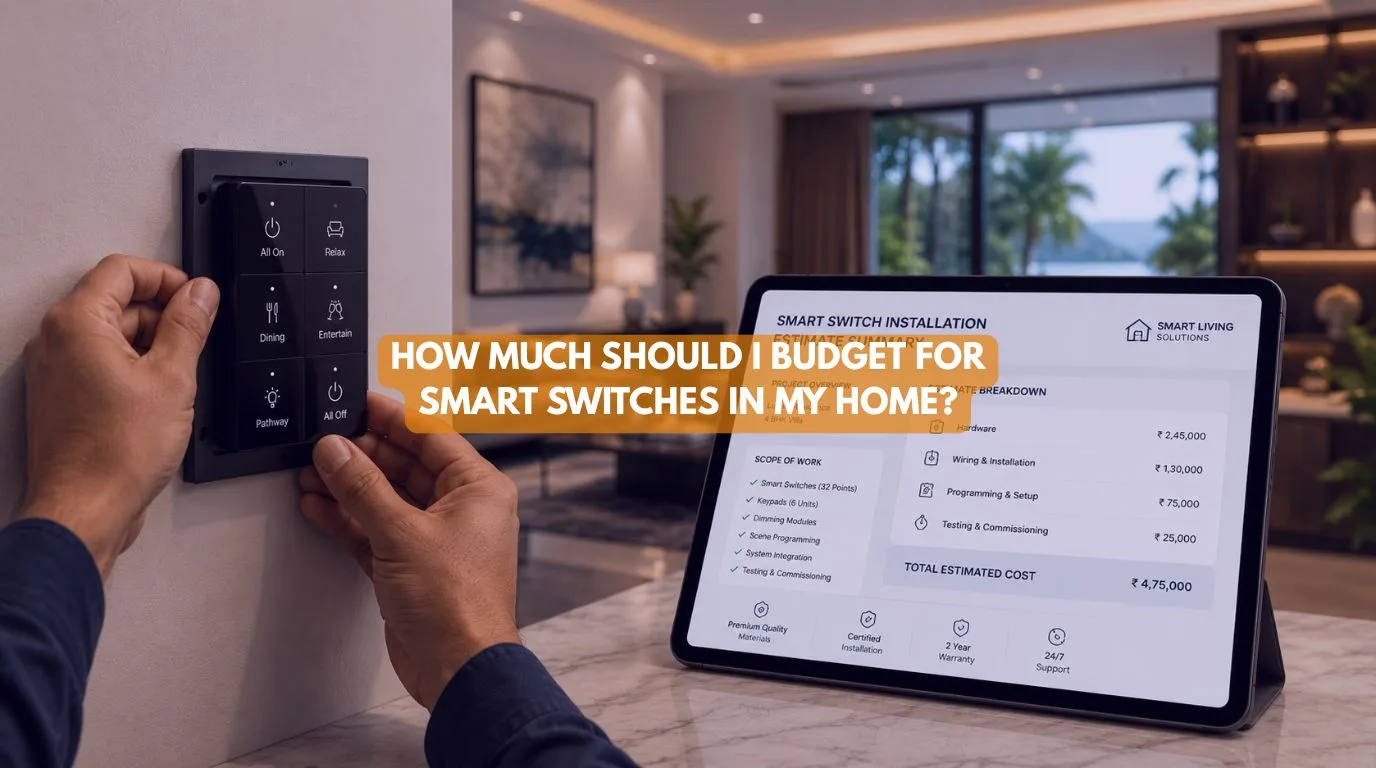
The smart switch installation cost depends on several factors, including the number of switches, the type of smart home platform, wiring requirements, home size, and whether the installation is part of new construction or an existing home renovation. Basic Wi-Fi smart switches are generally more affordable, while professional systems such as KNX require a higher upfront investment but provide superior reliability, centralized control, and long-term scalability. Budgeting should include hardware, installation, programming, networking, and future expansion rather than just the cost of individual switches.
Quick Answer
The smart switch installation cost depends on how many switches your home needs, the automation platform you choose, and the level of integration you want. While Wi-Fi smart switches are suitable for simple upgrades, professionally installed systems such as KNX offer centralized lighting control, automation scenes, and seamless integration with climate control, security, and motorized curtains. When budgeting, homeowners should consider the complete system—including installation, programming, and future scalability—not just the price of the switches themselves.
How Much Should I Budget for Smart Switches in My Home?
Smart switches are often the first upgrade homeowners make when building a smart home. They offer a familiar way to control lighting while adding features like:
- Smartphone control
- Voice commands
- Lighting schedules
- Automation scenes
- Energy-saving routines
Naturally, one of the first questions we hear at Techtastic is: “How much should smart switch installation cost in my home?”
The answer depends on more than the number of switches you plan to install. Your home’s size, electrical infrastructure, automation platform, and plans all influence the total investment.
Understanding these factors will help you know the smart switch installation cost more effectively and avoid unexpected costs later.
What Are Smart Switches?
Smart switches replace traditional wall switches and allow you to control lighting through:
- Wall switches
- Mobile apps
- Voice assistants
- Motion sensors
- Automation schedules
- Smart home systems
Unlike smart bulbs, smart switches control the electrical circuit, making them ideal for managing entire rooms while preserving the familiar wall switch experience.
What Affects Smart Switch Installation Cost?
Several factors determine the smart switch installation cost.
1. Number of Smart Switches
The number of switches is one of the biggest smart switch installation cost factors.
Examples include:
- One-room upgrade
- Entire apartment
- Independent house
- Luxury villa
Larger homes naturally require more switches and programming.
2. Type of Smart Switch
Different technologies have different price points.
Popular options include:
- Wi-Fi smart switches
- Zigbee switches
- Z-Wave switches
- KNX smart switches
- Touchscreen smart switches
Professional systems generally involve a higher initial investment but offer greater reliability and long-term flexibility.
3. New Home vs Existing Home
The smart switch installation cost varies depending on the stage of construction.
New Construction
Benefits include:
- Easier wiring
- Better infrastructure planning
- Cleaner installation
- Lower retrofit complexity
Existing Homes
Retrofit projects may require:
- Electrical modifications
- Switch box upgrades
- Additional wiring
- More installation time
4. Wiring Requirements
Some smart switches require:
- Neutral wiring
- Dedicated communication cables
- Larger switch boxes
Professional installers assess your existing wiring before recommending the best solution.
5. Automation Platform
The platform you choose has a major impact on the overall smart switch installation cost.
Wi-Fi Smart Switches
Ideal for:
- Apartments
- Small homes
- Individual room upgrades
KNX Home Automation
Designed for:
- Whole-home automation
- Luxury residences
- Long-term scalability
- Integrated lighting, HVAC, security, and curtains
Although the upfront investment is higher, KNX systems provide greater long-term value and reliability.
What Does Your Budget Actually Include?
Many homeowners focus only on the cost of the switch itself. A complete installation typically includes:
- Smart switch hardware
- Electrical installation
- Wiring (if required)
- Programming
- Mobile app setup
- Automation scene creation
- System testing
- User training
- Future expansion planning
Thinking about the complete project rather than individual products leads to a more realistic smart switch installation cost.
Wi-Fi Smart Switches vs KNX Smart Switches
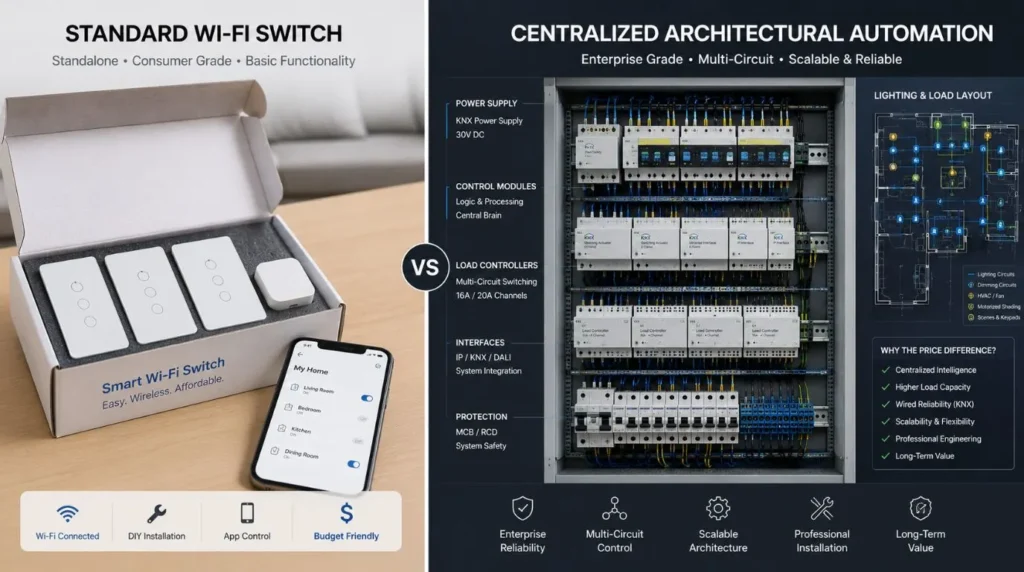
| Feature | Wi-Fi Smart Switches | KNX Smart Switches |
|---|---|---|
| Initial investment | Lower | Higher |
| Installation | Simpler | Professional |
| Reliability | Good | Excellent |
| Whole-home integration | Limited | Outstanding |
| Scalability | Moderate | Excellent |
| Future expansion | Good | Outstanding |
The best choice depends on your long-term goals, not just your initial smart switch installation cost.
Should You Budget for Future Expansion?
Absolutely. Many homeowners start with:
- Smart lighting
Later, they add:
- Motorized curtains
- Climate control
- Security
- Home theatre
- Energy management
Choosing scalable smart switches today can reduce upgrade costs tomorrow.
Can Smart Switches Save Money?
Smart switches don’t reduce electricity consumption on their own. However, they help eliminate waste through:
- Scheduled lighting
- Occupancy-based automation
- Automatic shutoff
- Remote monitoring
Over time, these features can improve energy efficiency while increasing everyday convenience.
Common Budgeting Mistakes
Buying Based Only on Price
Cheaper switches may limit future compatibility.
Ignoring Installation Costs
Professional programming and setup are part of the total smart switch installation cost.
Choosing Different Brands for Every Room
Multiple apps create unnecessary complexity.
Not Planning for Expansion
Future upgrades become easier when the foundation is designed properly.
Forgetting About Networking
Reliable Wi-Fi or structured networking is essential for dependable smart lighting.
Is It Worth Investing in Premium Smart Switches?
In our experience, yes—especially if you’re planning a long-term smart home.
Premium systems offer:
- Better reliability
- Faster response times
- Cleaner aesthetics
- Advanced automation
- Easier maintenance
- Greater property value
The real value isn’t just in controlling lights—it’s in creating a lighting system that supports your lifestyle for years to come.
Why It Matters for Modern Homes
Lighting is one of the most frequently used systems in any home. Investing in high-quality smart switches improves:
- Everyday convenience
- Comfort
- Energy efficiency
- Home security
- Future smart home integration
A well-designed lighting system also becomes the foundation for expanding into broader home automation.
Our Perspective at Techtastic
At Techtastic, we encourage homeowners to think beyond the cost of an individual switch. Instead, we look at how lighting fits into the overall smart home experience. We recommend solutions that are reliable, intuitive, and designed for future expansion, ensuring that today’s investment continues to deliver value as your automation needs grow.
Whether you’re installing smart switches in one room or throughout an entire home, careful planning almost always provides a better return than choosing products based on smart switch installation cost alone.
Collaboration Opportunities for Developers, Architects & Interior Designers
The best smart lighting systems begin during the planning phase.
At Techtastic, we collaborate with:
- Architects
- Interior designers
- Residential developers
- Luxury home builders
- Hospitality consultants
- Commercial project planners
Smart Lighting Infrastructure
Plan automation-ready electrical layouts.
KNX Lighting Design
Develop scalable lighting systems.
Interior Integration
Blend technology with modern aesthetics.
Premium Residential Projects
Create elegant lighting experiences.
Structured Networking
Support reliable automation throughout the property.
Future-Ready Developments
Design homes prepared for long-term smart living. Early planning helps reduce installation challenges while improving long-term flexibility.
Key Takeaways
- The smart switch installation cost depends on the number of switches, wiring, the automation platform, and the home’s size.
- Budget for the complete system, not just the hardware.
- Wi-Fi switches are ideal for smaller projects, while KNX offers superior scalability and integration.
- Professional installation improves reliability and long-term performance.
- Smart switches provide better whole-room control than smart bulbs.
- Planning for future expansion protects your investment.
- A well-designed smart lighting system enhances convenience, efficiency, and property value.
Frequently Asked Questions
1. How much should I budget for smart switches?
A: Your smart switch installation cost depends on the number of switches, your home’s size, the automation platform, wiring requirements, and whether you’re building a new home or upgrading an existing one.
2. Are smart switches worth the investment?
A: Yes. They improve convenience, support automation, enhance energy efficiency, and provide a foundation for future smart home upgrades.
3. Are Wi-Fi smart switches cheaper than KNX switches?
A: Generally, yes. Wi-Fi switches have a lower upfront cost, while KNX systems offer greater reliability, integration, and long-term scalability.
4. Can I install smart switches in an existing home?
A: Yes. Many smart switches can be retrofitted, although some installations may require electrical modifications.
5. Do I need an electrician to install smart switches?
A: Professional installation is recommended, particularly for wired systems and whole-home automation projects.
6. Can I expand my smart lighting later?
A: Yes. A well-planned smart lighting system allows additional rooms and automation features to be added over time.
7. Do smart switches work with voice assistants?
A: Many smart switches integrate with Amazon Alexa, Google Assistant, and Apple Siri for voice control.
8. Should I choose smart switches or smart bulbs?
A: Smart switches are generally better for whole-room lighting and long-term home automation, while smart bulbs are ideal for decorative lighting and smaller DIY projects.
Conclusion
Budgeting for smart switch installation cost involves much more than pricing individual switches. The right investment depends on your home’s size, the level of automation you want, your electrical infrastructure, and your future expansion plans. While entry-level Wi-Fi smart switches are a great way to get started, professionally designed systems like KNX offer superior reliability, seamless integration, and long-term flexibility for homeowners planning a fully connected home.
At Techtastic, we help homeowners, architects, and developers design smart lighting systems that balance performance, aesthetics, and future readiness.
📞 Call/WhatsApp: 9769145145
📍 Our Operational Hubs: Navi Mumbai | Nashik | Lonavla | Sangli
Whether you’re upgrading a few rooms or planning automation for your entire home, we create solutions that deliver everyday convenience, reliable operation, and lasting value.
Wondering how to manage all these requirements? Read our expert guide on 5 Easy Ways to Install Smart Switches in a Rental Apartment to discover the best way to improve your system’s infrastructure.